
2026 SUV Specs Compared: Engine Power, Safety Features, and Interior Dimensions
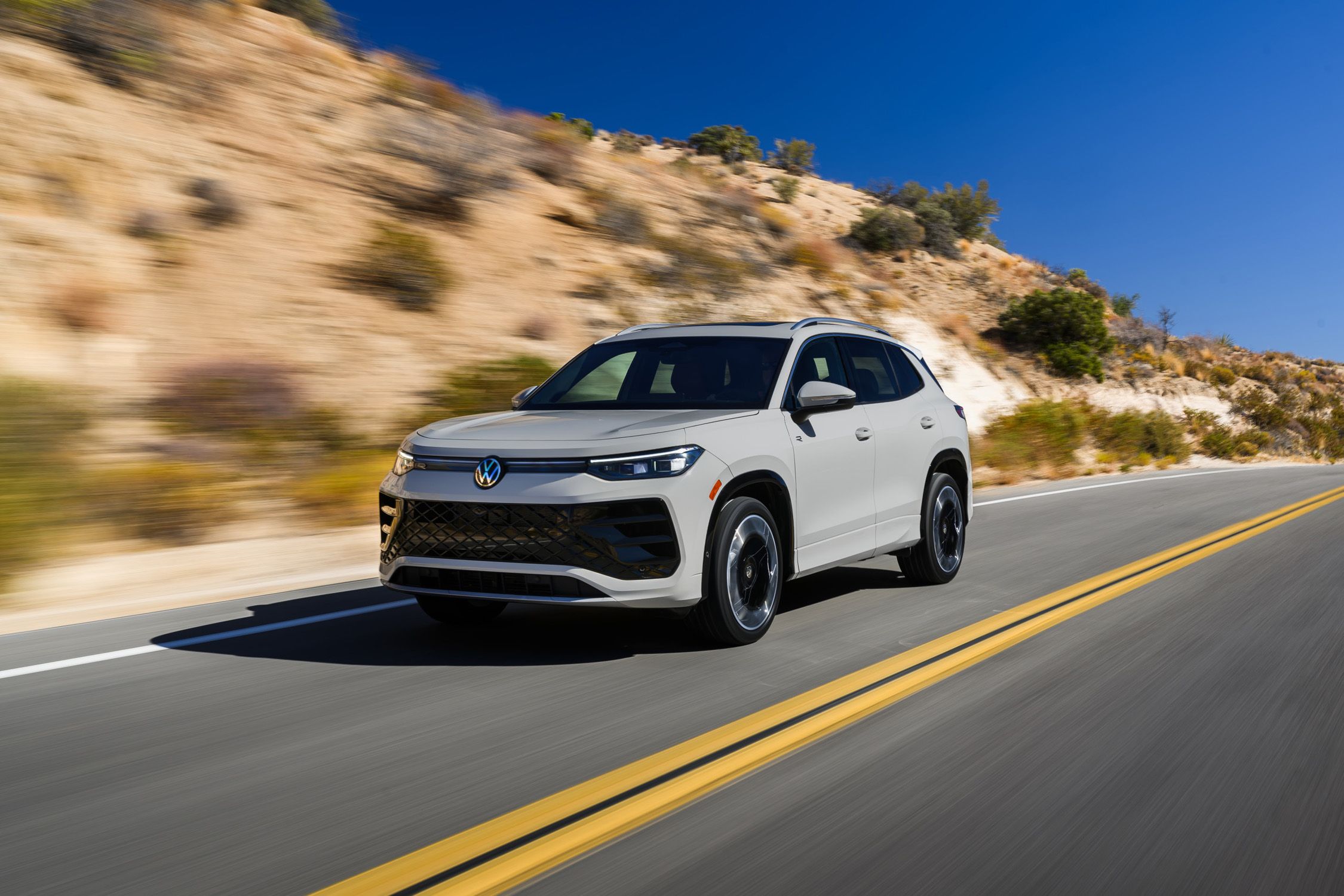
If you are comparing the 2026 Volkswagen Tiguan and Honda CR-V, the most important difference is not a single horsepower, cargo, or fuel-economy number. These compact SUVs take different approaches to the same job. The Tiguan centers its lineup around a turbocharged engine, an 8-speed automatic transmission, available 4MOTION all-wheel drive, and a higher-output SEL R-Line Turbo. The CR-V gives shoppers a choice between a conventional turbocharged gas powertrain and a two-motor hybrid system.
The 2026 Volkswagen Tiguan is a strong fit for shoppers who value turbocharged performance, a conventional 8-speed automatic transmission, and the option of a 268-horsepower SEL R-Line Turbo with standard 4MOTION all-wheel drive. The 2026 Honda CR-V has the advantage of offering both gas and hybrid powertrains, with its front-wheel-drive hybrid configurations rated as high as an EPA-estimated 43 mpg city, 36 mpg highway, and 40 mpg combined. The better choice depends on whether performance character, hybrid efficiency, cargo space, or drivetrain configuration matters most to you.
That distinction matters for shoppers around Daphne and Mobile because two people comparing the same model names can actually be considering very different vehicles. A CR-V Sport Hybrid and a gas CR-V EX do not have identical cargo capacity or fuel economy, just as a standard Tiguan and the SEL R-Line Turbo do not provide the same performance.
Below, we will compare those configurations separately so you can see what changes before deciding which compact SUV deserves a closer look.
What Matters Most When Comparing the 2026 Tiguan and CR-V?
Passenger Space, Cargo, and Family Usability
Both the 2026 Tiguan and CR-V are five-passenger compact SUVs, so the decision is less about adding another seating row and more about how you use the second row and cargo area.
Volkswagen lists 33.8 cubic feet of cargo space behind the Tiguan's second row and 69.8 cubic feet with the rear seats folded. That provides useful room for groceries, luggage, sports equipment, beach gear, or the larger items that come with day-to-day family use.
Honda publishes two different cargo sets for the CR-V. Gas-powered LX, EX, and EX-L models provide 39.3 cubic feet behind the second row and up to 76.5 cubic feet with the rear seats folded. Hybrid models provide 36.3 cubic feet behind the second row and up to 71.8 cubic feet with the rear seats folded.
In other words, the CR-V holds an advantage in published cargo volume, but the size of that advantage depends on which CR-V powertrain you are actually considering. If cargo is a major part of your decision, compare the specific configurations rather than relying on one maximum CR-V number.
Performance, Efficiency, and Drivetrain Choices
The 2026 Tiguan S, SE, and SE R-Line Black use a 2.0-liter turbocharged four-cylinder engine rated at 201 horsepower, paired with an 8-speed automatic transmission. Front-wheel drive is available, while 4MOTION all-wheel drive can be selected on those trims.
At the top of the Tiguan range, the SEL R-Line Turbo changes the performance equation considerably. Volkswagen rates it at 268 horsepower and 258 lb-ft of torque, and 4MOTION is standard. Volkswagen lists an EPA-estimated 29 mpg highway for this configuration.
Honda splits the CR-V lineup differently. LX, EX, and EX-L trims use a 1.5-liter turbocharged four-cylinder producing 190 horsepower and 179 lb-ft of torque with a continuously variable transmission. Real Time AWD is available.
Sport Hybrid, TrailSport Hybrid, Sport-L Hybrid, and Sport Touring Hybrid models use Honda's two-motor hybrid system. Honda rates total system output at 204 horsepower, while the electric drive motor produces up to 247 lb-ft of torque. The hybrid lineup is where the CR-V builds its strongest fuel-economy case.
Technology and Driver Assistance
Both vehicles offer extensive driver-assistance technology, but shoppers should compare the exact features included on the trim they intend to buy rather than assuming every feature is identical across the lineup.
The Tiguan incorporates Volkswagen's IQ.DRIVE suite. Volkswagen describes systems such as Travel Assist, Adaptive Cruise Control, Lane Assist, and Emergency Assist as part of its current driver-assistance approach. These are assistance technologies, not autonomous driving systems, and the driver remains responsible for controlling the vehicle.
Honda Sensing is standard across the 2026 CR-V lineup and includes technologies such as Collision Mitigation Braking System, Road Departure Mitigation, Adaptive Cruise Control with Low-Speed Follow, Lane Keeping Assist, Traffic Jam Assist, and Driver Attention Monitor. Other features, including Blind Spot Information and Cross Traffic Monitor, depend on trim.
2026 Volkswagen Tiguan vs Honda CR-V Side by Side
| Comparison | Tiguan S / SE / SE R-Line Black | Tiguan SEL R-Line Turbo | CR-V Gas | CR-V Hybrid |
|---|---|---|---|---|
| Powertrain | 2.0L turbo 4-cylinder | High-output 2.0L turbo 4-cylinder | 1.5L turbo 4-cylinder | 2.0L 2-motor hybrid system |
| Horsepower | 201 hp | 268 hp | 190 hp | 204 hp total system output |
| Transmission / Drive System | 8-speed automatic | 8-speed automatic | CVT | Two-motor hybrid direct-drive system |
| AWD | 4MOTION available | 4MOTION standard | Real Time AWD available | Available or standard depending on trim |
| Cargo Behind Second Row | 33.8 cu. ft. | 33.8 cu. ft. | 39.3 cu. ft. | 36.3 cu. ft. |
| Maximum Cargo | 69.8 cu. ft. | 69.8 cu. ft. | 76.5 cu. ft. | 71.8 cu. ft. |
| Fuel-Economy Highlight | Varies by FWD / 4MOTION configuration | EPA-estimated 29 mpg highway | FWD: 28 city / 33 highway / 30 combined mpg | FWD: up to 43 city / 36 highway / 40 combined mpg |
| Five-Passenger Seating | Yes | Yes | Yes | Yes |
Specifications can vary by trim and drivetrain. Honda hybrid cargo figures differ from gas CR-V figures, and AWD CR-V Hybrid fuel-economy ratings are lower than the FWD figures shown above.
The CR-V's biggest published cargo figure and its best fuel-economy figure do not come from the same configuration. Gas CR-V models offer up to 76.5 cubic feet of maximum cargo space, while hybrid models provide up to 71.8 cubic feet; the FWD hybrid, however, reaches an EPA-estimated 40 mpg combined. For an accurate Tiguan versus CR-V comparison, shoppers should decide first whether they are comparing the Tiguan with a gas CR-V or a CR-V Hybrid.
What the Numbers Mean in Everyday Driving
If your priority is maximum published cargo capacity, the gas CR-V has the clearest advantage. Even the CR-V Hybrid lists slightly more cargo volume than the Tiguan with both seating configurations.
If fuel consumption is the primary concern, the CR-V Hybrid introduces an option the 2026 Tiguan lineup does not directly match. A high-mileage commuter may find that distinction more meaningful than a difference in peak horsepower.
The Tiguan makes a different case. Its three lower trims provide 201 horsepower through a traditional 8-speed automatic, and the SEL R-Line Turbo moves well beyond both CR-V powertrains with 268 horsepower. That gives shoppers a wider performance spread inside the Tiguan range itself.
If the Tiguan is moving to the top of your list, our 2026 Volkswagen Tiguan trim guide can help narrow down the S, SE, SE R-Line Black, and SEL R-Line Turbo.
Which SUV Fits Eastern Shore Drivers Better?
Daphne-to-Mobile and Bayway Commuting
For someone regularly commuting between Daphne and Mobile, annual mileage can quickly become one of the most important ownership factors. That makes the CR-V Hybrid's EPA ratings particularly relevant for a shopper whose priority is reducing fuel use.
The Tiguan may appeal to a different type of commuter. Some drivers prefer the operating feel of a turbocharged engine paired with a conventional 8-speed automatic rather than a CVT or hybrid drivetrain. That is a preference worth testing rather than deciding from a specification sheet.
If AWD is part of your shortlist, both models provide options. Volkswagen offers 4MOTION on the Tiguan and makes it standard on the SEL R-Line Turbo, while Honda offers Real Time AWD across much of the CR-V range and makes it standard on certain hybrid trims.
Family Errands, School Runs, and US-98 Driving
The CR-V's larger published cargo measurements can matter if you frequently load strollers, sports equipment, groceries, luggage, or other bulky items while keeping the second row available for passengers.
The Tiguan still provides nearly 70 cubic feet with its rear seats folded, so its cargo area remains firmly within compact-SUV territory. The real question is whether the extra published volume in the Honda changes how you use the vehicle enough to outweigh the Tiguan's drivetrain, cabin, or performance advantages for you.
Families already leaning toward Volkswagen can also compare the Tiguan with larger or smaller VW SUVs in our 2026 Volkswagen SUV guide .
Weekend Trips and Gulf Coast Driving
A trip toward Gulf Shores or a longer Gulf Coast drive may shift priorities again. Highway fuel economy matters over repeated longer distances, but so do luggage space, seating comfort, passing power, and how the vehicle feels at sustained highway speeds.
For shoppers planning regular road trips with four or five occupants, loading the vehicles in person is often more informative than comparing cargo numbers alone. Different cargo-area shapes, seatbacks, rooflines, and the size of the items you actually carry can affect usefulness even when cubic-foot measurements look similar.
For a high-mileage Daphne-to-Mobile commuter focused primarily on fuel consumption, the CR-V Hybrid deserves serious consideration because its EPA estimates are substantially higher than those of conventional gas compact SUVs. A Tiguan shopper may instead prioritize the 8-speed automatic, available 4MOTION, or the 268-horsepower SEL R-Line Turbo. For families, the CR-V provides more published cargo volume, while the final decision can still depend on cabin layout, equipment, driving feel, and the specific trim being compared.
The CR-V Specification Detail Many Comparisons Miss
One of the easiest mistakes in compact-SUV comparison articles is to collect the largest or most impressive number attached to each model and put them into one table. That can create a vehicle configuration that does not actually exist.
The 2026 CR-V is a good example. Its 76.5-cubic-foot maximum cargo figure belongs to gas-powered versions. The hybrid's maximum is 71.8 cubic feet. Conversely, the CR-V's strongest EPA fuel-economy ratings belong to front-wheel-drive hybrid versions, not the gas models with the larger cargo figure.
The same discipline applies to the Tiguan. The 268-horsepower figure belongs to the SEL R-Line Turbo, not every Tiguan. The S, SE, and SE R-Line Black use the 201-horsepower version of the 2.0-liter turbo engine.
Comparing the vehicle configurations you would realistically buy makes the decision more useful and keeps horsepower, MPG, cargo, AWD, and equipment from becoming misleading headline numbers.
8-Speed Automatic vs CVT vs Two-Motor Hybrid
The Tiguan and CR-V also give shoppers three noticeably different approaches to delivering power.
The Tiguan uses an 8-speed automatic transmission. Instead of continuously changing its effective ratio, it works through distinct forward gears. Drivers who prefer the familiar rhythm of conventional gear changes may appreciate that setup.
Gas CR-V models use a continuously variable transmission, or CVT. A CVT can adjust its ratio across a range rather than selecting among a fixed set of conventional gears. Honda pairs it with the CR-V's 190-horsepower 1.5-liter turbo engine.
The CR-V Hybrid is different again. Honda's two-motor system combines a 2.0-liter Atkinson-cycle gasoline engine, an electric drive motor, a motor/generator, and a lithium-ion battery. Depending on operating conditions, the engine can generate electricity, help recharge the battery, or send torque mechanically to the wheels, while regenerative braking can recover energy during deceleration.
None of these systems is automatically the right choice for every driver. A useful test drive should include normal acceleration, stop-and-go traffic, highway merging, and the type of low-speed driving you encounter most often.
2026 Tiguan vs CR-V: Which One Should You Put on Your Shortlist?
Consider the 2026 Tiguan if...
- You prefer a turbocharged engine with an 8-speed automatic transmission.
- You want available 4MOTION AWD across the core lineup.
- You are interested in the 268-hp SEL R-Line Turbo.
- Volkswagen IQ.DRIVE and the Tiguan's technology package fit your preferences.
- Nearly 70 cu. ft. of maximum cargo space meets your needs.
Consider the 2026 CR-V if...
- Hybrid fuel economy is one of your highest priorities.
- You want more published cargo volume.
- You prefer the CR-V's gas/CVT combination.
- You want Honda's two-motor hybrid powertrain.
- A specific Honda Sensing or CR-V trim configuration better matches your needs.
This is also why a single "winner" is not especially useful. A CR-V Sport Hybrid shopper concerned about fuel use is making a different decision from someone comparing a Tiguan SEL R-Line Turbo for its extra output and standard AWD.
Compare the Tiguan for Yourself
Review current Volkswagen availability or schedule time behind the wheel to compare Tiguan trims, drivetrain options, passenger space, and everyday usability in person.
Key Takeaways
- The 2026 Tiguan offers 201 horsepower in its S, SE, and SE R-Line Black trims, while the SEL R-Line Turbo increases output to 268 horsepower.
- The 2026 CR-V gives shoppers a gas powertrain with 190 horsepower or a two-motor hybrid system with 204 horsepower of total system output.
- The CR-V provides more published cargo volume, but gas and hybrid CR-V models have different cargo capacities.
- The CR-V Hybrid is the stronger fuel-economy choice on paper, with FWD hybrid configurations rated at up to 43 city, 36 highway, and 40 combined mpg.
- Both SUVs offer AWD, but availability depends on trim and configuration. AWD can support traction, but it does not eliminate wet-weather driving risks.
- The best comparison is between the exact trims and powertrains you would realistically purchase, not each model's most favorable specification.
2026 Volkswagen Tiguan vs Honda CR-V FAQs
Which has more cargo space, the 2026 Tiguan or Honda CR-V?
Honda publishes more cargo space for both versions of the CR-V. Gas CR-V models provide 39.3 cubic feet behind the second row and up to 76.5 cubic feet with the rear seats folded. Hybrid CR-V models provide 36.3 and 71.8 cubic feet, respectively. Volkswagen lists 33.8 cubic feet behind the Tiguan's second row and 69.8 cubic feet with the seats folded.
Which gets better fuel economy, the Tiguan or CR-V?
The CR-V Hybrid has the strongest EPA ratings of these configurations. Front-wheel-drive Sport Hybrid and Sport-L Hybrid versions are rated at 43 mpg city, 36 mpg highway, and 40 mpg combined. AWD hybrid versions have different estimates. Tiguan fuel economy also varies by drivetrain and trim, so compare the exact configuration you are considering.
Does the 2026 Volkswagen Tiguan offer all-wheel drive?
Yes. Volkswagen offers 4MOTION all-wheel drive on the 2026 Tiguan S, SE, and SE R-Line Black, while the SEL R-Line Turbo includes 4MOTION as standard equipment. AWD can assist traction when accelerating on lower-grip surfaces, but tire condition, vehicle speed, visibility, and driver input remain important in wet weather.
Which is better for commuting between Daphne and Mobile?
It depends on your priority. A high-mileage commuter focused on fuel consumption may find the CR-V Hybrid especially appealing, while a driver who prefers a conventional automatic transmission, Volkswagen's driving characteristics, or available 4MOTION may prefer a Tiguan. Testing the actual configurations you are considering is the best way to compare comfort, visibility, acceleration, and driving feel.
Compare the 2026 Volkswagen Tiguan in Daphne
A specification table can narrow your shortlist, but the most useful next step is comparing the vehicle around the things you use every day. Sit in both rows, load the cargo area if space matters, check visibility, try the infotainment controls, and drive the Tiguan in the type of traffic you normally encounter.
You can browse current Volkswagen inventory at Volkswagen of Daphne or schedule a test drive to compare the current Tiguan configurations available.