Blog

All New VW Cars Daphne Volkswagen Service Daphne Volkswagen Dealer Vehicle Comparison Daphne Used Cars
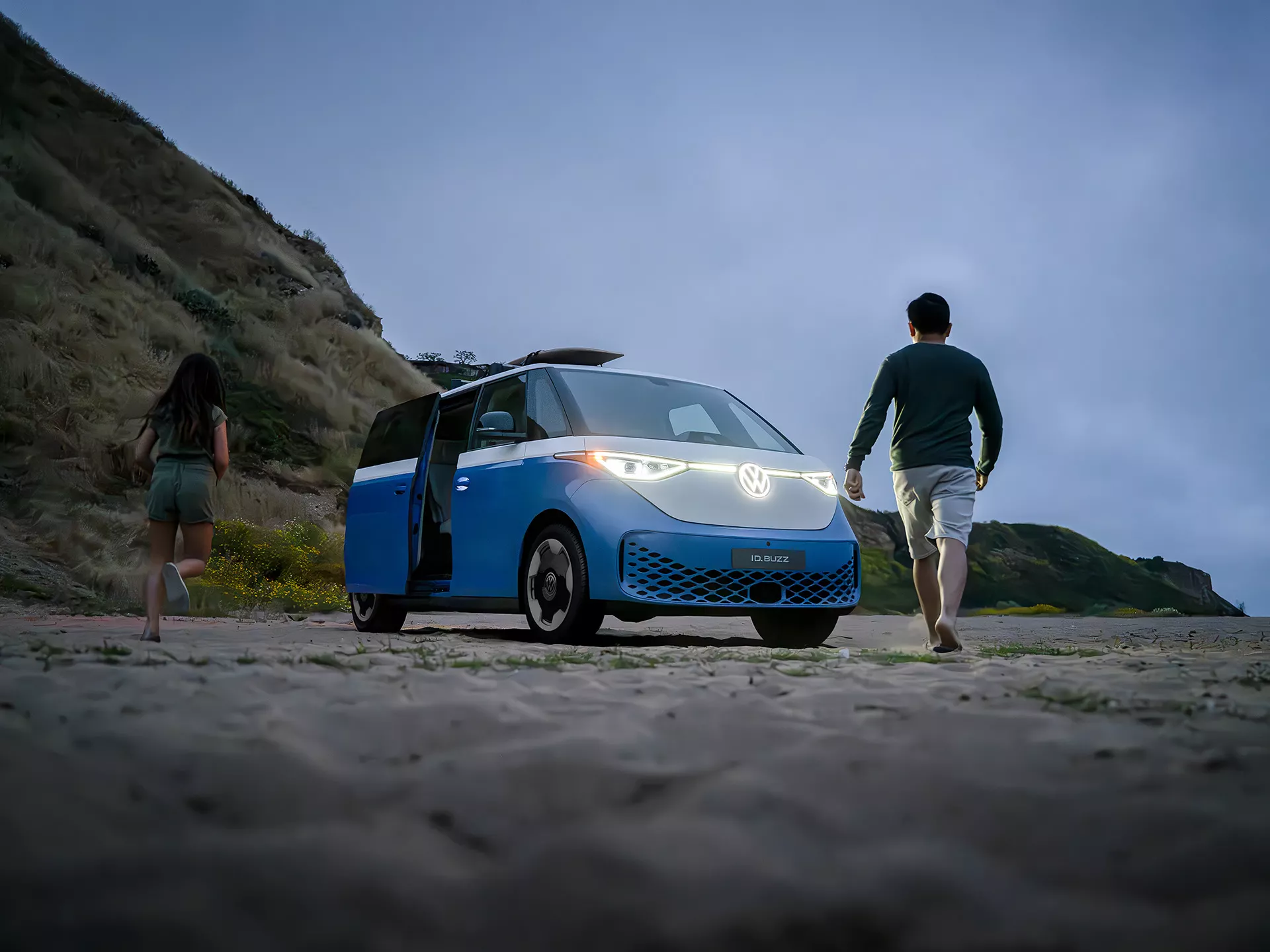
What’s New for 2027? Inside the Refined All-Electric VW Bus
in New VW Cars

2027 Volkswagen ID. Buzz Update: What Changed for Daphne Shoppers

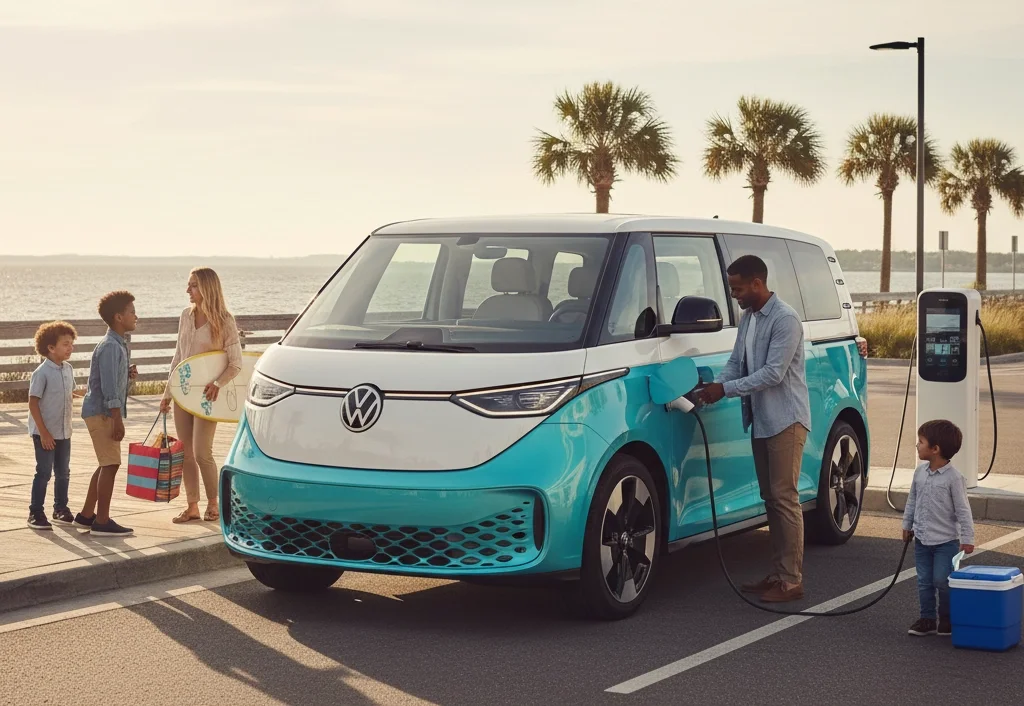
Key 2027 ID. Buzz Updates: Smarter Software, Physical Controls, and NACS Access Volkswagen originally announced the ID. Buzz's U.S. return for model year 2027 after skipping model year 2026. That plan has changed: Volkswagen confirmed in September 2026 that the updated van is now scheduled to arrive in the first half of 2027 as a 2028 model. The previously announced updates included four trims—Pro S RWD, Pro S 4Motion, Tourer 4Motion, and Pro S Plus 4Motion—along with true one-pedal driving and NACS charging compatibility. Contact Volkswagen of Daphne for the final U.S. lineup, local arrival timing, and equipment details for the returning ID. Buzz. This article walks through why the model-year gap happened, what Volkswagen originally announced for the 2027 trims, how the one-pedal driving change affects daily use, and what the current federal tax credit situation actually means for a purchase made now. We also address where official information is still pending, including pricing, so you know exactly what is confirmed and what is not. Volkswagen ID. Buzz Guide: Return Timeline, Trims, Charging & FAQs What Is the Volkswagen ID. Buzz? Why the ID. Buzz Took a Model-Year Hiatus Originally Announced 2027 ID. Buzz Trim Lineup One-Pedal Driving: An Announced Update Based on Owner Feedback Charging and Software Updates Is the ID. Buzz Right for Your Family? The Federal Clean Vehicle Tax Credit: What Current Law Actually Says Key Takeaways FAQ What Is the Volkswagen ID. Buzz? The Volkswagen ID. Buzz is an all-electric van built on Volkswagen's MEB electric vehicle architecture, styled after the brand's classic Microbus but built as a modern family and passenger vehicle. It debuted in the U.S. for model year 2025 in a long-wheelbase, three-row configuration. Volkswagen originally announced an expanded four-trim lineup for model year 2027, but the updated U.S. model is now scheduled to return as a 2028 model during the first half of 2027. Contact Volkswagen of Daphne for current availability and final specifications. Why the ID. Buzz Took a Model-Year Hiatus Volkswagen did not offer a model year 2026 ID. Buzz in the United States. The vehicle sold here for MY2025, and Volkswagen initially planned to bring it back for MY2027. The revised schedule now skips MY2027 as well, with the updated van expected in the first half of calendar year 2027 as a MY2028 vehicle. Contact Volkswagen of Daphne for the latest local arrival information. For shoppers who were on a waitlist or who test drove an early ID. Buzz in 2024 or 2025, this gap likely explains why the model seemed to disappear from new inventory listings for a stretch. It does not mean the vehicle was discontinued. The previously announced update expanded the trim lineup beyond the original launch offering. Final configurations for the returning model should be discussed with Volkswagen of Daphne as Volkswagen releases further details. If you are cross-shopping the ID. Buzz against a gas-powered minivan or a three-row SUV, the practical takeaway is that the updated vehicle is planned for a future arrival. Our team can help you check any remaining current-model availability and discuss the latest timing for the returning ID. Buzz. Originally Announced 2027 ID. Buzz Trim Lineup Volkswagen originally announced four trims for the 2027 ID. Buzz, with two new additions rather than carryovers from the original launch. Pro S RWD was the rear-wheel-drive entry point, and Pro S Plus 4Motion continued as an all-wheel-drive trim. Pro S 4Motion and Tourer 4Motion were the new additions, with the Tourer introducing camping-focused equipment rather than a different body style. These were the announced MY2027 plans; contact Volkswagen of Daphne for the final MY2028 trim structure. "4Motion" is Volkswagen's name for its all-wheel-drive system, which sends power to both the front and rear axles for improved traction. "RWD" means rear-wheel drive, where power goes only to the rear axle. Volkswagen has not released the complete returning U.S. model's specifications for every trim's battery size, output, or range. Contact Volkswagen of Daphne for the latest official specifications as they become available. Trim Drivetrain Originally Announced MY2027 Status Pro S RWD Rear-wheel drive Continuing Pro S 4Motion All-wheel drive New for 2027 Tourer 4Motion All-wheel drive New for 2027 Pro S Plus 4Motion All-wheel drive Continuing If you are deciding between a rear-wheel-drive and an all-wheel-drive ID. Buzz, the practical difference comes down to how power reaches the road. Rear-wheel drive works well for most daily driving on paved roads around Daphne, Fairhope, and Spanish Fort. All-wheel drive adds traction in wet conditions, which matters during the Gulf Coast's heavier rain events, and it typically adds weight and cost in exchange for that traction margin. We recommend discussing your typical driving conditions with our sales team so the drivetrain choice matches how you actually use the vehicle, rather than defaulting to the higher trim because it sounds more capable. One-Pedal Driving: An Announced Update Based on Owner Feedback One of the most significant functional changes announced for the ID. Buzz update is the addition of true one-pedal driving. One-pedal driving lets a driver slow the vehicle and bring it to a complete stop using only the accelerator pedal, through strong regenerative braking, without needing to press the brake pedal in most situations. Many EV drivers rely on this feature because it reduces how often they switch between pedals in stop-and-go traffic, and it recovers energy back into the battery every time the vehicle slows down. The MY2025 ID. Buzz did not offer true one-pedal driving. Its regenerative braking could slow the vehicle, but it could not bring the vehicle to a full stop on its own, meaning drivers still had to finish every stop with the brake pedal. Owners and reviewers flagged this as a notable gap compared to other EVs on the market that already offered full one-pedal capability. True one-pedal driving was announced for the update originally planned for MY2027. Contact Volkswagen of Daphne to confirm its availability and operation on the returning U.S. model. In everyday terms, one-pedal driving can change how a van feels in traffic. When equipped and operating within its limits, lifting off the accelerator allows the vehicle to decelerate toward a stop. Drivers must remain ready to use the brake pedal whenever needed. Drivers who already own another one-pedal-capable EV may find this behavior more familiar than the 2025 version's. Drivers new to one-pedal driving should expect a short adjustment period, since the deceleration feels stronger than a traditional gas vehicle coasting to a stop. This single change addresses one of the most repeated criticisms of the original U.S. ID. Buzz, and it is a meaningful reason for previous waitlist customers to take a fresh look at the announced update rather than assuming it is functionally identical to the vehicle they test drove in 2024 or 2025. Charging and Software Updates Volkswagen announced NACS (North American Charging Standard) adapter compatibility as part of the ID. Buzz update originally planned for MY2027. NACS is the charging connector standard that Tesla originally developed and that has since been adopted across most of the industry in North America. A compatible, approved NACS adapter can provide access to supported public charging stations beyond the CCS-based stations the vehicle has used previously. Contact Volkswagen of Daphne for the returning model's final charging-port configuration, approved adapter requirements, and network compatibility. For a family cross-shopping an ID. Buzz against a gas minivan, this matters most on longer trips, such as a drive toward Pensacola or up toward Mobile and beyond, where charging stop availability affects how practical the vehicle feels on a given route. Volkswagen has not yet published the returning U.S. model's complete battery capacity, EPA-estimated range, and DC fast charging specifications. Contact Volkswagen of Daphne for the full charging information, including supported networks and software features, as Volkswagen releases the final U.S. details. If you already drive a Volkswagen ID.4 or another EV and are considering the ID. Buzz as a second vehicle or a replacement, our team can walk through what is confirmed today about the returning model's charging compatibility and connected software, and what remains to be finalized before launch. You can also start exploring current new Volkswagen inventory at Volkswagen of Daphne's new inventory page to see what is arriving locally. Is the ID. Buzz Right for Your Family? The ID. Buzz occupies a specific spot in the market: it is a dedicated electric van with minivan-like passenger space, styled distinctly from both a traditional minivan and a three-row SUV. Families who already have a home charging setup, or reliable access to public charging along their regular routes, tend to get the most value from an EV like the ID. Buzz, since daily charging replaces regular gas station stops. For Eastern Shore and Gulf Coast households, a few practical questions matter more than styling. How far is your typical daily commute, and does it fit comfortably within a single charge with room to spare? Do you have a place to charge at home, whether that is a garage outlet or a dedicated home charger? Do your longer trips, such as visits to Gulf Shores, Orange Beach, or up toward Mobile, fall within a distance where charging stops are a minor inconvenience rather than a major planning exercise? If your household already drives an EV and understands the charging routine, the announced one-pedal driving and NACS compatibility updates may make the returning model a stronger fit than the original launch version. If you are new to EV ownership and considering the ID. Buzz as your first electric vehicle, we recommend a test drive when the updated model is available so you can feel how one-pedal driving behaves in real traffic, and a conversation with our finance team about how an EV purchase fits your budget compared to a gas-powered alternative. You can also review financing options in advance through our Finance Center. Price is one of the pieces still missing from the returning model's picture. Volkswagen has not announced final U.S. pricing for the updated ID. Buzz. Contact Volkswagen of Daphne for the latest pricing information as it is released. For context only, and not as a prediction of pricing for the returning model, the MY2025 ID. Buzz started at approximately $60,000. Treat that figure strictly as historical background on the prior model, since the returning model's actual pricing has not been published. Area MY2025 Announced Update / Revised U.S. Timing U.S. model-year availability Available MY2026 and MY2027 skipped; MY2028 expected in the first half of 2027 One-pedal driving Not available (regenerative braking did not bring the vehicle to a full stop) True one-pedal driving announced; confirm final equipment with Volkswagen of Daphne Trim lineup Fewer trims at initial U.S. launch Four trims: Pro S RWD, Pro S 4Motion, Tourer 4Motion, Pro S Plus 4Motion Charging CCS-based charging NACS compatibility announced; confirm final charging configuration with Volkswagen of Daphne The Federal Clean Vehicle Tax Credit: What Current Law Actually Says Because an EV purchase decision often factors in a federal tax credit, this is a point where accuracy matters more than optimism. Under current IRS guidance, the federal clean-vehicle tax credit is not available for vehicles acquired after September 30, 2025. This is current law as of this writing, and it applies broadly across eligible EVs, not specifically to the ID. Buzz. This means that an ID. Buzz acquired now would not qualify for the federal clean-vehicle credit under the acquisition-date rule currently in effect. We are not going to write around that fact or suggest a workaround. Tax law can change, and it has changed multiple times in recent years, so the right move is to confirm your specific situation with a qualified tax professional before assuming any credit applies, rather than relying on outdated information from an earlier version of the credit. Acquisition Scenario Current Credit Status Vehicle acquired on or before September 30, 2025 Credit may have applied under prior rules in effect at that time (verify with a tax professional) Vehicle acquired after September 30, 2025 Federal clean-vehicle credit is not currently available under IRS guidance Tax law can change, and eligibility depends on your specific circumstances. Confirm current federal and any applicable state or local EV incentive eligibility with a qualified tax advisor before making a purchase decision based on expected tax savings. Volkswagen of Daphne can share current published program information, but we are not a substitute for tax advice. Key Takeaways The updated U.S. ID. Buzz is now scheduled to return in the first half of 2027 as a 2028 model, replacing the earlier MY2027 plan. The earlier MY2027 announcement listed Pro S RWD, Pro S 4Motion, Tourer 4Motion, and Pro S Plus 4Motion. Contact Volkswagen of Daphne for the final returning lineup. True one-pedal driving was announced for the update, addressing a gap owners and reviewers noted in the MY2025 model. NACS charging compatibility was announced; contact Volkswagen of Daphne for final adapter, connector, and network details. Under current IRS guidance, the federal clean-vehicle tax credit is not available for vehicles acquired after September 30, 2025, so buyers should not assume a credit applies to a new ID. Buzz purchase. Final pricing, EPA range, battery capacity, and charging speed for the returning U.S. model remain pending. Contact Volkswagen of Daphne for the full information as it becomes available. FAQ Why didn't Volkswagen sell an ID. Buzz for 2026? Volkswagen did not offer a model year 2026 ID. Buzz in the United States. The vehicle was sold for MY2025, and Volkswagen initially announced a MY2027 return. That plan was subsequently delayed: the updated U.S. van is now expected during the first half of 2027 as a MY2028 model. Contact Volkswagen of Daphne for the latest availability information. What is one-pedal driving and why does it matter? One-pedal driving lets a driver bring the vehicle to a complete stop using only the accelerator pedal, through regenerative braking, without pressing the brake pedal. The MY2025 ID. Buzz could not fully stop this way, which owners and reviewers noted as a shortcoming. True one-pedal driving was announced for the update originally planned for MY2027. Contact Volkswagen of Daphne for its final availability and operation on the returning U.S. model. Drivers must remain ready to use the brake pedal. Is there still a federal tax credit for the ID. Buzz? Under current IRS guidance, the federal clean-vehicle tax credit is not available for vehicles acquired after September 30, 2025. An ID. Buzz acquired now would fall under that current rule. Tax law can change, so confirm your specific eligibility with a qualified tax professional rather than relying on assumptions about past versions of the credit. What happened to the announced 2027 ID. Buzz trims? Volkswagen originally announced Pro S RWD, Pro S 4Motion, Tourer 4Motion, and Pro S Plus 4Motion. The U.S. return has since moved to model year 2028. Contact Volkswagen of Daphne for the final trim lineup, specifications, range, and pricing as Volkswagen releases them. Volkswagen originally announced a wider trim lineup, true one-pedal driving, and NACS compatibility for the 2027 ID. Buzz. The U.S. return is now scheduled for the first half of 2027 as a 2028 model. Contact Volkswagen of Daphne for the final U.S. specifications and local arrival timing. Pricing, exact range, and battery details are still pending official release, and the federal clean-vehicle tax credit does not currently apply to vehicles acquired after September 30, 2025. If you were on the original ID. Buzz waitlist or are cross-shopping it against a minivan or three-row SUV, the clearest next step is a direct conversation with our team about current availability and timing. Visit Volkswagen of Daphne at 29816 Frederick Blvd, Daphne, AL 36526, or call our sales team at 251-374-0664 to ask about the returning ID. Buzz as details become available. See Why Volkswagen of Daphne for more on how our team works with EV shoppers. We're glad to answer questions and keep you updated as Volkswagen releases further information about the returning ID. Buzz. Explore Your Volkswagen ID. Buzz Options in Daphne View New Volkswagen Vehicles Explore Financing Call 251-374-0664 Related Volkswagen Insights & Updates How to Choose Between the 2026 Volkswagen Tiguan Trims in Daphne, AL Read More 2026 Volkswagen Tiguan in Daphne AL: Complete Guide Read More Which 2026 Volkswagen SUV Is Right for You in Daphne? Read More Best 2026 Volkswagen SUVs for Summer Adventures Near Daphne Read More
Read More
2027 Volkswagen Atlas Cross Sport First Look: What Changed for Daphne Drivers

2027 Volkswagen Atlas Cross Sport First Look: What Changed for Daphne Drivers

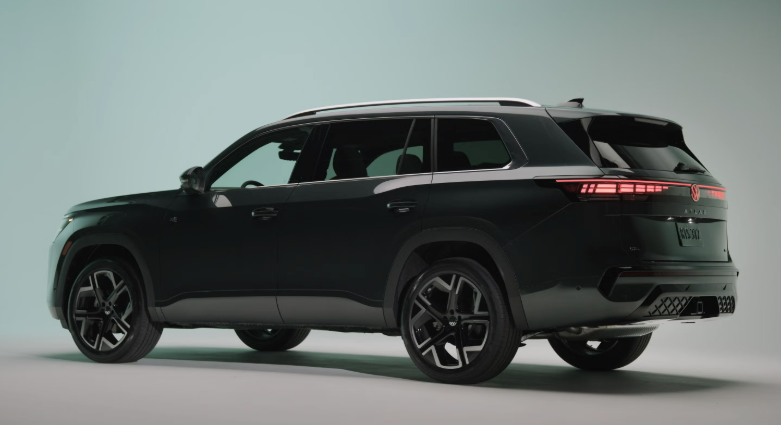
More Power, Smarter Tech: Key Changes in the 2027 VW Atlas Cross Sport Volkswagen of Daphne is taking an early look at the redesigned 2027 Volkswagen Atlas Cross Sport, and the short version is simple: Volkswagen revealed an all-new second-generation model on August 10, 2026, with new sheet metal, a reworked cabin, and updated IQ.DRIVE and infotainment technology. This is not a refresh of the outgoing Atlas Cross Sport. It is a ground-up replacement that shares its new-generation architecture with the redesigned 2027 Atlas, while keeping the two-row layout that has always separated the Cross Sport from its three-row sibling. For shoppers across Fairhope, Spanish Fort, and the rest of the Eastern Shore who liked the idea of Atlas styling and presence but never needed a third row, this reveal matters. It confirms Volkswagen is continuing to build a two-row version of the Atlas rather than folding that body style into the standard lineup. It also means a lot of the visual and technological direction set for the redesigned three-row Atlas is carrying over to the Cross Sport, even though several of the specific numbers buyers care most about (pricing, trim names, EPA fuel economy, and towing capacity) have not been published yet. Volkswagen has now confirmed a 282-horsepower turbocharged engine, an 8-speed automatic transmission, and FWD or 4MOTION AWD configurations for the 2027 Atlas Cross Sport. Contact Volkswagen of Daphne for the full information as additional specifications become available. We put this first look together to help drivers in Daphne, Mobile, and the surrounding Gulf Coast understand what Volkswagen has confirmed so far, what is still coming, and how the two-row Cross Sport compares with the three-row Atlas as a decision, not just a spec sheet. Our team can walk through current new inventory with you in person, and we can confirm Atlas Cross Sport trims and pricing directly with you once Volkswagen finalizes them. 2027 Volkswagen Atlas Cross Sport Guide: Redesign, Features & FAQs What Is the 2027 Volkswagen Atlas Cross Sport? An All-New Generation for the Atlas Cross Sport How the 2027 Atlas Cross Sport Differs From the 2026 Model Atlas Cross Sport vs. Atlas: Choosing Between Two Rows and Three Staying Current as 2027 Atlas Cross Sport Details Are Confirmed Key Takeaways Frequently Asked Questions What Is the 2027 Volkswagen Atlas Cross Sport? The 2027 Volkswagen Atlas Cross Sport is an all-new, second-generation two-row midsize SUV that Volkswagen officially revealed on August 10, 2026. It is built on a new-generation architecture shared with the redesigned 2027 Atlas, with a redesigned exterior, a reworked cabin, and updated IQ.DRIVE driver-assistance and infotainment technology. Volkswagen has confirmed 282 horsepower for the Atlas Cross Sport. Atlas Cross Sport-specific trims, pricing, EPA figures, and towing capacity have not yet been published; contact Volkswagen of Daphne for the latest information. An All-New Generation for the Atlas Cross Sport Calling the 2027 Atlas Cross Sport a redesign undersells what Volkswagen actually did. The August 10, 2026 reveal introduced a second-generation vehicle, and that distinction matters because it means the changes go well beyond a new grille or updated taillights. Volkswagen built this generation on a new-generation architecture, the same underlying platform family used for the redesigned 2027 Atlas, and that foundation touches nearly everything about how the vehicle looks, rides, and communicates with the driver. Starting with the exterior, Volkswagen gave the Cross Sport new sheet metal from front to back. The outgoing Cross Sport was already a distinct vehicle from the three-row Atlas, with its own roofline and rear-end treatment, and the new generation continues that separation with its own redesigned body panels rather than a shared shell with different badges. For Daphne-area shoppers cross-shopping two-row SUVs, that distinct identity is part of the appeal. Buyers who want a vehicle with Atlas-family styling and road presence, without the added length and visual bulk of a three-row model, get a vehicle designed specifically around that two-row proportion. Inside, Volkswagen redesigned the cabin alongside the exterior. A new-generation architecture typically brings a new dashboard layout, new seating structure, and new materials package, since the interior has to be engineered around the new platform's dimensions and electrical architecture rather than retrofitted onto the old one. While Volkswagen has not detailed every interior specification for the Cross Sport specifically, the automaker has described the redesigned cabin as part of the same second-generation update that applies to the three-row Atlas, which points toward a more contemporary layout, updated displays, and revised control surfaces compared with the outgoing model. Technology is where the new generation shows up most clearly for everyday driving. Volkswagen has confirmed updated IQ.DRIVE driver-assistance technology as part of this redesign. IQ.DRIVE is Volkswagen's umbrella name for its suite of driver-assistance features, and an update to that suite on a new-generation vehicle usually means refined sensor hardware, updated software calibration, and adjustments to how features like adaptive cruise control, lane-centering assistance, and forward collision warning behave in real-world traffic. Volkswagen has also confirmed updated infotainment technology, which generally means a new software platform, revised menu structure, and updated connectivity features compared with the outgoing Cross Sport's system. Volkswagen now lists an available 15-inch display with Premium Speech and an AI Voice Assistant. Contact Volkswagen of Daphne for the full IQ.DRIVE feature list and trim-specific infotainment equipment, since content can vary by trim. Why does any of this matter beyond the showroom floor? A new-generation architecture is not simply a styling exercise. It typically changes the vehicle's structural stiffness, sensor placement, and the electrical backbone that features like adaptive safety systems and touchscreen infotainment run on. When a manufacturer says a vehicle sits on new-generation architecture, that is usually the signal that ride characteristics, safety system responsiveness, and the ceiling for future software updates have all shifted together, not just the exterior panels. That is a meaningful distinction for anyone deciding whether to wait for the redesigned Cross Sport or move on a current-generation model now. What's New on the 2027 Atlas Cross Sport What Changed Design All-new second-generation sheet metal and exterior proportions, distinct from the three-row Atlas Cabin Redesigned interior layout and materials as part of the new-generation platform update Technology / IQ.DRIVE Updated IQ.DRIVE driver-assistance technology and updated infotainment system How the 2027 Atlas Cross Sport Differs From the 2026 Model The most important architectural fact Volkswagen has confirmed is that the 2027 Atlas Cross Sport moves to a new-generation platform family, the same one underpinning the redesigned 2027 Atlas. That is a different starting point than the outgoing Cross Sport, which was built on the platform that had carried the nameplate since its introduction. A platform change of this scope generally affects dimensions, structural engineering, and how new technology gets integrated, which is part of why Volkswagen is treating this as a second generation rather than a mid-cycle update. At the same time, it is worth being direct about what Volkswagen has not said yet. As of this writing, Volkswagen has not published specific trim names for the 2027 Atlas Cross Sport, has not announced pricing, has not released EPA fuel economy figures for this model, has confirmed a 282-horsepower turbocharged engine for the Cross Sport, and has not confirmed towing capacity. The 282-horsepower output matches the figure Volkswagen has already confirmed for the redesigned three-row Atlas. However, sharing a platform does not automatically mean identical powertrain tuning, weight distribution, or towing ratings between a two-row and three-row vehicle. The three-row Atlas has a 5,000-pound towing capacity; contact Volkswagen of Daphne for official towing information specific to the 2027 Atlas Cross Sport. This is a case where patience serves buyers better than assumption. Automakers frequently reveal a new generation's design and technology direction well ahead of finalizing trim structure and pricing, especially when a related model (in this case, the three-row Atlas) has already gone through its own reveal cycle. Our team would rather tell Daphne-area shoppers plainly that pricing and trims are still pending than guess at numbers that could change before the vehicle reaches dealerships. When Volkswagen finalizes that information, we will update our Atlas Cross Sport resources and can walk you through the details directly, whether that is in person at our Frederick Boulevard showroom or over the phone. The table below summarizes where things stand as of this first look, separating what Volkswagen has made official from what remains to be announced. Item Status Design (exterior sheet metal) Confirmed Platform / new-generation architecture Confirmed IQ.DRIVE and infotainment technology update Confirmed Trim names Not yet announced Pricing Not yet announced EPA fuel economy figures Not yet announced Engine output specific to the Cross Sport Confirmed: 282 horsepower Towing capacity Not yet announced Atlas Cross Sport vs. Atlas: Choosing Between Two Rows and Three Once Volkswagen confirmed both the redesigned three-row Atlas and the redesigned two-row Atlas Cross Sport share the same new-generation architecture, the decision between them stops being about which one is "newer" and becomes a question of which layout actually fits your household. That is a more useful way to think about it than comparing trim levels or price points that have not been announced yet. Seating is the clearest starting point. The Atlas seats up to seven across three rows, which matters for families who regularly need a third row for kids, carpools, grandparents, or extended trips. The Atlas Cross Sport drops that third row entirely, which is not a downgrade so much as a different design goal: more cargo flexibility behind the second row, a more coupe-like roofline, and a vehicle sized for households that do not need to seat seven on a regular basis but still want Atlas-level interior space for two rows of passengers. Typical shoppers tend to split along similar lines. Families who carpool regularly, who take road trips with extended family, or who simply want the option of a third row for occasional use gravitate toward the standard Atlas. Buyers who want SUV styling, ground clearance, and Atlas-family road presence without ever using a third row, including empty nesters, couples, and smaller households, tend to be the ones cross-shopping the Cross Sport against other two-row midsize SUVs. Neither vehicle is the "right" answer in isolation. The right answer depends on how many people actually ride in the vehicle on a normal week, not just on an occasional trip. Footprint is the other practical factor. Because the Cross Sport is built specifically around a two-row layout rather than a shortened three-row body, it typically offers a different balance of cargo space behind the rear seats compared with a three-row Atlas in its third-row-up configuration. For drivers navigating tighter parking around downtown Fairhope or Spanish Fort, or those who prioritize maneuverability alongside interior room, that proportion is worth cross-shopping with the standard Atlas in person rather than judging from spec sheets alone, especially while several Cross Sport-specific figures are still pending. Atlas Cross Sport vs. Atlas: Two Rows or Three? Atlas Cross Sport Atlas Seating Two rows Up to three rows, seats up to seven Typical shopper Buyers who want Atlas styling without a third row Families who need occasional or regular third-row seating Third-row need Not applicable, no third row offered Available for carpools, extended family, or regular group travel Footprint Proportioned around a two-row layout for cargo and maneuverability Longer overall footprint to accommodate a third row If you are weighing these two vehicles for a household in Daphne, Fairhope, or Spanish Fort, our team can sit down with you, talk through how you actually use a vehicle week to week, and compare the two-row and three-row layouts side by side once both are in our showroom. We can also walk through finance options and a trade-in appraisal for your current vehicle while you are deciding, so you have real numbers in hand rather than estimates. Reach our sales team at 251-374-0664 with questions about either vehicle as more details become available. Staying Current as 2027 Atlas Cross Sport Details Are Confirmed Volkswagen typically finalizes trim structure, pricing, and EPA figures closer to a vehicle's on-sale date, and the Atlas Cross Sport is following that same pattern after its August 10, 2026 design reveal. That sequence is normal for a new generation. The design, architecture, and headline technology features tend to come first, while the configuration-specific details that determine a monthly payment or a window sticker come later, once production planning and regulatory testing are farther along. We are tracking Volkswagen's official announcements for the Atlas Cross Sport the same way we tracked them for the redesigned three-row Atlas, which we covered in our 2027 Atlas First Look. Volkswagen has now confirmed the Cross Sport's 282-horsepower engine. As Volkswagen publishes trim names, pricing, EPA fuel economy ratings, and towing capacity specific to the Cross Sport, we will update our coverage with official information. Contact Volkswagen of Daphne for the latest details. If you want to be among the first to know when those details post, our team can add you to our list for Atlas Cross Sport updates, or you can check back with us directly. We would rather confirm a number once it is official than publish a figure that changes before the vehicle arrives. In the meantime, current inventory, including the outgoing generation where available, remains a real option for shoppers who need a vehicle now rather than waiting for a redesign to reach dealerships. Our team can check what is currently available and help you decide whether waiting for the new generation makes sense for your timeline. Key Takeaways Volkswagen officially revealed the all-new, second-generation 2027 Atlas Cross Sport on August 10, 2026. The Cross Sport keeps its two-row layout, staying distinct from the three-row Atlas that seats up to seven. The redesign shares new-generation architecture with the 2027 Atlas, bringing new sheet metal, a reworked cabin, and updated IQ.DRIVE and infotainment technology. Volkswagen has confirmed a 282-horsepower turbocharged engine for the Atlas Cross Sport; trims, pricing, EPA figures, and towing capacity remain to be announced. Contact Volkswagen of Daphne for the latest details. The Cross Sport's confirmed horsepower matches the three-row Atlas, but the Atlas's 5,000-pound towing capacity should not be assumed to apply directly to the Cross Sport. Contact Volkswagen of Daphne for model-specific towing information. Choosing between the Atlas Cross Sport and the Atlas comes down to whether your household regularly needs a third row, not just which model is newer. Frequently Asked Questions Is the 2027 Atlas Cross Sport bigger than the outgoing model? Volkswagen has not published detailed exterior dimensions for the new Cross Sport yet. What Volkswagen has confirmed is new sheet metal and a new-generation architecture shared with the redesigned Atlas. Contact Volkswagen of Daphne for the latest size specifications as Volkswagen releases them. Does the Atlas Cross Sport still have two rows? Yes. The 2027 Atlas Cross Sport continues as a two-row SUV, distinct from the three-row Atlas that seats up to seven. That two-row identity has not changed with this redesign. When will pricing be announced for the 2027 Atlas Cross Sport? Volkswagen has not announced pricing as of this first look. Automakers typically finalize pricing closer to a vehicle's on-sale date, and our team can confirm current pricing directly with you once Volkswagen publishes it. How is the Atlas Cross Sport different from the three-row Atlas? The main difference is seating and footprint. The Atlas Cross Sport offers two rows and a body designed around that layout, while the Atlas offers up to three rows and seats up to seven. Both vehicles share the same new-generation architecture and reveal-era design direction, and Volkswagen now confirms 282 horsepower for both. Atlas Cross Sport-specific towing capacity has not yet been published; contact Volkswagen of Daphne for the latest information. The 2027 Volkswagen Atlas Cross Sport enters its second generation with new sheet metal, a redesigned cabin, and updated IQ.DRIVE and infotainment technology, built on the same new-generation architecture as the redesigned Atlas. What has not arrived yet are the specifics that usually finalize a buying decision: trim names, pricing, EPA figures, and towing capacity. Volkswagen has confirmed a 282-horsepower turbocharged engine for the Atlas Cross Sport. Contact Volkswagen of Daphne for the full information as the remaining specifications are announced. We are watching for those announcements and will update our coverage as soon as Volkswagen confirms them. If you are deciding between a two-row and three-row Volkswagen SUV, or simply want to know when Atlas Cross Sport details become official, our team at Volkswagen of Daphne can help you sort through it. Call our sales team at 251-374-0664, visit us at 29816 Frederick Blvd in Daphne, AL, or ask us to confirm the latest Atlas Cross Sport information the next time you stop by. We will keep you posted as Volkswagen finalizes the rest of this redesign. Explore Your Volkswagen Atlas Cross Sport Options in Daphne View New Volkswagen Vehicles Explore Financing Call 251-374-0664 Related Volkswagen Insights & Updates How to Choose Between the 2026 Volkswagen Tiguan Trims in Daphne, AL Read More 2026 Volkswagen Tiguan in Daphne AL: Complete Guide Read More Which 2026 Volkswagen SUV Is Right for You in Daphne? Read More Best 2026 Volkswagen SUVs for Summer Adventures Near Daphne Read More
2027 volkswagen atlas

2027 Volkswagen Atlas First Look: What's New for Daphne Families

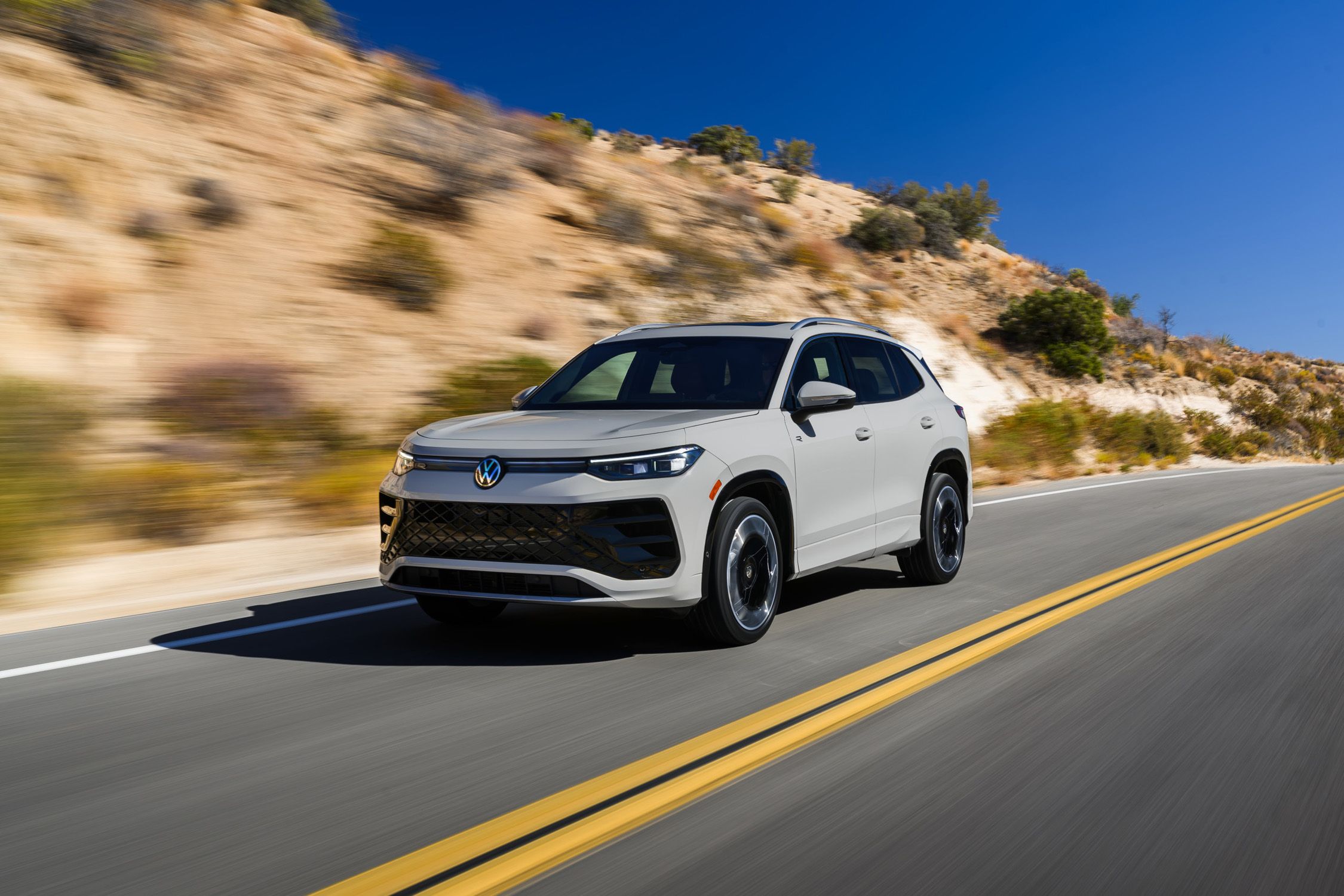
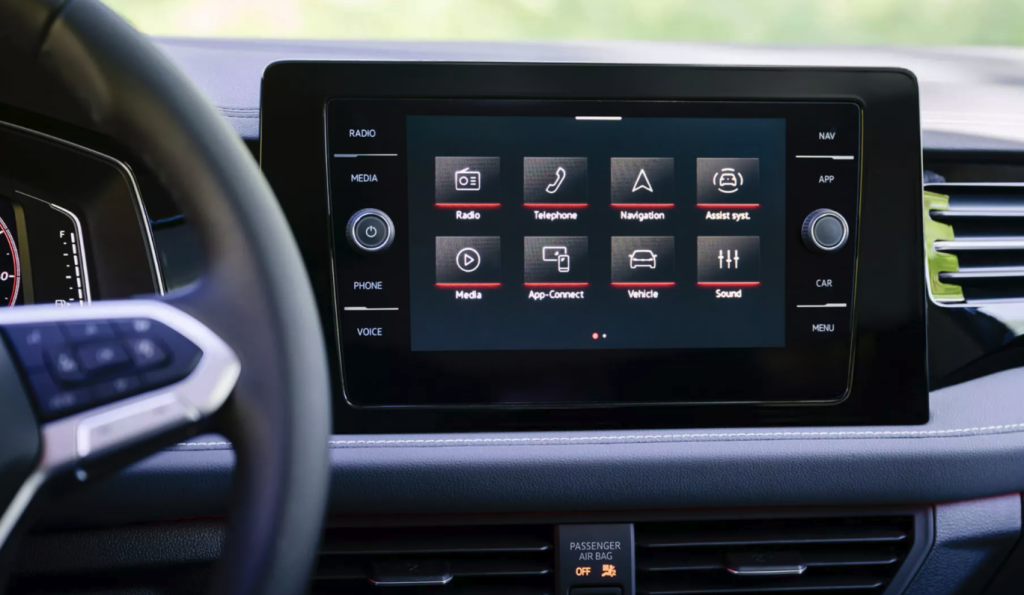
3-Row Comfort and Upgraded Safety: Built for the Baldwin County Family Routine Volkswagen has revealed the all-new, second-generation 2027 Atlas, and the redesign changes nearly every part of the three-row SUV that families across the Eastern Shore have relied on for road trips, school runs, and weekend drives to the beach. The 2027 Atlas gets reshaped exterior styling with new lighting, updated interior materials and colors, a larger standard infotainment display, and a more powerful version of Volkswagen's turbocharged four-cylinder engine, now rated at 282 horsepower, up from 269 horsepower on the outgoing generation. Towing capacity holds at 5,000 pounds, and the SUV still seats up to seven passengers across three rows. Volkswagen of Daphne is passing along what Volkswagen has confirmed so far, ahead of the model's fall 2026 launch. This first look covers what changed on the 2027 Atlas, why those changes matter to how the SUV actually drives and lives day to day, and what current 2026 Atlas owners in Daphne, Fairhope, Spanish Fort, and the rest of Baldwin County should weigh before deciding whether to wait for the redesign. Volkswagen now lists a starting MSRP of $41,610 and EPA estimates of 22 mpg city and 29 mpg highway for the front-wheel-drive Atlas. MSRP excludes destination, taxes, title, options, and dealer charges; actual mileage will vary. Our team can walk you through how the published figures apply to your family's budget and driving habits. The 2027 Volkswagen Atlas is the second-generation version of Volkswagen's three-row midsize SUV, revealed at the New York International Auto Show. It brings a redesigned exterior, updated interior materials and color choices, and a reworked technology layout, along with a more powerful version of Volkswagen's turbocharged four-cylinder engine. The 2027 Atlas is scheduled to launch in fall 2026, and Volkswagen now lists SE, SE with Technology, SEL R-Line, and SEL Premium R-Line trims. Contact Volkswagen of Daphne for local availability and configuration-specific pricing and fuel economy. 2027 Volkswagen Atlas Guide: Design, Specs, Technology & FAQs What Makes the 2027 Atlas an All-New Generation Engine, Drivetrain, and Towing Technology and Family-Focused Features What This Means If You Currently Drive a 2026 Atlas Where to Learn More About the 2027 Atlas Near Daphne Key Takeaways FAQ What Makes the 2027 Atlas an All-New Generation Calling the 2027 Atlas a refresh undersells what Volkswagen actually did. This is a second generation, which means the body panels, lighting, interior architecture, and much of the vehicle's underlying design language have been reworked rather than touched up with a new grille and a few trim badges. For shoppers comparing the outgoing Atlas to the new one, that distinction matters because it signals a broader set of changes across the whole vehicle rather than a single cosmetic update. The exterior takes on a more sculpted, sleeker shape than the outgoing model. Volkswagen has given the 2027 Atlas double-stacked LED headlights, a layout that separates the primary beam from the daytime running and signal elements instead of stacking every function into one housing. Animated LED turn signals sweep across the lighting element rather than simply blinking on and off, and illuminated door handles light up as a driver approaches. None of these are performance features, but they change how the Atlas reads at night and in a parking lot full of similar-sized SUVs, which is part of how a family distinguishes their vehicle from the one parked next to it. Three new exterior colors join the lineup: Sacramento Green, Sandstone, and Blackberry, giving shoppers who found the prior color sheet limited some new options to consider once local inventory and ordering details are available. Inside, Volkswagen has moved toward wave-like design patterns across the dash and door panels, a departure from the flatter, more horizontal layout of the current Atlas. Real wood trim and wood-grain textures appear across the cabin, offered across three interior color palettes rather than a single standard scheme. These are the kinds of changes a family notices the first time they sit in the vehicle rather than on a spec sheet: the way light reflects off a wood accent, the texture under a hand resting on the door panel, or how a lighter palette makes the third row feel less closed in on a long drive down I-10. Overall exterior dimensions grow only slightly, with the new Atlas running approximately one inch longer than the outgoing model while keeping the same width, wheelbase, and height, so the redesign is about materials and layout rather than a larger footprint that would change how the SUV fits in a garage or a standard parking space. Feature Category What Changed Exterior Sculpted, sleeker body design; double-stacked LED headlights; animated LED turn signals; illuminated door handles; three new colors (Sacramento Green, Sandstone, Blackberry) Interior Wave-like design patterns on dash and doors; real wood trim and textures; three interior color palettes Technology Infotainment screen grows to 15 inches on most trims (12.9 inches on the base trim); new driver experience dial for volume, ambient lighting, and drive mode Powertrain Turbocharged 2.0-liter EA888 evo5 engine now rated at 282 horsepower, up from 269 horsepower; FWD standard, 4MOTION AWD available; towing capacity unchanged at 5,000 pounds Engine, Drivetrain, and Towing Volkswagen carries the Atlas forward with a turbocharged 2.0-liter EA888 evo5 four-cylinder engine, but the output has increased to 282 horsepower, up from 269 horsepower on the outgoing generation. In practical terms, that bump shows up most in merging onto I-10 with a full load of passengers and cargo, or pulling away from a stop at a busy intersection on US-98 without the engine feeling like it is working as hard to get a nearly 4,500-pound SUV moving. A modest horsepower increase on the same basic engine architecture is not a dramatic transformation in how the Atlas drives, but it does give the redesigned SUV more margin when it is carrying the weight that three rows of passengers and a cargo area full of luggage typically add. Front-wheel drive remains the standard configuration, with Volkswagen's 4MOTION all-wheel-drive system available for shoppers who want it. That structure matches how the outgoing Atlas is sold and gives buyers the same basic choice they have had before: a FWD Atlas for drivers who mostly stick to paved roads and want a simpler, typically more efficient drivetrain, or a 4MOTION Atlas for drivers who want additional traction support in wet weather, on a boat ramp, or hauling a trailer up a graded driveway. Towing capacity stays at 5,000 pounds, unchanged from the current generation. That figure is useful for comparing the Atlas to other three-row SUVs in its class, but actual towing capability for any specific trailer depends on the exact trim, drivetrain, and how the vehicle is loaded and equipped, so our team can confirm the towing setup that applies to the specific configuration you are considering. We are not in a position to say a given trailer or boat is suitable for towing without reviewing the exact vehicle and load. Dimensionally, the 2027 Atlas stays close to the vehicle it replaces. It runs about one inch longer overall, with the same width, wheelbase, and height carried over from the outgoing generation. That consistency matters for two-row families used to loading kids into the second row or parents folding the third row flat for a Costco run to Mobile: the cargo area and interior proportions a current owner already knows will translate to the redesigned model rather than requiring them to relearn how their SUV handles a driveway, a parking garage, or a home garage door. Technology and Family-Focused Features The most immediately noticeable change inside the 2027 Atlas is the size of the infotainment screen. Volkswagen has grown the display to 15 inches on most trims, with a 12.9-inch screen offered on the base trim. A larger screen is not just a bigger rectangle in the dash: it means larger, easier-to-read touch targets for climate and navigation controls, more screen space to split between a map and audio source at the same time, and generally less squinting or reaching to adjust a setting while merging onto the Bayway. For a family vehicle that spends a lot of time carrying kids and running errands, a screen that is easier to operate at a glance is a genuine usability improvement rather than a cosmetic one. Alongside the larger screen, Volkswagen has added a new driver experience dial, a physical control similar in concept to the rotary dial already used on the current Tiguan. Rather than digging through a touchscreen menu to adjust volume, change the ambient lighting color, or switch drive modes, a driver twists or presses the dial directly. That matters because touchscreen-only controls for basic functions like volume have been a common complaint across the industry, and a dedicated physical dial gives Atlas drivers a way to make quick adjustments without taking their eyes off the road for as long. It is a small piece of hardware, but it addresses a real, everyday frustration rather than adding a feature for its own sake. Beyond the cabin's screen and controls, several family-focused features are new or updated on the redesigned Atlas. A power liftgate makes loading groceries, strollers, or beach gear easier when a parent's hands are already full. Front and rear park distance control adds sensor-based alerts when maneuvering in tight parking lots or backing out of a driveway with limited visibility. Rear sunshades help keep direct Gulf Coast sun off child car seats and rear-seat passengers during the region's long, bright summer. New B-pillar air vents extend climate control to second-row passengers more directly, which matters on days when Baldwin County humidity makes the cabin feel warm even with the front vents running at full blast. A center-seat airbag adds another layer of protection for occupants seated next to each other in the front and outboard second-row positions. None of these features replace attentive driving or proper child-seat installation, and how any driver-assistance or safety feature performs depends on road conditions, vehicle speed, and how the system is used, so they should be understood as additional layers of convenience and protection rather than guarantees of a particular outcome. Feature Why It Matters for Families Power liftgate Opens and closes hands-free, useful when carrying kids, strollers, or beach and sports gear Front and rear park distance control Adds sensor alerts for tight parking lots, driveways, and reduced-visibility backing situations Rear sunshades Helps block direct sun on rear-seat passengers and child car seats during hot Gulf Coast days New B-pillar air vents Extends climate control more directly to second-row passengers Center-seat airbag Adds an additional layer of protection for front and outboard second-row occupants What This Means If You Currently Drive a 2026 Atlas If you already own a 2026 Atlas, the redesign does not make your current SUV obsolete. The dimensions, seating capacity, and towing rating carry over closely enough that your Atlas will continue to do the same job it does today: hauling three rows of passengers, folding flat for cargo, and handling the daily mix of school runs, errands, and Eastern Shore road trips it was bought for. The changes that define the 2027 model, the exterior redesign, the interior materials, the larger screen, the driver experience dial, and the horsepower increase, are meaningful, but they are improvements layered onto a formula that has not fundamentally changed rather than a reason to think your current Atlas has fallen behind. The decision of whether to wait for the 2027 model comes down to which of those changes actually matter to your household and how much uncertainty you are comfortable carrying. Shoppers who want the updated interior materials, the larger infotainment screen, or the additional horsepower have a clear reason to wait. Shoppers who mainly want a capable, currently available three-row SUV, and who would rather avoid waiting for a specific 2027 configuration to become available locally, may be better served by what is available now. Volkswagen has now published pricing, fuel economy information, and trim names; Volkswagen of Daphne can help you compare those details with current inventory. Item Status Engine output (282 hp) Confirmed Towing capacity (5,000 lbs) Confirmed Seating capacity (up to 7) Confirmed Overall dimensions (approx. 1 inch longer, same width/wheelbase/height) Confirmed Exterior colors (Sacramento Green, Sandstone, Blackberry) Confirmed Launch timing (fall 2026) Confirmed Pricing Starting MSRP of $41,610 before destination, taxes, title, options, and dealer charges EPA fuel economy figures 22 mpg city / 29 mpg highway for FWD; actual mileage varies Trim lineup SE, SE with Technology, SEL R-Line, SEL Premium R-Line Hybrid Atlas variant and timing Contact Volkswagen of Daphne for the latest official information Volkswagen's published pricing, EPA figures, and trim lineup now provide a starting point for comparing the 2027 Atlas with a current 2026 model. The right comparison still depends on the exact drivetrain, equipment, and local availability. If you are weighing a trade-in now versus waiting, our team can walk through your current Atlas's trade-in value and how it may apply toward either a current model or a 2027 purchase, using our trade appraisal tool as a starting point. We can also talk through financing timelines through our finance center so you have a realistic picture of what your options would mean for your household, without promising a specific payment or approval outcome before reviewing your details. Where to Learn More About the 2027 Atlas Near Daphne Volkswagen of Daphne is tracking official updates on the 2027 Atlas as Volkswagen releases them. Volkswagen now publishes pricing and fuel economy information, and its configurator lists SE, SE with Technology, SEL R-Line, and SEL Premium R-Line trims. Contact our team for the full information on your preferred configuration, current ordering details, and local arrival timing. We can also show you what is currently available in our new Volkswagen inventory if a three-row SUV is a near-term need rather than something that can wait for a specific configuration. If you are still deciding between waiting for the 2027 Atlas or moving forward with a current model, our team can walk through the tradeoffs with you directly rather than leaving you to guess based on a spec sheet. You can find more about how we work with Eastern Shore and Mobile Bay families on our Why Volkswagen of Daphne page, and our sales team is available at 251-374-0664 to answer specific questions as new information becomes available. Key Takeaways The 2027 Volkswagen Atlas is an all-new second generation with a redesigned exterior, updated interior materials, and new technology. The turbocharged 2.0-liter EA888 evo5 engine is now rated at 282 horsepower, up from 269 horsepower on the outgoing Atlas. Towing capacity remains 5,000 pounds, and the Atlas continues to offer seating for up to seven passengers across three rows. The infotainment screen grows to 15 inches on most trims (12.9 inches on the base trim), and a new driver experience dial controls volume, ambient lighting, and drive mode. New family-focused features include a power liftgate, front and rear park distance control, rear sunshades, B-pillar air vents, and a center-seat airbag. Volkswagen now publishes starting pricing, fuel economy information, and four trim names; contact Volkswagen of Daphne for configuration-specific details and local availability. FAQ Is the 2027 Atlas bigger than the 2026 model? Only slightly. Volkswagen has confirmed the 2027 Atlas is about one inch longer overall than the outgoing generation, while width, wheelbase, and height stay the same. The change is unlikely to affect how the vehicle fits in a typical garage or parking space compared to the current Atlas. How much horsepower does the 2027 Atlas have? The 2027 Atlas uses a turbocharged 2.0-liter EA888 evo5 four-cylinder engine rated at 282 horsepower, an increase from 269 horsepower on the outgoing generation. Front-wheel drive is standard, and 4MOTION all-wheel drive is available. When can I order a 2027 Atlas at Volkswagen of Daphne? Volkswagen has stated the 2027 Atlas launches in fall 2026 and now publishes pricing and trim information. Contact Volkswagen of Daphne to confirm current ordering timelines, local arrivals, and availability for your preferred configuration. Will there be a hybrid Atlas? Volkswagen's current U.S. Atlas configurator lists gasoline-powered models. Contact Volkswagen of Daphne for the latest official information about a future hybrid Atlas and any announced U.S. launch timing. The 2027 Volkswagen Atlas brings real changes worth understanding before you decide what to do next, whether that means waiting for the redesign, trading in a current 2026 Atlas, or moving forward with a vehicle that is available today. The engine, seating capacity, and towing rating carry over in ways that should reassure current owners, while the exterior, interior, and technology updates give shoppers a clear reason to pay attention to the fall 2026 launch. Volkswagen has now published starting pricing, fuel economy information, and trim names, and our team can help you review the details for the Atlas configuration you are considering. If you want to talk through your options now, our team at Volkswagen of Daphne is ready to help. Call our sales team at 251-374-0664, visit us at 29816 Frederick Blvd in Daphne, AL, or reach out online, and we can walk you through current inventory, financing, and what we know about the 2027 Atlas as Volkswagen continues to release details. Explore Your Volkswagen Atlas Options in Daphne View New Volkswagen Vehicles Explore Financing Call 251-374-0664 Related Volkswagen Insights & Updates How to Choose Between the 2026 Volkswagen Tiguan Trims in Daphne, AL Read More 2026 Volkswagen Tiguan in Daphne AL: Complete Guide Read More Which 2026 Volkswagen SUV Is Right for You in Daphne? Read More Best 2026 Volkswagen SUVs for Summer Adventures Near Daphne Read More
jetta vw 2026

2026 Volkswagen Jetta Fuel Economy and Commuter Guide Near Daphne, AL

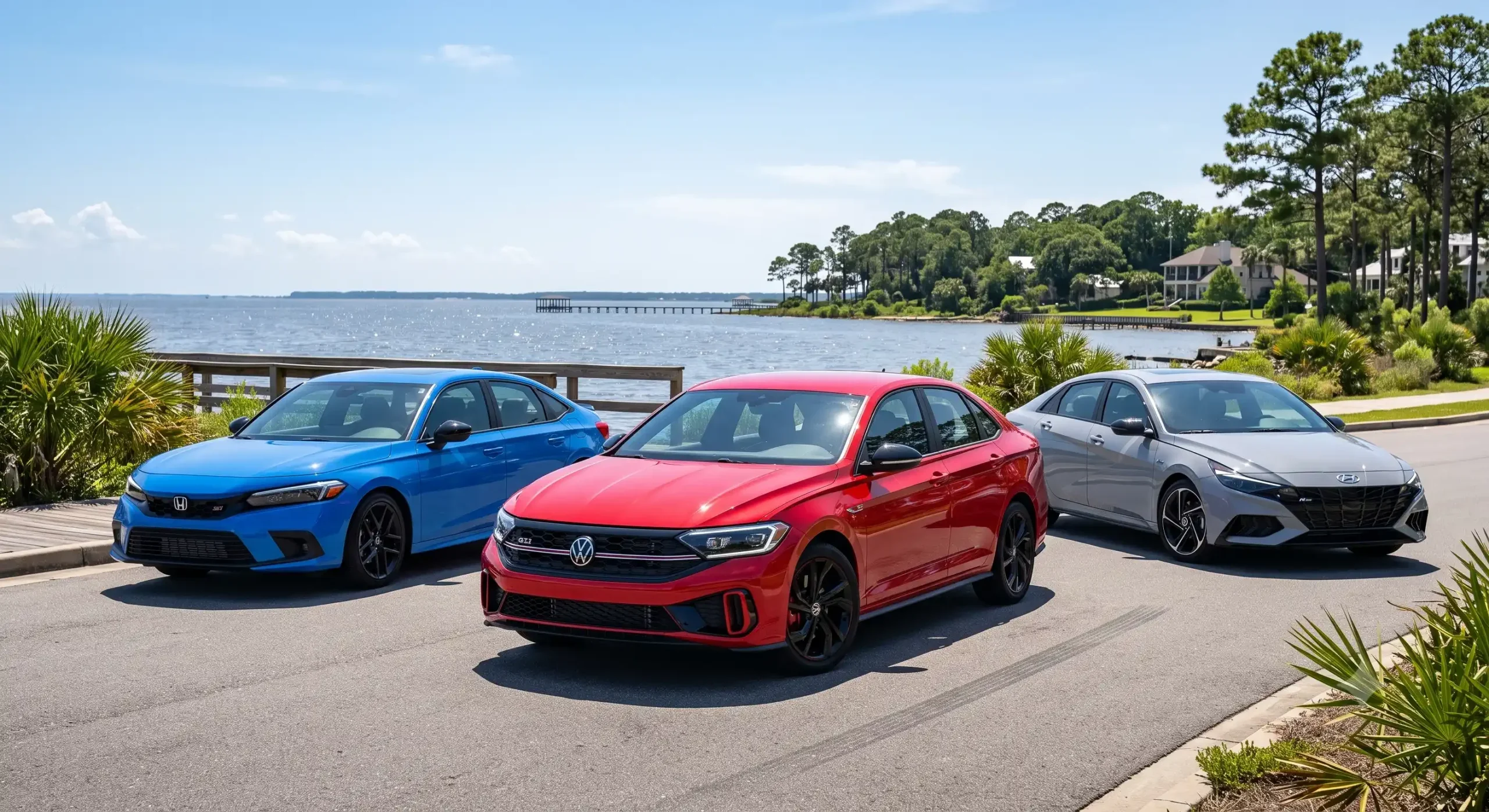
Maximum Range: How Far Can You Drive a Jetta Around Daphne on One Tank? The 2026 Volkswagen Jetta combines a 1.5-liter turbocharged engine with an 8-speed automatic transmission and EPA-estimated fuel economy of 29 mpg city and 40 mpg highway. For someone commuting around Daphne, Mobile, or the Eastern Shore, however, those two headline numbers are only the starting point. The 2026 Volkswagen Jetta is EPA-rated at 29 mpg city and 40 mpg highway across its regular S, Sport, SE, and SEL trims. The Jetta S carries a 34-mpg combined rating, while Sport, SE, and SEL are rated at 33 mpg combined. EPA estimates are useful for comparing vehicles, but actual mileage varies with factors such as driving habits, traffic, route type, speed, and vehicle condition. The difference between 33 and 34 mpg combined is small, but understanding it prevents a common mistake: assuming every Jetta trim has exactly the same EPA rating simply because Volkswagen advertises the same rounded 29-city and 40-highway figures across the lineup. More importantly, fuel economy becomes useful when you connect it to your own driving. A commuter spending most of the week on I-10 or the Bayway should interpret the EPA numbers differently from someone making short local trips along US-98 with frequent stops. What Does EPA-Estimated MPG Mean? EPA-estimated miles per gallon is a standardized fuel-economy measure designed to help shoppers compare vehicles under consistent test procedures. It is not a guarantee that a particular driver will reproduce the city, highway, or combined rating on every trip. 2026 Volkswagen Jetta MPG at a Glance 29 MPG EPA-estimated city rating 40 MPG EPA-estimated highway rating 33–34 MPG EPA-estimated combined, depending on trim All four regular 2026 Jetta trims use the same basic powertrain: a 1.5-liter turbocharged four-cylinder producing 158 horsepower and 184 lb-ft of torque, paired with an 8-speed automatic transmission and front-wheel drive. The Jetta GLI is not included in this guide. It uses a different 2.0-liter performance powertrain and has different fuel-economy specifications, so mixing it into the regular Jetta MPG discussion would make the comparison less useful. 2026 Jetta Fuel Economy by Trim 2026 Jetta Trim City MPG Highway MPG Combined MPG Jetta S 29 40 34 Jetta Sport 29 40 33 Jetta SE 29 40 33 Jetta SEL 29 40 33 EPA estimates shown for the regular 2026 Volkswagen Jetta lineup. Actual mileage will vary. Jetta GLI uses a different powertrain and is not included. All regular 2026 Jetta trims share a 158-horsepower 1.5-liter turbocharged engine, front-wheel drive, and an 8-speed automatic transmission, but their combined EPA ratings are not identical. The S is rated at 34 mpg combined, while Sport, SE, and SEL are rated at 33 mpg combined, even though all four carry the same rounded 29-city and 40-highway figures. Volkswagen does not need to explain that one-mpg combined difference for it to matter in an accurate comparison. The useful takeaway is simply that the city and highway headline figures do not tell the entire EPA-rating story. If you are also comparing features among these four versions, see our 2026 Volkswagen Jetta trim guide rather than choosing solely on a one-mpg combined difference. What Powers the 2026 Volkswagen Jetta? Fuel economy is only one side of the powertrain equation. The 2026 Jetta's 1.5-liter TSI turbocharged four-cylinder produces 158 horsepower and 184 lb-ft of torque. Volkswagen pairs that engine with an 8-speed automatic transmission with Tiptronic and Sport Mode. The regular Jetta lineup uses front-wheel drive rather than 4MOTION all-wheel drive. That consistency makes the trim comparison easier. Moving from S to Sport, SE, or SEL is primarily about differences in equipment, comfort, design, and technology rather than moving to an entirely different engine. What Does 29 City / 40 Highway MPG Mean for Your Commute? The city, highway, and combined ratings represent different driving patterns. Which number deserves the most attention depends on the routes you actually use. City-Heavy or Stop-and-Go Driving If most of your driving involves shorter trips, traffic signals, lower speeds, and repeated acceleration and braking, the 29-mpg city estimate is a more relevant reference point than the 40-mpg highway number. That does not mean every local trip will return 29 mpg. A very short drive, heavy congestion, aggressive acceleration, extended idling, climate-control use, and other conditions can move actual fuel economy in either direction. Highway-Heavy Commuting Drivers who spend a large share of their commute on I-10 or another sustained highway route may find the 40-mpg highway rating more relevant for comparison purposes. It should still be treated as an EPA estimate rather than a guaranteed result. Highway speed, traffic, wind, vehicle load, tire condition, driving behavior, and other operating factors affect actual fuel use. Mixed Driving For many Eastern Shore drivers, the combined rating may be the most useful starting point because a normal week includes both local roads and higher-speed travel. That is where the 34-mpg combined rating for the S and 33-mpg combined ratings for Sport, SE, and SEL become more useful than simply repeating the 40-mpg highway headline. Estimate Your Own Jetta Fuel Use MPG becomes much easier to understand when you turn it into approximate gallons. Miles Driven ÷ MPG = Approximate Gallons of Fuel Used This calculation does not predict what your Jetta will achieve. It lets you use a chosen MPG assumption to estimate how much fuel a certain amount of driving would require. 500 miles at 34 mpg Approximately 14.7 gallons 1,000 miles at 34 mpg Approximately 29.4 gallons 1,000 miles at 33 mpg Approximately 30.3 gallons Once you have an approximate gallon figure, you can multiply it by the fuel price you actually pay. That is more useful than publishing a fixed monthly fuel-cost claim because gasoline prices and driving patterns change. Build the Calculation Around Your Actual Commute Estimate your normal round-trip work or school mileage. Multiply it by the number of days you make that trip each month. Add errands, appointments, weekend driving, and regular family travel. Add occasional longer trips separately rather than pretending every month is identical. Divide the total miles by a realistic MPG assumption. This approach also makes comparisons with another vehicle more useful. Instead of asking whether one model has "good gas mileage," you can estimate the difference in gallons over the number of miles you actually drive. Why Your Actual Jetta MPG Can Differ From the EPA Rating Volkswagen itself qualifies EPA fuel-economy estimates by noting that actual mileage varies and depends on factors including driving habits and vehicle condition. Several everyday factors can therefore change your observed fuel economy: Route mix: repeated stop-and-go driving differs from sustained highway travel. Speed: the speed and traffic pattern of a highway commute can affect consumption. Acceleration and braking: driving style changes how much fuel is required to cover the same route. Vehicle condition: maintenance and mechanical condition can affect how the vehicle operates. Tire condition and pressure: proper tire maintenance matters for vehicle efficiency and safety. Climate-control use: cabin cooling places an additional demand on the vehicle, which can affect fuel consumption. Passenger and cargo load: operating conditions are not identical from one trip to another. Do not treat 40 mpg highway as an expected result for every highway trip. EPA estimates are standardized comparison figures. Your own dashboard average can be higher or lower depending on route, traffic, speed, driving style, vehicle condition, and other operating factors. Is the Jetta Practical Beyond Fuel Economy? Good MPG only matters if the vehicle also works for the rest of your commute. Volkswagen lists 14.1 cubic feet of trunk capacity and 37.4 inches of rear legroom for the Jetta. That gives the sedan a conventional enclosed trunk while retaining seating for five. A shopper who regularly carries larger or taller cargo may still prefer a hatchback or SUV even if the Jetta's fuel-economy ratings are attractive. Someone who mostly carries a laptop bag, groceries, luggage, or everyday sedan-size cargo may find the Jetta layout sufficient. For a broader look at the sedan rather than just fuel economy, see our 2026 Volkswagen Jetta overview. Technology That Matters During a Daily Commute The Jetta also includes technology that may matter to someone spending significant time in the car, but those features should not be presented as guaranteed fuel-economy improvements. Volkswagen lists IQ.DRIVE as standard on the 2026 Jetta. The suite can include driver-assistance technologies such as Travel Assist, Adaptive Cruise Control, Active Blind Spot Monitor, Rear Traffic Alert, Front Assist, Lane Assist, and Emergency Assist on automatic-transmission models. These systems are driver-assistance features. They do not make the Jetta autonomous and do not replace attentive driving. Wireless App-Connect for compatible Apple CarPlay and Android Auto devices can also simplify everyday phone integration. Available Digital Cockpit and comfort features vary by trim. For a deeper explanation, see our guide to 2026 Jetta technology and driver-assistance features. How the Jetta Fits Different Eastern Shore Commutes Daphne-to-Mobile Commuter If a large portion of your weekly mileage occurs at sustained highway speeds, the highway rating becomes more relevant. Estimate your actual monthly miles first, then use a realistic MPG assumption to understand approximate fuel consumption. Mostly Local Driving If your routine is dominated by shorter US-98 trips, errands, traffic signals, and local stops, the city or combined ratings may be more useful references than the 40-mpg highway figure. Frequent Gulf Coast Trips Drivers adding longer highway trips to their normal routine should include those miles in the monthly calculation. Fuel economy can become increasingly important as total annual mileage rises. For a Daphne-area commuter, the most useful Jetta fuel-economy number depends on the route. Highway-heavy driving makes the 40-mpg EPA highway rating more relevant for comparison, while local and mixed driving make the 29-mpg city and 33-to-34-mpg combined ratings more useful. Estimating your own monthly miles and dividing them by a realistic MPG assumption gives a more practical picture than treating the highway rating as the result of every commute. The MPG Detail Many Jetta Guides Miss Volkswagen's headline 29-city and 40-highway figures make the 2026 Jetta lineup look identical from a fuel-economy perspective, but the combined EPA ratings show a small distinction. The Jetta S is rated at 34 mpg combined. Sport, SE, and SEL are rated at 33 mpg combined. That difference is not large enough to make trim choice a fuel-economy-only decision. Features, comfort equipment, wheel and tire configuration, purchase price, and your own preferences are likely to matter more when choosing among the four trims. The reason to mention the distinction is accuracy. If you are comparing specifications closely, "29/40 mpg" is not the complete EPA picture for every 2026 Jetta. What to Check During a Commuter-Focused Test Drive A fuel-economy figure can help narrow a shopping list, but it cannot tell you whether the car works comfortably for an hour of everyday driving. During a Jetta test drive, pay attention to: seat comfort and driving position; visibility in traffic and while changing lanes; acceleration when merging onto a highway; how the 8-speed automatic responds in normal driving; road and cabin noise at the speeds you normally use; infotainment and smartphone connectivity; driver-assistance controls and displays; trunk access and whether your normal cargo fits comfortably. If possible, drive a route that resembles your normal use rather than judging the Jetta only from a short low-speed loop. Compare Your Commute in a 2026 Jetta Review current Volkswagen availability, then drive a Jetta on the type of roads you use most often to compare comfort, powertrain response, technology, and everyday usability alongside its EPA fuel-economy ratings. View Current Volkswagen Inventory Schedule a Test Drive Key Takeaways The regular 2026 Volkswagen Jetta lineup is EPA-rated at 29 mpg city and 40 mpg highway. The Jetta S is rated at 34 mpg combined, while Sport, SE, and SEL are rated at 33 mpg combined. All four regular Jetta trims use a 158-horsepower 1.5-liter turbocharged engine with an 8-speed automatic transmission and front-wheel drive. EPA fuel-economy estimates are comparison tools rather than guaranteed real-world results. A useful commuter calculation is miles driven divided by MPG, which gives an approximate number of gallons used. Route type matters. Highway-heavy, local, and mixed commuting patterns make different EPA ratings more relevant. 2026 Volkswagen Jetta Fuel Economy FAQs What MPG does the 2026 Volkswagen Jetta get? The regular 2026 Volkswagen Jetta lineup is EPA-rated at 29 mpg city and 40 mpg highway. Combined fuel economy is 34 mpg for the Jetta S and 33 mpg for Sport, SE, and SEL. Actual mileage varies with driving habits, route, traffic, vehicle condition, and other operating factors. Which 2026 Jetta trim gets the best combined MPG? The Jetta S has the highest combined EPA rating at 34 mpg. Sport, SE, and SEL are rated at 33 mpg combined. All four regular trims share the same 29-mpg city and 40-mpg highway headline ratings. Will a 2026 Jetta always get 40 mpg on the highway? No. The 40-mpg figure is an EPA highway estimate rather than a guaranteed result. Actual highway fuel economy varies with factors such as speed, traffic, driving habits, vehicle condition, weather, load, and other operating conditions. Is the 2026 Jetta a practical choice for a long commute? Its EPA ratings make fuel economy worth considering for a high-mileage commute, but MPG should not be the only factor. Seat comfort, trunk capacity, rear-seat room, technology, highway behavior, and the route you actually drive also matter. A test drive on roads similar to your normal commute can help evaluate those factors together. Use Your Own Commute to Evaluate the Jetta The most useful fuel-economy comparison starts with your own mileage. Estimate how far you drive in a normal month, decide whether your route is mostly local, highway, or mixed, and then use the appropriate EPA figure as a comparison point rather than a promise. You can view current Volkswagen inventory and schedule a Volkswagen test drive to compare the Jetta's fuel-economy potential with the comfort, cargo space, technology, and driving characteristics that matter during your daily routine. Related Volkswagen Insights & Updates Jetta Trim Guide 2026 Volkswagen Jetta Trim Levels: Which One Fits Daphne Drivers? Compare Jetta S, Sport, SE, and SEL equipment after reviewing the small fuel-economy differences among trims. Read More Jetta Technology 2026 Volkswagen Jetta Technology & Safety Review IQ.DRIVE, smartphone connectivity, digital displays, comfort features, and driver-assistance technology for daily commuting. Read More Jetta Overview 2026 Volkswagen Jetta Sedan Near Daphne, AL Take a broader look at Jetta performance, interior space, trims, technology, and everyday sedan usability. Read More Buyer Guide First Time Volkswagen Buyer Guide in Daphne, AL Review model selection, budgeting, test-drive considerations, finance preparation, and the steps involved in choosing a Volkswagen. Read More

Should You Lease or Finance a 2026 Volkswagen Jetta in Daphne, AL?

Should You Lease or Finance a 2026 Volkswagen Jetta in Daphne, AL?

Pros, Cons, and Monthly Costs: Leasing vs. Buying a VW Jetta Once you have decided that the 2026 Volkswagen Jetta is the car you want, the next question is how you want to pay for and use it. Leasing and financing can put you behind the wheel of the same Jetta, but they create different rules around mileage, customization, ownership, vehicle condition, and what happens several years later. Leasing a 2026 Volkswagen Jetta can make sense to evaluate when a defined vehicle cycle and contract mileage fit the way you drive, while financing creates a path toward full ownership without lease mileage or lease-end wear restrictions. Neither option is automatically better or less expensive for every shopper. The stronger choice depends on your expected mileage, how long you plan to keep the Jetta, the actual lease or finance terms, and what you want to do with the vehicle later. This guide assumes you have already chosen the Jetta rather than comparing it with another sedan. The 2026 Jetta uses a 1.5-liter turbocharged TSI four-cylinder engine producing 158 horsepower and an 8-speed automatic transmission with Tiptronic and Sport Mode. Choosing lease versus finance does not change that powertrain. It changes your financial relationship with the vehicle. That distinction is especially important for commuters around Daphne and Mobile. A payment that looks attractive on its own does not tell you whether a lease mileage allowance fits your daily driving, just as a longer finance term does not tell you whether you actually want to own the Jetta for many years. Lease vs Finance: What Is the Difference? A vehicle lease allows you to use the Jetta for a defined period under contract terms that include mileage and lease-end obligations. Financing uses a vehicle loan to purchase the Jetta, with full ownership remaining with you after the applicable loan balance has been repaid. Leasing a 2026 Volkswagen Jetta Leasing is built around a defined contract period rather than indefinite ownership. You agree to use the Jetta according to the lease terms, including the contracted mileage and vehicle-condition requirements, and then make another decision as the lease approaches maturity. That structure may appeal to someone who prefers replacing vehicles periodically instead of keeping one well beyond the original contract period. It can also make sense to evaluate if you know your driving pattern well enough to choose an appropriate mileage allowance. A Defined Vehicle Cycle One reason drivers consider leasing is that it gives the vehicle relationship a defined timeline. Instead of purchasing a Jetta and deciding at some unknown point when to sell or trade it, the lease has an established maturity date. That does not mean you simply hand over the keys without another decision. Volkswagen Financial Services currently provides lease-end options that can include returning the vehicle, purchasing it, or transitioning toward another Volkswagen according to the applicable agreement and current program. Mileage Allowances and Lease Terms Mileage deserves particular attention for a Jetta because sedans are often considered for commuting. The right lease should account for the way the car will actually be driven rather than starting with the lowest advertised payment and working backward. Your signed lease agreement determines the mileage allowance and any applicable excess-mileage terms. There is no single annual mileage number or universal overage rate that should be assumed for every Volkswagen lease. If you expect to commute regularly across the Eastern Shore or into Mobile, our Volkswagen lease mileage guide goes deeper into estimating contract mileage before signing. Vehicle Condition at Lease-End A leased Jetta must also be evaluated against the applicable lease-end wear-and-use standards if you return it. That means vehicle condition matters throughout the contract in a way that is different from owning a financed car. Normal driving does not mean the vehicle must remain untouched, but excessive wear, missing equipment, certain modifications, or damage can affect the lease-end process. Review the current Volkswagen Financial Services guidance and your specific agreement rather than relying on a general online estimate. Financing a 2026 Volkswagen Jetta Financing takes a different approach. Instead of paying for the right to use the vehicle during a lease term, you are purchasing the Jetta with a loan and working toward owning it outright. Long-Term Ownership Volkswagen's current financing guidance states that once the applicable vehicle financing has been fully repaid, you own the Volkswagen. There is no lease maturity date requiring you to return the Jetta simply because a specified term of vehicle use has ended. That can matter to someone who already knows they prefer keeping vehicles for a long time. Once the finance obligation is satisfied, the decision to continue driving, sell, or trade the Jetta belongs to the owner, subject to any other applicable obligations. Mileage Freedom Financing also removes lease mileage restrictions. If your work location changes, your commute grows, or you start taking more road trips than expected, there is no lease mileage allowance to exceed. That does not mean mileage becomes financially irrelevant. Mileage can still affect vehicle condition, maintenance needs, depreciation, and future resale or trade value. The difference is that there is no contractual lease mileage limit or lease-end excess-mileage charge. Customization Volkswagen also identifies greater customization freedom as a financing benefit. A leased vehicle is subject to lease terms and must eventually satisfy the applicable return requirements if it is turned in. If you already know you want to make permanent changes to the Jetta, financing may deserve closer consideration. Any modification should still comply with applicable laws, warranty terms, safety requirements, and vehicle specifications. 2026 Jetta Lease vs Finance Comparison Decision Factor Lease Finance Ownership You do not automatically own the Jetta at lease-end. You own the Jetta after the applicable loan balance is fully repaid. Mileage Contract mileage allowance and excess-mileage terms apply. No lease mileage restrictions. Vehicle Condition Lease-end wear-and-use standards matter if the vehicle is returned. No lease turn-in inspection or lease wear standard. Customization Changes may be limited by the lease agreement and return requirements. Greater customization freedom, subject to legal, warranty, and safety considerations. End of Term Return, purchase, or transition options may be available according to the agreement. Continue owning, sell, or trade the vehicle after satisfying the loan. Ownership Value The lease does not automatically create vehicle ownership. You may build ownership value, but positive equity at any particular point is not guaranteed. Primary Question Do the term, mileage, and lease-end requirements fit how I expect to use the Jetta? Do I want long-term ownership and freedom from lease mileage and return requirements? Leasing and financing do not change the mechanical specifications of the 2026 Jetta, but they change what happens around the vehicle. A lease uses a defined term, mileage allowance, and lease-end requirements, while financing removes lease mileage and return restrictions and leads toward ownership after the loan is repaid. Comparing those obligations is more useful than assuming one option wins simply because its advertised monthly payment appears lower. How Annual Mileage Changes the Jetta Decision Mileage is one of the strongest decision factors for a commuter considering a lease. A Jetta may be an appealing daily driver, but that does not automatically mean every Jetta lease structure fits every daily commute. Instead of choosing a mileage allowance from memory, estimate what you actually drive. Daily round-trip commute × commuting days + errands + personal driving + longer trips = estimated annual mileage Start with the distance you travel on a normal work or school day. Multiply that by the realistic number of days you make the trip each year, then add weekend driving, errands, appointments, family travel, and longer road trips. Someone commuting between Daphne and Mobile several days each week can accumulate a meaningful share of annual mileage from work travel alone. A change in office schedule, school location, or home address during the lease can shift that estimate further. High mileage does not automatically mean you must finance. It means the actual lease mileage allowance and excess-mileage terms deserve closer scrutiny. Compare your realistic annual driving with the specific lease being offered instead of using a generic mileage rule from another contract or dealership. How Long Do You Expect to Keep the Jetta? The second major question is time. If you like changing vehicles on a defined cycle and expect your mileage to remain compatible with the contract, leasing may fit the way you prefer to drive and replace cars. If your plan is to keep the Jetta long after a typical lease period would end, financing may align more directly with that goal because each completed payment moves the loan closer to payoff and full ownership. Neither timeline is inherently better. The useful question is whether you expect to want the same Jetta several years from now. A shopper who enjoys changing models regularly is making a different decision from someone who wants to keep a sedan through many years of commuting. Monthly Payment Is Not the Whole Comparison Focusing only on monthly payment can make two offers look easier to compare than they really are. Before deciding, compare the complete structure of each offer. Depending on the transaction, relevant items can include: cash due at signing or down payment; monthly payment; lease or finance term; contract mileage allowance; excess-mileage provisions; lease-end fees or obligations where applicable; APR or other applicable finance terms; purchase option information for a lease; total amount paid over the period you are comparing; what you own, if anything, at the end of that period. A lower monthly figure does not by itself establish a lower total cost. It can reflect a different term, mileage allowance, amount due at signing, interest structure, or end-of-term ownership position. The Volkswagen of Daphne finance page provides tools for reviewing financing and estimating payments. Any actual lease or finance decision should use the current offer and the terms presented for the specific Jetta you are considering. Which Option Fits Different Jetta Drivers? Frequent Commuter Start with mileage, not payment. Estimate your actual annual driving and compare it with the lease allowance. Financing removes lease mileage restrictions, while leasing can still be viable when the contract mileage fits your use. Driver Who Changes Cars Regularly A defined lease cycle may deserve consideration if you prefer transitioning to another vehicle periodically and are comfortable with the contract mileage and condition requirements. Long-Term Owner Financing deserves closer consideration if the goal is to keep the Jetta after the loan has been repaid rather than planning for a lease-end decision after a defined vehicle cycle. Driver Who Wants to Customize Financing generally provides greater flexibility because you are purchasing the vehicle rather than preparing it for a potential lease return. Modifications can still affect warranty coverage, legality, safety, and resale value. What About a Student or First-Time Volkswagen Buyer? Age or buyer status alone should not determine lease versus finance. A student who drives long distances may have very different mileage needs from a student living close to campus. A first-time buyer who plans to keep a Jetta for many years has a different ownership goal from someone who expects their transportation needs to change quickly. Instead of using a label such as "student" or "young professional" as the deciding factor, work through four questions: How many miles do you realistically expect to drive each year? How long do you expect the Jetta to fit your needs? Do you want to own the vehicle after the finance obligation is complete? How do the actual lease and finance offers compare beyond the monthly payment? Who Handles Volkswagen Lease and Finance Accounts? Volkswagen's current account structure is worth understanding because older online articles may use outdated finance terminology. Volkswagen currently identifies active lease customers as Volkswagen Financial Services customers. For new retail auto financing initiated on or after May 1, 2025, Volkswagen identifies the financing relationship as Volkswagen Retail Finance powered by Wells Fargo, with those auto finance accounts owned and serviced by Wells Fargo. That means a 2026 Jetta shopper should not assume that one generic "Volkswagen finance" account system handles both a new lease and a new retail loan in exactly the same way. Which Jetta Trim Are You Financing or Leasing? The lease-versus-finance decision is separate from choosing a Jetta trim, but the two decisions can affect the same budget. The 2026 Jetta lineup includes S, Sport, SE, and SEL non-performance trims built around the same 1.5-liter turbocharged engine and 8-speed automatic transmission. Equipment and comfort features vary, so compare the trim you actually want before evaluating the final financial structure. Our 2026 Volkswagen Jetta trim guide can help narrow down S, Sport, SE, and SEL before you compare specific lease and finance terms. For a Daphne-area Jetta commuter, the first lease-versus-finance calculation should be annual mileage rather than a generalized rule about which option is cheaper. Drivers whose expected mileage fits the actual lease contract may still find leasing appropriate, while drivers who want unrestricted mileage or long-term ownership may place more value on financing. The decision should use the specific lease or loan terms for the Jetta being considered, not a generic payment or mileage threshold. Questions to Ask Before Signing Before committing to either structure, make sure you can answer the questions that will matter after the first monthly payment. If You Are Considering a Lease What is the total contract mileage allowance? What happens if I exceed it? What is due at signing? What is the lease term? What lease-end fees or obligations apply? What is the purchase option? What happens if I need to end the lease early? If You Are Considering Financing What APR applies to my approved offer? What is the loan term? How much is being financed? What is the total cost over the loan term? Is there a trade-in involved? How long do I actually intend to keep the Jetta? Does the payment still make sense at the selected term? Compare 2026 Jetta Lease and Finance Options Once you know your expected mileage and ownership timeline, compare the current terms for the specific Jetta configuration you are considering rather than relying on a generic lease-versus-finance rule. Review Finance and Lease Options View Current Volkswagen Inventory Key Takeaways Leasing and financing give you access to the same 2026 Jetta, but they create different rules around mileage, ownership, customization, and what happens at the end of the agreement. A Jetta lease uses a contract mileage allowance and lease-end vehicle-condition requirements, so frequent commuters should estimate annual mileage before comparing offers. Financing removes lease mileage restrictions and creates a path toward full vehicle ownership after the applicable loan balance is repaid. A monthly payment alone is not enough to determine which option costs less. Compare term, cash due, mileage, fees, finance charges, end-of-term obligations, and ownership position. Volkswagen currently services lease customers through Volkswagen Financial Services, while newer retail financing is handled through Volkswagen Retail Finance powered by Wells Fargo. The better option depends on your actual mileage, ownership timeline, budget, and current contract terms rather than a universal lease-versus-finance rule. 2026 Volkswagen Jetta Lease vs Finance FAQs Is it better to lease or finance a 2026 Volkswagen Jetta? Neither is automatically better. Leasing may fit a driver who prefers a defined vehicle cycle and whose expected mileage aligns with the lease agreement. Financing may fit a driver who wants long-term ownership, no lease mileage restriction, and greater customization freedom. Compare the actual lease and finance terms before deciding. Is a Jetta lease a good fit for a high-mileage commuter? It can be, but only if the mileage structure of the specific lease fits the driver's expected use. Estimate your annual commute, personal driving, and road-trip mileage, then compare that total with the contract allowance and excess-mileage terms. High mileage does not automatically rule out leasing, but it makes mileage planning more important. Can I customize a leased Volkswagen Jetta? A leased Jetta remains subject to the lease agreement and applicable vehicle-return requirements, so permanent modifications can create complications at lease-end. Financing generally provides greater customization freedom, although any modification can still affect warranty coverage, safety, legality, and future vehicle value. Who handles Volkswagen Jetta lease and finance accounts? Volkswagen currently identifies lease customers as Volkswagen Financial Services customers. Retail auto financing initiated on or after May 1, 2025 is handled through Volkswagen Retail Finance powered by Wells Fargo, with the finance accounts owned and serviced by Wells Fargo. Choose the Structure That Fits How You Will Use the Jetta The useful comparison is not simply lease payment versus finance payment. Think about the full period you expect to drive the Jetta. Estimate mileage, decide whether you want long-term ownership, consider how likely your transportation needs are to change, and then compare the complete terms of the current offers. You can view current Volkswagen inventory and then use the Volkswagen of Daphne finance tools to review the current lease or financing path for the Jetta configuration you are considering. Related Volkswagen Insights & Updates Jetta Trim Guide 2026 Volkswagen Jetta Trim Levels: Which One Fits Daphne Drivers? Compare the Jetta S, Sport, SE, and SEL to decide which equipment level you want before evaluating a specific lease or finance offer. Read More Jetta Technology 2026 Volkswagen Jetta Technology & Safety Review IQ.DRIVE, connectivity, digital displays, driver-assistance features, and comfort technology available for the 2026 Jetta. Read More Lease Mileage Volkswagen Lease Mileage Guide for Daphne and Mobile Drivers Learn why commute distance, personal driving, and regional trips should be considered before agreeing to a lease mileage allowance. Read More Jetta Overview 2026 Volkswagen Jetta Sedan Near Daphne, AL Take a broader look at the 2026 Jetta's turbocharged powertrain, everyday usability, technology, and sedan configuration. Read More

Volkswagen SUV Leasing Guide: Taos, Tiguan, and Atlas

Volkswagen SUV Leasing Guide: Taos, Tiguan, and Atlas

The Financial Benefits of Leasing a Volkswagen: Lower Payments and Warranty Perks Choosing a Volkswagen SUV to lease starts with a different question than simply asking which SUV is largest or has the most features. A lease covers a defined period and a contracted mileage allowance, so the more useful question is how much passenger room, cargo flexibility, drivetrain capability, and vehicle size you expect to use during that period. The Volkswagen Taos, Tiguan, and Atlas serve three different SUV needs. The Taos is the smallest five-seat choice, the Tiguan adds more two-row cargo capacity and available performance, and the Atlas moves into a three-row layout with substantially greater maximum cargo space. For a lease shopper, the right choice is the SUV that provides enough capability for the next lease cycle without paying for size or capacity that will rarely be used. That distinction matters for drivers around Daphne and Mobile. A commuter who normally carries one or two passengers may have very different needs from a household that regularly fills a second row, and both may need far less vehicle than a family that depends on a third row. This guide focuses specifically on choosing among the Volkswagen Taos, Tiguan, and Atlas for a lease. It does not assume that the largest SUV is automatically better or that leasing is automatically less expensive than financing. The actual lease payment, mileage allowance, incentives, fees, and terms depend on the vehicle, program, contract, and customer eligibility at the time of the transaction. What Is a Lease Mileage Allowance? A lease mileage allowance is the amount of driving permitted under the lease agreement before additional mileage charges may apply when the vehicle is returned. Volkswagen Financial Services advises customers to review the mileage stated in their individual lease agreement because the allowed mileage and applicable excess-mileage terms are contract-specific. Why Lease a Volkswagen SUV? Leasing can fit drivers who prefer a defined vehicle cycle and expect their annual mileage to remain compatible with the lease agreement. Instead of purchasing the vehicle for indefinite ownership, the customer uses it for the agreed term and then follows the applicable lease-end process. That structure makes vehicle selection especially important. If you lease an SUV that is larger than your routine requires, you may spend the entire lease term carrying size and capability you rarely use. If you choose too little vehicle, passenger or cargo needs can become frustrating long before the lease reaches maturity. Access to Current Technology and Features A lease can also appeal to shoppers who prefer changing vehicles periodically rather than keeping one for many years. Taos, Tiguan, and Atlas can offer Volkswagen technologies such as Digital Cockpit features, connected services, IQ.DRIVE driver-assistance technology, and available 4MOTION all-wheel drive, although exact equipment varies by model year and trim. Driver-assistance systems should be compared by exact configuration. IQ.DRIVE features assist the driver but do not make a Volkswagen autonomous, and they remain subject to system limitations and driver responsibility. Ownership Timeline, Mileage, and Lifestyle Before deciding among these SUVs, estimate how your driving will look over the entire lease period. Include your normal commute, school or family transportation, errands, weekend travel, and longer trips rather than basing the estimate on one typical week. A regular Daphne-to-Mobile commute, for example, can contribute a significant portion of annual mileage before weekend driving is added. Instead of assuming a standard allowance will fit, calculate your actual route and expected driving days, then compare that estimate with current Volkswagen Financial Services lease terms. For more detail on this part of the decision, see our Volkswagen lease mileage guide. Leasing a Volkswagen Taos Compact SUV Taos The Taos is the smallest of these three Volkswagen SUVs. Volkswagen's current U.S. Taos information lists five-passenger seating, a 174-horsepower turbocharged engine, available 4MOTION all-wheel drive, and up to 65.9 cubic feet of cargo capacity with the rear seats folded. Two-Row SUV Tiguan The current Tiguan provides five-passenger seating and up to 69.8 cubic feet of cargo space with the rear seats folded. Available 4MOTION gives shoppers an AWD option, while the current SEL R-Line Turbo adds a higher-output 268-horsepower configuration. Three-Row SUV Atlas The Atlas changes the decision more substantially by adding a third row and up to 96.6 cubic feet of cargo capacity with the rear seats folded. Its current turbocharged engine produces 269 horsepower and 273 lb-ft of torque, with up to 5,000 pounds of towing capacity when properly equipped. Compact Size, Commuting, and Everyday Flexibility The Taos deserves consideration when five seats are enough and you want SUV cargo access without moving into a larger footprint. That can be useful for commuting, parking, daily errands, and households that regularly carry passengers but do not need a third row. Choosing the Taos does not have to mean treating it as a compromise. If its passenger room and cargo capacity cover the way you expect to use the SUV throughout the lease, moving up simply because another model is larger may add capacity without adding much practical value. Volkswagen's national model-year transition is worth noting here. At the time of publication, Volkswagen's current U.S. Taos page has moved to the 2027 model, while Volkswagen of Daphne inventory may still include 2026 Taos vehicles. Always compare the specifications and lease program for the exact model year and VIN you are considering. Leasing a Volkswagen Tiguan Passenger Flexibility, Cargo Room, and Family Use The Tiguan sits between the Taos and Atlas in this decision. It remains a two-row, five-passenger SUV, but Volkswagen lists 33.8 cubic feet of cargo capacity behind its rear seats and 69.8 cubic feet with them folded on the current 2026 model. That makes the Tiguan worth evaluating when a Taos is close to meeting your needs but you expect to use the rear seats frequently, carry bulkier items, or simply want additional two-row flexibility without leasing a three-row SUV. The current Tiguan also gives shoppers a broader performance spread. Core versions use Volkswagen's turbocharged powertrain, while the 2026 SEL R-Line Turbo is rated at 268 horsepower and 258 lb-ft of torque with standard 4MOTION. More horsepower is not automatically a reason to choose that configuration. For a lease shopper focused mainly on commuting and cargo flexibility, trim equipment, drivetrain, mileage terms, and the actual lease program may matter more than peak output. Leasing a Volkswagen Atlas When a Third Row Changes the Decision Atlas is not simply a larger Tiguan. Its three-row layout changes the type of household it can support. If your normal routine includes additional children, relatives, friends, teammates, or other passengers who regularly require more than two seating rows, Atlas provides functionality the Taos and Tiguan cannot duplicate. Volkswagen also lists up to 96.6 cubic feet of cargo space with the rear seats folded on the current 2026 Atlas. Atlas may also matter when towing is part of the requirement. Volkswagen lists up to 5,000 pounds of towing capacity for the current Atlas when properly equipped. Towing limits depend on configuration, equipment, trailer setup, load, and other operating conditions, so always confirm the requirements for the exact vehicle before towing. If the third row would remain folded almost all the time and your cargo needs fit comfortably within a smaller SUV, however, the added size may not provide meaningful value during the lease. That is why Atlas should be selected because its extra capability solves an actual need, not simply because it sits above Tiguan in the lineup. Taos vs Tiguan vs Atlas for a Volkswagen Lease Decision Factor Volkswagen Taos Volkswagen Tiguan Volkswagen Atlas Layout Two rows Two rows Three rows Passenger Focus Five-seat compact SUV Five-seat SUV with more two-row flexibility Households that need a third row Maximum Published Cargo 65.9 cu. ft. 69.8 cu. ft. 96.6 cu. ft. 4MOTION AWD Available Available; standard on current SEL R-Line Turbo Available Main Sizing Question Are five seats and compact-SUV cargo enough? Do you need more two-row space without a third row? Will you actually use three-row passenger capacity? Lease Planning Question Does the smaller SUV cover your needs for the full term? Is the extra two-row flexibility useful often enough? Do passenger, cargo, or towing needs justify the larger vehicle? Current official Volkswagen specifications shown here refer to the current U.S. model pages available at publication. Volkswagen currently lists the 2027 Taos, 2026 Tiguan, and 2026 Atlas. Always verify the exact model year, trim, drivetrain, and lease program for the vehicle you are considering. The biggest functional jump in this Volkswagen SUV comparison occurs between the Tiguan and Atlas, not between Taos and Tiguan. Volkswagen lists 65.9 cubic feet of maximum cargo capacity for the current Taos and 69.8 cubic feet for the current Tiguan, while the Atlas increases maximum cargo capacity to 96.6 cubic feet and adds a third seating row. That makes the Atlas decision primarily about needing a different passenger-and-cargo layout rather than simply moving one size higher. Vehicle Size and Passenger Capacity Start by counting how many seats are used regularly rather than how many people might ride in the SUV once or twice a year. If five seats cover nearly every week of the lease, Taos and Tiguan keep the decision within the two-row category. If a third row will regularly solve carpools, extended-family travel, or larger household needs, the Atlas becomes fundamentally different from the other two. Daily Commuting and Regional Travel Commuting can favor a smaller SUV simply because passenger capacity is not the only consideration. Parking, maneuverability, fuel use, annual mileage, and how much cargo you carry during a normal workweek all matter. Longer Gulf Coast trips can shift the calculation. Four or five people plus luggage may make cargo space more important than it appears during a normal commute. Frequent travel can also increase annual mileage considerably, which means the lease allowance deserves as much attention as the model itself. Choosing an SUV Based on Your Lease Priorities Instead of trying to identify a universal "best Volkswagen SUV to lease," rank the factors that will remain important during the entire lease term. Passenger count: How many people ride with you during a normal week? Cargo with seats in use: Do you need cargo room while the rear seats remain occupied? Annual mileage: Does your commute and regional travel fit the mileage structure being offered? AWD preference: Do you specifically want a 4MOTION configuration? Parking and maneuverability: Does a larger vehicle create an unnecessary tradeoff in your daily routine? Third-row use: Will you actually use the Atlas's additional seating layout often enough to justify moving up? Lease term and program: What mileage, payment, fees, and obligations apply to the exact offer you are reviewing? How Mileage Changes the SUV Lease Decision Mileage is one of the areas where leasing changes the model-selection conversation. A vehicle can fit your passenger needs perfectly and still be a poor lease match if your expected driving does not align with the contract. Volkswagen Financial Services states that most standard leases are calculated around a specified mileage allowance and that a higher mileage limit may be negotiated in some cases. If the contracted mileage is exceeded and the vehicle is returned, additional charges may apply according to the agreement. That means a regular Eastern Shore commuter should calculate likely mileage before choosing both the SUV and the lease structure. Start with your normal round-trip commute and number of commuting days, then add recurring errands, school transportation, trips to Mobile, and longer regional travel. Do not assume every Volkswagen lease uses the same mileage allowance or excess-mileage rate. Review the current Volkswagen Financial Services program and the actual lease agreement for the specific vehicle. The contract controls the mileage and financial obligations that apply to your lease. Do You Actually Need to Move Up to the Next Volkswagen SUV? Taos to Tiguan Moving from Taos to Tiguan is primarily a two-row space decision. Both are designed around five-passenger use, and their maximum published cargo figures are relatively close compared with the much larger jump to Atlas. Tiguan becomes more compelling when the additional passenger and cargo flexibility, available configuration, or performance choices matter in your daily use. If the Taos already covers your routine comfortably, there is no automatic leasing advantage to moving up. Tiguan to Atlas Moving from Tiguan to Atlas is easier to justify when you have a real third-row requirement. The Atlas also provides a substantial increase in maximum cargo capacity and greater towing capability, but those strengths only matter when you use them. A five-passenger household that rarely transports additional people may find Tiguan provides all the space needed. A household that regularly exceeds two rows has a clearer functional reason to evaluate Atlas. Leasing the largest SUV available is not automatically the most useful choice. A lease covers a defined term and mileage structure, so the better sizing decision is to choose enough passenger, cargo, drivetrain, and towing capability for how you expect to use the vehicle during that period. A third row creates clear value when it is used regularly, but it provides less practical benefit to a commuter or five-passenger household that rarely needs it. Taos, Tiguan, or Atlas for Different Driving Needs If Compact Size Is the Priority Start with the Taos. Check whether its five seats and cargo capacity cover your normal passenger and luggage needs before moving to a larger model. If You Need More Two-Row Flexibility Compare the Tiguan. It gives you additional cargo capacity and a broader range of current performance configurations without moving into a three-row SUV. If a Third Row Is Part of Normal Life Put the Atlas on the comparison list. Its seating layout and much larger maximum cargo capacity address a different household need than the Taos or Tiguan. If you want to compare the Volkswagen SUV lineup without the leasing-specific factors, our Volkswagen SUV buying guide takes a broader look at passenger space, cargo needs, daily driving, and regional travel. Compare Volkswagen SUV Lease Options in Daphne Compare the Taos, Tiguan, and Atlas based on the space and mileage you actually expect to use, then review the current lease terms for the exact vehicle and configuration you are considering. View Current Volkswagen Inventory Review Finance and Lease Options Key Takeaways The Taos, Tiguan, and Atlas solve different SUV needs, so choosing a lease should start with passenger count, cargo requirements, and expected mileage rather than simply choosing the largest model. Volkswagen currently lists 65.9 cubic feet of maximum cargo space for the Taos, 69.8 cubic feet for the Tiguan, and 96.6 cubic feet for the Atlas. The biggest functional step occurs when moving to the Atlas because it adds a third seating row and substantially more maximum cargo capacity. Drivers considering a lease should estimate their full annual mileage, including commuting, errands, and regional travel, before agreeing to a mileage allowance. 4MOTION is available across these SUV lines in certain configurations, but AWD should be chosen because it matches a real drivetrain preference or use case, not because it is automatically necessary for every driver. Exact lease payments, mileage terms, incentives, fees, and availability change, so evaluate the current program for the exact model, trim, drivetrain, and model year you are considering. Volkswagen SUV Leasing FAQs Should I lease a Volkswagen Taos or Tiguan? Start with passenger and cargo needs. Both are two-row, five-passenger SUVs, but the Tiguan provides somewhat greater maximum cargo capacity and a broader current performance range. If the Taos already gives you enough room for the full lease period, moving up to Tiguan is not automatically necessary. Should I lease a Tiguan or Atlas? The strongest reason to move from Tiguan to Atlas is a genuine need for a third row or substantially greater cargo capacity. Tiguan remains a two-row option, while Atlas is designed around a three-row layout and provides up to 96.6 cubic feet of maximum cargo space on the current model. Which Volkswagen SUV has three rows? The Volkswagen Atlas is the three-row SUV in this comparison. Taos and Tiguan use two-row layouts, so shoppers who regularly need a third seating row should include Atlas in their comparison. How should annual mileage affect my Volkswagen SUV lease? Estimate the mileage you expect to drive during the entire lease term before choosing an allowance. Include commuting, errands, family transportation, and longer trips. Volkswagen Financial Services states that exceeding the mileage specified in the lease agreement can result in additional charges when the vehicle is returned, so the exact contract should guide the decision. Compare the SUV You Will Actually Use Taos, Tiguan, and Atlas are easier to compare once you stop treating size as the goal. Think about the busiest normal week you expect during the lease: how many people are in the vehicle, how much cargo stays behind occupied seats, how far you drive, and whether you genuinely need the capability of the next SUV up. You can view current Volkswagen inventory to compare available SUVs, then review the current program with the Volkswagen of Daphne finance team before making a lease decision. Related Volkswagen Insights & Updates SUV Buying Guide Which 2026 Volkswagen SUV Is Right for You in Daphne? Compare Taos, Tiguan, Atlas Cross Sport, and Atlas based on passenger space, cargo needs, commuting, and everyday use. Read More Lease Mileage Volkswagen Lease Mileage Guide for Daphne and Mobile Drivers Learn how mileage allowances work and how commuting, errands, and regional travel can affect lease planning. Read More Taos Guide 2026 Volkswagen Taos: Is It the Right Compact SUV for Your Daily Drive in Daphne, AL? Take a closer look at Taos cargo flexibility, commuting, technology, drivetrain choices, and everyday usability. Read More SUV Travel Guide Best 2026 Volkswagen SUVs for Summer Adventures Near Daphne Compare Volkswagen SUVs for road trips, beach travel, passengers, cargo, and Gulf Coast weekend use. Read More

volkswagen lease

Volkswagen Lease Return, Buyout, and Trade-In Options in Daphne, AL

Lease Return, Buyout, or Trade-In: Which End-of-Lease Path Fits Your Budget? Reaching the end of a Volkswagen lease does not automatically mean handing over the keys and starting over. If your Volkswagen Financial Services lease is approaching maturity, you may have several paths to consider, including returning the vehicle, purchasing it, moving into another Volkswagen, or asking whether you qualify for a limited lease extension. Volkswagen Financial Services currently provides four broad lease-transition paths: turn in your vehicle and move into another Volkswagen, request an eligible lease extension, purchase your current vehicle, or return it at lease-end. The right option depends on your individual lease agreement, payoff information, vehicle condition, mileage, future driving needs, and any new transaction you are considering. Review your actual account and contract before assuming that a fee, payoff amount, extension, or trade-in outcome applies to you. This guide is for drivers who already have an active Volkswagen lease and are deciding what to do next. It is different from deciding whether leasing or financing makes sense when first acquiring a vehicle. At lease-end, the important questions involve your existing agreement, current mileage, vehicle condition, purchase option, timing, and what you want to drive after the contract ends. Starting the process before the maturity date can also give you more time to review the vehicle, arrange the required inspection if you plan to return it, investigate a buyout, or compare a replacement vehicle without rushing the decision. Definition: What Is Lease Maturity? Lease maturity is the scheduled end of the lease term established in your agreement. As that date approaches, the lessee must determine how the contract will be completed, such as returning the vehicle, exercising an available purchase option, or reviewing another transition option offered by Volkswagen Financial Services. What Are Your Options at the End of a Volkswagen Lease? Volkswagen Financial Services currently organizes the lease-end process around four broad choices. They sound simple on paper, but each one has different practical and financial considerations. Return Your Leased Volkswagen If you do not want to keep the vehicle, you can prepare it for turn-in. Volkswagen Financial Services provides a formal return process that includes assessing the vehicle, arranging a complimentary inspection, deciding whether to complete eligible repairs, making the final payment, and scheduling the turn-in with a Volkswagen dealer. Purchase Your Current Volkswagen If you want to keep the Volkswagen you have been driving, contact your Volkswagen dealer or Volkswagen Financial Services for current payoff instructions. The purchase decision should be based on your actual contract and payoff information rather than assuming the original residual or a general market estimate tells the whole story. Move Into Another Volkswagen You may choose to return your existing leased vehicle and lease or purchase another Volkswagen. Treat the old lease and the new transaction as connected decisions but separate financial obligations. Current programs, eligibility, incentives, credit approval, and terms should always be confirmed at the time of the transaction. Ask About a Lease Extension Volkswagen Financial Services states that customers may be eligible to extend a lease for a limited period. Eligibility is not automatic. Current customers should use My Account and contact Volkswagen Financial Services to determine whether an extension is available for their specific lease. When Should You Start Preparing for Volkswagen Lease-End? Volkswagen Financial Services publishes a lease timeline that begins well before the final day of the contract. You do not have to make every decision six months in advance, but the timeline gives you useful milestones for avoiding a last-minute rush. 6M About 6 months remaining: Start reviewing your lease-transition options. If you are considering another vehicle, this is also a reasonable time to begin comparing models. 3M About 3 months remaining: Volkswagen Financial Services indicates that customers receive Wear and Use guidance around this point. Review the vehicle's condition and the items that should be present at inspection and return. 45 About 45 days remaining: Schedule the complimentary vehicle inspection if you plan to return the Volkswagen. Also begin arranging the eventual turn-in with the appropriate dealership. 30 About 30 days remaining: Prepare for your final scheduled payment and make sure you understand any remaining account obligations. 0 Lease-end: Complete the return or purchase process according to your lease and Volkswagen Financial Services instructions. The exact account status always matters more than a general timeline. If your vehicle is being repaired, you have deferred payments, your maturity date has passed, or another circumstance affects the account, contact Volkswagen Financial Services directly for instructions. What Should You Review Before Returning Your Volkswagen? Mileage and Your Lease Agreement Start with your signed lease agreement. That document establishes the mileage allowance and the terms that apply if the vehicle is returned with more mileage than the contract allows. Volkswagen Financial Services states that mileage beyond the maximum allowed by the agreement, plus any additional miles that may have been purchased, can result in an excess-mileage charge when the vehicle is returned. The applicable per-mile rate comes from the individual lease agreement, so there is no single overage rate that should be applied to every Volkswagen lease. If you want a deeper explanation of how contract mileage works, see our Volkswagen lease mileage guide for Daphne and Mobile drivers. Vehicle Condition and Excess Wear Normal use and excess wear are not the same thing. Volkswagen Financial Services publishes current wear-and-use standards covering areas such as exterior damage, interior condition, wheels, tires, missing equipment, aftermarket modifications, and mechanical condition. That is why it is useful to assess the vehicle before the formal inspection instead of waiting until the return appointment. Check that original equipment is present, look for damage that may fall outside normal-use guidelines, and make sure recommended maintenance or warranty repairs that apply to the vehicle have been addressed. Volkswagen Financial Services currently instructs returning lease customers to schedule a complimentary inspection through AiM, its accepted third-party inspection provider for excess wear and use. The inspection report is valid for 90 days as long as no additional damage occurs after the inspection date. Completing the inspection before turn-in gives the customer time to review the report and decide whether eligible repairs should be handled before the vehicle is returned. What to Have Ready for the Inspection and Return Volkswagen Lease-End Checklist All vehicle keys Owner's manual and maintenance booklet Headrests Cargo cover, when applicable Equipment that was installed when the vehicle was delivered Inspection report Repair documentation and proof of payment for qualifying post-inspection work, when applicable Your lease and account information Volkswagen Financial Services currently states that its complimentary lease-end inspection can take place at a home, office, or dealership. If repairs are completed after the inspection, follow Volkswagen Financial Services instructions for documenting the work before turning in the vehicle. Should You Buy Out or Return Your Volkswagen Lease? A lease buyout and a vehicle return solve two different problems. The right decision depends on whether you still want the vehicle and what the actual numbers in your account look like. Question to Review Why It Matters Do you still want to drive this Volkswagen long term? If the vehicle still fits your needs, purchasing it may deserve consideration. If your needs have changed, returning or replacing it may be more logical. What is the current payoff or purchase amount? You need actual Volkswagen Financial Services payoff information before evaluating a buyout. What is the vehicle's current condition? Condition is especially important when returning the vehicle because excess wear may affect the final invoice. Where are you relative to your mileage allowance? Mileage can affect a return. Review the allowance and excess-mileage provisions in your individual agreement. Have your passenger or cargo needs changed? A different vehicle may make more sense if your household, commute, or daily use has changed since the lease began. Do you want another lease or long-term ownership? Your preferred ownership timeline can change whether the next step is another lease, a purchase, or keeping the current vehicle. Buying your leased Volkswagen can make sense to evaluate if you want to keep the vehicle and the actual payoff, financing or cash requirements, and long-term ownership plan fit your situation. Returning the vehicle may be more appropriate when you want a different vehicle or no longer want to own the current one long term. Neither option is automatically cheaper or financially better without reviewing the real contract terms, payoff, vehicle condition, market context, and any financing involved. One important distinction is that Volkswagen Financial Services currently states that customers who purchase their leased vehicle do not pay a turn-in fee, excess wear-and-use charges, or excess-mileage charges associated with returning the vehicle. That does not mean purchasing is automatically less expensive overall. The purchase price, taxes, registration costs, financing terms, and long-term ownership expenses still need to be considered. If you want help evaluating financing for a purchase, you can review the Volkswagen of Daphne finance options and discuss the actual lease payoff before making a decision. Can You Trade In a Leased Volkswagen Early? This question needs more nuance than a simple yes or no. A leased Volkswagen is not the same as a vehicle you own outright, so a lease customer should not assume the vehicle can be traded like a fully owned car without first reviewing the lease account. Volkswagen Financial Services currently directs lease customers who are interested in trade-in possibilities to log into My Account and review their options. The current account balance, payoff, timing, vehicle value, transaction structure, and contractual obligations may all affect what is possible. Important: Returning a Volkswagen before the scheduled lease-end date may involve an early-termination charge. Volkswagen Financial Services notes that the earlier a lease is ended, the greater that charge is likely to be. Contact Volkswagen Financial Services about your specific account before assuming a dealer trade or replacement vehicle eliminates the obligations on your current lease. This is especially important if you still have several payments remaining. Moving into another vehicle and ending the current lease are related decisions, but they should not be treated as one automatic transaction. What Happens During a Volkswagen Lease Return? If you decide to return the vehicle rather than purchase it, Volkswagen Financial Services currently outlines a six-step process. Assess your Volkswagen. Review mileage, maintenance, vehicle condition, original equipment, and current wear-and-use guidelines. Schedule the complimentary inspection. Volkswagen Financial Services currently uses AiM for its official excess wear-and-use inspections. Review the inspection and decide on repairs. If you choose to address items identified during the inspection, follow current Volkswagen Financial Services requirements for qualifying repairs and documentation. Make your final scheduled payment. Check your account for any deferred or other remaining contractual payments. Arrange the vehicle turn-in. Contact your Volkswagen dealer to schedule the return. Volkswagen Financial Services instructs customers to obtain a copy of the Vehicle Turn-In Form for their records. Review the final invoice. Volkswagen Financial Services currently says the final invoice is typically made available through My Account or mailed after the completed turn-in process. If you are returning the vehicle somewhere other than the originating Volkswagen dealer, confirm acceptance with that dealership before arriving. Volkswagen Financial Services guidance notes that the originating dealer is required to accept the vehicle, while another Volkswagen dealer should be contacted first. What If You Want Another Volkswagen After Your Lease? Lease-end can also be a useful point to reassess what you actually need from the next vehicle. Your commute, passenger count, cargo needs, annual mileage, or preference for leasing versus owning may have changed during the current contract. For example, someone who originally leased a compact Volkswagen for a shorter commute may now need more passenger or cargo room. Another driver may still prefer the same vehicle category but want newer technology. The decision should come from your current needs rather than assuming the same lease structure or model remains the right fit. You can browse current Volkswagen inventory to compare models and configurations before deciding whether another vehicle belongs in your lease-end plan. Review Your Volkswagen Lease-End Options If your current lease is approaching maturity, Volkswagen of Daphne can help you compare a return, vehicle purchase, or transition into another Volkswagen based on your actual account and current needs. Contact the Finance Team View Current Volkswagen Inventory Key Takeaways Volkswagen Financial Services currently gives lease customers several possible paths at maturity, including returning the vehicle, purchasing it, moving into another Volkswagen, or asking whether a limited extension is available. Your signed lease agreement and current Volkswagen Financial Services account determine the financial terms that actually apply to you. Volkswagen's published timeline recommends beginning the decision process months before maturity and scheduling the complimentary inspection around 45 days before lease-end if you plan to return the vehicle. The current official inspection process uses AiM, and an inspection report remains valid for 90 days provided no additional damage occurs afterward. Early return or trade-in should be reviewed with Volkswagen Financial Services because early termination may involve additional charges. Do not assume that returning, buying, trading, extending, and moving into a new lease have the same financial consequences. Each option changes which contract terms matter. Volkswagen Lease Return and Buyout FAQs Can I buy my Volkswagen when the lease ends? Volkswagen Financial Services currently provides a purchase option for lease customers. Contact your Volkswagen dealer or Volkswagen Financial Services for current payoff instructions and review your actual contract and account before deciding whether purchasing the vehicle fits your budget and ownership plans. Do I need an inspection before returning my Volkswagen? Volkswagen Financial Services' current turn-in process calls for a complimentary inspection through AiM, its accepted third-party inspection provider for determining excess wear and use. Volkswagen's lease timeline recommends scheduling that inspection around 45 days before lease-end. The resulting inspection report is valid for 90 days if no additional damage occurs. Can I return my Volkswagen lease early? You may be able to end a Volkswagen Financial Services lease before its scheduled maturity date, but early termination can involve a charge. Volkswagen Financial Services states that the earlier the lease ends, the greater that charge is likely to be. Review your specific account before making an early-return decision. Can I extend my Volkswagen lease? You may qualify for a limited lease extension, but extensions are not automatic. Volkswagen Financial Services currently instructs customers to log into My Account and send a secure message to determine whether their lease qualifies. Plan Your Next Step Before Your Lease Matures The most useful lease-end decision starts with your actual contract and your actual plans. Check your maturity date, current mileage, vehicle condition, purchase information, and whether you still want the same vehicle before deciding what comes next. If you are considering another Volkswagen, you can compare current Volkswagen inventory. If you want to discuss purchasing the vehicle you already lease or financing another vehicle, visit the Volkswagen of Daphne finance department to review the next steps based on your situation. Related Volkswagen Insights & Updates Lease Mileage Volkswagen Lease Mileage Guide for Daphne and Mobile Drivers Learn how contract mileage works and what to review as your current Volkswagen lease approaches its scheduled end. Read More Volkswagen Leasing Best Volkswagen Models to Lease for Daphne Commuters and Families Compare Volkswagen models based on passenger space, commuting, mileage expectations, and lifestyle if another lease is your next step. Read More Lease vs Buy Buy or Lease? Find the Best Option for Your New Volkswagen Review the broader differences between leasing and purchasing if your current lease-end has you reconsidering how you want to acquire your next vehicle. Read More Buying Guide First Time Volkswagen Buyer Guide in Daphne, AL Review vehicle selection, budgeting, financing preparation, test-drive considerations, and online tools for purchasing a Volkswagen. Read More

2026 vw tiguan

2026 Volkswagen Tiguan vs Honda CR-V Near Daphne, AL

2026 SUV Specs Compared: Engine Power, Safety Features, and Interior Dimensions If you are comparing the 2026 Volkswagen Tiguan and Honda CR-V, the most important difference is not a single horsepower, cargo, or fuel-economy number. These compact SUVs take different approaches to the same job. The Tiguan centers its lineup around a turbocharged engine, an 8-speed automatic transmission, available 4MOTION all-wheel drive, and a higher-output SEL R-Line Turbo. The CR-V gives shoppers a choice between a conventional turbocharged gas powertrain and a two-motor hybrid system. The 2026 Volkswagen Tiguan is a strong fit for shoppers who value turbocharged performance, a conventional 8-speed automatic transmission, and the option of a 268-horsepower SEL R-Line Turbo with standard 4MOTION all-wheel drive. The 2026 Honda CR-V has the advantage of offering both gas and hybrid powertrains, with its front-wheel-drive hybrid configurations rated as high as an EPA-estimated 43 mpg city, 36 mpg highway, and 40 mpg combined. The better choice depends on whether performance character, hybrid efficiency, cargo space, or drivetrain configuration matters most to you. That distinction matters for shoppers around Daphne and Mobile because two people comparing the same model names can actually be considering very different vehicles. A CR-V Sport Hybrid and a gas CR-V EX do not have identical cargo capacity or fuel economy, just as a standard Tiguan and the SEL R-Line Turbo do not provide the same performance. Below, we will compare those configurations separately so you can see what changes before deciding which compact SUV deserves a closer look. What are 4MOTION and Real Time AWD? Volkswagen 4MOTION and Honda Real Time AWD are all-wheel-drive systems designed to distribute power beyond the front wheels when conditions and vehicle operation call for it. AWD can assist traction during acceleration on wet or loose surfaces, but it does not prevent hydroplaning, shorten every braking distance, replace appropriate tires, or make driving through standing or floodwater safe. What Matters Most When Comparing the 2026 Tiguan and CR-V? Passenger Space, Cargo, and Family Usability Both the 2026 Tiguan and CR-V are five-passenger compact SUVs, so the decision is less about adding another seating row and more about how you use the second row and cargo area. Volkswagen lists 33.8 cubic feet of cargo space behind the Tiguan's second row and 69.8 cubic feet with the rear seats folded. That provides useful room for groceries, luggage, sports equipment, beach gear, or the larger items that come with day-to-day family use. Honda publishes two different cargo sets for the CR-V. Gas-powered LX, EX, and EX-L models provide 39.3 cubic feet behind the second row and up to 76.5 cubic feet with the rear seats folded. Hybrid models provide 36.3 cubic feet behind the second row and up to 71.8 cubic feet with the rear seats folded. In other words, the CR-V holds an advantage in published cargo volume, but the size of that advantage depends on which CR-V powertrain you are actually considering. If cargo is a major part of your decision, compare the specific configurations rather than relying on one maximum CR-V number. Performance, Efficiency, and Drivetrain Choices The 2026 Tiguan S, SE, and SE R-Line Black use a 2.0-liter turbocharged four-cylinder engine rated at 201 horsepower, paired with an 8-speed automatic transmission. Front-wheel drive is available, while 4MOTION all-wheel drive can be selected on those trims. At the top of the Tiguan range, the SEL R-Line Turbo changes the performance equation considerably. Volkswagen rates it at 268 horsepower and 258 lb-ft of torque, and 4MOTION is standard. Volkswagen lists an EPA-estimated 29 mpg highway for this configuration. Honda splits the CR-V lineup differently. LX, EX, and EX-L trims use a 1.5-liter turbocharged four-cylinder producing 190 horsepower and 179 lb-ft of torque with a continuously variable transmission. Real Time AWD is available. Sport Hybrid, TrailSport Hybrid, Sport-L Hybrid, and Sport Touring Hybrid models use Honda's two-motor hybrid system. Honda rates total system output at 204 horsepower, while the electric drive motor produces up to 247 lb-ft of torque. The hybrid lineup is where the CR-V builds its strongest fuel-economy case. Technology and Driver Assistance Both vehicles offer extensive driver-assistance technology, but shoppers should compare the exact features included on the trim they intend to buy rather than assuming every feature is identical across the lineup. The Tiguan incorporates Volkswagen's IQ.DRIVE suite. Volkswagen describes systems such as Travel Assist, Adaptive Cruise Control, Lane Assist, and Emergency Assist as part of its current driver-assistance approach. These are assistance technologies, not autonomous driving systems, and the driver remains responsible for controlling the vehicle. Honda Sensing is standard across the 2026 CR-V lineup and includes technologies such as Collision Mitigation Braking System, Road Departure Mitigation, Adaptive Cruise Control with Low-Speed Follow, Lane Keeping Assist, Traffic Jam Assist, and Driver Attention Monitor. Other features, including Blind Spot Information and Cross Traffic Monitor, depend on trim. 2026 Volkswagen Tiguan vs Honda CR-V Side by Side Comparison Tiguan S / SE / SE R-Line Black Tiguan SEL R-Line Turbo CR-V Gas CR-V Hybrid Powertrain 2.0L turbo 4-cylinder High-output 2.0L turbo 4-cylinder 1.5L turbo 4-cylinder 2.0L 2-motor hybrid system Horsepower 201 hp 268 hp 190 hp 204 hp total system output Transmission / Drive System 8-speed automatic 8-speed automatic CVT Two-motor hybrid direct-drive system AWD 4MOTION available 4MOTION standard Real Time AWD available Available or standard depending on trim Cargo Behind Second Row 33.8 cu. ft. 33.8 cu. ft. 39.3 cu. ft. 36.3 cu. ft. Maximum Cargo 69.8 cu. ft. 69.8 cu. ft. 76.5 cu. ft. 71.8 cu. ft. Fuel-Economy Highlight Varies by FWD / 4MOTION configuration EPA-estimated 29 mpg highway FWD: 28 city / 33 highway / 30 combined mpg FWD: up to 43 city / 36 highway / 40 combined mpg Five-Passenger Seating Yes Yes Yes Yes Specifications can vary by trim and drivetrain. Honda hybrid cargo figures differ from gas CR-V figures, and AWD CR-V Hybrid fuel-economy ratings are lower than the FWD figures shown above. The CR-V's biggest published cargo figure and its best fuel-economy figure do not come from the same configuration. Gas CR-V models offer up to 76.5 cubic feet of maximum cargo space, while hybrid models provide up to 71.8 cubic feet; the FWD hybrid, however, reaches an EPA-estimated 40 mpg combined. For an accurate Tiguan versus CR-V comparison, shoppers should decide first whether they are comparing the Tiguan with a gas CR-V or a CR-V Hybrid. What the Numbers Mean in Everyday Driving If your priority is maximum published cargo capacity, the gas CR-V has the clearest advantage. Even the CR-V Hybrid lists slightly more cargo volume than the Tiguan with both seating configurations. If fuel consumption is the primary concern, the CR-V Hybrid introduces an option the 2026 Tiguan lineup does not directly match. A high-mileage commuter may find that distinction more meaningful than a difference in peak horsepower. The Tiguan makes a different case. Its three lower trims provide 201 horsepower through a traditional 8-speed automatic, and the SEL R-Line Turbo moves well beyond both CR-V powertrains with 268 horsepower. That gives shoppers a wider performance spread inside the Tiguan range itself. If the Tiguan is moving to the top of your list, our 2026 Volkswagen Tiguan trim guide can help narrow down the S, SE, SE R-Line Black, and SEL R-Line Turbo. Which SUV Fits Eastern Shore Drivers Better? Daphne-to-Mobile and Bayway Commuting For someone regularly commuting between Daphne and Mobile, annual mileage can quickly become one of the most important ownership factors. That makes the CR-V Hybrid's EPA ratings particularly relevant for a shopper whose priority is reducing fuel use. The Tiguan may appeal to a different type of commuter. Some drivers prefer the operating feel of a turbocharged engine paired with a conventional 8-speed automatic rather than a CVT or hybrid drivetrain. That is a preference worth testing rather than deciding from a specification sheet. If AWD is part of your shortlist, both models provide options. Volkswagen offers 4MOTION on the Tiguan and makes it standard on the SEL R-Line Turbo, while Honda offers Real Time AWD across much of the CR-V range and makes it standard on certain hybrid trims. Family Errands, School Runs, and US-98 Driving The CR-V's larger published cargo measurements can matter if you frequently load strollers, sports equipment, groceries, luggage, or other bulky items while keeping the second row available for passengers. The Tiguan still provides nearly 70 cubic feet with its rear seats folded, so its cargo area remains firmly within compact-SUV territory. The real question is whether the extra published volume in the Honda changes how you use the vehicle enough to outweigh the Tiguan's drivetrain, cabin, or performance advantages for you. Families already leaning toward Volkswagen can also compare the Tiguan with larger or smaller VW SUVs in our 2026 Volkswagen SUV guide. Weekend Trips and Gulf Coast Driving A trip toward Gulf Shores or a longer Gulf Coast drive may shift priorities again. Highway fuel economy matters over repeated longer distances, but so do luggage space, seating comfort, passing power, and how the vehicle feels at sustained highway speeds. For shoppers planning regular road trips with four or five occupants, loading the vehicles in person is often more informative than comparing cargo numbers alone. Different cargo-area shapes, seatbacks, rooflines, and the size of the items you actually carry can affect usefulness even when cubic-foot measurements look similar. For a high-mileage Daphne-to-Mobile commuter focused primarily on fuel consumption, the CR-V Hybrid deserves serious consideration because its EPA estimates are substantially higher than those of conventional gas compact SUVs. A Tiguan shopper may instead prioritize the 8-speed automatic, available 4MOTION, or the 268-horsepower SEL R-Line Turbo. For families, the CR-V provides more published cargo volume, while the final decision can still depend on cabin layout, equipment, driving feel, and the specific trim being compared. The CR-V Specification Detail Many Comparisons Miss One of the easiest mistakes in compact-SUV comparison articles is to collect the largest or most impressive number attached to each model and put them into one table. That can create a vehicle configuration that does not actually exist. The 2026 CR-V is a good example. Its 76.5-cubic-foot maximum cargo figure belongs to gas-powered versions. The hybrid's maximum is 71.8 cubic feet. Conversely, the CR-V's strongest EPA fuel-economy ratings belong to front-wheel-drive hybrid versions, not the gas models with the larger cargo figure. The same discipline applies to the Tiguan. The 268-horsepower figure belongs to the SEL R-Line Turbo, not every Tiguan. The S, SE, and SE R-Line Black use the 201-horsepower version of the 2.0-liter turbo engine. Comparing the vehicle configurations you would realistically buy makes the decision more useful and keeps horsepower, MPG, cargo, AWD, and equipment from becoming misleading headline numbers. 8-Speed Automatic vs CVT vs Two-Motor Hybrid The Tiguan and CR-V also give shoppers three noticeably different approaches to delivering power. The Tiguan uses an 8-speed automatic transmission. Instead of continuously changing its effective ratio, it works through distinct forward gears. Drivers who prefer the familiar rhythm of conventional gear changes may appreciate that setup. Gas CR-V models use a continuously variable transmission, or CVT. A CVT can adjust its ratio across a range rather than selecting among a fixed set of conventional gears. Honda pairs it with the CR-V's 190-horsepower 1.5-liter turbo engine. The CR-V Hybrid is different again. Honda's two-motor system combines a 2.0-liter Atkinson-cycle gasoline engine, an electric drive motor, a motor/generator, and a lithium-ion battery. Depending on operating conditions, the engine can generate electricity, help recharge the battery, or send torque mechanically to the wheels, while regenerative braking can recover energy during deceleration. None of these systems is automatically the right choice for every driver. A useful test drive should include normal acceleration, stop-and-go traffic, highway merging, and the type of low-speed driving you encounter most often. 2026 Tiguan vs CR-V: Which One Should You Put on Your Shortlist? Consider the 2026 Tiguan if... You prefer a turbocharged engine with an 8-speed automatic transmission. You want available 4MOTION AWD across the core lineup. You are interested in the 268-hp SEL R-Line Turbo. Volkswagen IQ.DRIVE and the Tiguan's technology package fit your preferences. Nearly 70 cu. ft. of maximum cargo space meets your needs. Consider the 2026 CR-V if... Hybrid fuel economy is one of your highest priorities. You want more published cargo volume. You prefer the CR-V's gas/CVT combination. You want Honda's two-motor hybrid powertrain. A specific Honda Sensing or CR-V trim configuration better matches your needs. This is also why a single "winner" is not especially useful. A CR-V Sport Hybrid shopper concerned about fuel use is making a different decision from someone comparing a Tiguan SEL R-Line Turbo for its extra output and standard AWD. Compare the Tiguan for Yourself Review current Volkswagen availability or schedule time behind the wheel to compare Tiguan trims, drivetrain options, passenger space, and everyday usability in person. View Current Volkswagen Inventory Schedule a Test Drive Key Takeaways The 2026 Tiguan offers 201 horsepower in its S, SE, and SE R-Line Black trims, while the SEL R-Line Turbo increases output to 268 horsepower. The 2026 CR-V gives shoppers a gas powertrain with 190 horsepower or a two-motor hybrid system with 204 horsepower of total system output. The CR-V provides more published cargo volume, but gas and hybrid CR-V models have different cargo capacities. The CR-V Hybrid is the stronger fuel-economy choice on paper, with FWD hybrid configurations rated at up to 43 city, 36 highway, and 40 combined mpg. Both SUVs offer AWD, but availability depends on trim and configuration. AWD can support traction, but it does not eliminate wet-weather driving risks. The best comparison is between the exact trims and powertrains you would realistically purchase, not each model's most favorable specification. 2026 Volkswagen Tiguan vs Honda CR-V FAQs Which has more cargo space, the 2026 Tiguan or Honda CR-V? Honda publishes more cargo space for both versions of the CR-V. Gas CR-V models provide 39.3 cubic feet behind the second row and up to 76.5 cubic feet with the rear seats folded. Hybrid CR-V models provide 36.3 and 71.8 cubic feet, respectively. Volkswagen lists 33.8 cubic feet behind the Tiguan's second row and 69.8 cubic feet with the seats folded. Which gets better fuel economy, the Tiguan or CR-V? The CR-V Hybrid has the strongest EPA ratings of these configurations. Front-wheel-drive Sport Hybrid and Sport-L Hybrid versions are rated at 43 mpg city, 36 mpg highway, and 40 mpg combined. AWD hybrid versions have different estimates. Tiguan fuel economy also varies by drivetrain and trim, so compare the exact configuration you are considering. Does the 2026 Volkswagen Tiguan offer all-wheel drive? Yes. Volkswagen offers 4MOTION all-wheel drive on the 2026 Tiguan S, SE, and SE R-Line Black, while the SEL R-Line Turbo includes 4MOTION as standard equipment. AWD can assist traction when accelerating on lower-grip surfaces, but tire condition, vehicle speed, visibility, and driver input remain important in wet weather. Which is better for commuting between Daphne and Mobile? It depends on your priority. A high-mileage commuter focused on fuel consumption may find the CR-V Hybrid especially appealing, while a driver who prefers a conventional automatic transmission, Volkswagen's driving characteristics, or available 4MOTION may prefer a Tiguan. Testing the actual configurations you are considering is the best way to compare comfort, visibility, acceleration, and driving feel. Compare the 2026 Volkswagen Tiguan in Daphne A specification table can narrow your shortlist, but the most useful next step is comparing the vehicle around the things you use every day. Sit in both rows, load the cargo area if space matters, check visibility, try the infotainment controls, and drive the Tiguan in the type of traffic you normally encounter. You can browse current Volkswagen inventory at Volkswagen of Daphne or schedule a test drive to compare the current Tiguan configurations available. Related Volkswagen Insights & Updates Tiguan Trim Guide How to Choose Between the 2026 Volkswagen Tiguan Trims in Daphne, AL Compare the Tiguan S, SE, SE R-Line Black, and SEL R-Line Turbo after deciding the Tiguan belongs on your shortlist. Read More Tiguan Research 2026 Volkswagen Tiguan in Daphne AL: Complete Guide Review Tiguan performance, interior features, cargo capacity, technology, driver assistance, and ownership considerations in greater detail. Read More Volkswagen SUV Guide Which 2026 Volkswagen SUV Is Right for You in Daphne? Compare Taos, Tiguan, Atlas Cross Sport, and Atlas based on passenger needs, cargo space, commuting, and family use. Read More SUV Ownership Best 2026 Volkswagen SUVs for Summer Adventures Near Daphne See how current Volkswagen SUVs fit road trips, beach days, passenger needs, and cargo-heavy Gulf Coast travel. Read More

Volkswagen dashboard mileage display at Volkswagen of Daphne in Daphne, AL

Volkswagen Lease Mileage Guide for Daphne and Mobile Drivers

Quick Answer: How Volkswagen Lease Mileage Works A Volkswagen lease sets an annual mileage allowance, commonly offered in tiers such as 10,000, 12,000, or 15,000 miles per year, and multiplies that figure by your lease term to create a total contract mileage limit. Driving beyond that limit typically results in a per-mile overage charge at lease end, so the right allowance depends on your actual daily commute plus any regular road trips, not just a rough guess. At Volkswagen of Daphne, we walk lease customers through this exact math nearly every week, and Bayway and I-10 commuters between Daphne and Mobile often need a different mileage tier than someone who mostly drives around town. Table of Contents How Volkswagen Lease Mileage Works Annual Mileage Allowances and Total Contract Mileage Why Mileage Terms Should Match Your Driving Habits Common Mileage Tiers and How They're Structured How Much Lease Mileage Do Daphne Drivers Need? Daily Bayway and Mobile Commutes School Trips, Errands, and Regional Road Trips What Happens If You Exceed Your Lease Mileage? Reviewing Excess-Mileage Terms and Options Before Lease End How to Estimate Your Annual Driving Discuss Volkswagen Lease Mileage Options in Daphne Key Takeaways Frequently Asked Questions Definition: A lease mileage allowance is the number of miles a driver is permitted to drive each year of a vehicle lease before additional per-mile charges apply at the end of the term. It is designed to account for the vehicle's expected depreciation over the lease period based on typical use. For drivers in Daphne and the surrounding Eastern Shore, choosing the right allowance depends mainly on daily commuting distance plus any regular regional travel. If you are researching Volkswagen lease mileage, you are likely trying to figure out whether a standard allowance covers your actual driving or whether you should plan for a higher tier. That question covers a wide range of drivers we see at Volkswagen of Daphne: a Bayway commuter driving into Mobile five days a week, a Fairhope parent handling school runs and errands, and a Spanish Fort family that regularly drives to Gulf Shores or Pensacola on weekends. After that first mention, we will speak to you directly as the team who structures these leases every day on the Eastern Shore. By the end of this guide, you will know how Volkswagen lease mileage works, how to estimate the right allowance for your driving, and what your options are if your mileage runs higher than expected. You can explore our Volkswagen lease options, view our current new Volkswagen inventory, or start with online pre-approval whenever you are ready. How Volkswagen Lease Mileage Works A Volkswagen lease's mileage allowance is set per year and multiplied across your full lease term to create a total contract mileage limit, and choosing a tier that matches your real driving habits matters more than the advertised monthly payment alone. We walk every lease customer through this math before they sign, since the mileage allowance directly affects both the monthly payment and what happens at the end of the lease term. Annual Mileage Allowances and Total Contract Mileage A lease's annual mileage allowance is multiplied by the number of years in the lease term to produce the total contract mileage. For example, a driver on a 12,000-mile annual allowance over a three-year lease has 36,000 total contract miles to use across the entire term, not strictly 12,000 miles every single year. This means a driver who travels less in year one can generally use more mileage in year two or three without exceeding the total, as long as the odometer stays within the overall contract limit by the scheduled return date. A few points we clarify for every Daphne-area lease customer: Annual allowance and total contract mileage are two different numbers; the total matters most at lease end Mileage is generally tracked cumulatively, not on a strict yearly reset Mileage allowance is set at lease signing and is not automatically adjusted later without a formal request Why Mileage Terms Should Match Your Driving Habits We recommend choosing a mileage allowance based on your actual driving pattern rather than the lowest advertised payment. A lower mileage tier typically produces a lower monthly payment, but if your real annual driving exceeds that allowance, the savings can be outweighed by overage charges at lease end. Our finance team walks every customer through their expected commute distance, school or errand routes, and any regular road trips before recommending a specific tier. For a Daphne shopper who recently changed jobs or moved, we recommend re-estimating mileage from scratch rather than assuming a previous lease's allowance still fits, since even a modest change in commute distance can shift annual mileage by several thousand miles. Common Mileage Tiers and How They're Structured Volkswagen leases are commonly offered with mileage tiers such as 10,000, 12,000, and 15,000 miles per year, though exact tiers and pricing depend on the specific model, term length, and current program terms. Higher mileage tiers typically increase the monthly payment somewhat, since the vehicle is expected to depreciate faster with more use. Mileage Tier Typical Driver Profile Best For / Ideal Use Case 10,000 miles/year Short local commute, limited weekend driving Students or drivers mainly staying within Daphne and Fairhope 12,000 miles/year Standard daily commute plus regular errands Most common tier for Eastern Shore commuters 15,000 miles/year Longer commute or frequent weekend trips Drivers regularly traveling to Gulf Shores or Pensacola Custom/higher allowance Extensive regional travel or unpredictable driving patterns Drivers who should discuss a tailored allowance with our finance team General industry mileage tier structure shown for planning purposes; confirm exact tiers and pricing currently offered on your model with our finance team. How Much Lease Mileage Do Daphne Drivers Need? We recommend calculating your daily Bayway or I-10 commute separately from occasional road-trip mileage, since combining both accurately is the most reliable way to choose the right Volkswagen lease mileage tier. Daily Bayway and Mobile Commutes A round-trip commute across the Bayway between Daphne and Mobile adds up quickly over a full work year. We walk commuters through a simple estimate: daily round-trip distance multiplied by the number of commuting days per year, then rounded up to account for unplanned trips. Commute Scenario Estimated Round-Trip Distance Rough Annual Commute Mileage Daphne to downtown Mobile, 5 days/week ~30 miles round trip Roughly 7,500 miles/year from commuting alone Fairhope to Spanish Fort, 5 days/week ~20 miles round trip Roughly 5,000 miles/year from commuting alone Daphne local commute, 5 days/week ~10 miles round trip Roughly 2,500 miles/year from commuting alone Estimates are illustrative only; confirm your own commute distance and typical commuting days per year for an accurate personal estimate. These commute-only estimates leave a meaningful mileage buffer within a standard 10,000 to 12,000-mile allowance, but they do not yet account for errands, school trips, or weekend travel, which is why we always ask about those separately. School Trips, Errands, and Regional Road Trips Beyond a daily commute, most households add several thousand miles a year from school drop-offs, grocery runs, and general errands around town. A few use cases we walk through with Daphne and Fairhope families: If you commute a short distance but handle daily school runs and after-school activities, we recommend adding a buffer of at least 2,000 to 3,000 miles a year on top of your commute estimate. If your household takes regular weekend trips to Gulf Shores or Pensacola, we recommend factoring in the round-trip distance for each expected trip rather than assuming your commute estimate already covers it. If you are a Mobile-area worker with a longer daily commute and occasional regional travel, a 15,000-mile tier often provides a safer buffer than the standard 12,000-mile allowance. If your driving is mostly local with few road trips, a 10,000-mile tier can meaningfully lower your monthly payment without meaningful overage risk. For a Spanish Fort family planning frequent Gulf Shores getaways, we typically recommend adding each trip's round-trip distance to a full year's estimate before choosing a mileage tier, since a handful of regional trips can add several thousand miles that a commute-only estimate would miss entirely. Let Us Help You Estimate Your Mileage Not sure which mileage tier fits your driving? Our finance team can walk through your actual commute and travel patterns with you before you sign a lease. Ready to estimate the right mileage tier for your specific driving pattern? We invite you to stop by our showroom at 29816 Frederick Blvd in Daphne, where our finance team can walk through your commute, errands, and road-trip habits before recommending a mileage tier. If you would rather start online, you can browse our current new Volkswagen inventory or use our payment calculator to see how different mileage tiers affect your estimated payment. Give us a call anytime at (251) 374-0664 to discuss current lease mileage options, or simply drop in during our regular showroom hours. We find that customers who walk through their actual driving pattern with our team choose a more accurate mileage tier than those who guess based on a rough estimate alone. Explore Volkswagen Lease Options What Happens If You Exceed Your Lease Mileage? Exceeding your lease's total contract mileage typically results in a per-mile overage charge at lease end, though the exact rate and any available options depend on your specific signed agreement and current program terms. Reviewing Excess-Mileage Terms and Options Before Lease End Every Volkswagen lease agreement spells out the excess-mileage charge that applies if you return the vehicle with more miles than your total contract allowance. Rates and specific terms vary by program and model, so we always recommend reviewing your own signed lease agreement rather than relying on a general figure found online. A few options we discuss with customers whose mileage is running higher than expected: Purchasing the vehicle outright at lease end, which typically eliminates mileage overage charges entirely since you now own the car Discussing a mileage allowance adjustment before the lease matures, which can sometimes be arranged for an additional cost depending on the remaining term Timing your lease-end date carefully if you know a schedule change is coming, such as a new job with a longer or shorter commute Reviewing your total contract mileage rather than panicking over a single high-mileage year, since some leases allow higher use in one year to be offset by lower use in another For a Daphne driver whose job or commute has changed since signing, we recommend having this conversation with our finance team well before the scheduled lease-end date rather than waiting until the final inspection, since early planning generally provides more options. Whether you are commuting from Fairhope, Spanish Fort, Foley, or Gulf Shores, our Daphne showroom is an easy stop to review your lease agreement and discuss your options if your mileage is trending higher than planned. We proudly serve the whole Eastern Shore community, and many of our lease customers reach out to us mid-term simply to check their mileage pace rather than waiting until the final months. As a Volkswagen of Daphne customer, you also gain access to our Partner Program benefits throughout your lease term. You can view our showroom hours and directions online, or reach our finance team directly to review your current mileage pace. We would rather help you plan ahead than have you face a surprise at lease-end inspection. Schedule a Lease Mileage Review How to Estimate Your Annual Driving The most reliable way to estimate your annual mileage before leasing is to check your current vehicle's actual odometer history over the past year rather than guessing based on how far your commute feels. Using Current Odometer History and Weekly Mileage What most lease shoppers don't realize is that their own current vehicle already holds the most accurate mileage data available. Checking your last one or two years of service records, oil change stickers, or state inspection paperwork usually reveals your actual annual mileage far more precisely than mentally adding up your commute. We recommend comparing at least two data points, such as odometer readings from two consecutive oil changes, to calculate a realistic average. For a Daphne driver who no longer has a previous Volkswagen to reference, checking a smartphone mapping app's driving history or a fuel purchase pattern over the last few months can provide a rough substitute, though our finance team can also help cross-check your estimate against typical mileage patterns for similar commutes in the area. Planning for Changes in Work, School, or Family Routines Past mileage is a strong starting point, but we also ask every customer whether anything is changing. A new job in Mobile, a child starting school in a different part of the Eastern Shore, or a planned move from Daphne to Fairhope can shift annual mileage meaningfully compared to the prior year. For a driver anticipating a longer commute soon, we generally recommend rounding up to the next mileage tier rather than signing based on outdated driving patterns. We also ask about upcoming life changes that are easy to overlook, such as a teenager starting to drive the family vehicle occasionally, a new part-time job that adds weekly trips, or a parent who will begin helping with school pickup. Each of these can add a meaningful number of miles over a two- or three-year lease term. Discuss Volkswagen Lease Mileage Options in Daphne Reviewing your mileage needs with our finance team before you sign typically leads to a more accurate lease structure than choosing a tier based on the lowest advertised payment alone. We are centrally located for Eastern Shore drivers weighing these decisions, whether you commute daily across the Bayway, handle school runs around Fairhope, or plan regular trips to Gulf Shores and Pensacola. Our finance team walks through your actual driving pattern using your current vehicle's mileage history, discusses which tier fits best, and explains your options if your driving changes partway through the lease term. We find that customers who have this conversation upfront feel far more confident about their lease than those who simply pick the tier with the lowest listed payment. This conversation also gives us a chance to walk you through which Volkswagen models tend to pair well with which mileage tiers, since a commuter-focused Jetta lease and a family-focused Atlas lease often call for different mileage planning even at similar annual distances. Key Takeaways Volkswagen lease mileage allowances are commonly offered in tiers such as 10,000, 12,000, and 15,000 miles per year, multiplied by your lease term for a total contract mileage. Mileage is generally tracked cumulatively across the full lease term rather than resetting strictly each year. We recommend estimating your commute and errands separately from occasional road trips before choosing a mileage tier. Exceeding your total contract mileage typically results in a per-mile overage charge; exact rates vary by program and should be confirmed in your signed lease agreement. Checking your current vehicle's actual odometer history is more reliable than estimating mileage from memory. For Daphne and Mobile commuters with regular Gulf Shores or Pensacola trips, a higher mileage tier often provides a safer buffer than the standard allowance. Volkswagen Lease Mileage FAQs How does Volkswagen lease mileage work? A Volkswagen lease sets an annual mileage allowance that is multiplied by your lease term to create a total contract mileage limit. Based on what our finance team sees at our dealership, mileage is generally tracked cumulatively across the full term rather than resetting strictly each year, which gives some flexibility if your driving varies year to year. What happens if I go over my Volkswagen lease mileage? Exceeding your total contract mileage typically results in a per-mile overage charge when you return the vehicle at lease end. Exact rates vary by program and model, so we recommend reviewing your specific signed lease agreement or discussing current terms with our finance team rather than relying on a general online estimate. How much lease mileage do I need for a Daphne to Mobile commute? A typical Daphne to Mobile round-trip commute adds up to roughly 7,500 miles a year on its own, based on a standard five-day work week, leaving room within a 10,000 to 12,000-mile allowance for errands and occasional trips. Drivers who also take regular weekend trips to Gulf Shores or Pensacola should add that mileage separately before choosing a tier. Can I change my Volkswagen lease mileage allowance mid-lease? In some cases, mileage allowances can be adjusted before the lease matures, though this depends on the remaining term and current program terms. We recommend having this conversation with our finance team as soon as you notice your driving pattern has changed, rather than waiting until the final months of your lease. We are here to help you choose a Volkswagen lease mileage plan that actually fits how you drive, not just the lowest advertised payment. At our showroom at 29816 Frederick Blvd in Daphne, AL, our finance team can walk through your commute, errands, and road-trip habits before recommending a mileage tier. As a Volkswagen of Daphne customer, you also gain access to our Partner Program benefits throughout your lease term. We proudly serve drivers throughout Daphne, Fairhope, Spanish Fort, Mobile, Foley, and Gulf Shores, and we would love the chance to help you plan a lease mileage allowance that matches your real driving pattern. Call us at (251) 374-0664 or schedule a lease mileage review online today, and let our team help you estimate the right plan before you sign. Related Articles Explore more Volkswagen leasing, buying, and model comparison guides from our team at Volkswagen of Daphne. Leasing Guide Best Volkswagen Models to Lease for Daphne Commuters and Families Compare Volkswagen models that fit leasing needs for Daphne commuters and families, including the Jetta, Taos, Tiguan, and Atlas. Read More Trim Guide 2026 Volkswagen Jetta Trim Levels: Which One Fits Daphne Drivers? Compare 2026 Jetta trim levels, pricing, and features to find the right sedan for your Daphne driving needs. Read More Performance Comparison 2026 Volkswagen Golf R vs Golf GTI: Which Hot Hatch Fits Daphne, AL? Compare the 2026 Golf R and Golf GTI, plus how both stack up against the Civic Type R and GR Corolla. Read More Performance Comparison 2026 Volkswagen Jetta GLI vs Compact Sport Sedans in Daphne, AL See how the 2026 Jetta GLI compares to the Honda Civic Si and Hyundai Elantra N Line for Daphne performance shoppers. Read More

25-09-29_VW-of-Daphne_VW_IDBuzz

Volkswagen ID. Buzz Buyer’s Guide

Volkswagen ID. Buzz Buyer's Guide for Daphne, AL The Volkswagen ID. Buzz brings the spirit of the classic VW bus into the electric era with standout styling, flexible seating, quiet EV performance, and family-friendly space. For shoppers around Daphne, Mobile, Fairhope, Spanish Fort, Foley, and Gulf Shores, it is one of the most interesting electric vehicles to consider because it feels different from a typical SUV while still offering everyday practicality. This guide focuses on what matters most right now: ID. Buzz availability, space, charging, range, ownership support, and how to decide whether this electric VW van fits your life on the Gulf Coast. Last updated: August 25, 2026 Important availability note: Model year, trim, pricing, incentives, and charging benefits can change. If you are shopping today, confirm current ID. Buzz availability, trims, pricing, incentives, charging benefits, and delivery timing directly with Volkswagen of Daphne before making a purchase decision. The Volkswagen ID. Buzz is an all-electric Volkswagen van inspired by the classic Microbus. It combines retro design, sliding-door practicality, EV torque, flexible seating, and modern technology for families, commuters, road-trippers, and shoppers who want an electric vehicle with more personality than a traditional SUV. Quick Answer: Should You Buy a Volkswagen ID. Buzz? The Volkswagen ID. Buzz is a strong fit if you want an electric family vehicle with flexible space, standout style, sliding-door convenience, quiet driving, and local Volkswagen support. It may not be the best fit if you need the lowest EV price, maximum highway range, or a compact vehicle for tight city parking. Around Daphne and Mobile, the ID. Buzz makes the most sense for shoppers who can charge at home, value interior space, and want a vehicle that feels fun, practical, and different. Best for: Families, beach trips, carpooling, road trips, first-time EV shoppers, and drivers who want a modern VW bus experience. Watch for: Availability, model year, trim, range, charging benefits, pricing, incentives, and EV tax-credit eligibility. Local advantage: Volkswagen of Daphne can help with test drives, charging questions, service support, and ownership guidance. Smart next step: Check current inventory and ask our team what ID. Buzz models are available now or arriving soon. Table of Contents ID. Buzz Availability: What Shoppers Should Know Why the ID. Buzz Still Gets Attention Retro Style, Modern EV Practicality Interior Space and Family Flexibility Range and Charging the Volkswagen ID. Buzz Driving Experience Around Daphne and Mobile How the ID. Buzz Fits Gulf Coast Family Life Ownership, Warranty, and Local VW Support Your Path to ID. Buzz Ownership Key Takeaways Volkswagen ID. Buzz FAQ ID. Buzz Availability: What Shoppers Should Know Key Takeaway: The ID. Buzz is a high-interest, limited-availability EV, so the buying process should start with real-time inventory and dealership guidance rather than assumptions from online research. The Volkswagen ID. Buzz still feels new, exciting, and highly visible online, which means shoppers often come in with questions about trim, features, and timing. Because availability can shift with inventory and production, the most reliable information always comes from confirming details directly with Volkswagen of Daphne rather than relying on search results alone. If an ID. Buzz is available now, the key questions are trim, range, charging benefits, warranty coverage, pricing, current incentives, and whether the specific vehicle fits your budget and driving habits. Shopper Question What to Know Best Next Step Is the ID. Buzz available now? Availability depends on current inventory, incoming units, and market conditions. Check new inventory and contact the dealership for live availability. Which trims and features are current? Trim lineups and specs are confirmed by Volkswagen and can change between updates. Ask Volkswagen of Daphne to confirm the exact trim and specs of any vehicle you are considering. Should I wait for a future update? Future updates may change pricing, range, features, and availability. Compare what is available now with your timeline and driving needs. Are the specs I found online final? Specs found online should not be treated as final until confirmed against official Volkswagen sources. Use official VW information and dealership updates before deciding. Check Current VW Inventory Why the ID. Buzz Still Gets Attention Key Takeaway: The ID. Buzz is not just another EV. Its mix of nostalgia, space, electric driving, and sliding-door practicality gives it a personality few electric SUVs can match. The Volkswagen ID. Buzz has the kind of style that makes people smile before they even step inside. It blends retro VW bus character with modern EV confidence, creating a vehicle that feels equally at home near a beach parking lot, a school pickup line, a family driveway, or a weekend stop along the Gulf Coast. For many shoppers, the appeal is emotional first and practical second. The ID. Buzz looks different, feels friendly, and offers a more open cabin than many traditional SUVs. But it also has real-world advantages: sliding doors, easy access, a tall cabin, flexible seating, quiet performance, and electric torque that makes daily driving feel smooth. More Personality The ID. Buzz has a recognizable design inspired by Volkswagen heritage. More Room to Move The tall cabin and sliding doors make it easier for passengers and cargo to get in and out. More EV Confidence Quiet driving, instant torque, and home charging can make daily travel easier. Retro Style, Modern EV Practicality Key Takeaway: The ID. Buzz works because it does not only copy the past. It uses Volkswagen heritage as the starting point for a modern electric family vehicle. The ID. Buzz is inspired by the classic Volkswagen bus, but the experience is modern. The upright shape, two-tone color options, short overhangs, big glass area, and friendly stance help it stand out immediately. At the same time, it delivers EV benefits that the original VW bus never could: smooth acceleration, quiet driving, modern driver assistance, connected technology, and home charging convenience. This combination is especially useful for Gulf Coast drivers who want something practical but not boring. The ID. Buzz can work for school schedules, beach weekends, sports equipment, errands, and road trips, while still feeling like a vehicle with a story. ID. Buzz Feature Why It Matters Good Fit For Sliding doors Make passenger access easier in tight parking lots and family loading zones. Families, school pickup, beach gear, and car seats. Tall cabin Creates an open, airy interior feel with strong visibility. Drivers who dislike cramped SUV cabins. Electric powertrain Provides quiet driving, instant torque, and no routine oil changes. Daily commuters and first-time EV owners. Retro-modern design Gives the vehicle a memorable look without sacrificing modern usability. Shoppers who want personality and practicality. Interior Space and Family Flexibility Key Takeaway: The ID. Buzz is designed around people first, with a spacious cabin, easy entry, flexible seating, and cargo space that supports real family life. The ID. Buzz is built for everyday movement. A flat floor, large doors, open cabin, and easy step-in height help make the vehicle feel friendly for kids, adults, pets, and gear. It is the kind of EV that can handle school drop-offs during the week and beach equipment on the weekend. Depending on configuration, seating flexibility can support daily carpools, family errands, road trips, and cargo-heavy days. The wide opening and tall interior are useful when you are loading coolers, beach chairs, luggage, strollers, sports bags, or home project supplies. Daily Use Case Why the ID. Buzz Helps Daphne-Area Example School pickup Sliding doors and an open cabin can make loading easier. Daphne, Fairhope, or Spanish Fort school routes. Beach weekends The cabin shape works well for coolers, bags, chairs, and towels. Gulf Shores, Orange Beach, and coastal day trips. Family errands Quiet EV driving and easy passenger access reduce daily stress. Groceries, appointments, sports, and weekend plans. Road trips Open space and flexible cargo areas help passengers stay comfortable. Daphne to Mobile, Pensacola, or longer Gulf Coast drives. Range and Charging the Volkswagen ID. Buzz Key Takeaway: ID. Buzz range should be considered in the context of your real driving routine, home charging access, public charging routes, passenger load, temperature, and highway use. Volkswagen's technical information for the 2025 ID. Buzz 4MOTION lists 231 miles of EPA-estimated total range. Actual range can vary based on driving habits, accessory use, outside temperature, topography, battery age, load, and vehicle condition. For shoppers around Daphne, that means it is important to think about how you actually drive rather than focusing on one maximum range number. Most daily driving around Daphne, Mobile, Fairhope, and Spanish Fort uses far less than a full charge. If you can install Level 2 home charging, the ID. Buzz can start each morning ready for normal errands, school schedules, and commuting. For road trips, planning charging stops becomes part of the EV routine, especially when carrying passengers and cargo. Charging Scenario What It Means Best Planning Tip Home charging Most convenient option for daily ID. Buzz ownership. Ask about Level 2 home charging setup before purchase. Workplace charging Can add convenience if your employer offers EV chargers. Confirm charger type, access rules, and cost. Public fast charging Helpful for road trips and high-mileage days. Map stations along Mobile, Pensacola, and Gulf Coast routes. Beach and family trips Passengers, cargo, heat, and highway speeds can affect range. Plan a comfortable range buffer instead of driving to empty. Explore Volkswagen EV Inventory Driving Experience Around Daphne and Mobile Key Takeaway: The ID. Buzz is not trying to feel like a sports car. It is designed to feel smooth, quiet, easygoing, and confident for everyday family driving. Electric torque helps the ID. Buzz feel responsive from a stop, which is useful in local traffic around Daphne, Mobile, and Spanish Fort. The quiet cabin can make family conversations easier and reduce the stress of longer drives. Compared with a traditional gas-powered van or SUV, the electric powertrain feels smoother and more relaxed in daily driving. The ID. Buzz also gives drivers a different kind of visibility. The upright shape, large windshield, and open cabin can make the vehicle feel approachable despite its size. For many shoppers, that driving feel is one of the reasons the ID. Buzz stands out from a typical electric SUV. Quiet Cabin The EV powertrain helps reduce engine noise and makes family driving feel more relaxed. Instant Torque Electric response helps the ID. Buzz feel smooth and confident around town. Easygoing Ride The ID. Buzz is built for comfort, visibility, and practical daily movement. How the ID. Buzz Fits Gulf Coast Family Life Key Takeaway: The ID. Buzz is especially appealing for families who need space, comfort, easy entry, and personality in one electric vehicle. Life around Daphne often means mixing commutes, school schedules, sports practices, beach weekends, grocery runs, and family road trips. The ID. Buzz fits that routine because it feels less like a compromise than many vehicles. It offers SUV-like usefulness, van-style access, and EV smoothness in one package. For parents, sliding doors can make parking lots easier. For passengers, the tall cabin helps the vehicle feel open. For drivers, the quiet EV experience can make routine trips feel less tiring. For weekend plans, the cargo area and flexible seating make it easier to bring the gear you actually use. Family Need How the ID. Buzz Helps What to Test During a Visit Car seats Large door openings can make access easier. Bring your car seat and test the installation area. Teen passengers The open cabin can feel more comfortable than a cramped SUV. Have rear passengers sit inside during a test drive. Beach gear The cargo shape can support chairs, coolers, towels, and bags. Check the cargo area with your real gear in mind. Longer trips Quiet driving and flexible space help reduce fatigue. Review charging stops for your common routes. Ownership, Warranty, and Local VW Support Key Takeaway: ID. Buzz ownership is easier when you have a local Volkswagen team that can help with charging, warranty questions, service needs, and EV education. Buying an electric van is not only about the test drive. It is also about ownership support. EV shoppers often have questions about charging equipment, public charging, range changes, tires, brake wear, software updates, warranty coverage, and what maintenance looks like without a traditional gas engine. Volkswagen of Daphne can help local shoppers compare available ID. Buzz models, understand current offers, review charging needs, and plan for long-term ownership. Our team can also help with Volkswagen service, genuine parts, and questions that come up after purchase. Ownership Topic Why It Matters How Volkswagen of Daphne Helps Charging setup Charging habits shape the EV ownership experience. We can help you think through home and public charging needs. Range expectations Range varies by driving style, heat, load, and road conditions. We can explain how to plan for real Gulf Coast driving. Service support EVs still need tires, filters, inspections, diagnostics, and software-related support. Our Volkswagen service team can help with ownership questions. Warranty questions Coverage depends on the exact model year and vehicle. We can review warranty details for the specific ID. Buzz you are considering. Schedule Volkswagen Service Your Path to ID. Buzz Ownership Key Takeaway: Start with availability, then compare trim, price, range, charging benefits, monthly payment, and how the vehicle fits your real family routine. If you are interested in the Volkswagen ID. Buzz, the first step is to confirm what is available now. Inventory, pricing, incentives, and timing can change, especially with a high-interest EV like the ID. Buzz. From there, you can compare payment options, trade-in value, and whether the available configuration fits your daily driving. We recommend following this simple process: Check current inventory. See whether ID. Buzz models are available or incoming. Ask about model year and trim. Confirm exactly which vehicle you are considering. Review charging needs. Think about home charging, public charging, and road-trip routes. Estimate payments. Use finance tools to understand monthly payment scenarios. Value your trade. Trade-in value can help shape your budget. Test drive the vehicle. Check visibility, comfort, cargo space, controls, and passenger access. Confirm current offers. Incentives, charging benefits, and eligibility can change. Shop New Volkswagen Inventory Use Payment Calculator Get Pre-Approved Key Takeaways The Volkswagen ID. Buzz blends classic VW bus personality with modern electric driving. Availability, trim, and pricing can shift, so shoppers should always verify real-time details with Volkswagen of Daphne rather than relying on search results. The 2025 ID. Buzz 4MOTION technical data lists 231 miles of EPA-estimated total range. Actual range depends on driving habits, accessory use, temperature, terrain, battery age, load, and vehicle condition. The ID. Buzz is best for shoppers who value space, sliding doors, family flexibility, personality, and local Volkswagen support. Volkswagen of Daphne can help with inventory, test drives, charging questions, financing, trade-ins, and service support. Volkswagen ID. Buzz FAQ What model year is the current Volkswagen ID. Buzz? Volkswagen's official U.S. retail information currently focuses on the 2025 ID. Buzz. Model-year availability can change, so shoppers should confirm current trims, specs, and pricing directly with Volkswagen of Daphne before making a decision. Can I still buy a Volkswagen ID. Buzz near Daphne, AL? You may be able to buy or reserve a Volkswagen ID. Buzz near Daphne depending on current inventory, incoming units, and market availability. Contact Volkswagen of Daphne or check current new Volkswagen inventory for the latest availability. What is the Volkswagen ID. Buzz range? Volkswagen technical data for the 2025 ID. Buzz 4MOTION lists 231 miles of EPA-estimated total range. Actual range varies by driving habits, accessory use, temperature, topography, battery age, load, and vehicle condition. Is the Volkswagen ID. Buzz good for families? Yes. The Volkswagen ID. Buzz can be a strong family vehicle because it offers sliding-door access, a roomy cabin, flexible seating, quiet EV driving, and cargo space for everyday errands, school schedules, beach trips, and road trips. Can I charge the Volkswagen ID. Buzz at home? Yes. Many ID. Buzz owners will find home charging to be the easiest daily charging method, especially with a properly installed Level 2 charger. Public fast charging can help support longer trips and high-mileage days. Is the ID. Buzz better than a traditional SUV? The ID. Buzz may be better than a traditional SUV if you want sliding doors, a more open cabin, unique Volkswagen style, and electric driving. A traditional SUV may be better if you want lower pricing, a smaller footprint, or a more familiar gas-powered ownership experience. Does the Volkswagen ID. Buzz need oil changes? No. Because the ID. Buzz is electric, it does not need traditional engine oil changes. However, it still needs maintenance such as tire service, brake inspections, cabin filters, software checks, and general vehicle inspections. Can Volkswagen of Daphne help with ID. Buzz charging questions? Yes. Volkswagen of Daphne can help shoppers understand ID. Buzz charging basics, home charging considerations, public charging, range planning, available inventory, financing tools, and EV service support. The Volkswagen ID. Buzz is one of the most distinctive EVs in the Volkswagen lineup. It brings together retro personality, sliding-door practicality, electric driving, and family-friendly space in a way that feels built for Gulf Coast life. Before you buy, the most important step is to verify current availability, trim, and specs directly with the dealership. Volkswagen of Daphne can help you compare available ID. Buzz options, review charging needs, estimate payments, value your trade, and decide whether this electric VW van fits your daily routine. Ask Our Team About the ID. Buzz Schedule a Test Drive

Best Volkswagen Models to Lease for Daphne Commuters and Families

Best Volkswagen Models to Lease for Daphne Commuters and Families

Quick Answer: Best Volkswagen Models to Lease For most Daphne-area drivers, the Jetta, Taos, Tiguan, Atlas, and ID.4 each make sense to lease for different reasons: the Jetta for low-mileage commuters who want the lowest monthly cost, the Taos and Tiguan for compact SUV flexibility, the Atlas for families who need three-row space, and the ID.4 for qualified drivers curious about EV ownership without a long-term commitment. Leasing tends to fit best when you drive a predictable number of miles each year, want the latest technology every few years, and prefer a lower monthly payment over long-term ownership. At Volkswagen of Daphne, we walk shoppers through this exact decision nearly every week, and the right model usually comes down to your annual mileage, passenger needs, and how often you want to upgrade. Table of Contents What Makes a Volkswagen a Good Fit for Leasing? Ownership Timeline, Mileage, and Driving Habits Technology Preferences and Refresh Cycles Residual Value and Carefree Coverage Volkswagen Models to Consider Leasing Model-by-Model Lease Comparison Which Model Fits Different Lease Priorities Which Volkswagen Fits Your Eastern Shore Lifestyle? Questions to Ask Before Leasing a Volkswagen Mileage and End-of-Lease Considerations Key Takeaways Frequently Asked Questions Definition: Leasing a vehicle means paying for the right to drive it over a set term, typically two to three years, rather than paying to own it outright. It is designed to give drivers a lower monthly payment and access to a newer vehicle more often, in exchange for mileage limits and no long-term ownership. For drivers in Daphne and the surrounding Eastern Shore, leasing often works best for predictable, moderate annual mileage. If you are trying to decide which Volkswagen makes the most sense to lease, you are likely weighing monthly payment against space, technology, and how long you plan to keep the vehicle. That covers a wide range of shoppers we see at Volkswagen of Daphne: a Fairhope commuter who wants the lowest possible payment, a Spanish Fort family that needs three-row seating for road trips, and a Mobile-area driver who is curious about an EV but does not want to commit to one long-term. After that first mention, we will speak to you directly as the team who structures these leases every day on the Eastern Shore. By the end of this guide, you will know which Volkswagen models tend to fit leasing best and which one matches your driving habits and budget. You can view our current new Volkswagen inventory, explore our Volkswagen lease options, or start with online pre-approval whenever you are ready. What Makes a Volkswagen a Good Fit for Leasing? A Volkswagen tends to fit leasing best when your annual mileage is predictable, you want the newest technology every few years, and you would rather pay for use of the vehicle than build long-term equity in it. We walk every leasing customer through the same basic questions before recommending a specific model, since the right car depends more on your driving habits than on any single feature list. Ownership Timeline, Mileage, and Driving Habits Leasing generally works best for drivers who stay within a predictable annual mileage range and who plan to trade into a new vehicle every two to three years rather than keep a car for a decade. A few questions we ask every leasing customer: How many miles do you typically drive per year, including regular commuting and occasional road trips? Do you expect your daily driving distance to change in the next two to three years? Would you rather have a lower monthly payment now or build equity toward eventual ownership? Do you want the flexibility to move to a different model when your lease ends? For a Daphne commuter with a short, consistent daily drive, a lease often makes more financial sense than for a Foley or Gulf Shores driver who regularly takes long highway trips and may exceed typical mileage allowances. We also ask about how long you realistically expect to keep a vehicle before wanting something different. A driver who has leased and returned three or four Volkswagens over the years usually already knows leasing fits their pattern, while a first-time lease shopper benefits from thinking through whether they would rather build equity slowly through ownership or keep payments lower and predictable through a lease term. Technology Preferences and Regularly Upgrading Vehicles Volkswagen's technology, from IQ.DRIVE driver assistance to the Digital Cockpit Pro instrument display, tends to improve meaningfully every few model years. Drivers who want to stay current with the latest safety and infotainment features without paying to upgrade an owned vehicle midway through ownership often find leasing better suited to that goal. Our sales team frequently walks returning lease customers through what has changed since their previous Volkswagen, and it is common for two or three model years to bring noticeably updated displays, connectivity, or driver-assistance features. This matters most for shoppers who lease every two to three years rather than every five or six. A driver who leases the Jetta or Tiguan today and returns for a new lease in 2028 or 2029 will likely find a meaningfully larger touchscreen, updated voice control, and additional standard driver-assistance features compared to their outgoing vehicle, all without paying separately to retrofit any of it. Residual Value and Carefree Coverage A vehicle's residual value, the amount it is expected to be worth at lease end, plays a direct role in monthly lease payments. Volkswagen models that hold value well typically produce more competitive lease payments than models that depreciate faster. Volkswagen's Carefree Coverage, which includes complimentary scheduled maintenance during the first two years or 20,000 miles, also adds real value during a typical lease term by reducing out-of-pocket maintenance costs. We also remind shoppers that residual value works differently across body styles. SUVs like the Tiguan and Atlas have historically held value competitively within their segments, while a newer nameplate like the ID.4 depends more heavily on how quickly EV technology and range expectations continue to evolve. This is one more reason a shorter lease term can make sense for a first-time EV driver. Volkswagen Models to Consider Leasing The Jetta, Taos, Tiguan, Atlas, and ID.4 each fit a different leasing priority, from lowest monthly payment to maximum passenger space to EV curiosity without long-term commitment. Model-by-Model Lease Comparison Here is how these five Volkswagen models compare on the factors that matter most for a leasing decision. Model Body Style Seating AWD Available Best For / Ideal Use Case Jetta Compact sedan 5 No Low-mileage commuters who want the lowest monthly payment Taos Subcompact SUV 5 Yes (4MOTION) Drivers who want SUV flexibility in a smaller footprint Tiguan Compact SUV 5 Yes (4MOTION) Buyers who want more cargo room and tech than the Taos without a third row Atlas Midsize SUV Up to 7 Yes (4Motion) Families who need three-row seating and towing capability ID.4 Electric SUV 5 Yes (dual-motor) Drivers curious about EV ownership without a long-term commitment Based on Volkswagen official website. Seating, drivetrain, and feature availability vary by trim and model year; confirm exact configuration with our sales team. The biggest factor separating these models for leasing purposes is passenger and cargo need. If you do not need three-row seating, the Tiguan or Taos typically produces a lower monthly payment than the Atlas while still offering standard IQ.DRIVE and available 4MOTION AWD. The ID.4 stands apart because leasing removes the long-term battery and technology uncertainty that can make EV ownership feel riskier to first-time EV drivers. Which Model Fits Different Lease Priorities Our customers comparing these five models usually map cleanly to a specific driving profile and mileage pattern. We break down exactly how driver profile connects to recommended model, mileage tier, and local Eastern Shore driving conditions in the next section. If you drive under roughly 12,000 miles a year and mainly commute around Daphne, we recommend the Jetta because it delivers the lowest monthly payment while still including standard driver-assistance technology. If your household needs three-row seating for carpools or Gulf Shores trips, we recommend the Atlas because it is the only model in this group built for six or seven passengers. Between those two extremes, the Taos and Tiguan cover the largest share of our lease customers. A Fairhope driver who wants a bit more ground clearance and cargo space than the Jetta, without the size or payment of the Atlas, typically test drives both before deciding. We usually point buyers who prioritize parking ease and price toward the Taos, and buyers who want a larger cabin, more standard technology, or higher available horsepower toward the Tiguan. Compare Lease Options in Person We keep Jetta, Taos, Tiguan, Atlas, and ID.4 models on our Daphne lot most of the year. Our finance team can walk you through current lease terms for each model side by side. Ready to see which Volkswagen fits your leasing priorities in person? We invite you to stop by our showroom at 29816 Frederick Blvd in Daphne, where our sales and finance team can walk you through Jetta, Taos, Tiguan, Atlas, and ID.4 lease options side by side. If you would rather start online, you can browse our current new Volkswagen inventory or use our payment calculator to estimate monthly costs before you visit. Give us a call anytime at (251) 374-0664 to check current lease specials, or simply drop in during our regular showroom hours. We find that customers who compare a few models side by side make a more confident leasing decision than those who focus on a single model in isolation. View Current Volkswagen Inventory Which Volkswagen Fits Your Eastern Shore Lifestyle? Gulf Coast driving patterns, from short Daphne commutes to long Gulf Shores road trips, play a direct role in which Volkswagen model and lease mileage allowance make the most sense. Driver Profile Primary Need Recommended Model Key Feature Daphne commuter, low annual mileage Lowest possible payment Jetta Standard IQ.DRIVE and efficient turbo engine Fairhope driver wanting SUV flexibility Compact footprint, easy parking Taos Available 4MOTION AWD and generous cargo space Buyer wanting more room than a subcompact Cargo space without a third row Tiguan Up to 268 hp on top trim, spacious two-row cabin Spanish Fort family, weekend road trips Three-row seating and towing Atlas Seating for up to 7, up to 5,000 lb towing capacity Mobile-area driver curious about EVs Try EV ownership without long-term risk ID.4 Up to 291 miles of range, NACS Supercharger access Commuting Between Daphne and Mobile; Family Travel Across the Eastern Shore A driver commuting between Daphne and Mobile on a fairly consistent daily route typically stays within standard lease mileage allowances comfortably, which makes the Jetta or Tiguan a strong fit. A Spanish Fort or Fairhope family that regularly drives to Gulf Shores or Pensacola for weekend trips should discuss higher-mileage lease terms with our finance team, since occasional long drives can add up over a lease term faster than daily commuting alone. For a Mobile-area driver considering the ID.4, we point out that Volkswagen of Daphne is centrally located for Eastern Shore EV charging planning, and a lease term is a practical way to experience real-world EV range on regional trips before committing to long-term EV ownership. We also see a meaningful number of Gulf Shores and Foley shoppers who lease specifically because their driving pattern shifts seasonally. A retiree who drives heavily during snowbird season but far less during the summer months often finds a lease's predictable mileage cap easier to plan around than open-ended ownership, especially when paired with a model like the Taos that stays easy to park and maneuver around town. Whether you are commuting from Fairhope, Spanish Fort, Foley, or Gulf Shores, our Daphne showroom is an easy stop to discuss which Volkswagen and which lease mileage tier fits your actual driving patterns. We proudly serve the whole Eastern Shore community, and many of our leasing customers return to us every two to three years because the process stays simple. As a Volkswagen of Daphne customer, you also gain access to our Partner Program benefits, which add ongoing value throughout your lease term. You can view our showroom hours and directions online, or reach our sales team directly to discuss your specific mileage needs before you visit. We would rather help you choose the right mileage tier upfront than have you face an unexpected overage charge at lease end. Schedule a Lease Consultation Test Drive Questions to Ask Before Leasing a Volkswagen Before choosing a model or a lease term, we recommend answering a short list of practical questions rather than starting from the advertised monthly payment alone. What most first-time lease shoppers don't realize is that the advertised payment on a specific trim can shift considerably once mileage allowance, term length, and money factor are added in. A car that looks affordable at a glance may not stay that way once it matches your actual annual mileage. A few questions we ask every Volkswagen lease shopper: What is your realistic annual mileage, including occasional road trips, not just your daily commute? Do you plan to lease again at the end of this term, or are you considering buying the vehicle outright? Is a lower monthly payment on a smaller model worth more to you than the extra space of a larger one? Are you interested in trying an EV, and would a shorter lease term help you evaluate range and charging before a longer commitment? For a Daphne shopper coming out of a previous lease, we often find the biggest surprise is how much technology has changed since their last Volkswagen, which is frequently the deciding factor in choosing to lease again rather than buy outright. We also encourage every shopper to think honestly about wear and tear expectations before signing. A lease agreement typically includes standard wear-and-tear guidelines, so a household with young children, pets, or frequent cargo hauling should discuss those expectations with our finance team upfront rather than being surprised by them at lease-end inspection. Mileage and End-of-Lease Considerations for Daphne Drivers Choosing the right mileage tier upfront matters more for total lease cost than most shoppers expect, since exceeding your allowance typically costs more per mile than paying for a higher tier from the start. Annual Mileage Estimate Typical Driver Profile Consideration Under 10,000 miles/year Short Daphne or Fairhope commute, limited weekend driving Lowest mileage tier often available; typically the lowest monthly payment 10,000 to 12,000 miles/year Standard daily commute plus regular errands Most common mileage tier for Eastern Shore commuters 12,000 to 15,000 miles/year Longer commute or frequent weekend trips to Gulf Shores or Pensacola Higher tier costs more monthly but avoids overage charges 15,000+ miles/year Extensive regional travel or ride-share style use Discuss a custom mileage allowance with our finance team before signing At the end of a lease, drivers generally choose to return the vehicle, purchase it at the predetermined price, or lease a new Volkswagen. We recommend deciding on your preferred outcome, or at least your leaning, before your final few months of the lease term, since that decision affects whether it makes sense to keep mileage low toward the end or use your remaining allowance fully. Key Takeaways Leasing tends to fit best for drivers with predictable annual mileage who want a lower monthly payment and newer technology every few years. The Jetta typically produces the lowest lease payment among these five models for low-mileage commuters. The Atlas is the only model in this comparison built for three-row, up to seven-passenger seating. The ID.4 offers up to 291 miles of range and standard NACS Supercharger access, making a lease a practical way to try EV ownership. Choosing the right mileage tier upfront usually costs less than paying overage charges at lease end. For Gulf Shores or Pensacola road-trip drivers, we recommend discussing a higher mileage tier before signing. Volkswagen Model Leasing FAQs Which Volkswagen is best to lease for commuting? Based on what our finance team sees at our dealership, the Jetta is typically the best Volkswagen to lease for low-mileage commuters, since it combines an efficient turbocharged engine with standard IQ.DRIVE at the lowest starting price in the lineup. Drivers who want SUV flexibility for the same commuting mileage often consider the Taos or Tiguan instead. Should I lease the Tiguan or the Atlas? The choice mainly comes down to seating and cargo needs. The Tiguan seats up to five across two rows and typically produces a lower monthly payment, while the Atlas seats up to seven across three rows and adds towing capacity up to 5,000 pounds. Families who regularly need a third row should lease the Atlas; everyone else typically finds the Tiguan a better value. Is leasing a Volkswagen ID.4 a good idea? Leasing can be a practical way to try EV ownership, since it limits your long-term exposure to battery and technology changes while giving you real-world experience with the ID.4's up to 291-mile range and NACS Supercharger access. We recommend it especially for first-time EV drivers who are not yet ready for a long-term ownership commitment. What happens if I exceed my Volkswagen lease mileage? Exceeding your contracted mileage allowance typically results in a per-mile overage charge at lease end. We recommend estimating your realistic annual mileage, including occasional road trips, before choosing a mileage tier, since paying for a higher tier upfront is usually less expensive than paying overage charges later. We are here to help you find the Volkswagen lease that actually fits your budget and your driving habits, not just the one with the lowest advertised payment. At our showroom at 29816 Frederick Blvd in Daphne, AL, our sales and finance team can walk you through current lease options on the Jetta, Taos, Tiguan, Atlas, and ID.4. As a Volkswagen of Daphne customer, you also gain access to our Partner Program benefits and Volkswagen's Carefree Coverage maintenance program, both of which add real value throughout your lease term. We proudly serve drivers throughout Daphne, Fairhope, Spanish Fort, Mobile, Foley, and Gulf Shores, and we would love the chance to help you find the right Volkswagen lease for your lifestyle. Call us at (251) 374-0664 or schedule a lease consultation online today, and let our team help you compare models side by side. Related Articles Explore more Volkswagen buying, leasing, and model comparison guides from our team at Volkswagen of Daphne. Trim Guide 2026 Volkswagen Jetta Trim Levels: Which One Fits Daphne Drivers? Compare 2026 Jetta trim levels, pricing, and features to find the right sedan for your Daphne driving needs. Read More Performance Comparison 2026 Volkswagen Golf R vs Golf GTI: Which Hot Hatch Fits Daphne, AL? Compare the 2026 Golf R and Golf GTI, plus how both stack up against the Civic Type R and GR Corolla. Read More Performance Comparison 2026 Volkswagen Jetta GLI vs Compact Sport Sedans in Daphne, AL See how the 2026 Jetta GLI compares to the Honda Civic Si and Hyundai Elantra N Line for Daphne performance shoppers. Read More Technology Guide 2026 Volkswagen Jetta Technology & Safety Explore Jetta technology, IQ.DRIVE safety features, and connectivity for daily driving around Daphne and Mobile, AL. Read More

2026 Golf R vs Golf GTI

2026 Volkswagen Golf R vs Golf GTI: Which Hot Hatch Fits Daphne, AL?

Golf R vs Golf GTI The 2026 Volkswagen Golf R is the more powerful choice for Daphne drivers who want standard all-wheel drive and 328 horsepower, while the Golf GTI remains the more accessible hot hatchback for buyers who want strong performance and everyday practicality starting near $34,590. The Golf R produces 328 horsepower and 295 lb-ft of torque through standard 4MOTION all-wheel drive, compared to the GTI's 241 horsepower and 273 lb-ft sent through the front wheels, and both use a 7-speed DSG automatic transmission exclusively for 2026. At Volkswagen of Daphne, we walk shoppers through both cars nearly every week, and once you add the Honda Civic Type R and Toyota GR Corolla into the conversation, the decision becomes about drivetrain, transmission choice, and budget as much as raw horsepower. Table of Contents Golf R vs Golf GTI at a Glance Power, AWD, and Transmission Differences Technology and Interior Differences Daily Usability for Daphne Drivers Full Comparison: Golf R, Golf GTI, Civic Type R, and GR Corolla Side-by-Side Specifications Which Hot Hatch Fits Your Driving Style Gulf Coast Hot Hatch Ownership Golf R's Single Trim vs the Golf GTI's Three Trims Real Price Gap Between Golf R and Golf GTI Key Takeaways Frequently Asked Questions Definition: A hot hatchback is a compact hatchback built with a more powerful engine, sport-tuned suspension, and upgraded brakes compared to its standard counterpart, while keeping the everyday practicality of a hatchback body style. It is designed to give a driver strong acceleration and sharp handling without sacrificing cargo space or rear-seat usability. For drivers in Daphne and the Eastern Shore, this combination means one car can serve as both a daily commuter and a genuinely quick weekend drive. If you are cross-shopping the 2026 Golf R against the Golf GTI, you are likely also considering the Honda Civic Type R and Toyota GR Corolla, since all four compete for the same enthusiast dollar. That covers a wide range of shoppers we see at Volkswagen of Daphne: a Fairhope driver who wants AWD confidence for rainy Gulf Coast commutes, a Mobile-area enthusiast who wants the highest horsepower available in this class, and a Spanish Fort buyer who wants strong performance without spending near $50,000. After that first mention, we will speak to you directly as the team who sells, services, and drives these cars every day. By the end of this guide, you will know how the Golf R and Golf GTI compare to each other and to their two closest rivals, and which one fits your budget and daily driving needs on the Gulf Coast. You can view our current Golf R inventory, browse our Golf GTI inventory, or schedule a test drive whenever you are ready. Golf R vs Golf GTI at a Glance The Golf R and Golf GTI share the same hatchback body and 7-speed DSG transmission, but the Golf R adds standard all-wheel drive and 87 more horsepower, making it the clear choice for drivers who want maximum performance rather than maximum value. We think of the GTI as the car that defined this segment and the R as the version built for drivers who want to push further. Neither car asks you to give up daily usability; both keep the practical hatchback layout, a comfortable back seat, and a real cargo area behind the rear seats. Power, AWD, and Transmission Differences The 2026 Golf R uses a 2.0-liter turbocharged inline-4 producing 328 horsepower and 295 lb-ft of torque, routed through a 7-speed DSG automatic to standard 4MOTION all-wheel drive with torque vectoring. The Golf GTI uses the same basic engine architecture tuned to 241 horsepower and 273 lb-ft, sent only to the front wheels through the same 7-speed DSG. Neither car offers a manual transmission for 2026. A few specifics we point out to every shopper cross-shopping these two: Golf R: 328 hp, 295 lb-ft, standard 4MOTION AWD with torque vectoring, MSRP starting at $49,455 Golf GTI: 241 hp, 273 lb-ft, front-wheel drive with a VAQ limited-slip differential, MSRP starting at $34,590 Both use a 7-speed DSG dual-clutch automatic exclusively; the manual transmission was discontinued after the 2024 model year Golf R adds Multimode DCC Adaptive Chassis Control as standard equipment; the GTI offers DCC only on its top Autobahn trim We carry this exact combination in our Daphne showroom because it is the biggest factor shoppers weigh: do you want the highest horsepower and AWD confidence, or the lower entry price and lighter, more nimble front-wheel-drive feel. Technology and Interior Differences Both the Golf R and Golf GTI share the same 12.9-inch Discover Pro touchscreen and 10.25-inch Digital Cockpit Pro instrument display, along with physical steering wheel buttons that replaced the old touch-capacitive sliders. The Golf R adds "R" specific graphics to its digital cluster, including a dedicated rev counter, along with a standard Harman Kardon premium audio system. Our sales team walks customers through both infotainment systems on every test drive, since the shared platform means a shopper is never sacrificing usability by choosing the GTI over the R. The core difference is drivetrain hardware, not cabin technology. Daily Usability for Daphne Drivers What we see here in Daphne is that both cars handle daily commuting equally well, but the Golf R's standard AWD becomes the deciding factor for drivers who regularly deal with sudden Gulf Coast downpours. The GTI remains the lighter, more playful car around town, while the R feels more planted at highway speeds and in wet conditions. Full Comparison: Golf R, Golf GTI, Civic Type R, and GR Corolla We recommend the Golf R for drivers who want the most complete hot hatchback package, since it combines the highest horsepower in this group with standard AWD, while the Golf GTI remains our recommendation for buyers who want strong performance at a significantly lower price. Side-by-Side Specifications Here is how all four hot hatchbacks compare on the specifications that matter most for performance and daily driving. Specification 2026 Golf R 2026 Golf GTI 2026 Civic Type R 2026 GR Corolla Engine 2.0L turbo inline-4 2.0L turbo inline-4 2.0L turbo VTEC inline-4 1.6L turbo inline-3 Horsepower 328 hp 241 hp 315 hp 300 hp Torque 295 lb-ft 273 lb-ft 310 lb-ft 295 lb-ft Drivetrain Standard 4MOTION AWD FWD with limited-slip differential FWD with helical LSD Standard GR-FOUR AWD Transmission 7-speed DSG only 7-speed DSG only 6-speed manual only 6-speed manual or 8-speed automatic Starting MSRP $49,455* $34,590* $47,395* $39,920* Best For / Ideal Use Case Drivers who want the most power and AWD confidence in wet weather Buyers who want strong performance at the lowest entry price Purists who want a manual-only, front-drive track-focused feel Enthusiasts who want AWD and manual availability at a mid-range price *MSRP excludes destination charge. Based on Volkswagen official website, Honda official website, and Toyota official website. The transmission and drivetrain rows tell most of the story. If you want a manual transmission, only the Civic Type R and GR Corolla currently offer one; both the Golf R and Golf GTI moved to DSG-only for 2026. If you want AWD, the Golf R and GR Corolla are your only options in this group, and the Golf R delivers meaningfully more power than the GR Corolla for a higher price. For Daphne-area buyers who want the most complete performance package without cross-shopping outside the Volkswagen brand, the Golf R remains our top recommendation. Which Hot Hatch Fits Your Driving Style Our customers cross-shopping these four cars usually fall into a few clear groups, and matching your priorities to the right car makes the decision easier. If you commute through Gulf Coast rain regularly and want the highest horsepower available, we recommend the Golf R because its standard 4MOTION AWD and torque vectoring deliver the most confident wet-weather traction in this group. If your top priority is the lowest entry price while still getting genuine hot hatch performance, we recommend the Golf GTI because it delivers 241 horsepower and a limited-slip differential for roughly $15,000 less than the Golf R. If you want a fully manual, driver-focused experience and do not need AWD, the Civic Type R is worth cross-shopping, though its 315 horsepower comes only through the front wheels. If you want AWD and the option of a manual transmission at a lower price than the Golf R, the GR Corolla is the closest alternative, though it uses a smaller three-cylinder engine. For a Spanish Fort buyer who wants both AWD and a manual gearbox, the honest answer is that no Volkswagen currently offers that combination; the GR Corolla is the only car in this comparison that does. Our customers who prioritize staying within the Volkswagen lineup tell us the Golf R's DCC adaptive chassis and Digital Cockpit Pro still make it the more refined daily driver of the group. See Both Cars in Person We keep Golf R and Golf GTI models on our Daphne lot most of the year. Ready to feel the horsepower and AWD difference for yourself? Our sales team can walk you through both side by side. Ready to compare these hot hatchbacks in person rather than on paper? We invite you to stop by our showroom at 29816 Frederick Blvd in Daphne, where our sales team keeps both the Golf R and Golf GTI on the lot for direct comparison. We can also walk you through current Civic Type R and GR Corolla pricing so you can see the full picture before you decide. If you would rather start online, you can browse our current Golf R inventory or use our payment calculator to compare monthly costs before you visit. Give us a call anytime at (251) 374-0664 to check which cars are currently in stock, or simply drop in during our regular showroom hours. We find that customers who drive both cars back to back make a faster, more confident decision than those who only read spec sheets. View Golf R Inventory Gulf Coast Hot Hatch Ownership: Daphne, Fairhope, and Mobile Standard all-wheel drive and adaptive damping matter more on the Gulf Coast than an extra 87 horsepower alone, since Daphne-area drivers deal with sudden downpours, humid pavement, and heavy Bayway merging traffic on a regular basis. AWD vs FWD in Coastal Weather Drivers commuting between Daphne and Spanish Fort deal with frequent lane changes around the US-98 and I-10 interchange, while Fairhope and Mobile commuters spend extended time in humid, rain-prone conditions for much of the year. The Golf R's standard 4MOTION AWD with torque vectoring is built for exactly this kind of driving, helping put power down predictably even when the pavement is wet from a sudden Gulf Coast storm. The Golf GTI's front-wheel-drive setup with a limited-slip differential still performs confidently in the rain, but it does not match the R's all-weather traction. Local Driving Scenario Gulf Coast Condition Recommended Car and Why Daphne to Mobile I-10 commute Heavy merging traffic, frequent lane changes Golf R or Golf GTI; both include standard IQ.DRIVE assistance Fairhope to Spanish Fort commuting Sudden afternoon downpours Golf R for standard AWD and torque vectoring in wet conditions Weekend Foley or Gulf Shores drive Long highway stretches Golf GTI for a lighter, more efficient cruising feel Budget-focused enthusiast driving Occasional wet roads, tighter budget GR Corolla as the AWD alternative at a lower price than the Golf R For Fairhope-area enthusiasts planning weekend drives and for Mobile commuters who spend an hour or more on the road daily, these local conditions make the difference between a hot hatchback that looks good on a spec sheet and one that actually performs well where you drive it every day. Whether you are commuting from Fairhope, Spanish Fort, Foley, or Gulf Shores, our Daphne showroom is an easy stop for a test drive that reflects your actual daily roads rather than a closed course. We proudly serve the whole Eastern Shore community, and many of our Golf R and Golf GTI customers first visited us after driving in from a neighboring town specifically to compare AWD against front-wheel drive. As a Volkswagen of Daphne customer, you also gain access to our Partner Program benefits and straightforward service scheduling. You can view our showroom hours and directions online, or reach our sales team directly to set a time that works around your schedule. We would rather earn your business with a real road test on the routes you already drive than with a sales pitch alone. Schedule a Golf R or Golf GTI Test Drive Trim-Level Deep Dive: Golf R's Single Trim vs the Golf GTI's Three Trims Volkswagen sells the 2026 Golf R in a single, fully-equipped trim, while the Golf GTI spreads its features across S, SE, and Autobahn trims, which changes how each car's buying decision actually works. What most buyers don't realize is that the Golf R's single-trim approach means every car on our lot already includes the Harman Kardon audio system, Digital Cockpit Pro with R-specific graphics, and DCC Adaptive Chassis Control. There is no upsell path, since the fully-equipped car is the only car. The Golf GTI works differently. The base S trim keeps the price near $34,590 with plaid cloth seating and a 6-speaker audio system, the SE adds Clubsport ArtVelours upholstery or optional two-tone leather, and the range-topping Autobahn trim adds standard leather seats and Multimode DCC Adaptive Chassis Control, the same suspension technology that comes standard on every Golf R. For a Fairhope shopper who wants DCC without the Golf R's price tag or AWD, the GTI Autobahn is the trim we recommend testing first. Ownership Cost Analysis: Real Price Gap Between Golf R and Golf GTI The 2026 Golf R costs roughly $14,865 more than the base Golf GTI, a gap that mainly buys standard AWD, 87 additional horsepower, and equipment that otherwise requires stepping up to the GTI Autobahn trim. A few cost factors we walk every shopper through before they decide between these two: Golf R starting MSRP of $49,455 versus Golf GTI S starting MSRP of $34,590 (both exclude destination charge) Stepping up to the Golf GTI Autobahn narrows the equipment gap considerably while still costing several thousand dollars less than the Golf R Golf R's AWD hardware and higher output typically bring a modest fuel economy penalty, with EPA estimates around 22 mpg city and 31 mpg highway versus the GTI's roughly 25 mpg city and 34 mpg highway Both cars share the same 7-speed DSG transmission, so there is no maintenance cost difference tied to transmission type between them For Daphne-area drivers who mainly commute rather than track their car, we find the Golf GTI Autobahn often delivers the most complete ownership value in this lineup, since it adds DCC Adaptive Chassis Control and leather seating while remaining several thousand dollars below the Golf R's starting price. Key Takeaways The 2026 Golf R produces 328 horsepower and 295 lb-ft of torque through standard 4MOTION AWD, versus 241 horsepower and 273 lb-ft through the front wheels on the Golf GTI. Both the Golf R and Golf GTI use a 7-speed DSG automatic transmission exclusively for 2026; the manual transmission was discontinued after 2024. Golf R starting MSRP is $49,455, while the Golf GTI starts at $34,590, both excluding destination charge. The Civic Type R (315 hp) offers a 6-speed manual but no AWD; the GR Corolla (300 hp) offers both AWD and a manual option. For Gulf Coast rain and daily commuting confidence, we recommend the Golf R's standard AWD over the Golf GTI's front-wheel-drive setup. The Golf GTI Autobahn trim adds DCC Adaptive Chassis Control, narrowing the feel gap with the Golf R at a lower price. 2026 Golf R vs Golf GTI FAQs Is the Golf R faster than the Golf GTI? Yes. Based on manufacturer specifications, the Golf R's 328 horsepower and 295 lb-ft of torque, combined with standard 4MOTION AWD, deliver quicker acceleration than the Golf GTI's 241 horsepower and front-wheel-drive setup. Independent testing has clocked the Golf R at roughly 4.4 seconds to 60 mph, noticeably quicker than the GTI's approximate 5.7-second time. Does the 2026 Golf GTI still offer a manual transmission? No. Volkswagen discontinued the manual transmission on both the Golf GTI and Golf R after the 2024 model year. Every 2026 Golf GTI and Golf R comes exclusively with a 7-speed DSG dual-clutch automatic transmission. Shoppers who specifically want a manual hot hatchback should consider the Honda Civic Type R or Toyota GR Corolla. How much more does the Golf R cost than the Golf GTI? The 2026 Golf R starts at $49,455, roughly $14,865 more than the Golf GTI's $34,590 starting price (both figures exclude destination charge). We can walk you through current financing and lease options for both cars when you visit our Daphne showroom, since incentives can meaningfully change the real-world gap between them. Is AWD worth it in a hot hatchback for Gulf Coast driving? Based on what our sales team sees at our dealership, standard AWD genuinely helps during sudden Gulf Coast downpours and heavy I-10 merging traffic, which is why we recommend the Golf R to drivers who prioritize wet-weather confidence. Drivers who mainly commute in normal conditions often find the Golf GTI's front-wheel-drive setup perfectly capable for daily use. We are here to help you find the hot hatchback that fits how you actually drive, not just the one with the biggest number on a spec sheet. At our showroom at 29816 Frederick Blvd in Daphne, AL, our sales team keeps both the Golf R and Golf GTI ready for a side-by-side test drive. As a Volkswagen of Daphne customer, you also gain access to our Partner Program benefits and Volkswagen's Carefree Coverage maintenance program, both of which add real value beyond the sticker price. We proudly serve drivers throughout Daphne, Fairhope, Spanish Fort, Mobile, Foley, and Gulf Shores, and we would love the chance to show you why so many Eastern Shore enthusiasts choose Volkswagen's hot hatchback lineup. Call us at (251) 374-0664 or schedule your test drive online today, and let us show you what 328 horsepower and standard AWD feel like on your own daily commute. Related Articles Explore more Volkswagen performance, comparison, and buying guides from our team at Volkswagen of Daphne. Performance Comparison 2026 Volkswagen Jetta GLI vs Compact Sport Sedans in Daphne, AL See how the 2026 Jetta GLI compares to the Honda Civic Si and Hyundai Elantra N Line for Daphne performance shoppers. Read More Trim Guide 2026 Volkswagen Jetta Trim Levels: Which One Fits Daphne Drivers? Compare 2026 Jetta trim levels, pricing, and features to find the right sedan for your Daphne driving needs. Read More Performance Comparison Golf GTI vs Jetta GLI 2026 Compared Compare the 2026 Golf GTI and Jetta GLI on performance, practicality, and value near Daphne, AL. Read More Technology Guide 2026 Volkswagen Jetta Technology & Safety Explore Jetta technology, IQ.DRIVE safety features, and connectivity for daily driving around Daphne and Mobile, AL. Read More

2026 vw jetta

2026 Volkswagen Jetta Trim Levels: Which One Fits Daphne Drivers?

Quick Answer: 2026 Jetta Trim Levels The 2026 Volkswagen Jetta comes in four non-performance trims: S, Sport, SE, and SEL, each built around the same 1.5-liter turbocharged engine making 158 horsepower and 184 lb-ft of torque paired with an 8-speed automatic transmission. Pricing runs from $23,995 for the S up to $29,995 for the SEL (MSRP excludes destination charge), and the trims differ mainly in seating material, wheel size, technology, and comfort features rather than performance. At Volkswagen of Daphne, we walk shoppers through all four trims nearly every day, and the right choice usually comes down to how much comfort technology you want versus how much you want to spend. Table of Contents 2026 Jetta Trim Levels Overview Jetta S: Core Features and Everyday Usability Sport and SE: Technology and Comfort Differences SEL: Premium Comfort and Top-Tier Features Comparing 2026 Jetta Trims Full Trim Comparison Table Which Trim Fits Different Buyer Priorities Which 2026 Jetta Trim Fits Your Lifestyle? Questions to Ask Before Choosing a Jetta Trim Real Price Gap Between Jetta Trims Key Takeaways Frequently Asked Questions Definition: A trim level is a specific version of a vehicle model that Volkswagen packages with a defined set of standard features, wheels, upholstery, and technology at a fixed price point. It is designed to let buyers choose the level of comfort and equipment that matches their budget without changing the vehicle's core body style or engine. For drivers in Daphne and the surrounding Eastern Shore, trim choice is usually the biggest factor in the Jetta's final price and feature set. If you are shopping the 2026 Volkswagen Jetta, you have likely noticed the lineup includes four non-performance trims before you even get to the sportier GLI Autobahn. That range covers a wide group of shoppers we see at Volkswagen of Daphne: a first-time buyer in Daphne who wants a reliable sedan without overspending, a Fairhope commuter who wants a bit more style for the same daily drive, and a Spanish Fort family that wants leather seating and the larger digital display without stepping up to an SUV. After that first mention, we will speak to you directly as the team who sells and services these cars every day on the Eastern Shore. By the end of this guide, you will know exactly what separates the S, Sport, SE, and SEL, and which one fits your budget and daily driving needs. You can view our current Jetta inventory, schedule a Jetta test drive, or start with online pre-approval whenever you are ready. 2026 Volkswagen Jetta Trim Levels Overview All four 2026 Jetta trims share the same 158-horsepower turbocharged engine and 8-speed automatic transmission, so the real decision for Daphne shoppers comes down to seating material, wheel size, technology, and comfort features rather than performance. We find this reassures a lot of first-time Jetta shoppers. You are never choosing a weaker engine to save money, which means you can pick the trim that fits your budget and comfort priorities without worrying about giving up drivability. Jetta S: Core Features and Everyday Usability The Jetta S starts at $23,995 (MSRP excludes destination charge) and is the trim we recommend most often to Daphne shoppers who want a dependable daily driver without paying for features they will not use. Every S comes with the same 158-horsepower 1.5-liter turbocharged engine and 8-speed automatic transmission found across the lineup. Standard S features we point out to every shopper: 16-inch alloy wheels and LED headlights 8-inch touchscreen with wireless Apple CarPlay and Android Auto 8-inch digital instrument cluster and cloth upholstery Heated front seats, heated side mirrors, and a heated steering wheel Standard IQ.DRIVE, including adaptive cruise control For a Daphne college student or a first-time buyer working with a tight budget, we carry this trim starting at $23,995 and stock it regularly, since it is the single most requested Jetta configuration on our lot. We often hear shoppers assume a base trim means giving up meaningful safety or connectivity technology, but that is not the case with the 2026 Jetta S. Standard adaptive cruise control, wireless smartphone integration, and a digital instrument cluster all come standard here, which is why we recommend it confidently rather than treating it as a stripped-down starter car. Sport and SE: Technology and Comfort Differences The Sport trim starts at $25,305 and builds on the S with 17-inch alloy wheels, a leather-wrapped steering wheel, rain-sensing wipers, an integrated front light bar, and Volkswagen's XDS cross differential for sharper cornering response. Our sales team walks customers through the Sport trim when they want a visibly sportier look without paying for the SE's added comfort technology. The SE trim starts at $26,985 and is where the Jetta lineup shifts toward comfort and convenience. It adds a panoramic sunroof, synthetic leather CloudTex upholstery, an 8-way power-adjustable driver's seat with lumbar support, wireless device charging, proximity keyless entry, remote start, and satellite radio. What we see here in Daphne is that SE buyers are usually commuters who want the sunroof and wireless charging enough to justify the roughly $1,680 step up from Sport. Our sales team also points out that the SE's remote start becomes especially useful during Gulf Coast summers, letting the cabin cool down before a driver ever opens the door. For a commuter parking in an open lot in Daphne or Mobile through July and August, this small feature tends to matter more day to day than the styling upgrades found on the Sport trim. SEL: Premium Comfort and Top-Tier Standard Features The SEL sits at the top of the non-performance lineup, starting at $29,995. It moves to genuine Vienna leather seating with heated and ventilated front seats, heated rear seats, a heated steering wheel, driver memory settings, 18-inch wheels, ambient interior lighting, and built-in navigation. The 8-inch digital cluster used on lower trims is also replaced with the larger 10.25-inch VW Digital Cockpit Pro, alongside the new-for-2026 VW Premium Sound System. For Spanish Fort and Fairhope buyers who want a near-luxury cabin feel without moving to a more expensive segment, the SEL is the trim we recommend, especially given how useful ventilated seats become during Gulf Coast summer humidity. We also point out that the SEL's larger 10.25-inch VW Digital Cockpit Pro is exclusive to this trim. Buyers coming from a competitor sedan with a similarly sized digital display often tell us this is the single feature that finalizes their decision, since it is not available as a standalone option on the SE or lower trims. Comparing 2026 Jetta Trims We recommend the SE trim for most Daphne-area commuters, since it adds the panoramic sunroof, wireless charging, and remote start that buyers request most, without the full price jump to the leather-trimmed SEL. Full Trim Comparison Table Here is how the four 2026 Jetta trims compare on price and the features that matter most to daily drivers. Feature Jetta S Jetta Sport Jetta SE Jetta SEL Starting MSRP* $23,995 $25,305 $26,985 $29,995 Engine 1.5L turbocharged inline-4, 158 hp / 184 lb-ft, 8-speed automatic (all trims) Wheels 16-in alloy 17-in alloy 17-in alloy 18-in alloy Upholstery Cloth Cloth, heated CloudTex synthetic leather Vienna leather, heated + ventilated front Driver display 8-in digital cluster 8-in digital cluster 8-in digital cluster 10.25-in Digital Cockpit Pro Key comfort extras Heated seats, heated steering wheel Leather steering wheel, rain-sensing wipers Panoramic sunroof, wireless charging, remote start Navigation, driver memory, VW Premium Sound System Best For / Ideal Use Case Budget-focused first-time buyers Drivers who want sportier styling on a modest budget Daily commuters who want sunroof and wireless charging Buyers who want near-luxury comfort and the larger display *MSRP excludes destination charge. Based on Volkswagen official website. The biggest jump in real-world usefulness happens between Sport and SE, where the panoramic sunroof, wireless charging, and remote start arrive together. The jump from SE to SEL is more about upgrading materials and display size than adding new functionality, which is why we tell budget-conscious shoppers the SE often delivers the best dollar-for-feature value in the lineup. Which Trim Fits Different Buyer Priorities Our customers comparing these four trims usually fall into a few clear groups, and matching your priorities to the right trim makes the decision much easier. If you are a first-time buyer in Daphne on a tight budget, we recommend the Jetta S because it includes IQ.DRIVE, wireless CarPlay, and heated front seats at the lowest entry price in the lineup. If you want sportier looks without a big price jump, we recommend the Sport trim because it adds 17-inch wheels and the XDS cross differential for about $1,310 more than the S. If you commute daily and want the panoramic sunroof, wireless charging, and remote start, we recommend the SE because it delivers the biggest jump in everyday convenience for the price. If you want a near-luxury cabin with leather, ventilated seats, and the larger 10.25-inch display, we recommend the SEL, especially for Gulf Coast summer driving. For a Fairhope family cross-shopping SE against SEL, the honest answer is that the SE covers nearly everything most daily drivers actually use, while the SEL is worth the extra cost mainly for buyers who specifically want leather seating and ventilated seats for hot, humid commutes. Compare All Four Trims in Person We keep S, Sport, SE, and SEL models on our Daphne lot most of the year so you can sit in each one back to back. Our sales team can walk you through every option side by side before you decide. Ready to feel the difference between these trims yourself rather than comparing them on paper? We invite you to stop by our showroom at 29816 Frederick Blvd in Daphne, where our sales team keeps all four 2026 Jetta trims on the lot for direct, side-by-side comparison. If you would rather start online, you can browse our current Jetta inventory or use our payment calculator to compare monthly costs across trims before you visit. Give us a call anytime at (251) 374-0664 to check which trims are currently in stock, or simply drop in during our regular showroom hours. We find that customers who sit in all four trims back to back make a faster, more confident decision than those who only compare spec sheets online. View Jetta Trim Inventory Which 2026 Jetta Trim Fits Your Lifestyle? Gulf Coast heat and humidity make the SE's sunroof and the SEL's ventilated seats genuinely useful rather than optional extras, which changes the trim math for many Daphne, Fairhope, and Mobile drivers. Daphne, Fairhope, and Mobile Commuters; Students and First-Time Buyers A student commuting around Daphne or a first-time buyer working with a fixed budget typically gets the most value from the S trim, since it already includes IQ.DRIVE, wireless CarPlay, and heated seats without paying for a sunroof or leather they may not prioritize yet. A young professional commuting from Fairhope who wants a sportier look for the same commute is usually better served by the Sport trim's 17-inch wheels and XDS differential. For a Mobile-area commuter spending real time on I-10 every day, we usually point toward the SE, since the panoramic sunroof and wireless charging make a noticeable difference on a long daily drive. A Gulf Shores retiree or a Spanish Fort family planning frequent summer trips tends to appreciate the SEL most, since ventilated front seats meaningfully cut down on discomfort during Eastern Shore heat and humidity. We also see a fair number of Foley-area shoppers who split the difference and choose Sport, since it gives them a visibly sportier daily driver for weekday commuting without the added cost of features they mainly need only a few months out of the year. There is no wrong answer among these four trims; the right one simply depends on which features you will use on a normal Tuesday commute rather than an occasional weekend trip. Whether you are commuting from Fairhope, Spanish Fort, Foley, or Gulf Shores, our Daphne showroom is an easy stop to compare all four Jetta trims in the conditions you actually drive in. We proudly serve the whole Eastern Shore community, and many of our Jetta customers first visited us after driving in from a neighboring town specifically to compare trims side by side. As a Volkswagen of Daphne customer, you also gain access to our Partner Program benefits and straightforward service scheduling once you drive home in your new Jetta. You can view our showroom hours and directions online, or reach our sales team directly to set a time that works around your schedule. We would rather help you compare all four trims in person than have you guess based on a spec sheet alone. Schedule a Jetta Test Drive Trim-Level Deep Dive: Questions to Ask Before Choosing a Jetta Trim Before deciding between S, Sport, SE, and SEL, we recommend answering a short list of practical questions rather than starting from the price tag alone. What most buyers don't realize is that the trim question is really three smaller questions: how much technology do you actually use, how much comfort do you want on a daily basis, and how long do you plan to keep the car. A driver who leases every two to three years often has less reason to pay for SEL leather than an owner planning to keep the Jetta for eight or nine years. A few questions we ask every Jetta shopper before recommending a trim: Do you want a sunroof and wireless device charging enough to justify moving past Sport into SE? Is ventilated seating a genuine priority for Gulf Coast summers, or would heated seats alone cover your needs? Do you want the larger 10.25-inch Digital Cockpit Pro, which is exclusive to the SEL? Are you financing or leasing, and how does the monthly payment difference between trims compare to the features you would actually use? For a Daphne shopper trading in an older Jetta, we often find the biggest surprise is how much standard equipment has moved down the lineup since their previous purchase, which sometimes means a lower trim than expected still meets their needs. We also encourage every shopper to physically sit in the front and back seats of each trim before deciding, since photos rarely convey how the CloudTex material on the SE feels compared to the Vienna leather on the SEL, or how noticeably firmer the ride feels on the Sport's larger wheels versus the S. A short walkaround in our Daphne showroom typically resolves more questions than an hour of reading spec sheets online. Ownership Cost Analysis: Real Price Gap Between Jetta Trims The price difference between adjacent Jetta trims ranges from roughly $1,310 to $3,010, and the SE trim consistently delivers the most added feature value per dollar spent compared to the step up from S to Sport or SE to SEL. Trim Step-Up Price Difference* What You Gain S to Sport +$1,310 17-in wheels, XDS differential, sportier styling Sport to SE +$1,680 Panoramic sunroof, wireless charging, remote start, keyless entry SE to SEL +$3,010 Leather seating, ventilated front seats, 10.25-in display, navigation *MSRP differences exclude destination charge. Based on Volkswagen official website. On a typical 60- to 72-month loan, the Sport-to-SE step-up adds roughly $25 to $30 per month for a meaningfully more convenient daily commute, which is why our finance team sees more buyers land on SE than any other trim. The SE-to-SEL jump costs more per month, and we recommend it primarily to buyers who specifically want leather and ventilated seating rather than buyers chasing incremental convenience features. Key Takeaways All four 2026 Jetta trims share the same 158-horsepower, 1.5-liter turbocharged engine and 8-speed automatic transmission. Starting MSRP ranges from $23,995 for the S to $29,995 for the SEL, excluding destination charge. The SE trim adds the panoramic sunroof, wireless charging, and remote start that most daily commuters request. Only the SEL trim includes the larger 10.25-inch VW Digital Cockpit Pro and ventilated front seats. For Gulf Coast summer driving, we recommend the SEL if ventilated seating is a genuine priority. Budget-conscious first-time buyers in Daphne are typically best served by the Jetta S. 2026 Volkswagen Jetta Trim Levels FAQs What are the 2026 Volkswagen Jetta trim levels? The 2026 Volkswagen Jetta lineup includes four non-performance trims: S, Sport, SE, and SEL, plus the separate performance-focused Jetta GLI Autobahn. Based on what we see at our dealership, most Daphne-area shoppers cross-shop S, Sport, and SE before deciding, while SEL buyers usually already know they want the leather interior. What's the difference between the Jetta SE and SEL? The SE includes CloudTex synthetic leather seating, a panoramic sunroof, wireless charging, and remote start, while the SEL upgrades to genuine Vienna leather with heated and ventilated front seats, heated rear seats, an 18-inch wheel design, and the larger 10.25-inch VW Digital Cockpit Pro with built-in navigation. The SEL costs roughly $3,010 more than the SE. Which Jetta trim is the best value? We recommend the SE trim as the best value for most Daphne-area drivers, since it adds the sunroof, wireless charging, and remote start that buyers use daily without the full price jump to the SEL's leather interior. For a strictly budget-first buyer, the S trim remains the strongest value since it still includes IQ.DRIVE and wireless CarPlay at the lowest price point. Does every Jetta trim have IQ.DRIVE? Yes. Standard IQ.DRIVE, including adaptive cruise control, is included on every 2026 Jetta trim starting with the base S. Higher trims do not add additional driver-assistance hardware; the differences between trims are focused on comfort, styling, and technology display size rather than safety equipment. We are here to help you find the Jetta trim that actually fits how you drive, not just the one with the longest feature list. At our showroom at 29816 Frederick Blvd in Daphne, AL, our sales team keeps S, Sport, SE, and SEL models ready for a side-by-side test drive. As a Volkswagen of Daphne customer, you also gain access to our Partner Program benefits and Volkswagen's Carefree Coverage maintenance program, both of which add real value beyond the sticker price. We proudly serve drivers throughout Daphne, Fairhope, Spanish Fort, Mobile, Foley, and Gulf Shores, and we would love the chance to show you which Jetta trim fits your budget and your daily commute. Whether you land on the value-focused S, the sportier Sport, the commuter-friendly SE, or the premium SEL, we stand behind every trim with the same level of service after the sale. Call us at (251) 374-0664 or schedule your test drive online today, and let our team help you compare all four trims in person. Related Articles Explore more Volkswagen buying, performance, and comparison guides from our team at Volkswagen of Daphne. Performance Comparison 2026 Volkswagen Jetta GLI vs Compact Sport Sedans See how the 2026 Jetta GLI compares to the Honda Civic Si and Hyundai Elantra N Line for Daphne performance shoppers. Read More Technology Guide 2026 Volkswagen Jetta Technology & Safety Explore Jetta technology, IQ.DRIVE safety features, and connectivity for daily driving around Daphne and Mobile, AL. Read More Performance Comparison Golf GTI vs Jetta GLI 2026 Compared Compare the 2026 Golf GTI and Jetta GLI on performance, practicality, and value near Daphne, AL. Read More Model Comparison 2026 Volkswagen Taos vs Nissan Kicks Near Daphne Compare connectivity, driver assistance, cargo flexibility, and everyday value in two compact options. Read More

Contact Us

Fill out this form below and we'll contact you shortly
*Required Fields