
3-Row Comfort and Upgraded Safety: Built for the Baldwin County Family Routine
Volkswagen has revealed the all-new, second-generation 2027 Atlas, and the redesign changes nearly every part of the three-row SUV that families across the Eastern Shore have relied on for road trips, school runs, and weekend drives to the beach. The 2027 Atlas gets reshaped exterior styling with new lighting, updated interior materials and colors, a larger standard infotainment display, and a more powerful version of Volkswagen's turbocharged four-cylinder engine, now rated at 282 horsepower, up from 269 horsepower on the outgoing generation. Towing capacity holds at 5,000 pounds, and the SUV still seats up to seven passengers across three rows. Volkswagen of Daphne is passing along what Volkswagen has confirmed so far, ahead of the model's fall 2026 launch.
This first look covers what changed on the 2027 Atlas, why those changes matter to how the SUV actually drives and lives day to day, and what current 2026 Atlas owners in Daphne, Fairhope, Spanish Fort, and the rest of Baldwin County should weigh before deciding whether to wait for the redesign. Volkswagen now lists a starting MSRP of $41,610 and EPA estimates of 22 mpg city and 29 mpg highway for the front-wheel-drive Atlas. MSRP excludes destination, taxes, title, options, and dealer charges; actual mileage will vary. Our team can walk you through how the published figures apply to your family's budget and driving habits.
The 2027 Volkswagen Atlas is the second-generation version of Volkswagen's three-row midsize SUV, revealed at the New York International Auto Show. It brings a redesigned exterior, updated interior materials and color choices, and a reworked technology layout, along with a more powerful version of Volkswagen's turbocharged four-cylinder engine. The 2027 Atlas is scheduled to launch in fall 2026, and Volkswagen now lists SE, SE with Technology, SEL R-Line, and SEL Premium R-Line trims. Contact Volkswagen of Daphne for local availability and configuration-specific pricing and fuel economy.
What Makes the 2027 Atlas an All-New Generation
Calling the 2027 Atlas a refresh undersells what Volkswagen actually did. This is a second generation, which means the body panels, lighting, interior architecture, and much of the vehicle's underlying design language have been reworked rather than touched up with a new grille and a few trim badges. For shoppers comparing the outgoing Atlas to the new one, that distinction matters because it signals a broader set of changes across the whole vehicle rather than a single cosmetic update.
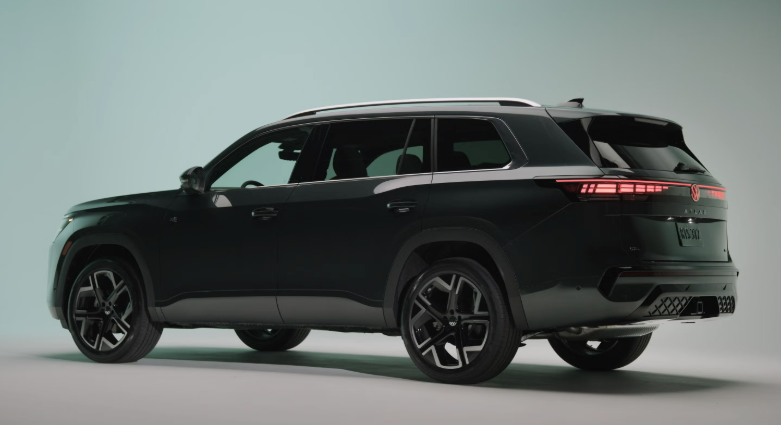
The exterior takes on a more sculpted, sleeker shape than the outgoing model. Volkswagen has given the 2027 Atlas double-stacked LED headlights, a layout that separates the primary beam from the daytime running and signal elements instead of stacking every function into one housing. Animated LED turn signals sweep across the lighting element rather than simply blinking on and off, and illuminated door handles light up as a driver approaches. None of these are performance features, but they change how the Atlas reads at night and in a parking lot full of similar-sized SUVs, which is part of how a family distinguishes their vehicle from the one parked next to it. Three new exterior colors join the lineup: Sacramento Green, Sandstone, and Blackberry, giving shoppers who found the prior color sheet limited some new options to consider once local inventory and ordering details are available.
Inside, Volkswagen has moved toward wave-like design patterns across the dash and door panels, a departure from the flatter, more horizontal layout of the current Atlas. Real wood trim and wood-grain textures appear across the cabin, offered across three interior color palettes rather than a single standard scheme. These are the kinds of changes a family notices the first time they sit in the vehicle rather than on a spec sheet: the way light reflects off a wood accent, the texture under a hand resting on the door panel, or how a lighter palette makes the third row feel less closed in on a long drive down I-10. Overall exterior dimensions grow only slightly, with the new Atlas running approximately one inch longer than the outgoing model while keeping the same width, wheelbase, and height, so the redesign is about materials and layout rather than a larger footprint that would change how the SUV fits in a garage or a standard parking space.
| Feature Category | What Changed |
|---|---|
| Exterior | Sculpted, sleeker body design; double-stacked LED headlights; animated LED turn signals; illuminated door handles; three new colors (Sacramento Green, Sandstone, Blackberry) |
| Interior | Wave-like design patterns on dash and doors; real wood trim and textures; three interior color palettes |
| Technology | Infotainment screen grows to 15 inches on most trims (12.9 inches on the base trim); new driver experience dial for volume, ambient lighting, and drive mode |
| Powertrain | Turbocharged 2.0-liter EA888 evo5 engine now rated at 282 horsepower, up from 269 horsepower; FWD standard, 4MOTION AWD available; towing capacity unchanged at 5,000 pounds |
Engine, Drivetrain, and Towing
Volkswagen carries the Atlas forward with a turbocharged 2.0-liter EA888 evo5 four-cylinder engine, but the output has increased to 282 horsepower, up from 269 horsepower on the outgoing generation. In practical terms, that bump shows up most in merging onto I-10 with a full load of passengers and cargo, or pulling away from a stop at a busy intersection on US-98 without the engine feeling like it is working as hard to get a nearly 4,500-pound SUV moving. A modest horsepower increase on the same basic engine architecture is not a dramatic transformation in how the Atlas drives, but it does give the redesigned SUV more margin when it is carrying the weight that three rows of passengers and a cargo area full of luggage typically add.
Front-wheel drive remains the standard configuration, with Volkswagen's 4MOTION all-wheel-drive system available for shoppers who want it. That structure matches how the outgoing Atlas is sold and gives buyers the same basic choice they have had before: a FWD Atlas for drivers who mostly stick to paved roads and want a simpler, typically more efficient drivetrain, or a 4MOTION Atlas for drivers who want additional traction support in wet weather, on a boat ramp, or hauling a trailer up a graded driveway. Towing capacity stays at 5,000 pounds, unchanged from the current generation. That figure is useful for comparing the Atlas to other three-row SUVs in its class, but actual towing capability for any specific trailer depends on the exact trim, drivetrain, and how the vehicle is loaded and equipped, so our team can confirm the towing setup that applies to the specific configuration you are considering. We are not in a position to say a given trailer or boat is suitable for towing without reviewing the exact vehicle and load.
Dimensionally, the 2027 Atlas stays close to the vehicle it replaces. It runs about one inch longer overall, with the same width, wheelbase, and height carried over from the outgoing generation. That consistency matters for two-row families used to loading kids into the second row or parents folding the third row flat for a Costco run to Mobile: the cargo area and interior proportions a current owner already knows will translate to the redesigned model rather than requiring them to relearn how their SUV handles a driveway, a parking garage, or a home garage door.
Technology and Family-Focused Features
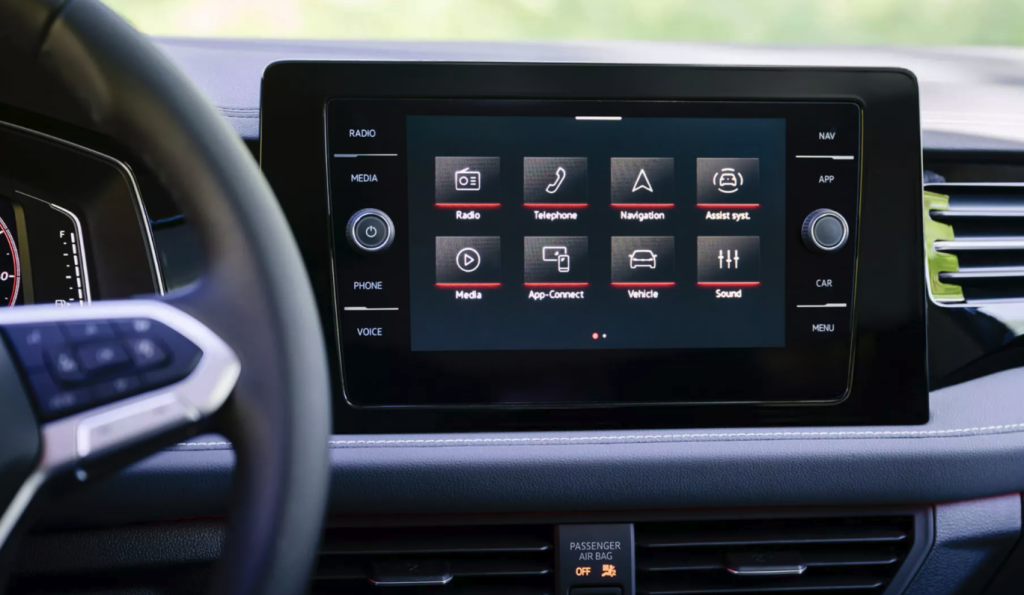
The most immediately noticeable change inside the 2027 Atlas is the size of the infotainment screen. Volkswagen has grown the display to 15 inches on most trims, with a 12.9-inch screen offered on the base trim. A larger screen is not just a bigger rectangle in the dash: it means larger, easier-to-read touch targets for climate and navigation controls, more screen space to split between a map and audio source at the same time, and generally less squinting or reaching to adjust a setting while merging onto the Bayway. For a family vehicle that spends a lot of time carrying kids and running errands, a screen that is easier to operate at a glance is a genuine usability improvement rather than a cosmetic one.
Alongside the larger screen, Volkswagen has added a new driver experience dial, a physical control similar in concept to the rotary dial already used on the current Tiguan. Rather than digging through a touchscreen menu to adjust volume, change the ambient lighting color, or switch drive modes, a driver twists or presses the dial directly. That matters because touchscreen-only controls for basic functions like volume have been a common complaint across the industry, and a dedicated physical dial gives Atlas drivers a way to make quick adjustments without taking their eyes off the road for as long. It is a small piece of hardware, but it addresses a real, everyday frustration rather than adding a feature for its own sake.
Beyond the cabin's screen and controls, several family-focused features are new or updated on the redesigned Atlas. A power liftgate makes loading groceries, strollers, or beach gear easier when a parent's hands are already full. Front and rear park distance control adds sensor-based alerts when maneuvering in tight parking lots or backing out of a driveway with limited visibility. Rear sunshades help keep direct Gulf Coast sun off child car seats and rear-seat passengers during the region's long, bright summer. New B-pillar air vents extend climate control to second-row passengers more directly, which matters on days when Baldwin County humidity makes the cabin feel warm even with the front vents running at full blast. A center-seat airbag adds another layer of protection for occupants seated next to each other in the front and outboard second-row positions. None of these features replace attentive driving or proper child-seat installation, and how any driver-assistance or safety feature performs depends on road conditions, vehicle speed, and how the system is used, so they should be understood as additional layers of convenience and protection rather than guarantees of a particular outcome.
| Feature | Why It Matters for Families |
|---|---|
| Power liftgate | Opens and closes hands-free, useful when carrying kids, strollers, or beach and sports gear |
| Front and rear park distance control | Adds sensor alerts for tight parking lots, driveways, and reduced-visibility backing situations |
| Rear sunshades | Helps block direct sun on rear-seat passengers and child car seats during hot Gulf Coast days |
| New B-pillar air vents | Extends climate control more directly to second-row passengers |
| Center-seat airbag | Adds an additional layer of protection for front and outboard second-row occupants |
What This Means If You Currently Drive a 2026 Atlas
If you already own a 2026 Atlas, the redesign does not make your current SUV obsolete. The dimensions, seating capacity, and towing rating carry over closely enough that your Atlas will continue to do the same job it does today: hauling three rows of passengers, folding flat for cargo, and handling the daily mix of school runs, errands, and Eastern Shore road trips it was bought for. The changes that define the 2027 model, the exterior redesign, the interior materials, the larger screen, the driver experience dial, and the horsepower increase, are meaningful, but they are improvements layered onto a formula that has not fundamentally changed rather than a reason to think your current Atlas has fallen behind.
The decision of whether to wait for the 2027 model comes down to which of those changes actually matter to your household and how much uncertainty you are comfortable carrying. Shoppers who want the updated interior materials, the larger infotainment screen, or the additional horsepower have a clear reason to wait. Shoppers who mainly want a capable, currently available three-row SUV, and who would rather avoid waiting for a specific 2027 configuration to become available locally, may be better served by what is available now. Volkswagen has now published pricing, fuel economy information, and trim names; Volkswagen of Daphne can help you compare those details with current inventory.
| Item | Status |
|---|---|
| Engine output (282 hp) | Confirmed |
| Towing capacity (5,000 lbs) | Confirmed |
| Seating capacity (up to 7) | Confirmed |
| Overall dimensions (approx. 1 inch longer, same width/wheelbase/height) | Confirmed |
| Exterior colors (Sacramento Green, Sandstone, Blackberry) | Confirmed |
| Launch timing (fall 2026) | Confirmed |
| Pricing | Starting MSRP of $41,610 before destination, taxes, title, options, and dealer charges |
| EPA fuel economy figures | 22 mpg city / 29 mpg highway for FWD; actual mileage varies |
| Trim lineup | SE, SE with Technology, SEL R-Line, SEL Premium R-Line |
| Hybrid Atlas variant and timing | Contact Volkswagen of Daphne for the latest official information |
Volkswagen's published pricing, EPA figures, and trim lineup now provide a starting point for comparing the 2027 Atlas with a current 2026 model. The right comparison still depends on the exact drivetrain, equipment, and local availability. If you are weighing a trade-in now versus waiting, our team can walk through your current Atlas's trade-in value and how it may apply toward either a current model or a 2027 purchase, using our trade appraisal tool as a starting point. We can also talk through financing timelines through our finance center so you have a realistic picture of what your options would mean for your household, without promising a specific payment or approval outcome before reviewing your details.
Where to Learn More About the 2027 Atlas Near Daphne
Volkswagen of Daphne is tracking official updates on the 2027 Atlas as Volkswagen releases them. Volkswagen now publishes pricing and fuel economy information, and its configurator lists SE, SE with Technology, SEL R-Line, and SEL Premium R-Line trims. Contact our team for the full information on your preferred configuration, current ordering details, and local arrival timing. We can also show you what is currently available in our new Volkswagen inventory if a three-row SUV is a near-term need rather than something that can wait for a specific configuration.
If you are still deciding between waiting for the 2027 Atlas or moving forward with a current model, our team can walk through the tradeoffs with you directly rather than leaving you to guess based on a spec sheet. You can find more about how we work with Eastern Shore and Mobile Bay families on our Why Volkswagen of Daphne page, and our sales team is available at 251-374-0664 to answer specific questions as new information becomes available.
Key Takeaways
- The 2027 Volkswagen Atlas is an all-new second generation with a redesigned exterior, updated interior materials, and new technology.
- The turbocharged 2.0-liter EA888 evo5 engine is now rated at 282 horsepower, up from 269 horsepower on the outgoing Atlas.
- Towing capacity remains 5,000 pounds, and the Atlas continues to offer seating for up to seven passengers across three rows.
- The infotainment screen grows to 15 inches on most trims (12.9 inches on the base trim), and a new driver experience dial controls volume, ambient lighting, and drive mode.
- New family-focused features include a power liftgate, front and rear park distance control, rear sunshades, B-pillar air vents, and a center-seat airbag.
- Volkswagen now publishes starting pricing, fuel economy information, and four trim names; contact Volkswagen of Daphne for configuration-specific details and local availability.
FAQ
Is the 2027 Atlas bigger than the 2026 model?
Only slightly. Volkswagen has confirmed the 2027 Atlas is about one inch longer overall than the outgoing generation, while width, wheelbase, and height stay the same. The change is unlikely to affect how the vehicle fits in a typical garage or parking space compared to the current Atlas.
How much horsepower does the 2027 Atlas have?
The 2027 Atlas uses a turbocharged 2.0-liter EA888 evo5 four-cylinder engine rated at 282 horsepower, an increase from 269 horsepower on the outgoing generation. Front-wheel drive is standard, and 4MOTION all-wheel drive is available.
When can I order a 2027 Atlas at Volkswagen of Daphne?
Volkswagen has stated the 2027 Atlas launches in fall 2026 and now publishes pricing and trim information. Contact Volkswagen of Daphne to confirm current ordering timelines, local arrivals, and availability for your preferred configuration.
Will there be a hybrid Atlas?
Volkswagen's current U.S. Atlas configurator lists gasoline-powered models. Contact Volkswagen of Daphne for the latest official information about a future hybrid Atlas and any announced U.S. launch timing.
The 2027 Volkswagen Atlas brings real changes worth understanding before you decide what to do next, whether that means waiting for the redesign, trading in a current 2026 Atlas, or moving forward with a vehicle that is available today. The engine, seating capacity, and towing rating carry over in ways that should reassure current owners, while the exterior, interior, and technology updates give shoppers a clear reason to pay attention to the fall 2026 launch. Volkswagen has now published starting pricing, fuel economy information, and trim names, and our team can help you review the details for the Atlas configuration you are considering.
If you want to talk through your options now, our team at Volkswagen of Daphne is ready to help. Call our sales team at 251-374-0664, visit us at 29816 Frederick Blvd in Daphne, AL, or reach out online, and we can walk you through current inventory, financing, and what we know about the 2027 Atlas as Volkswagen continues to release details.
Explore Your Volkswagen Atlas Options in Daphne