
Maximum Range: How Far Can You Drive a Jetta Around Daphne on One Tank?
The 2026 Volkswagen Jetta combines a 1.5-liter turbocharged engine with an 8-speed automatic transmission and EPA-estimated fuel economy of 29 mpg city and 40 mpg highway. For someone commuting around Daphne, Mobile, or the Eastern Shore, however, those two headline numbers are only the starting point.
The 2026 Volkswagen Jetta is EPA-rated at 29 mpg city and 40 mpg highway across its regular S, Sport, SE, and SEL trims. The Jetta S carries a 34-mpg combined rating, while Sport, SE, and SEL are rated at 33 mpg combined. EPA estimates are useful for comparing vehicles, but actual mileage varies with factors such as driving habits, traffic, route type, speed, and vehicle condition.
The difference between 33 and 34 mpg combined is small, but understanding it prevents a common mistake: assuming every Jetta trim has exactly the same EPA rating simply because Volkswagen advertises the same rounded 29-city and 40-highway figures across the lineup.
More importantly, fuel economy becomes useful when you connect it to your own driving. A commuter spending most of the week on I-10 or the Bayway should interpret the EPA numbers differently from someone making short local trips along US-98 with frequent stops.
2026 Volkswagen Jetta MPG at a Glance
All four regular 2026 Jetta trims use the same basic powertrain: a 1.5-liter turbocharged four-cylinder producing 158 horsepower and 184 lb-ft of torque, paired with an 8-speed automatic transmission and front-wheel drive.
The Jetta GLI is not included in this guide. It uses a different 2.0-liter performance powertrain and has different fuel-economy specifications, so mixing it into the regular Jetta MPG discussion would make the comparison less useful.
2026 Jetta Fuel Economy by Trim
| 2026 Jetta Trim | City MPG | Highway MPG | Combined MPG |
|---|---|---|---|
| Jetta S | 29 | 40 | 34 |
| Jetta Sport | 29 | 40 | 33 |
| Jetta SE | 29 | 40 | 33 |
| Jetta SEL | 29 | 40 | 33 |
EPA estimates shown for the regular 2026 Volkswagen Jetta lineup. Actual mileage will vary. Jetta GLI uses a different powertrain and is not included.
All regular 2026 Jetta trims share a 158-horsepower 1.5-liter turbocharged engine, front-wheel drive, and an 8-speed automatic transmission, but their combined EPA ratings are not identical. The S is rated at 34 mpg combined, while Sport, SE, and SEL are rated at 33 mpg combined, even though all four carry the same rounded 29-city and 40-highway figures.
Volkswagen does not need to explain that one-mpg combined difference for it to matter in an accurate comparison. The useful takeaway is simply that the city and highway headline figures do not tell the entire EPA-rating story.
If you are also comparing features among these four versions, see our 2026 Volkswagen Jetta trim guide rather than choosing solely on a one-mpg combined difference.
What Powers the 2026 Volkswagen Jetta?
Fuel economy is only one side of the powertrain equation. The 2026 Jetta's 1.5-liter TSI turbocharged four-cylinder produces 158 horsepower and 184 lb-ft of torque.
Volkswagen pairs that engine with an 8-speed automatic transmission with Tiptronic and Sport Mode. The regular Jetta lineup uses front-wheel drive rather than 4MOTION all-wheel drive.
That consistency makes the trim comparison easier. Moving from S to Sport, SE, or SEL is primarily about differences in equipment, comfort, design, and technology rather than moving to an entirely different engine.
What Does 29 City / 40 Highway MPG Mean for Your Commute?
The city, highway, and combined ratings represent different driving patterns. Which number deserves the most attention depends on the routes you actually use.
City-Heavy or Stop-and-Go Driving
If most of your driving involves shorter trips, traffic signals, lower speeds, and repeated acceleration and braking, the 29-mpg city estimate is a more relevant reference point than the 40-mpg highway number.
That does not mean every local trip will return 29 mpg. A very short drive, heavy congestion, aggressive acceleration, extended idling, climate-control use, and other conditions can move actual fuel economy in either direction.
Highway-Heavy Commuting
Drivers who spend a large share of their commute on I-10 or another sustained highway route may find the 40-mpg highway rating more relevant for comparison purposes.
It should still be treated as an EPA estimate rather than a guaranteed result. Highway speed, traffic, wind, vehicle load, tire condition, driving behavior, and other operating factors affect actual fuel use.
Mixed Driving
For many Eastern Shore drivers, the combined rating may be the most useful starting point because a normal week includes both local roads and higher-speed travel.
That is where the 34-mpg combined rating for the S and 33-mpg combined ratings for Sport, SE, and SEL become more useful than simply repeating the 40-mpg highway headline.
Estimate Your Own Jetta Fuel Use
MPG becomes much easier to understand when you turn it into approximate gallons.
This calculation does not predict what your Jetta will achieve. It lets you use a chosen MPG assumption to estimate how much fuel a certain amount of driving would require.
Once you have an approximate gallon figure, you can multiply it by the fuel price you actually pay. That is more useful than publishing a fixed monthly fuel-cost claim because gasoline prices and driving patterns change.
Build the Calculation Around Your Actual Commute
- Estimate your normal round-trip work or school mileage.
- Multiply it by the number of days you make that trip each month.
- Add errands, appointments, weekend driving, and regular family travel.
- Add occasional longer trips separately rather than pretending every month is identical.
- Divide the total miles by a realistic MPG assumption.
This approach also makes comparisons with another vehicle more useful. Instead of asking whether one model has "good gas mileage," you can estimate the difference in gallons over the number of miles you actually drive.
Why Your Actual Jetta MPG Can Differ From the EPA Rating
Volkswagen itself qualifies EPA fuel-economy estimates by noting that actual mileage varies and depends on factors including driving habits and vehicle condition.
Several everyday factors can therefore change your observed fuel economy:
- Route mix: repeated stop-and-go driving differs from sustained highway travel.
- Speed: the speed and traffic pattern of a highway commute can affect consumption.
- Acceleration and braking: driving style changes how much fuel is required to cover the same route.
- Vehicle condition: maintenance and mechanical condition can affect how the vehicle operates.
- Tire condition and pressure: proper tire maintenance matters for vehicle efficiency and safety.
- Climate-control use: cabin cooling places an additional demand on the vehicle, which can affect fuel consumption.
- Passenger and cargo load: operating conditions are not identical from one trip to another.
Is the Jetta Practical Beyond Fuel Economy?
Good MPG only matters if the vehicle also works for the rest of your commute.
Volkswagen lists 14.1 cubic feet of trunk capacity and 37.4 inches of rear legroom for the Jetta. That gives the sedan a conventional enclosed trunk while retaining seating for five.
A shopper who regularly carries larger or taller cargo may still prefer a hatchback or SUV even if the Jetta's fuel-economy ratings are attractive. Someone who mostly carries a laptop bag, groceries, luggage, or everyday sedan-size cargo may find the Jetta layout sufficient.
For a broader look at the sedan rather than just fuel economy, see our 2026 Volkswagen Jetta overview .
Technology That Matters During a Daily Commute
The Jetta also includes technology that may matter to someone spending significant time in the car, but those features should not be presented as guaranteed fuel-economy improvements.
Volkswagen lists IQ.DRIVE as standard on the 2026 Jetta. The suite can include driver-assistance technologies such as Travel Assist, Adaptive Cruise Control, Active Blind Spot Monitor, Rear Traffic Alert, Front Assist, Lane Assist, and Emergency Assist on automatic-transmission models.
These systems are driver-assistance features. They do not make the Jetta autonomous and do not replace attentive driving.
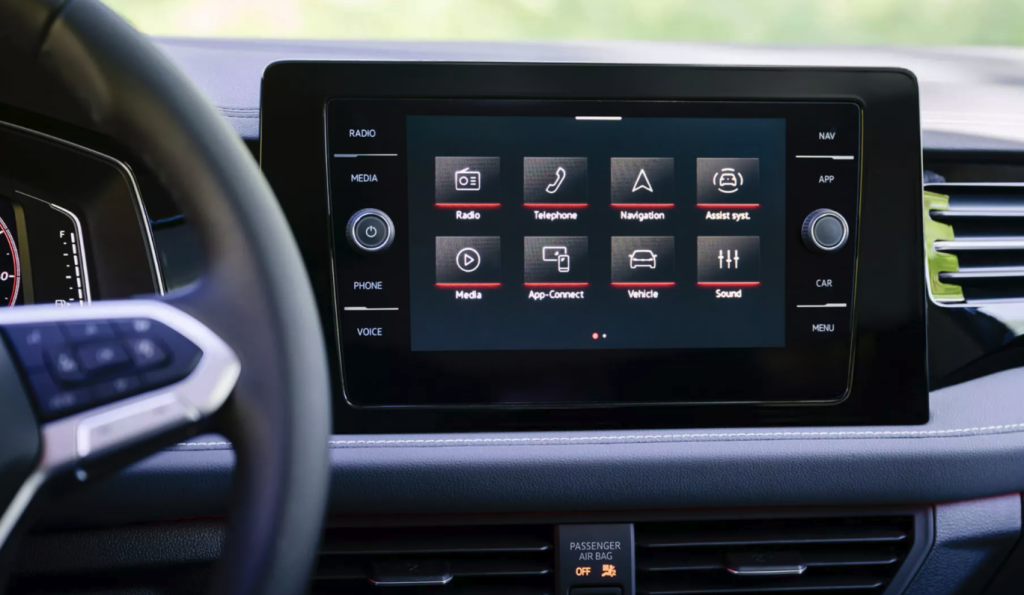
Wireless App-Connect for compatible Apple CarPlay and Android Auto devices can also simplify everyday phone integration. Available Digital Cockpit and comfort features vary by trim.
For a deeper explanation, see our guide to 2026 Jetta technology and driver-assistance features .
How the Jetta Fits Different Eastern Shore Commutes
Daphne-to-Mobile Commuter
If a large portion of your weekly mileage occurs at sustained highway speeds, the highway rating becomes more relevant. Estimate your actual monthly miles first, then use a realistic MPG assumption to understand approximate fuel consumption.
Mostly Local Driving
If your routine is dominated by shorter US-98 trips, errands, traffic signals, and local stops, the city or combined ratings may be more useful references than the 40-mpg highway figure.
Frequent Gulf Coast Trips
Drivers adding longer highway trips to their normal routine should include those miles in the monthly calculation. Fuel economy can become increasingly important as total annual mileage rises.
For a Daphne-area commuter, the most useful Jetta fuel-economy number depends on the route. Highway-heavy driving makes the 40-mpg EPA highway rating more relevant for comparison, while local and mixed driving make the 29-mpg city and 33-to-34-mpg combined ratings more useful. Estimating your own monthly miles and dividing them by a realistic MPG assumption gives a more practical picture than treating the highway rating as the result of every commute.
The MPG Detail Many Jetta Guides Miss
Volkswagen's headline 29-city and 40-highway figures make the 2026 Jetta lineup look identical from a fuel-economy perspective, but the combined EPA ratings show a small distinction.
The Jetta S is rated at 34 mpg combined. Sport, SE, and SEL are rated at 33 mpg combined.
That difference is not large enough to make trim choice a fuel-economy-only decision. Features, comfort equipment, wheel and tire configuration, purchase price, and your own preferences are likely to matter more when choosing among the four trims.
The reason to mention the distinction is accuracy. If you are comparing specifications closely, "29/40 mpg" is not the complete EPA picture for every 2026 Jetta.
What to Check During a Commuter-Focused Test Drive
A fuel-economy figure can help narrow a shopping list, but it cannot tell you whether the car works comfortably for an hour of everyday driving.
During a Jetta test drive, pay attention to:
- seat comfort and driving position;
- visibility in traffic and while changing lanes;
- acceleration when merging onto a highway;
- how the 8-speed automatic responds in normal driving;
- road and cabin noise at the speeds you normally use;
- infotainment and smartphone connectivity;
- driver-assistance controls and displays;
- trunk access and whether your normal cargo fits comfortably.
If possible, drive a route that resembles your normal use rather than judging the Jetta only from a short low-speed loop.
Compare Your Commute in a 2026 Jetta
Review current Volkswagen availability, then drive a Jetta on the type of roads you use most often to compare comfort, powertrain response, technology, and everyday usability alongside its EPA fuel-economy ratings.
Key Takeaways
- The regular 2026 Volkswagen Jetta lineup is EPA-rated at 29 mpg city and 40 mpg highway.
- The Jetta S is rated at 34 mpg combined, while Sport, SE, and SEL are rated at 33 mpg combined.
- All four regular Jetta trims use a 158-horsepower 1.5-liter turbocharged engine with an 8-speed automatic transmission and front-wheel drive.
- EPA fuel-economy estimates are comparison tools rather than guaranteed real-world results.
- A useful commuter calculation is miles driven divided by MPG, which gives an approximate number of gallons used.
- Route type matters. Highway-heavy, local, and mixed commuting patterns make different EPA ratings more relevant.
2026 Volkswagen Jetta Fuel Economy FAQs
What MPG does the 2026 Volkswagen Jetta get?
The regular 2026 Volkswagen Jetta lineup is EPA-rated at 29 mpg city and 40 mpg highway. Combined fuel economy is 34 mpg for the Jetta S and 33 mpg for Sport, SE, and SEL. Actual mileage varies with driving habits, route, traffic, vehicle condition, and other operating factors.
Which 2026 Jetta trim gets the best combined MPG?
The Jetta S has the highest combined EPA rating at 34 mpg. Sport, SE, and SEL are rated at 33 mpg combined. All four regular trims share the same 29-mpg city and 40-mpg highway headline ratings.
Will a 2026 Jetta always get 40 mpg on the highway?
No. The 40-mpg figure is an EPA highway estimate rather than a guaranteed result. Actual highway fuel economy varies with factors such as speed, traffic, driving habits, vehicle condition, weather, load, and other operating conditions.
Is the 2026 Jetta a practical choice for a long commute?
Its EPA ratings make fuel economy worth considering for a high-mileage commute, but MPG should not be the only factor. Seat comfort, trunk capacity, rear-seat room, technology, highway behavior, and the route you actually drive also matter. A test drive on roads similar to your normal commute can help evaluate those factors together.
Use Your Own Commute to Evaluate the Jetta
The most useful fuel-economy comparison starts with your own mileage. Estimate how far you drive in a normal month, decide whether your route is mostly local, highway, or mixed, and then use the appropriate EPA figure as a comparison point rather than a promise.
You can view current Volkswagen inventory and schedule a Volkswagen test drive to compare the Jetta's fuel-economy potential with the comfort, cargo space, technology, and driving characteristics that matter during your daily routine.