Blog

All New VW Cars Daphne Volkswagen Service Daphne Volkswagen Dealer Vehicle Comparison Daphne Used Cars
volkservi

Are Volkswagen Vehicles Expensive to Maintain? | Volkswagen of Daphne

Are Volkswagens Expensive to Maintain? VW Maintenance Cost Guide Volkswagen maintenance cost depends on your model, mileage, driving habits, service history, and whether you stay ahead of routine care. The good news is that most VW ownership costs are easier to manage when maintenance is planned instead of delayed. Oil changes, tire rotations, inspections, brake service, battery checks, and genuine Volkswagen parts can help protect long-term reliability while reducing the chance of unexpected repair costs. Volkswagen of Daphne created this guide for drivers in Daphne, Fairhope, Spanish Fort, Mobile, Foley, and Gulf Shores who want a clearer answer to common questions like “Are Volkswagens expensive to maintain?” and “Are Volkswagen parts expensive?” Use the sections below to understand what affects VW maintenance cost, how routine service compares with repair costs, and how Volkswagen Care plans may help you budget with more confidence. Last updated: July 8, 2026 Volkswagen maintenance cost is the total cost of routine services, inspections, replacement parts, fluids, tires, brakes, batteries, and scheduled maintenance needed to keep a VW running properly. Your actual cost depends on the model, mileage, age, driving conditions, and whether the work is preventive maintenance or an unexpected repair. Quick Answer: Are Volkswagens Expensive to Maintain? Volkswagens are not automatically expensive to maintain, but they do reward consistent, Volkswagen-specific service. Routine VW maintenance is usually more predictable than unexpected repair work, especially when you follow the recommended maintenance schedule, use genuine VW parts, keep records, and address small issues early. New Volkswagen models also include Carefree Maintenance for the first two scheduled services, and Volkswagen Care prepaid maintenance plans may help owners manage future service costs. Most predictable costs: Oil changes, tire rotations, inspections, filters, brake service, and battery checks. Costs that vary most: Tires, brakes, diagnostics, repairs, high-mileage service, and driving-condition-related wear. Best way to save: Follow the VW maintenance schedule and use service specials or prepaid maintenance plans when available. Local help: Volkswagen of Daphne can help estimate service needs based on your model, mileage, and driving habits. Table of Contents Understanding Volkswagen Maintenance Cost What Affects VW Maintenance and Repair Costs? Routine Maintenance vs Unexpected Volkswagen Repair Costs Volkswagen Carefree Maintenance and VW Care Plans Are Volkswagen Parts Expensive? Common Volkswagen Services and Cost Factors How Volkswagen of Daphne Helps Lower Maintenance Costs Daphne, Mobile, and Gulf Coast Driving Conditions Key Takeaways Volkswagen Maintenance Cost FAQ Understanding Volkswagen Maintenance Cost Key Takeaway: Volkswagen maintenance cost is easier to control when you plan routine care around mileage, time, and driving conditions instead of waiting for warning lights or symptoms. Your Volkswagen maintenance costs depend on your model, mileage, driving habits, local conditions, and how consistently you follow the recommended service schedule. A Tiguan used for daily family driving may have different tire and brake needs than a Jetta used mostly for highway commuting. An Atlas that takes frequent Gulf Coast road trips may need different attention than a Taos used mostly around Daphne and Fairhope. For many VW owners, the most important distinction is simple: scheduled maintenance is usually more predictable than surprise repairs. Routine services help technicians inspect the vehicle, catch wear early, and confirm that fluids, filters, tires, brakes, battery health, and software or system concerns are being monitored over time. Volkswagen recommends maintenance every 10,000 miles or 12 months, whichever comes first, and new VW models include two years of Carefree Maintenance covering the first two scheduled maintenance services. If you want to plan beyond those first visits, Volkswagen Care prepaid maintenance plans can help cover factory-recommended scheduled maintenance at participating Volkswagen dealerships. Review VW Maintenance Services What Affects VW Maintenance and Repair Costs? Drivers often search for one simple number, but Volkswagen maintenance cost is not one-size-fits-all. Your actual cost depends on whether you are paying for normal wear, scheduled service, diagnostics, a model-specific repair, or a high-mileage item that appears later in ownership. Model and Powertrain Maintenance needs can vary between models like Jetta, Taos, Tiguan, Atlas, Golf GTI, and ID.4. Tires, brakes, fluids, and system checks may differ by vehicle type. Mileage and Age A newer VW with Carefree Maintenance may have lower early service costs, while an older or higher-mileage VW may need more wear-item attention. Driving Habits Short trips, stop-and-go traffic, highway commuting, towing, heat, and frequent road trips can affect tires, brakes, battery life, and fluid condition. Service Consistency Regular service can help reduce the risk of larger repairs by catching small concerns before they become more expensive. Cost Factor Why It Matters How to Manage It Model Different VW models have different service needs, tire sizes, brake sizes, and systems. Use model-specific maintenance guidance and service records. Mileage Higher mileage increases the importance of inspections and wear-item planning. Follow the recommended maintenance schedule and ask about upcoming needs. Driving conditions Heat, traffic, humidity, and short trips can affect batteries, brakes, tires, and fluids. Schedule service before long trips and during seasonal changes. Parts choice Genuine Volkswagen parts are designed for proper fit and performance. Use genuine VW parts when fit, quality, and long-term reliability matter. Maintenance history Missing records can make future costs harder to predict. Keep service records and confirm history when buying a used VW. Routine Maintenance vs Unexpected Volkswagen Repair Costs Key Takeaway: Routine maintenance is planned. Repair costs are usually less predictable. The goal is to use maintenance to reduce surprise repair risk. Many drivers use “maintenance cost” and “repair cost” as if they mean the same thing. They are related, but they are not identical. Maintenance includes planned services like oil changes, inspections, tire rotations, filters, brake checks, battery testing, and mileage-based service. Repairs usually happen when a part fails, a system sets a warning light, or a problem requires diagnosis and replacement. The most cost-effective VW ownership strategy is to stay ahead of routine service so repair risk is easier to manage. That does not mean repairs never happen. It means your service history gives technicians better information, helps spot patterns, and can make ownership more predictable over time. Category Examples Cost Predictability Best Ownership Strategy Routine maintenance Oil changes, inspections, tire rotations, filters, fluid checks More predictable Follow the VW maintenance schedule Wear items Brakes, tires, battery, wipers Moderately predictable Inspect during service and plan ahead Diagnostics Check engine light, EPC light, electrical concern, noise diagnosis Variable Do not delay recurring symptoms Repairs Failed parts, leaks, sensors, mechanical repairs Less predictable Address small problems before they expand Prepaid service Volkswagen Care prepaid scheduled maintenance More predictable for covered services Review plan options based on model and mileage Volkswagen Carefree Maintenance and VW Care Plans Key Takeaway: Volkswagen Carefree Maintenance helps with early scheduled service, while Volkswagen Care prepaid plans can help owners budget for future factory-recommended maintenance. New Volkswagen models include Carefree Maintenance for the first two scheduled maintenance services. Volkswagen recommends maintenance every 10,000 miles or 12 months, whichever comes first, so this early coverage can help reduce initial ownership costs for eligible new VW owners. After those first scheduled services, Volkswagen Care prepaid maintenance plans may help owners plan ahead. These plans are designed to cover factory-recommended scheduled maintenance services, which can make costs more predictable and help keep your Volkswagen service history consistent. Program What It Helps With Best For What to Confirm Carefree Maintenance Early scheduled maintenance on eligible new VW models New Volkswagen owners Eligibility, covered services, time limits, and mileage limits Volkswagen Care Plans Prepaid factory-recommended scheduled maintenance Drivers who want predictable service budgeting Plan availability, covered intervals, model year, and exclusions Service specials Potential savings on select services Owners looking to reduce out-of-pocket service costs Current offers, expiration dates, and service eligibility These programs do not replace all possible ownership costs. Tires, brakes, batteries, diagnostics, repairs, and wear items may still vary. However, they can help reduce uncertainty around factory-recommended scheduled maintenance and make it easier to plan your VW service budget. Learn About Carefree Maintenance Explore Volkswagen Care Plans Are Volkswagen Parts Expensive? Key Takeaway: Volkswagen parts cost depends on the part, model, availability, and whether the repair is routine or specialized. The right part choice can support fit, performance, and long-term reliability. Searches like “are Volkswagen parts expensive” and “are VW parts expensive” show that many drivers are not only asking about maintenance intervals. They are also trying to understand what happens when their VW needs a repair, replacement part, or high-mileage service. Volkswagen parts cost can vary widely. Filters, wipers, oil service parts, batteries, brake components, and tires are common ownership items. More specialized repairs, electrical diagnosis, sensor work, turbo-related concerns, or model-specific components can cost more depending on the issue and the vehicle. Using genuine Volkswagen parts can help protect proper fit and performance. It may also help avoid repeat repairs caused by parts that do not match the vehicle’s specifications. For many owners, the better question is not just “Is this part expensive?” It is “Will this part help the vehicle perform correctly and reduce the chance of doing the job twice?” Part or Service Type Typical Cost Pattern Why It Varies Best Way to Manage Cost Filters and oil service parts More predictable Model, oil specification, service interval Follow scheduled maintenance Battery Moderately predictable Climate, age, driving habits, battery type Test before failure, especially in Gulf Coast heat Brakes Varies by driving style Traffic, hills, load, driving habits, model Inspect pads and rotors during routine visits Tires Varies by size and usage Vehicle model, tire size, alignment, rotation habits Rotate, align, and monitor pressure Diagnostic repairs Less predictable System complexity, fault history, part availability Diagnose early before symptoms worsen Common Volkswagen Services and Cost Factors Common Volkswagen services include maintenance items that support reliability, efficiency, safety, and long-term value. Exact pricing depends on the model, service package, parts needed, and current offers, so we recommend using this table as a planning guide rather than a fixed estimate. Service Why It Matters Typical Timing or Trigger Cost-Saving Tip Oil and filter change Protects engine health and supports long-term performance Often every 10,000 miles or 12 months, depending on model and guidance Follow the VW schedule and use the correct oil specification Tire rotation Helps promote even tire wear Often paired with scheduled service Rotate regularly and monitor tire pressure Brake inspection Helps identify pad, rotor, fluid, or braking concerns During routine maintenance or when noise, vibration, or longer stopping distance appears Inspect before pads wear too far Battery test or replacement Helps prevent no-start problems Battery age, slow start, warning light, or seasonal check Test battery before summer heat or long trips Alignment Helps protect tires and handling Uneven tire wear, pulling, steering-wheel vibration, or after suspension/tire work Do not delay if tire wear appears uneven Diagnostic service Finds the cause of warning lights, noises, leaks, or performance issues Check engine light, EPC light, dashboard warning, noise, or drivability symptom Diagnose recurring concerns early Schedule Volkswagen Service How Volkswagen of Daphne Helps Lower Your Maintenance Costs Key Takeaway: A trusted VW service center can help you plan service by model, mileage, condition, and driving habits instead of reacting only when something breaks. Keeping your VW in peak condition does not have to feel confusing. The team at the Volkswagen of Daphne service center can help you understand what your vehicle needs now, what can wait, and what should be planned for your next visit. Here is how we help local VW owners manage maintenance costs: Certified Volkswagen service support for VW models and systems Online scheduling for convenient service planning Genuine Volkswagen parts for proper fit and performance Maintenance guidance based on model, mileage, and service history Volkswagen Care Plan information for prepaid maintenance planning Clear recommendations when a service is urgent, upcoming, or optional By staying on top of routine care and choosing a Volkswagen service center, you can help your vehicle stay reliable while reducing the chance of surprise repair costs. This is especially helpful for drivers who plan to keep their VW for years, commute from Daphne to Mobile, or rely on one vehicle for family transportation. Visit Our VW Service Center Daphne, Mobile, and Gulf Coast Driving Conditions Key Takeaway: Local driving conditions can affect Volkswagen maintenance cost. Heat, humidity, short trips, traffic, and road-trip use can change how often certain items need attention. Volkswagen maintenance planning should reflect how and where you drive. Around Daphne, Fairhope, Spanish Fort, Mobile, Foley, and Gulf Shores, vehicles often deal with heat, humidity, stop-and-go traffic, short trips, school schedules, beach trips, and highway commuting. These conditions can affect batteries, tires, brakes, fluids, air filters, and alignment. Local Driving Pattern Potential Maintenance Impact Recommended Planning Daphne-to-Mobile commute More mileage, highway use, tire wear, and scheduled service needs Track mileage closely and schedule service before intervals are overdue Fairhope and Spanish Fort errands Short trips can affect battery life and service timing Ask for battery checks and inspection during routine service Gulf Shores weekend trips Longer drives, heat, and road vibration can reveal small issues Inspect tires, fluids, and brakes before seasonal travel Summer heat and humidity Battery, A/C, belts, hoses, and cooling systems may work harder Schedule seasonal inspections before peak heat Used VW ownership Unknown maintenance history can make costs harder to predict Start with a baseline inspection and service-history review If you are not sure what your Volkswagen needs next, start with the model, mileage, service history, and any symptoms you have noticed. From there, our team can help you prioritize what matters most. Book Volkswagen Service in Daphne Key Takeaways Volkswagens are not automatically expensive to maintain, but they benefit from consistent VW-specific service. Routine maintenance is usually more predictable than unexpected repair costs. Volkswagen recommends maintenance every 10,000 miles or 12 months, whichever comes first. New Volkswagen models include Carefree Maintenance for the first two scheduled services. Volkswagen Care prepaid plans can help owners plan for factory-recommended scheduled maintenance. Parts and repair costs vary by model, part type, mileage, and driving conditions. Gulf Coast heat, humidity, traffic, and road trips can affect batteries, tires, brakes, and fluids. Volkswagen Maintenance Cost FAQ Are Volkswagens expensive to maintain? Volkswagens are not automatically expensive to maintain, but costs depend on the model, mileage, age, driving habits, and service history. Routine maintenance is usually easier to budget for than unexpected repairs, especially when you follow the recommended maintenance schedule and use a Volkswagen service center. What affects Volkswagen maintenance cost the most? The biggest factors are model, mileage, age, driving conditions, parts needed, labor involved, and whether the service is routine maintenance or an unexpected repair. Gulf Coast heat, short trips, and stop-and-go driving can also affect items like batteries, tires, brakes, and fluids. Are Volkswagen parts expensive? Volkswagen parts cost varies by part type and model. Routine service parts are usually easier to plan for, while specialized components, diagnostic repairs, or high-mileage repairs can vary more. Genuine Volkswagen parts are designed for proper fit and performance, which can help support long-term reliability. Are Volkswagens expensive to repair? Volkswagen repair costs depend on the issue, the part involved, the model, and how early the problem is diagnosed. Regular maintenance can help reduce the risk of surprise repairs by catching wear, leaks, warning lights, and performance concerns before they become larger problems. How often does a Volkswagen need maintenance? Volkswagen recommends maintenance every 10,000 miles or 12 months, whichever comes first. Your exact needs can vary by model, model year, driving conditions, and service history, so check your owner resources or ask Volkswagen of Daphne for model-specific guidance. What is Volkswagen Carefree Maintenance? Volkswagen Carefree Maintenance is included with new VW models and covers the first two scheduled maintenance services. It can help lower early ownership costs by covering factory-recommended scheduled service during the initial maintenance period. Are Volkswagen Care Plans worth it? Volkswagen Care prepaid maintenance plans may be worth considering if you want more predictable service budgeting. These plans are designed to cover factory-recommended scheduled maintenance services, but availability, coverage, and exclusions can vary, so review the details with Volkswagen of Daphne. How can I lower my Volkswagen maintenance costs? The best ways to manage Volkswagen maintenance costs are to follow the maintenance schedule, address warning lights early, rotate tires, monitor brakes and battery health, use service specials when available, and consider Volkswagen Care plans if they fit your ownership timeline. Volkswagen maintenance cost is easier to manage when you plan ahead. Whether you need scheduled maintenance, help understanding Volkswagen Care plans, a service estimate, or guidance on a warning light, Volkswagen of Daphne is ready to help. Visit us at 29816 Frederick Blvd, Daphne, AL 36526, call 251-374-0664, explore our website at Volkswagen of Daphne, or schedule your next appointment online. Schedule Your Volkswagen Service

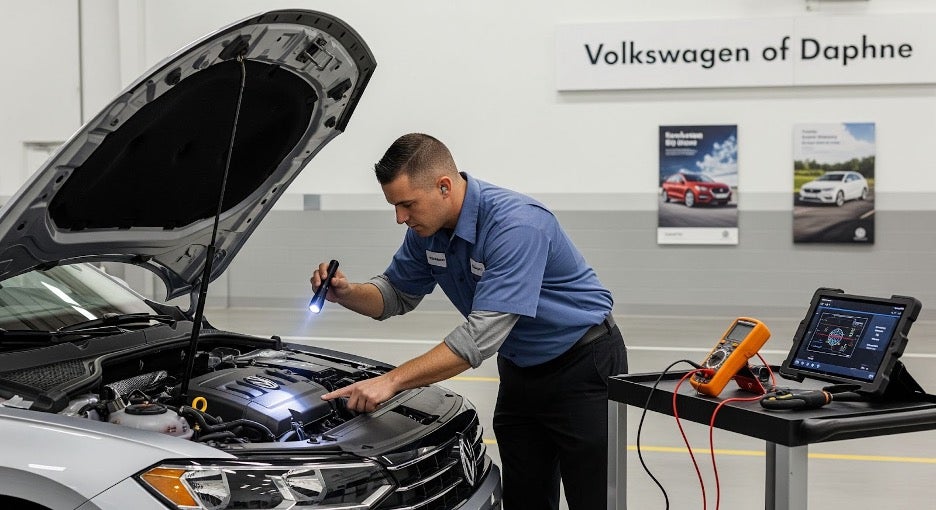
Volkswagen sedan with its hood open at Volkswagen of Daphne service center, while a certified technician inspects the engine to diagnose an unusual noise.

Why is My VW Engine Rattling? Common Volkswagen Engine Noises Explained

VW Engine Rattling Noise? Common Volkswagen Engine Sounds Explained A VW engine rattling noise can come from something simple, such as a loose heat shield or aging belt, or something more serious, such as low oil pressure, spark knock, or internal engine wear. The sound itself matters. A light tick at idle is different from a deep knock under acceleration. A brief cold-start sound is different from a rattle that gets louder with RPM, appears with a dashboard warning light, or comes with smoke, rough running, or loss of power. Volkswagen of Daphne created this guide for drivers in Daphne, Fairhope, Spanish Fort, Mobile, Foley, and Gulf Shores who want to understand common Volkswagen engine noises before scheduling service. Use the tables below to compare rattling, ticking, knocking, squealing, clunking, and pinging sounds, then decide whether your VW should be monitored, inspected soon, or stopped safely. VW engine rattling is a noticeable sound from the engine bay or nearby components that may come from normal mechanical operation, loose hardware, oil-related wear, belt or pulley noise, exhaust vibration, combustion issues, or internal engine damage. The safest next step depends on when the noise happens, how loud it is, whether it changes with RPM, and whether warning lights or drivability symptoms appear. Quick Answer: Why Is My Volkswagen Engine Making a Rattling Noise? A Volkswagen engine may rattle because of a loose heat shield, worn belt or pulley, exhaust vibration, low oil, aging oil, spark knock, a turbo or accessory concern, or a deeper internal engine issue. If the sound is light, brief, and not paired with warning lights, it may be safe to monitor briefly. If the sound is loud, metallic, gets worse with acceleration, or appears with an oil warning, smoke, shaking, overheating, or power loss, we recommend stopping safely and scheduling diagnosis. Light ticking at idle: Often less urgent, but still worth verifying during service. Rattling under the vehicle: May point to a loose shield, bracket, or exhaust component. Knocking under acceleration: More urgent and should be inspected quickly. Squealing or chirping: May relate to belts, pulleys, or accessory components. Noise with warning lights: Stop guessing and schedule service guidance. Table of Contents Common VW Engine Noises and What They Usually Mean Rattling, Ticking, Tapping, Knocking, and Squealing Compared Normal VW Engine Sounds vs Red Flags How Oil, Heat, and Maintenance Affect Engine Noise Should You Keep Driving or Stop? Jetta, Tiguan, Atlas, Taos, and Golf Engine Noise Tips Daphne, Fairhope, Spanish Fort, and Mobile Driving Conditions What Our Volkswagen Technicians Check First Key Takeaways VW Engine Rattling FAQ Common VW Engine Noises and What They Usually Mean Key Takeaway: The first SEO and service opportunity is to explain the sound type clearly. Drivers search for rattling, knocking, ticking, tapping, squealing, and clunking, but each sound points to a different diagnostic path. When someone says, “My VW engine is rattling,” the first step is to make the sound more specific. A loose heat shield can sound like an engine rattle even when the engine itself is not the source. A light injector tick can sound alarming to someone who has not owned a modern Volkswagen before. A deep knock under acceleration is much more concerning than a brief tick after startup. The timing of the sound matters too. A rattle during cold start may have a different cause than a rattle after a 40-minute drive from Mobile. A noise that happens only when accelerating can point to a different system than a noise that happens while idling in Fairhope traffic. A sound that appears after hitting road debris or driving through heavy rain may point us toward shields, belts, or underbody components. Monitor Briefly Light, brief sounds with no warning lights and no change in performance may be noted and verified during routine service. Schedule Service Soon New, repeated, RPM-related, or worsening sounds should be inspected before they become more expensive. Stop Driving Loud knocking, oil warnings, smoke, overheating, shaking, or power loss should be treated as urgent. Rattling, Ticking, Tapping, Knocking, and Squealing Compared Use this comparison table to describe the sound before scheduling service. You do not need to diagnose the part. You only need to explain what the noise sounds like, when it happens, and whether the vehicle still drives normally. Sound Common Pattern Possible Cause Recommended First Step Light ticking Fast, even sound at idle or cold start Direct-injection operation, valve-train sound, oil level, or normal mechanical sound Monitor if brief, then ask our team to verify during service Tapping Sharper sound that may change with RPM Oil level, oil age, valve-train concern, or internal wear Check oil level safely and schedule inspection Rattling Loose vibrating sound from engine bay or below vehicle Heat shield, exhaust bracket, loose hardware, belt area, or underbody component Schedule a multi-point inspection Squealing or chirping High-pitched sound during startup, acceleration, rain, or accessory load Belt, pulley, bearing, tensioner, or accessory-drive issue Schedule belt and pulley inspection Pinging Light metallic sound under acceleration or load Combustion, fuel, carbon buildup, sensor, or engine-management concern Avoid hard acceleration and schedule diagnosis Knocking Deep metallic sound, often worse under load Potential internal engine, combustion, oil-pressure, or severe wear issue Stop driving if loud, persistent, or paired with warning lights Clunking Dull hit or movement sound during shifts, bumps, or load changes Mount, accessory, exhaust, driveline, or suspension-related issue Schedule inspection before more driving For a Daphne commuter hearing a faint tick during the first minute after startup, we recommend noting whether the sound fades as the engine warms. For a Spanish Fort Tiguan owner hearing a heavy knock while merging onto I-10, we recommend avoiding hard acceleration and scheduling diagnosis because load-related knocking can point to a more serious concern. Schedule VW Engine Noise Service Normal VW Engine Sounds vs Red Flags That Need Service Key Takeaway: A sound can be normal only when the pattern supports it. New, loud, worsening, metallic, or warning-light-related sounds should be inspected. Modern Volkswagen engines can make normal operating sounds. Many VW models use direct injection, turbocharged components, cooling fans, emissions systems, and belt-driven accessories. A light ticking sound at idle, a brief cold-start sound, or a fan noise after shutdown may not automatically mean something is failing. The red flags are different. We recommend service when the sound is new, loud, metallic, or worsening. We also recommend prompt inspection if the vehicle shakes, loses power, smells hot, leaks fluid, smokes, overheats, or shows an oil pressure, check engine, EPC, coolant, or charging-system warning. Sound Scenario Less Concerning Pattern Red Flag Pattern Best Next Step Cold-start tick Brief, even, fades after warmup Gets louder, continues after warmup, or appears with warning lights Verify during oil service or diagnostic visit Rattle under vehicle Mild vibration over certain RPM range Dragging, scraping, burning smell, or loud metallic sound Inspect heat shields and exhaust hardware Squeal or chirp Brief sound on startup or damp conditions Repeated sound with steering, A/C load, or acceleration Inspect belts, pulleys, and accessory drive Knock under acceleration None that should be ignored Deep knock, power loss, smoke, or flashing warning light Stop driving and request service guidance For a Mobile Jetta commuter with a light tick and no warning lights, our service team may begin with an oil level check, service history review, and normal-operation comparison. For a Fairhope family driving a Tiguan that suddenly rattles hard in traffic, we recommend scheduling service sooner because heat and stop-and-go driving can reveal oil, belt, cooling, or vibration problems faster. Check VW Service Specials How Oil Condition, Heat, and Maintenance Affect VW Engine Noise Key Takeaway: Oil level, oil age, and maintenance history are among the first items to check when a Volkswagen engine starts ticking, tapping, or rattling. Oil is one of the first things we check when a Volkswagen engine noise comes into our shop. Low oil, old oil, incorrect oil specification, delayed maintenance, or a leak can make engine components sound louder because moving parts are not being protected the way they should be. Gulf Coast heat can make this more noticeable, especially during long commutes, school traffic, and summer road trips. For a Fairhope driver who hears tapping after sitting in traffic, checking oil level and service timing is a smart first step. For a Foley driver who recently bought a used VW and does not know the last service date, a baseline oil service and multi-point inspection can help separate normal operation from a developing issue. Maintenance Factor Why It Can Affect Noise What Our Team Checks Best For Oil level Low oil can increase friction and mechanical sound Oil level, leaks, and oil-pressure concerns Ticking, tapping, or oil warning concerns Oil age Old oil may not protect as well under heat Maintenance history and oil condition High-mileage commuters Oil specification Incorrect oil can affect protection and performance Correct VW-approved oil for the specific model Used VW buyers with unknown service records Belts and pulleys Wear can create chirping, squealing, or rattling Belt drive, pulley bearings, and tensioner condition Drivers hearing sound near the front of the engine Heat shields and exhaust Loose shields can mimic engine rattle Underbody hardware, exhaust hangers, and brackets Drivers hearing rattle below the vehicle Should You Keep Driving or Stop? Key Takeaway: The safest decision depends on sound severity, warning lights, drivability changes, and whether the noise is getting worse. Many VW engine noises are easier to diagnose when they are inspected early. A minor rattle can be a loose shield or bracket. A squeal can be a belt concern. A ticking sound can be related to oil condition or normal operating noise. A deep knock is different. Continuing to drive with a serious knock can turn a manageable problem into a major repair. Situation Monitor Briefly Schedule Service Soon Stop Driving Light tick at idle Yes, if brief and no warning lights Yes, if new, louder, or persistent Only if warning lights or symptoms appear Loose rattle from below vehicle Only if mild and brief Yes Yes, if dragging, scraping, or very loud Squealing belt sound No long-term monitoring Yes Yes, if overheating, steering concern, or battery warning appears Tapping that rises with RPM No long-term monitoring Yes Yes, if oil light appears Pinging under acceleration Avoid hard acceleration Yes Yes, if severe or paired with power loss Deep knocking No Call first Yes If your VW knocks, shakes, smells hot, shows an oil warning, loses power, smokes, overheats, or makes a heavy metallic sound, we recommend stopping safely and contacting our service team before continuing. Book VW Diagnostic Service Jetta, Tiguan, Atlas, Taos, and Golf Engine Noise Tips Key Takeaway: Model-specific language helps capture long-tail search demand while giving owners more relevant service guidance. Volkswagen Model Common Search Intent Possible Noise Pattern Recommended Next Step Volkswagen Jetta Volkswagen Jetta rattling noise, VW Jetta engine ticking Light ticking at idle, tapping after startup, rattle during acceleration Check oil level and schedule diagnosis if the sound repeats Volkswagen Tiguan VW Tiguan rattling noise when accelerating Rattle under load, belt noise, heat shield vibration, engine knock Avoid hard acceleration and schedule service if the noise persists Volkswagen Atlas VW Atlas engine knocking or rattling Deep sound under load, family-trip noise, underbody rattle Schedule diagnosis before longer travel Volkswagen Taos VW Taos engine noise, ticking, or rattle Cold-start sound, idle tick, or RPM-related noise Confirm service history and inspect if the sound is new Volkswagen Golf or Golf GTI VW Golf rattling noise when accelerating Turbo, belt, heat shield, engine, or exhaust-related noise Schedule inspection if the sound changes with throttle The best first step is not guessing the repair. It is matching the sound to timing, warning lights, service history, and driving behavior. Our technicians can use that information to decide whether the inspection should begin with oil condition, loose hardware, belt-drive components, diagnostic codes, or an engine performance test. Daphne, Fairhope, Spanish Fort, and Mobile Driving Conditions Key Takeaway: Gulf Coast heat, humidity, heavy rain, short trips, and I-10 acceleration can make Volkswagen engine noises easier to hear and more important to inspect early. Local conditions matter. Around Daphne and Fairhope, short trips, school traffic, summer heat, and humid air can make oil condition, cooling performance, belts, and exhaust hardware more important. On I-10 toward Mobile, acceleration and engine load can reveal pinging, knocking, or belt-drive noise that may not show up during neighborhood driving. Local Driving Condition Noise Risk What We Check Recommended Action Daphne and Fairhope errands Short trips may make cold-start sounds more noticeable Oil level, service history, startup sound Monitor if mild, service if repeated Spanish Fort to Mobile I-10 driving Acceleration can reveal pinging or knocking Diagnostic scan and road-test pattern Schedule service quickly Gulf Coast summer heat Heat can stress oil, belts, hoses, and cooling parts Fluids, belts, fans, hoses Pair oil service with inspection Gulf Shores weekend trips Long drives and vibration can expose loose components Heat shields, exhaust hangers, underbody hardware Inspect before the next trip Rain and humidity Moisture can make belt or accessory sounds more obvious Belt condition and pulley area Schedule service if the noise repeats If you drive from Fairhope, Spanish Fort, Mobile, Foley, or Gulf Shores, we recommend checking current service specials before booking your appointment. Our team can help pair the right service with the sound you are hearing, including oil service, battery checks, multi-point inspection, belt inspection, or diagnostic testing. View VW Service Specials What Our Volkswagen Technicians Check First Key Takeaway: A step-by-step inspection helps separate simple vibration issues from maintenance-related noises or more serious internal engine concerns. When a VW arrives with an engine noise, our technicians do not jump straight to a worst-case repair. We begin with the basics because many noises are tied to oil level, service history, shields, brackets, belts, pulleys, mounts, exhaust vibration, or stored diagnostic codes. Inspection Step What We Look For Why It Matters Best For Oil level and condition Low level, dark oil, overdue service, leaks Oil problems can make engine sounds louder Tapping, ticking, or maintenance concerns Dashboard and code scan Stored faults, warning-light history, misfire data Electronic clues may point us to the right system Noise with warning lights or rough running Cold and warm listening check Noise timing and temperature pattern Some sounds appear only during startup or warm idle Cold-start complaints Belt and pulley inspection Accessory noise, bearing wear, belt condition Front-engine noises can sound like internal rattles Chirp, squeal, or RPM-related sound Exhaust and shield inspection Loose heat shields, hangers, brackets Simple vibration can mimic engine rattle Rattle from underneath Road test when appropriate Noise under load, turning, braking, or acceleration Some problems only show up while driving Acceleration knock or clunk concern Before your appointment, write down when the sound happens, whether the engine is cold or warm, whether the sound changes with acceleration, and whether any dashboard warning appeared. That information helps us inspect your Jetta, Tiguan, Atlas, Taos, Golf GTI, or other Volkswagen more efficiently. Ask Us About a VW Engine Sound Key Takeaways A light VW engine tick can be normal, but a loud knock or warning-light event needs prompt service. Low oil, aging oil, loose shields, belts, pulleys, exhaust hardware, and internal concerns can all create rattling sounds. Noise under acceleration should be inspected quickly, especially if it is metallic or getting worse. Model-specific searches around Jetta, Tiguan, Atlas, Taos, and Golf are important opportunities for this page. Gulf Coast heat, humidity, traffic, and longer trips can make small maintenance issues easier to hear. Bring sound timing, temperature, acceleration, and warning-light notes to your service appointment. VW Engine Rattling FAQ Why is my Volkswagen engine making a rattling noise? Your Volkswagen engine may be rattling because of a loose heat shield, exhaust vibration, belt or pulley wear, low oil, aging oil, spark knock, or an internal engine concern. A mild rattle may be less urgent, but a loud metallic rattle, knocking sound, warning light, smoke, or power loss should be inspected right away. Is a ticking noise normal in a Volkswagen engine? A light, even ticking sound can be normal in some modern Volkswagen engines, especially at idle or during cold start. If the tick is brief, steady, and not paired with a warning light, our team can verify it during routine service. If the ticking gets louder, changes with RPM, or appears with rough idle, oil warning, or loss of power, schedule service. Can low oil make my VW engine rattle? Yes. Low oil can make a VW engine sound louder because moving parts may not be getting the protection they need. Check the oil level only when it is safe to do so and schedule service if the level is low, the oil looks dirty, or the oil light appears. Do not continue driving with an oil pressure warning. Why does my VW rattle when accelerating? A VW rattling noise when accelerating may relate to exhaust vibration, a loose heat shield, belt or pulley wear, spark knock, turbo-related sounds, engine mounts, or internal engine stress under load. We recommend avoiding hard acceleration and scheduling diagnosis if the sound repeats or gets louder. Should I drive my Volkswagen if the engine is knocking? We do not recommend continuing to drive if your Volkswagen has a deep knocking sound, especially if the noise gets worse under acceleration or appears with a warning light, smoke, rough running, or power loss. Stop safely and call our service team for guidance. What service should I schedule for a VW engine noise? For most VW engine noise concerns, start with a diagnostic inspection or an oil change paired with a multi-point inspection, depending on the sound and service history. If the sound is loud, metallic, new, or paired with warning lights, schedule diagnostic service instead of basic maintenance only. Why is my Volkswagen Jetta making a rattling noise? A Volkswagen Jetta rattling noise may come from a heat shield, exhaust component, belt or pulley, oil-related issue, or engine-management concern. If the sound is light and brief, note when it happens. If it repeats, changes with RPM, or appears while accelerating, schedule service. Why is my VW Tiguan making a rattling noise when accelerating? A VW Tiguan rattling noise when accelerating may indicate a loose shield, exhaust vibration, belt-drive concern, engine mount issue, spark knock, or another load-related problem. Because acceleration noises can point to more serious causes, we recommend scheduling diagnosis if the sound repeats. We know an unfamiliar VW engine sound can make every drive feel uncertain. Volkswagen of Daphne can help you identify whether the noise sounds like a monitor-it item, a service-soon concern, or a stop-driving situation. Visit us at 29816 Frederick Blvd, Daphne, AL 36526, call our service department at 228-291-2035, or schedule through our service appointment form. We proudly serve Volkswagen drivers from Daphne, Fairhope, Spanish Fort, Mobile, Foley, and Gulf Shores.

maxresdefault

5 Simple Steps to Program Your Volkswagen Garage Door Opener

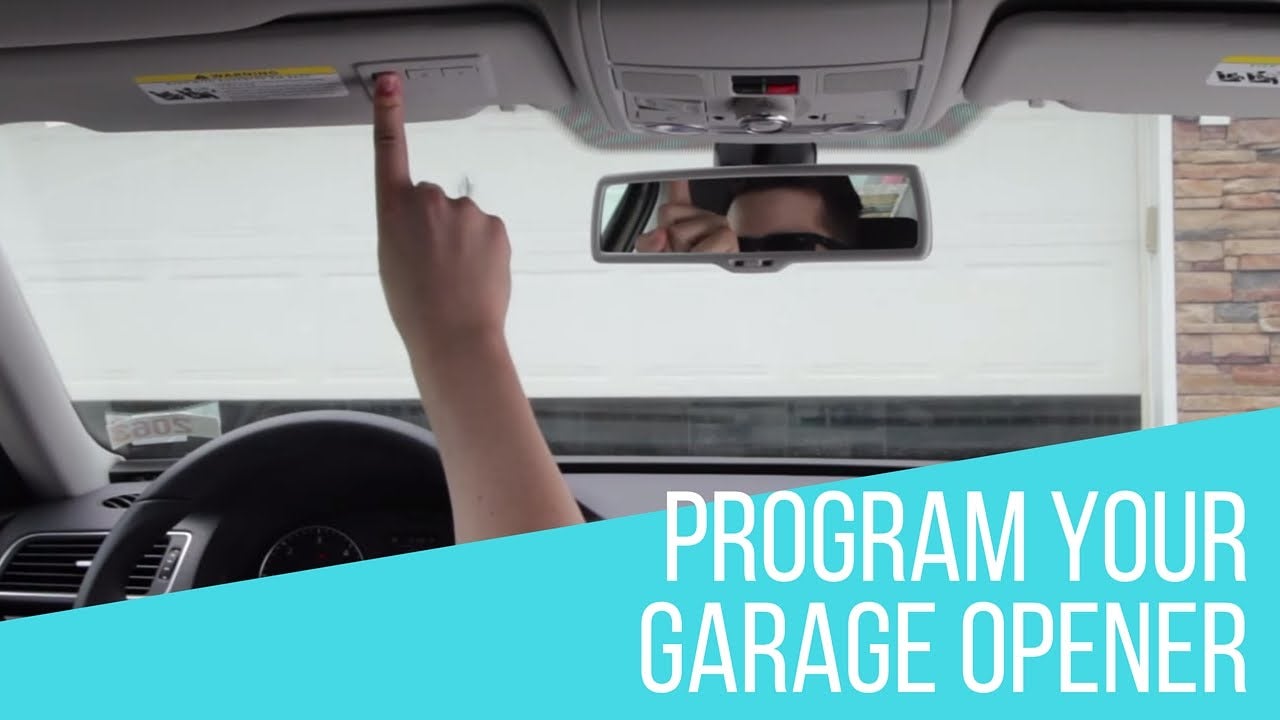
How to Program a VW Garage Door Opener Near Daphne, AL Programming your Volkswagen garage door opener usually starts with your vehicle’s built-in HomeLink controls, a working handheld garage remote, and the right process for your garage opener type. The most important step is knowing whether your opener uses a fixed code or rolling code system, because rolling-code openers usually require a final Learn-button sync at the garage motor unit. Volkswagen of Daphne helps local drivers work through VW HomeLink setup, reset questions, rolling-code troubleshooting, and model-specific questions for vehicles like the Tiguan, Atlas, ID.4, ID. Buzz, Jetta, and Taos. Use this guide to program your Volkswagen garage door opener, reset one button or all buttons, and troubleshoot a VW garage door opener that is not working after the first setup attempt. A Volkswagen garage door opener setup connects your vehicle’s built-in HomeLink controls or compatible connected-garage feature to a home garage door system. For drivers in Daphne, Fairhope, Spanish Fort, Mobile, Foley, and Gulf Shores, it can reduce loose remote clutter and make daily garage access more convenient. Quick Answer: How Do You Program a VW Garage Door Opener? To program a VW garage door opener, park outside the garage, hold your handheld garage remote close to the in-vehicle HomeLink button, train the chosen button until the indicator changes, then test the door. If your garage opener uses rolling code, press the Learn or Smart button on the garage motor unit and return to the vehicle to finish the sync. Best first step: Confirm your handheld garage remote works before training HomeLink. Most common issue: The vehicle learns the remote signal, but the rolling-code Learn-button step is not finished. Reset need: Reset all buttons only when old codes are unknown or every button needs to be cleared. Local help: Volkswagen of Daphne can help if your VW HomeLink button blinks but the garage door still does not move. Table of Contents VW HomeLink Basics, Button Locations, and Setup Checklist Rolling Code vs Fixed Code Garage Door Openers How to Program a Volkswagen Garage Door Opener How to Reset VW HomeLink or Reprogram One Button Tiguan, Atlas, ID.4, ID. Buzz, and Model-Specific Tips Why Your VW Garage Door Opener Is Not Working HomeLink vs Connected Garage Features Local Garage Opener Setup Tips for Daphne Drivers Key Takeaways Volkswagen Garage Door Opener FAQ VW HomeLink Basics, Button Locations, and Setup Checklist Key Takeaway: Before you start programming, identify your HomeLink buttons, confirm your handheld remote works, and decide whether you are setting up a new button, replacing one button, or clearing old settings. Many Volkswagen vehicles with built-in garage door opener capability use HomeLink controls near the rearview mirror, overhead console, or interior control area, depending on model and model year. Because the exact placement can vary, start with your owner resources or look for the three programmable HomeLink buttons before training the system. The setup works best when you prepare before pressing buttons. Bring the handheld garage remote into the vehicle, park outside the garage, keep the remote close to the in-vehicle controls, and make sure the garage door area is clear before testing. A weak handheld remote battery can make programming unreliable, so test the remote first before assuming the Volkswagen system is the issue. Before You Start Programming VW HomeLink Park outside the garage, not under the moving door. Keep the handheld garage remote inside the vehicle. Confirm the remote opens and closes the door reliably. Choose which in-vehicle HomeLink button you want to program. Look for a Learn or Smart button on the garage motor unit. Clear old settings only if the vehicle is used or old codes are unknown. For a Daphne homeowner, a clean setup can make daily entry easier when leaving for work, school drop-off, or errands. For a Mobile commuter, it can also remove the need to search for a loose remote before backing out in the morning. Ask Us About VW HomeLink Setup Rolling Code vs Fixed Code Garage Door Openers Key Takeaway: If your garage door opener uses rolling code, your VW may appear to learn the remote but still need a final Learn-button sync at the garage motor before it works. The difference between fixed code and rolling code is one of the most important parts of Volkswagen garage door opener programming. A fixed-code opener usually completes setup after the vehicle learns the handheld remote signal. A rolling-code opener adds a second security step at the garage opener motor unit. That second step is where many drivers get stuck. The HomeLink indicator may change, the vehicle may seem trained, and the garage door may still do nothing. In that case, the programming is often unfinished, not broken. Comparison Point Fixed Code Opener Rolling Code Opener What It Means for VW Owners Setup flow Usually one main training step Training step plus Learn-button sync Rolling-code systems need extra setup after the remote signal is learned Common opener age Often older systems Often newer systems Newer garage systems are more likely to need the final sync Common symptom Door works after training Button blinks or seems trained, but door does not move The opener may need the Learn-button sequence Garage motor clue May not rely on a Learn button Usually has a Learn or Smart button Check the motor unit before repeating the same vehicle step Best next step Test from a normal driveway position Press Learn, return to vehicle, and complete the sync Finish the full process before resetting everything For many LiftMaster, Chamberlain, Craftsman, Genie, and similar opener systems, the brand alone does not tell the whole story. The opener generation and Learn-button process matter more than the logo on the remote. If your VW HomeLink button blinks but does not activate the door, check for rolling-code setup before clearing the system. How to Program a Volkswagen Garage Door Opener Key Takeaway: Program the in-vehicle button first, then complete the Learn-button step only if your garage opener requires rolling-code training. The exact process can vary by Volkswagen model year and garage opener type, but the general HomeLink programming flow follows the same logic. Work slowly, test each step, and avoid clearing all buttons unless you truly need a full reset. Step-by-Step VW HomeLink Programming Park safely outside the garage. Make sure the garage door has a clear path before testing. Choose the HomeLink button. Pick the in-vehicle button you want to assign to the garage door. Hold the handheld remote near the controls. Keep the remote close to the HomeLink area while training. Train the button. Press and hold the handheld remote button and the selected HomeLink button until the indicator changes. Test the programmed button. Press the in-vehicle button to see whether the door responds. Complete rolling-code setup if needed. If the door does not move, press the Learn or Smart button on the opener motor, return to the vehicle, and press the programmed HomeLink button again until the opener responds. Programming Stage What to Do Why It Matters Common Mistake Remote check Test the handheld remote first Confirms the remote is sending a strong signal Trying to train HomeLink with a weak remote battery Button selection Choose one HomeLink button Keeps setup organized Training multiple buttons at once Remote-to-vehicle training Hold the remote close to the HomeLink controls Helps the vehicle learn the signal Holding the remote too far away Rolling-code sync Press Learn at the motor unit, then return to the vehicle Completes the opener’s security handshake Stopping after the first in-vehicle training step Final test Press the programmed button from your normal driveway position Confirms real-world function Only testing while parked too close to the motor If your VW garage door opener still does not work after training, do not immediately erase all buttons. First, check whether the opener requires rolling-code completion, whether the remote battery is weak, and whether the selected HomeLink button was already assigned to another device. Schedule Volkswagen Assistance How to Reset VW HomeLink or Reprogram One Button Key Takeaway: Use a full VW HomeLink reset when old codes are unknown. Use single-button reprogramming when one garage assignment needs to change. There are two different reset situations. A full reset clears stored HomeLink settings, which is useful if you purchased a used Volkswagen or do not know what the previous owner programmed. Single-button reprogramming is better when the other buttons still work and only one garage door assignment needs to change. Situation Recommended Path Why Best For You bought a used Volkswagen Full reset Clears unknown old codes New owners of pre-owned vehicles You moved to a new home Single-button reprogram or full reset Depends on whether the other buttons still matter Drivers changing garage assignments Only one garage door changed Single-button reprogram Protects other working HomeLink buttons Multi-door households Repeated programming attempts failed Check rolling-code setup first, then consider reset Prevents unnecessary clearing Drivers stuck after several attempts You are selling or trading your Volkswagen Clear stored HomeLink settings Removes home access from the vehicle Trade-in and resale situations If you are preparing to trade your vehicle, it is smart to clear stored garage access before handing over the keys. You can also start your next upgrade with our trade appraisal page or compare available new Volkswagen inventory. Get Help Resetting HomeLink Tiguan, Atlas, ID.4, ID. Buzz, and Model-Specific Garage Door Opener Tips Key Takeaway: Model-specific searches are a major opportunity for this page. Tiguan and Atlas queries are already generating visibility, and newer EV-related queries need clearer answers. Drivers often search for Volkswagen garage door opener help by model, especially Tiguan and Atlas owners. That makes sense because button placement, trim availability, mirror controls, and digital menu expectations can vary across the Volkswagen lineup. The overall setup logic is similar, but the first question should always be whether your specific Volkswagen has built-in HomeLink controls or a compatible connected-garage feature. After that, the garage opener type usually determines whether you need only remote-to-vehicle training or a rolling-code Learn-button sync. Volkswagen Model Common Search Intent What to Check First Recommended Next Step Volkswagen Tiguan VW Tiguan garage door opener programming HomeLink button location and opener type Train the button, then complete rolling-code sync if needed Volkswagen Atlas VW Atlas garage door opener not working Whether the Learn-button step was completed Retry rolling-code setup before resetting all buttons Volkswagen ID.4 VW ID.4 garage door opener or connected garage setup Model-specific owner resources and available features Confirm whether you are using HomeLink or another connected path Volkswagen ID. Buzz ID. Buzz garage door opener Feature availability and model-year setup flow Use exact model guidance before assuming a mirror-button process Volkswagen Jetta or Taos VW HomeLink or garage opener button location Interior control location and trim availability Verify controls first, then follow HomeLink programming steps For shoppers comparing a vehicle upgrade, convenience features like HomeLink can be part of the daily-use experience. You can compare available models through our new Volkswagen inventory or review pre-owned options through our used Volkswagen inventory. Tiguan Owners If your Tiguan button trains but does not open the garage, check for rolling-code setup before resetting the system. Atlas Owners If your Atlas HomeLink button blinks but the door does not move, the Learn-button sync may still be incomplete. ID.4 and ID. Buzz Owners If you are using a newer Volkswagen EV, check exact model resources so you do not apply the wrong setup path. Shop New Volkswagen Models Why Your VW Garage Door Opener Is Not Working Key Takeaway: Most VW garage door opener problems are caused by incomplete rolling-code setup, weak handheld remote batteries, missed timing, or old stored codes, not a broken vehicle system. If your Volkswagen garage door opener is not working, start with the simplest checks. Confirm the handheld remote still operates the door. Then check whether the vehicle button was trained at close range. After that, look for a Learn or Smart button on the opener motor unit. Problem Likely Cause What to Try When to Ask for Help HomeLink button blinks but door does not move Rolling-code sync not complete Press Learn at the motor, then return to the vehicle If the timing window keeps expiring Vehicle will not learn the remote Weak remote battery or remote held too far away Replace remote battery and retrain closer to the buttons If multiple remotes fail One HomeLink button works, another does not Single button needs reprogramming Reprogram the affected button only If button behavior is inconsistent Used vehicle has unknown garage settings Old stored codes remain Clear HomeLink memory and start fresh If reset does not clear the issue Door works only from very close range Signal strength, interference, or remote battery issue Retest the handheld remote and repeat training If range stays poor after retraining For a Fairhope driver whose remote works but the Volkswagen button does not, rolling-code setup is often the missing step. For a Spanish Fort driver with a used VW, old stored codes may be interfering. For a Gulf Shores weekend driver who only uses the garage occasionally, a weak handheld remote battery can make the setup feel random. Contact Us for Garage Opener Help HomeLink vs Connected Garage Features Key Takeaway: HomeLink is usually best for simple in-vehicle button access. Connected garage features may be better when compatible app-based access fits your routine. HomeLink is straightforward. Once the button is programmed correctly, you press the in-vehicle control and the garage responds. This works well for drivers who want a simple built-in button and do not want to rely on a separate handheld remote. Connected garage features may make sense for drivers who prefer app-based access, shared household controls, or connected-home routines. However, compatibility can vary by vehicle, garage system, model year, and available services, so verify your exact setup before assuming one method is better. Option Best Use Case Main Benefit What to Verify HomeLink Daily in-vehicle garage access Simple physical button convenience Vehicle control location and opener compatibility Connected garage feature App-based or smart-home routines Remote access and connected convenience Vehicle, opener, app, and subscription compatibility Handheld remote Backup access Works independently of vehicle programming Battery strength and remote condition For many Daphne drivers, HomeLink is the most direct option. For newer Volkswagen owners, especially EV shoppers comparing technology features, it is worth checking model-specific guidance before choosing the setup path. Local Garage Opener Setup Tips for Daphne Drivers Key Takeaway: Treat garage opener setup as part of daily convenience. A working VW HomeLink button can make commutes, family errands, and stormy Gulf Coast days easier. Garage door opener setup is not just a technology feature. It affects how easy the vehicle is to live with every day. When rain moves through the Eastern Shore, when you are getting home late from Mobile, or when you are leaving early from Daphne, a working in-vehicle garage button makes the routine smoother. Local drivers tend to run into the same few scenarios: a used Volkswagen with old codes, a newer garage opener that needs rolling-code sync, a handheld remote with a weak battery, or a model-specific layout that is not obvious at first glance. Local Driver Scenario Common Issue Recommended Action Daphne homeowner with a newer garage opener Rolling-code setup not finished Complete the Learn-button sequence at the motor unit Mobile commuter Remote clutter or inconsistent access Program HomeLink for one-touch daily use Fairhope family with multiple drivers Several remotes and vehicles to manage Program each vehicle carefully and document which button controls each door Spanish Fort used VW buyer Unknown old HomeLink codes Reset HomeLink before adding new garage access Gulf Shores weekend driver Infrequent use and forgotten setup steps Test HomeLink before relying on it for a trip or seasonal stay If you want help confirming whether your Volkswagen setup issue is coming from the vehicle, the remote, or the garage opener side, our team can help you walk through the process. You can also schedule support through our Volkswagen service page. Schedule Volkswagen Support Key Takeaways Most VW garage door opener setups depend on whether the opener uses fixed code or rolling code. Rolling-code openers usually need a Learn-button sync after the in-vehicle button is trained. Do not reset all VW HomeLink buttons unless old codes are unknown or every button needs to be cleared. Tiguan and Atlas owners should check rolling-code setup first when the button blinks but the door does not move. ID.4 and ID. Buzz owners should verify model-specific resources before assuming the process matches older Volkswagen models. A weak handheld remote battery can make the Volkswagen system look like the problem. Volkswagen Garage Door Opener FAQ How do I program a Volkswagen garage door opener? Start by parking outside the garage, bringing the handheld remote into the vehicle, and choosing the HomeLink button you want to program. Hold the remote near the in-vehicle controls and train the selected button. If your opener uses rolling code, press the Learn or Smart button on the garage motor unit and return to the vehicle to complete the sync. Do I need to reset my Volkswagen garage door opener before programming it? Not always. A full reset is useful if the vehicle is new to you or the old codes are unknown. If one button already works and you only need to update one garage door, single-button reprogramming is usually the better choice. Ask About Resetting HomeLink How do I know if my garage door opener uses rolling code? A Learn or Smart button on the garage opener motor unit is a common clue that your opener may need rolling-code programming. If your Volkswagen button seems trained but the garage door does not move, complete the Learn-button sync before resetting the system. Why is my Volkswagen HomeLink button blinking but not opening the garage? A blinking HomeLink button can mean the vehicle learned part of the signal but the rolling-code process is not finished. Check the garage motor unit for a Learn or Smart button, complete the final sync, and then test the programmed button again. How do I reset VW HomeLink? VW HomeLink reset steps can vary by model and button layout, but the goal is to clear stored codes before starting fresh. Use a full reset when old codes are unknown or when preparing a vehicle for sale or trade. Use single-button reprogramming if only one garage assignment needs to change. How do I program a VW Tiguan garage door opener? For a Volkswagen Tiguan, first confirm the HomeLink control location and test your handheld remote. Train the selected in-vehicle button with the remote, then complete the garage motor Learn-button sync if your opener uses rolling code. How do I program a VW Atlas garage door opener? For a Volkswagen Atlas, use the same general HomeLink process: train the selected button with the handheld remote, then finish rolling-code setup at the garage opener motor if needed. If the Atlas button blinks but the door does not move, the Learn-button step may still be incomplete. Can Volkswagen of Daphne help if my garage opener works with the remote but not the vehicle? Yes. If the handheld remote works but the in-vehicle button does not, Volkswagen of Daphne can help you narrow down whether the issue is rolling-code timing, an old stored code, a weak training signal, or a model-specific setup question. Volkswagen garage door opener setup can look simple until one missed step keeps the system from working. If you need help programming VW HomeLink, resetting an old code, troubleshooting a blinking button, or understanding a model-specific garage opener setup, Volkswagen of Daphne is here to help. Visit us at 29816 Frederick Blvd, Daphne, AL 36526, call 251-374-0664, explore our website at Volkswagen of Daphne, or contact our team online.

sddefault

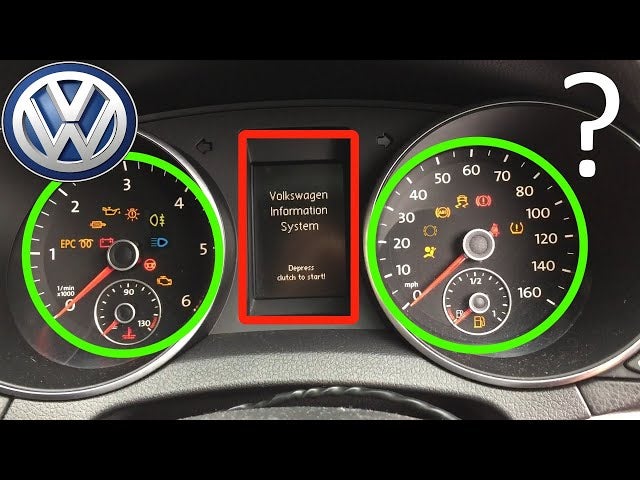
Volkswagen Dashboard Lights and What They Mean

VW Dashboard Warning Lights Explained for Daphne Drivers VW dashboard warning lights help you understand what your Volkswagen is trying to tell you before a small issue becomes a bigger concern. The quickest way to respond is to read the color first, then the symbol, then any message shown in the instrument cluster. Red warning lights usually mean stop safely and address the issue before continuing. Yellow or amber warning lights usually mean the vehicle needs attention soon. Green, blue, and white indicators usually show system status or active features. Volkswagen of Daphne helps local drivers understand Volkswagen warning lights, VW dashboard symbols, ID.4 EV indicators, and newer driver-assistance alerts. Use this guide to understand common lights for Volkswagen Tiguan, Jetta, Passat, Golf, Atlas, Taos, ID.4, and other VW models, then decide whether to monitor the message, schedule service, or stop driving safely. VW dashboard warning lights are symbols and alerts that appear in the instrument cluster to identify vehicle status, maintenance needs, safety-system concerns, or potential faults. For drivers in Daphne, Fairhope, Spanish Fort, Mobile, Foley, and Gulf Shores, they help determine when to stop driving, drive carefully, or schedule Volkswagen service. Quick Answer: What Do VW Dashboard Warning Lights Mean? VW dashboard warning lights use color and symbol type to show urgency. A red Volkswagen warning light usually means stop safely and address the issue before driving farther. A yellow or amber light usually means service or inspection is needed soon. Green, blue, or white indicators usually show that a system is active, available, or changing status. Red light: Stop safely, read the message, and avoid guessing. Yellow light: Drive carefully and schedule service soon if the light stays on. Flashing light: Treat it as more urgent than a steady light. Model-specific light: Check the message, especially on ID.4, Tiguan, Atlas, Jetta, Passat, and newer ADAS-equipped VW models. Table of Contents VW Dashboard Light Color Guide Red Volkswagen Warning Lights That Mean Stop Safely Yellow Volkswagen Warning Lights That Need Attention Soon Green, Blue, and Informational VW Dashboard Icons Tiguan, Jetta, Passat, Golf, Atlas, and ID.4 Dashboard Symbols ID.4 EV Indicators, ADAS Symbols, and Newer VW Alerts VW Dashboard Lights Meaning Reset: What to Know What Dashboard Lights Mean for Daphne and Mobile Drivers Key Takeaways Volkswagen Dashboard Light FAQ VW Dashboard Light Color Guide Key Takeaway: The color of a VW dashboard light tells you the first level of urgency. Red usually means stop safely, yellow means service soon, and green or blue usually means system status. The most useful way to understand Volkswagen dashboard symbols is to start with color. You do not need to memorize every icon immediately. Instead, use the color to decide the safest first response, then use the symbol and message to narrow down the system involved. Red VW Warning Lights Red lights usually point to a serious system warning. Stop safely, read the message, and avoid continuing until you understand whether the vehicle should be driven. Yellow VW Warning Lights Yellow or amber lights usually mean attention is needed soon. The vehicle may still drive, but the issue should not be ignored. Green, Blue, or White Icons These icons often show that a feature is active, available, or changing state. They are usually informational unless paired with a warning message. Light Color Common Meaning Recommended First Step Example VW Systems Red Critical warning or immediate attention needed Stop safely and check the message before continuing Brake system, oil pressure, coolant temperature, charging system Yellow or amber Service, inspection, or caution needed soon Drive carefully and schedule diagnosis if the light remains on Check engine, TPMS, EPC, ABS, traction control, driver-assistance alerts Green System is active or ready Monitor for normal operation Cruise control, lights, turn signals, driver-assistance status Blue Informational system status Confirm the feature matches the driving condition High beams or system indicators depending on model White or gray Status, standby, or feature availability Read the message and monitor ADAS readiness, EV status, driving mode or system status If a light is flashing, paired with a warning sound, or appears with a major change in vehicle behavior, treat it as more urgent. A flashing warning light can indicate that the system needs immediate attention even if the vehicle still moves. Red Volkswagen Warning Lights That Mean Stop Safely Key Takeaway: Red Volkswagen dashboard lights should be treated as stop-and-assess alerts. A vehicle that still drives may still be unsafe to continue operating. Red dashboard lights are the ones we recommend taking most seriously. They often relate to braking, engine lubrication, coolant temperature, charging-system function, or another system that can affect safety or vehicle health. The right response is not panic. It is to stop safely, check the display message, and decide whether the vehicle should continue driving. Common red Volkswagen warning-light categories include: Brake warning light: May indicate a brake-system issue, parking brake concern, or low brake fluid depending on the message. Oil pressure warning light: May indicate that the engine is not receiving proper lubrication. Coolant temperature warning light: May indicate overheating or a cooling-system concern. Battery or charging-system warning: May indicate the charging system is not operating correctly. Critical safety-system alert: May indicate a serious airbag, restraint, or safety-related issue depending on the model. Red VW Warning Light What It May Mean What to Do First Why It Matters Brake system warning Brake-system condition, parking brake, or brake fluid concern Stop safely and review the message Braking performance is safety-critical Oil pressure warning Engine lubrication may be too low or not circulating properly Stop safely and avoid continued driving Driving with oil-pressure issues can damage the engine Coolant temperature warning The engine or system may be overheating Pull over safely and allow the vehicle to cool Overheating can escalate quickly in Gulf Coast heat Battery or charging warning The charging system may not be maintaining power Reduce risk and seek diagnosis The vehicle may lose electrical support if ignored Critical safety warning A major safety-related system may need attention Read the message and avoid assumptions Safety-system status can affect protection and drivability For a Daphne commuter headed toward Mobile, a red light should change your plan immediately. For a Gulf Shores weekend driver loading up for a longer trip, a red warning is the signal to pause before turning a manageable issue into a roadside problem. Schedule Volkswagen Warning-Light Service Yellow Volkswagen Warning Lights That Need Attention Soon Key Takeaway: Yellow VW warning lights usually mean attention is needed soon. The vehicle may still drive, but the issue should not be ignored. Yellow or amber dashboard lights are where many drivers get confused. These warnings often mean the vehicle can still be driven carefully, but that does not make the alert unimportant. We recommend treating yellow lights as service-soon alerts, especially when the light stays on, comes back repeatedly, or appears with unusual vehicle behavior. Common yellow Volkswagen warning-light categories include: Check engine light: May relate to emissions, fuel, ignition, sensor, or engine-management systems. TPMS or tire pressure light: May indicate low tire pressure or a tire pressure monitoring concern. EPC light: May relate to electronic power control on certain gasoline Volkswagen models. ABS light: May indicate an anti-lock braking system concern. Traction control or stability alert: May show system activity, reduced traction, or a fault depending on behavior. Driver-assistance warning: May indicate a temporarily unavailable or limited feature. Yellow VW Light Common Search Intent Recommended Response When to Escalate Check engine light VW warning lights, VW dash lights Schedule diagnostic service soon If flashing, rough running, or loss of power occurs Tire pressure light VW dashboard warning lights Check tire pressure and inspect for tire damage If pressure drops repeatedly or handling changes EPC light VW dashboard symbols Drive carefully and schedule diagnosis If throttle response or power changes ABS light VW warning signs Have braking systems inspected If brake warning lights also appear Driver-assistance alert Volkswagen dashboard symbols Check sensor visibility and message context If the warning persists after conditions improve For a Fairhope driver seeing a tire-pressure warning during errands, the question is not only whether the vehicle still moves. It is whether the tire or system needs attention before the next longer drive. For a Spanish Fort commuter seeing a check engine light without obvious symptoms, diagnosis is still a smart move because waiting can make the issue harder to trace. Visit Our Volkswagen Service Center Green, Blue, and Informational VW Dashboard Icons Key Takeaway: Not every Volkswagen dashboard symbol is a warning. Green, blue, and white icons often show system status, active features, or driver-assistance availability. Green, blue, and informational icons usually show that a system is active, available, or changing state. That can include turn signals, high beams, cruise control, lighting status, driver-assistance status, or EV system readiness on certain models. We still recommend paying attention to these indicators because they help you understand what the vehicle is doing. If an informational symbol changes color, begins flashing, appears with a warning message, or behaves differently than expected, treat it as a sign to review the system and consider service support. Icon Type Common Meaning Typical Urgency Driver Action Green indicator System is active or available Low Confirm the system is operating as expected Blue indicator Feature status, often lighting-related Low Monitor feature status White or gray indicator System standby or availability Low to moderate Read the message if shown Flashing indicator Active system change or warning behavior Varies Check the owner message and system context Tiguan, Jetta, Passat, Golf, Atlas, and ID.4 Dashboard Symbols Key Takeaway: Many drivers search by model because the same general warning category can appear with different messages or display layouts across Volkswagen models. Volkswagen dashboard symbols can vary by model, trim, model year, and display system. That is why drivers often search for terms like VW Tiguan dashboard symbols, Volkswagen Jetta dashboard lights, VW Passat warning lights, VW Golf warning lights, and ID.4 dashboard indicators. The safest approach is to use the symbol color, the exact message, and the model context together. Volkswagen Model Common Search Intent What to Check First Best Next Step Volkswagen Tiguan VW Tiguan dashboard symbols, VW Tiguan warning lights Color, message, and whether the light is steady or flashing Schedule service for persistent yellow lights or any red warning Volkswagen Jetta Volkswagen Jetta dashboard lights, VW Jetta dashboard lights Check engine, EPC, tire pressure, and brake-related alerts Diagnose recurring lights before daily driving makes the issue worse Volkswagen Passat VW Passat warning lights, VW Passat dashboard symbols Brake, check engine, oil, coolant, and service reminders Use color and message to decide urgency Volkswagen Golf VW Golf warning lights symbols explained Engine, tire, braking, and stability control symbols Do not ignore repeated yellow lights Volkswagen Atlas VW dashboard lights, Volkswagen warning lights Family-driving alerts, tire pressure, ADAS, and braking messages Schedule service if safety or driver-assistance alerts persist Volkswagen ID.4 ID.4 dashboard lights, EV indicators EV readiness, charging, high-voltage, and driver-assistance messages Use EV-specific message context instead of gas-vehicle assumptions A Tiguan warning light may appear in a familiar category, but the message and context matter. A Jetta or Passat check engine light may still deserve prompt diagnosis even when the car feels normal. An ID.4 EV indicator may not match older Volkswagen habits at all, so the full display message becomes especially important. ID.4 EV Indicators, ADAS Symbols, and Newer VW Alerts Key Takeaway: Newer VW models should be read by system type as well as color. EV indicators and driver-assistance icons may show system status, temporary limits, or a true fault. Newer Volkswagen models add another layer to dashboard-light interpretation. On an ID.4, some indicators relate to EV operation, charging state, drive readiness, high-voltage systems, or regenerative behavior. On both EV and gasoline models, ADAS and IQ.DRIVE-related icons may reflect system availability, sensor obstruction, reduced function, or a genuine fault. For a Spanish Fort ID.4 owner who sees an unfamiliar symbol, the safest move is not to guess based on an old gas-vehicle warning-light guide. For a Mobile commuter who sees a driver-assistance icon, the right first question is whether the system is temporarily limited, turned off, blocked by conditions, or actually faulted. Newer VW Light Type What It May Relate To Common Meaning Pattern What We Recommend ID.4 EV indicator Charging, readiness, or EV system status Vehicle-specific EV operation message or status light Check the display message and owner guidance first EV warning light High-voltage or drive-system concern System may need attention and affect drivability Follow message guidance and avoid guessing ADAS indicator Driver-assistance availability or sensor issue System may be off, limited, or temporarily blocked Confirm whether the feature is still active Sensor-related indicator Camera, radar, or environmental obstruction Conditions may be affecting feature performance Monitor conditions or schedule diagnosis if persistent Informational assist icon Feature is on or standing by Normal status, not urgent warning Use awareness, not alarm Newer Volkswagen dashboard lights make the most sense when you group them by system as well as urgency. EV indicators, ID.4-specific messages, and driver-assistance icons often answer different questions than traditional engine, oil, or brake warnings. Ask Our Team About a VW Warning Light VW Dashboard Lights Meaning Reset: What to Know Key Takeaway: Resetting or clearing a dashboard light is not the same as fixing the issue. Diagnose the cause before focusing only on making the symbol disappear. Many drivers search for VW dashboard lights meaning reset because they want the light gone. That is understandable, but clearing a light does not automatically resolve the condition that triggered it. If the problem is still present, the light can come back, the vehicle can store another fault, or the underlying issue can get worse. Before thinking about a reset, ask these questions: Is the light red, yellow, or informational? Is the light steady or flashing? Does the display show a specific message? Has the light appeared more than once? Did the vehicle feel different when the light appeared? Was recent service, battery work, tire service, or sensor work completed? Reset Scenario What It May Mean Recommended Action Light appears after tire service TPMS may need confirmation or pressure adjustment Check tire pressure and follow the proper TPMS process Check engine light comes back after clearing The underlying fault may still be present Schedule diagnostic service Service reminder appears Maintenance interval or inspection reminder may be due Confirm maintenance history before resetting ADAS alert disappears and returns Sensor obstruction or system issue may be recurring Check conditions and schedule service if persistent Red warning light appears A critical system may require immediate attention Do not attempt a reset as the first response A light that disappears can still point to a real intermittent fault. A system that feels normal can still need diagnosis. The earlier the cause is found, the easier many issues are to trace accurately. Book a Warning-Light Diagnosis What Dashboard Lights Mean for Daphne, Fairhope, Spanish Fort, and Mobile Drivers Key Takeaway: Gulf Coast heat, humidity, stop-and-go driving, longer commutes, and seasonal trips can make some warning lights more urgent than they look at first. Dashboard lights do not appear in a vacuum. Local driving conditions matter because they affect how hard the vehicle works, how quickly small issues show up, and how much risk there is in delaying diagnosis. Around Daphne and the Eastern Shore, warning-light patterns can be tied to summer heat, humidity, Mobile commutes, stop-and-go traffic, and long periods of lighter use before a weekend trip. Local Driver Scenario Likely Concern Pattern What We Recommend Why It Helps Daphne-to-Mobile commuter Repeating yellow light during regular highway use Schedule service sooner rather than later High-mile use can make small issues grow faster Fairhope errand driver Tire, brake, or system light during stop-and-go use Check urgency and avoid long delays Frequent short trips still stress key systems Spanish Fort newer-VW owner ADAS or sensor alert appears in changing conditions Confirm whether the system is limited or faulted Prevents overreaction or underreaction Gulf Shores weekend traveler Warning light appears before a longer summer drive Reassess trip timing and service urgency Heat and distance raise the risk of delay Foley used-VW owner Light comes and goes over time Diagnose before the issue becomes constant Intermittent faults are easier to address early If you are in Fairhope, Spanish Fort, Mobile, Foley, or Gulf Shores and a dashboard light has you second-guessing whether to keep driving, our service team can help you separate a minor status issue from a problem that should not wait. Visit Our Volkswagen Service Team Key Takeaways Red VW dashboard warning lights usually mean stop safely and assess the issue before continuing. Yellow Volkswagen warning lights often mean the vehicle can still move, but service or inspection should not be delayed. Green, blue, and white indicators usually show system status, not urgent failure. Tiguan, Jetta, Passat, Golf, Atlas, and ID.4 dashboard symbols should be read with model context. ID.4 and ADAS alerts should be interpreted by system type as well as color. Resetting a dashboard light is not the same as fixing the underlying issue. A warning light that comes and goes still deserves diagnosis if it repeats. Volkswagen Dashboard Light FAQ What do VW dashboard warning lights mean? VW dashboard warning lights use colors, symbols, and display messages to show vehicle status or system concerns. Red lights usually mean stop safely, yellow lights usually mean service or inspection is needed soon, and green, blue, or white icons usually show system status. Which Volkswagen dashboard lights mean I should stop driving immediately? We recommend stopping safely for red warning lights tied to braking, oil pressure, overheating, charging-system failure, or another critical safety or system issue. The exact message in the cluster matters, but the safest rule is simple: if the light is red and relates to a major operating system, do not treat it like a minor reminder. Schedule Service for a Warning Light What does a yellow VW warning light mean? A yellow or amber VW warning light usually means the vehicle needs attention soon. The vehicle may still drive, but you should schedule service if the light stays on, comes back repeatedly, or appears with unusual sounds, reduced power, poor braking, overheating, or other symptoms. What warning lights are common on the Volkswagen ID.4? The Volkswagen ID.4 can show EV-related indicators tied to charging, drive-system status, readiness, and high-voltage operation, along with driver-assistance and system-status icons. We recommend checking the full display message because EV indicators often need to be interpreted by system context, not by old gas-vehicle habits. What should I do if my Volkswagen warning light turns on but the car still drives normally? Decide based on color, system type, and whether the vehicle behavior has changed. If the light is red, stop safely. If it is yellow and persistent, schedule service soon even if the vehicle still feels normal. If it appears and disappears, do not ignore it, because intermittent faults are often easier to diagnose early. Can Volkswagen of Daphne diagnose a light even if it comes and goes? Yes. Intermittent warning-light behavior is exactly the kind of issue that should be inspected before it becomes constant. If a light comes and goes, we still recommend having it checked, especially if it has repeated more than once, changed the way the vehicle drives, or appeared before a longer trip. What are common VW Tiguan dashboard symbols? Common VW Tiguan dashboard symbols may include check engine, tire pressure, brake, ABS, traction control, service reminder, and driver-assistance alerts. Always use the color and message to decide urgency because the same general symbol can have different context by model year. What are common Volkswagen Jetta dashboard lights? Volkswagen Jetta dashboard lights often include check engine, EPC, tire pressure, oil pressure, battery or charging, coolant temperature, brake, and traction-control indicators. A red light should be treated as urgent, while a yellow light should be inspected soon if it stays on. Should I reset a VW dashboard light myself? Do not reset a VW dashboard light until you understand why it appeared. Resetting or clearing the light does not fix the cause. If the issue is still present, the warning can return or the problem can get worse. We know a Volkswagen dashboard light can turn an ordinary drive into a stressful guessing game. Volkswagen of Daphne can help you decide whether the alert means stop now, drive carefully, or book service soon. We are proud to serve drivers from Daphne, Fairhope, Spanish Fort, Mobile, Foley, and Gulf Shores. Visit us at 29816 Frederick Blvd, Daphne, AL 36526, call 251-374-0664, use our website at Volkswagen of Daphne, or schedule service online so our team can help you respond the right way.

2026 volkswagen atlas cross sport dashboard

2026 Volkswagen Atlas vs 2026 Dodge Durango: Three-Row SUV Comparison

2026 Volkswagen Atlas vs 2026 Dodge Durango: Three-Row SUV Comparison The 2026 Volkswagen Atlas is the better fit for many Daphne-area families who want a refined, spacious, comfortable, easy-to-use three-row SUV, while the 2026 Dodge Durango is the stronger fit for shoppers who prioritize V8 performance, towing strength, and a more traditional muscle-SUV personality. Volkswagen of Daphne recommends the Atlas for families who need third-row flexibility, generous cargo space, everyday comfort, and modern cabin technology without making every drive feel like a towing decision. For a Fairhope family comparing the Atlas and Durango for school routines, sports gear, Gulf Shores trips, and occasional towing, we recommend starting with the Atlas because its 96.6 cubic feet of maximum cargo capacity, family-focused interior, and balanced turbocharged performance make it easier to live with every day. The Durango deserves respect in this comparison. In the official GT HEMI V8 AWD configuration reviewed here, it brings 360 horsepower, 390 lb-ft of torque, and 7,200 pounds of towing capability. That is the right answer for some buyers. The key question is whether your household needs towing-first strength or family-first refinement most often. Definition: A 2026 Atlas vs 2026 Durango comparison evaluates two three-row SUVs by family space, interior comfort, cargo practicality, powertrain, towing, technology, safety features, ownership support, and daily usability. For Daphne-area drivers, it helps clarify whether refined family comfort or V8 towing strength matters more. Table of Contents Family Space, Interior Comfort, and Cargo Practicality Three-Row Seating and Everyday Family Access Cargo Room for Sports Gear, Groceries, and Gulf Coast Trips Why Atlas Practicality Matters for Growing Families Powertrain, Towing, and Everyday Driving Feel Towing Strength vs Family Comfort: Which Priority Matters More? Atlas vs Durango Performance and Feature Comparison Which SUV Should You Choose for Your Lifestyle? Compare the Atlas in Person Why the 2026 Volkswagen Atlas Is a Smart Family SUV Pick Daphne, Fairhope, Spanish Fort, Mobile, Foley, and Gulf Shores Use Cases Plan Your Family SUV Upgrade Pricing, Safety Features, Technology, and Long-Term Value Key Takeaways 2026 Volkswagen Atlas vs Dodge Durango FAQ for Daphne Drivers Which is better for families, the 2026 Atlas or Dodge Durango? Does the Dodge Durango tow more than the Volkswagen Atlas? Which has more cargo space, the Atlas or Durango? Is the Durango more powerful than the Volkswagen Atlas? Which SUV should Daphne families test drive first? Family Space, Interior Comfort, and Cargo Practicality Key Takeaway: We recommend the 2026 Volkswagen Atlas for families who want three-row comfort, easy cargo loading, and a refined daily cabin, while the Durango makes more sense when towing strength and V8 character are higher priorities. Three-Row Seating and Everyday Family Access Three-row SUV shoppers often begin by asking how many passengers the vehicle can carry, but the better question is how easy those passengers are to carry every week. A family SUV needs to work when kids are climbing in after school, grandparents are joining for dinner, grocery bags are sliding around the cargo area, and sports gear has to fit without blocking the rear view. The Atlas is designed around that kind of family routine. The 2026 Atlas gives shoppers a seven-passenger family layout and a cabin that feels more focused on calm, refined daily use. The Durango also offers seven-passenger seating in the official configuration reviewed here, but its identity leans more toward V8 strength and towing capability. That makes it appealing for a different kind of shopper. If your family mostly needs passenger comfort, easy access, and space that feels natural during school and weekend routines, we recommend starting with the Atlas. For a Fairhope growing family, the Atlas makes sense because it feels purpose-built for daily people-moving. For a Daphne family upgrading from a Tiguan or Taos, it also provides a natural step up into three-row space without changing the ownership experience too dramatically. Cargo Room for Sports Gear, Groceries, and Gulf Coast Trips Cargo space is one of the clearest differences in this comparison. The 2026 Volkswagen Atlas offers 96.6 cubic feet of maximum cargo capacity with the rear seats folded. The 2026 Dodge Durango GT HEMI V8 AWD configuration reviewed here lists 85.1 cubic feet of maximum interior cargo volume. That gives the Atlas a meaningful advantage for families that use their SUV as a daily cargo tool, not just a weekend tow vehicle. For a Spanish Fort sports family, that cargo advantage matters. Folding chairs, coolers, backpacks, uniforms, cleats, snacks, water bottles, and luggage can fill a three-row SUV fast. For a Gulf Shores weekend family, the same applies to towels, beach chairs, bags, groceries, and coolers. We recommend the Atlas when your week includes frequent people-and-gear loading. We recommend considering the Durango when your family has heavier towing needs and is willing to give up some maximum cargo space for more V8 pulling strength. Family Usability Point 2026 Volkswagen Atlas 2026 Dodge Durango Why It Matters Best For Seating Seven-passenger family layout Seven-passenger seating in GT HEMI V8 AWD configuration reviewed Both can support growing families Families needing three rows Maximum cargo capacity 96.6 cu ft 85.1 cu ft Atlas gives more maximum cargo room Sports gear, luggage, groceries, and beach trips Interior personality Refined, spacious, family-focused Traditional SUV with V8 muscle character Cabin feel affects daily satisfaction Atlas for comfort, Durango for power personality Third-row routine Built around family practicality Useful three-row layout with performance emphasis Daily access matters when the third row is used often Atlas for school and family routines Gear loading More maximum space for flexible packing Strong utility, less max cargo in this comparison Family cargo needs add up quickly Atlas for cargo-heavy families Ideal Use Case Refined daily family SUV Towing and V8 performance-oriented SUV Clarifies the key split Choose by family comfort vs towing priority Based on Volkswagen official website and Dodge official website. Shop New Volkswagen Atlas SUVs Why Atlas Practicality Matters for Growing Families Growing families need a three-row SUV that reduces daily friction. The Atlas does that by focusing on space, comfort, cargo flexibility, and family usability. It is not trying to be a muscle SUV. It is trying to be the SUV that makes school days, grocery runs, road trips, and weekend plans feel easier. For a Spanish Fort family with kids in sports, we recommend the Atlas because it has more maximum cargo capacity and a calmer daily-use personality. For a Fairhope family that carries relatives, kids, and errands in one trip, we recommend the Atlas because passenger comfort matters more often than maximum towing. For a Gulf Shores weekend traveler, we recommend the Atlas unless towing a heavier trailer is a regular part of the trip. The Durango is the better emotional choice for some buyers because V8 power has a strong appeal. The Atlas is the better practical choice for many families because it solves more everyday problems more often. Powertrain, Towing, and Everyday Driving Feel Key Takeaway: We recommend separating towing-first needs from family-first needs because the Durango has stronger towing and V8 output, while the Atlas has the stronger everyday comfort and cargo-space story. Towing Strength vs Family Comfort: Which Priority Matters More? The Durango has the towing advantage in the official configuration reviewed here. The 2026 Dodge Durango GT HEMI V8 AWD lists 360 horsepower, 390 lb-ft of torque, and 7,200 pounds of towing capability. The 2026 Volkswagen Atlas lists 269 horsepower, 273 lb-ft of torque, and towing capability of up to 5,000 pounds. If your top priority is pulling a heavier trailer, the Durango deserves serious consideration. That does not automatically make the Durango the better family SUV. Many Daphne-area families tow occasionally, or not at all. Their SUV is used more often for school runs, I-10 commutes, grocery trips, beach weekends, sports schedules, and daily passenger comfort. In that reality, the Atlas can be the smarter pick because it gives more maximum cargo room, a more refined family feel, and a cabin that is easier to recommend for regular three-row use. We recommend the Durango if towing strength, V8 sound, and muscle-SUV character are central to the purchase. We recommend the Atlas if your towing needs are occasional and your daily life depends more on comfort, space, cargo flexibility, and easy driving. That is the most honest way to compare these two SUVs. Atlas vs Durango Performance and Feature Comparison The Atlas and Durango approach performance differently. The Atlas uses one turbocharged 2.0 TSI engine that keeps the lineup simple and family-focused. The Durango, especially in HEMI V8 configuration, leans into stronger power and towing. That makes the Durango more compelling for power-first shoppers, but it also sharpens why the Atlas feels like the cleaner daily choice for many families. Comparison Point 2026 Volkswagen Atlas 2026 Dodge Durango Why It Matters Best For Starting MSRP $39,310 $38,995 base MSRP; GT HEMI V8 AWD configuration listed higher Pricing depends on configuration and options Budget and trim shoppers Engine Turbocharged 2.0 TSI 5.7L HEMI V8 in GT HEMI V8 AWD configuration reviewed Different SUV personalities Atlas for refined family use, Durango for V8 feel Horsepower 269 hp 360 hp in GT HEMI V8 AWD configuration Durango has more power in this configuration Performance-focused shoppers Torque 273 lb-ft 390 lb-ft in GT HEMI V8 AWD configuration Torque supports towing and loaded driving Towing-focused buyers Towing capacity Up to 5,000 lb 7,200 lb in GT HEMI V8 AWD configuration Durango wins towing in this comparison Trailer and heavier recreational towing Maximum cargo capacity 96.6 cu ft 85.1 cu ft Atlas wins maximum cargo room Families carrying people and gear Seating Seven-passenger layout Seven-passenger seating in configuration reviewed Both support three-row family use Growing families Technology 12-inch display and Digital Cockpit Pro Uconnect 5 system in configuration reviewed Both offer modern cabin tech Tech-focused daily drivers Ideal buyer Family comfort, cargo, daily refinement V8 power, towing, muscle-SUV personality The right SUV depends on priority Atlas for most family routines, Durango for power-first needs Based on Volkswagen official website and Dodge official website. The key difference between the 2026 Atlas and 2026 Durango is that the Durango has the stronger power and towing story, while the Atlas has the stronger family comfort, cargo, and daily usability story. We recommend the Atlas when your SUV will spend most of its life carrying people, school gear, groceries, luggage, and beach supplies. We recommend the Durango if towing and V8 power are the main reasons you are shopping. Schedule an Atlas Test Drive Which SUV Should You Choose for Your Lifestyle? Driver Profile: Daphne family commuter. Scenario: You want three rows, a comfortable cabin, and daily ease more than V8 power. Recommendation: We recommend the Atlas because it prioritizes family comfort and flexible cargo space. Driver Profile: Mobile towing-oriented shopper. Scenario: You regularly tow heavier recreational gear or a larger trailer. Recommendation: We recommend considering the Durango if towing is the top priority, while still testing the Atlas if daily comfort matters more than the highest tow rating. Driver Profile: Spanish Fort sports family. Scenario: You carry coolers, chairs, backpacks, uniforms, and passengers several days a week. Recommendation: We recommend the Atlas because its extra maximum cargo space is more useful for everyday family loading. Driver Profile: Gulf Shores weekend traveler. Scenario: You pack beach gear, luggage, passengers, and sometimes small recreational items. Recommendation: We recommend the Atlas for passenger and cargo comfort unless heavier towing is part of your regular plans. Driver Profile: Performance-focused shopper. Scenario: You want V8 character, stronger horsepower, and towing confidence. Recommendation: We recommend reviewing the Durango, then testing the Atlas to decide whether daily refinement and family space matter more in normal use. If your main priority is family comfort, we recommend the Atlas. If your main priority is towing strength, the Durango deserves serious consideration. If your main priority is maximum cargo space, we recommend the Atlas. If you are moving up from a Tiguan or Taos, we recommend starting with an Atlas test drive. If you are comparing the 2026 Atlas and 2026 Durango, we recommend driving the Atlas with your actual family routine in mind. Bring the questions that matter most: how the third row feels, how easy the cargo area is to load, whether the cabin feels calm in daily traffic, and how much towing you realistically do each month. Our team can walk you through Atlas trims, available 4MOTION configurations, technology, cargo space, financing, and trade-in options. Use our website to schedule a test drive or browse our new Volkswagen inventory before you arrive. Call us at 251-374-0664 or use our test drive scheduler, and we will help you compare the Atlas around your real family needs. Book a 2026 Atlas Test Drive Why the 2026 Volkswagen Atlas Is a Smart Family SUV Pick Key Takeaway: We recommend the Atlas for Daphne-area families because local routines usually reward comfort, space, cargo flexibility, and easy daily usability more often than maximum towing strength. Daphne, Fairhope, Spanish Fort, Mobile, Foley, and Gulf Shores Use Cases Local driving helps clarify this comparison. Around Daphne, families often use a three-row SUV for weekday commuting, school lines, errands, sports schedules, and weekend trips toward Gulf Shores. That mix rewards space and comfort. Around Mobile, towing and highway confidence may matter more for some buyers. Around Spanish Fort and Fairhope, passenger comfort and easy cargo loading are often the stronger daily needs. We recommend the Atlas for families whose SUV has to feel easy Monday through Friday and still work for Saturday trips. We recommend considering the Durango when towing heavier gear is a regular part of your life. This balanced approach gives each SUV credit for what it does best. Local Driver Profile Primary Need Atlas Advantage Durango Consideration Best Fit Daphne family commuter Comfort and easy three-row use Refined cabin and more max cargo room V8 power may be more than needed Atlas Fairhope school-run family Third-row access and passenger comfort Family-first practicality Useful if towing is part of family plans Atlas Spanish Fort sports family Gear, coolers, chairs, and passengers 96.6 cu ft max cargo capacity Strong if towing a trailer regularly Atlas unless towing-heavy Mobile towing shopper Trailer confidence and V8 power Comfortable family drive for occasional towing 7,200 lb towing in GT HEMI V8 AWD configuration Durango if towing comes first Gulf Shores weekend traveler Beach gear, luggage, passengers, and comfort More cargo flexibility and daily comfort Better fit if towing boat or trailer often Atlas or Durango by towing need Foley value shopper Three rows, technology, and support Compare Atlas trims, financing, and trade value Compare Durango configuration pricing carefully Test Atlas first Ideal Use Case Family-first decision Atlas for comfort and cargo Durango for towing and V8 feel Choose by real monthly use Based on our experience at Volkswagen of Daphne, three-row SUV shoppers usually make the best decision when they separate “what sounds exciting” from “what makes family life easier.” The Durango’s V8 power is appealing, but the Atlas is easier to recommend for families that spend more time loading people and gear than pulling heavier trailers. Value Your Current Trade If you are planning a family SUV upgrade, we recommend looking at the Atlas, your current trade value, and your financing options together. Our team can review available Atlas trims, help you compare payment options, and show how your current vehicle may fit into the purchase. We also encourage eligible shoppers to ask us about our Partner Program when they visit. Drivers from Fairhope, Spanish Fort, Mobile, Foley, and Gulf Shores often find the decision easier after they compare space, budget, cargo needs, and real family use in one conversation. Start with our financing center or call us at 251-374-0664, and we will help you decide whether the Atlas is the right three-row SUV for your household. Review Atlas Financing Options Pricing, Safety Features, Technology, and Long-Term Value The Atlas starts at $39,310 MSRP and gives families a simple value story: three-row seating, 96.6 cubic feet of maximum cargo capacity, 269 horsepower, 273 lb-ft of torque, a 12-inch display, Digital Cockpit Pro, Safe & Secure plan, and Carefree Coverage on new 2026 Atlas vehicles. The Durango starts at $38,995 base MSRP, but the HEMI V8 AWD configuration reviewed here is listed higher and is better understood as a towing and performance-oriented choice. For long-term family value, we recommend looking beyond the starting price. Ask what the SUV will do most days. If the answer is school driving, commuting, errands, kids, grandparents, sports, and trips, the Atlas is the smarter everyday value. If the answer is towing heavier gear and wanting V8 character, the Durango’s higher-output configuration may justify a closer look. Ownership Priority Atlas Strength Durango Strength Our Recommendation Family cargo 96.6 cu ft max cargo capacity 85.1 cu ft max cargo capacity in configuration reviewed Atlas Towing Up to 5,000 lb 7,200 lb in GT HEMI V8 AWD configuration Durango if towing comes first Horsepower 269 hp 360 hp in GT HEMI V8 AWD configuration Durango for power-focused shoppers Daily family refinement Comfort-first, spacious, modern cabin Traditional V8 SUV feel Atlas Technology and ownership support Digital Cockpit Pro, 12-inch display, Carefree Coverage, local VW support Uconnect 5 and Dodge ownership network Atlas for VW shoppers near Daphne Ideal Use Case Family-first long-term value Towing and performance-first value Choose by real use, not only spec-sheet excitement Ask Us About the Atlas Key Takeaways The Atlas is our recommendation for families prioritizing space, comfort, cargo flexibility, and daily refinement. The Durango is stronger for towing and V8 performance in the official HEMI configuration reviewed here. The Atlas offers 96.6 cu ft of maximum cargo capacity, compared with 85.1 cu ft for the Durango configuration reviewed. The Durango GT HEMI V8 AWD lists 7,200 lb of towing, while the Atlas lists up to 5,000 lb. We recommend test driving the Atlas first if your main goal is easier family life near Daphne. 2026 Volkswagen Atlas vs Dodge Durango FAQ for Daphne Drivers Which is better for families, the 2026 Atlas or Dodge Durango? For most Daphne-area families, we recommend the 2026 Volkswagen Atlas because it focuses on interior comfort, cargo flexibility, refined daily driving, and practical three-row usability. The Dodge Durango is the stronger choice for shoppers who prioritize V8 power, towing strength, and a traditional muscle-SUV feel. If your family mostly needs school-run comfort, sports gear space, groceries, and road-trip room, the Atlas is usually the better fit. If you tow heavier gear regularly, the Durango deserves a closer look. Does the Dodge Durango tow more than the Volkswagen Atlas? Yes, in the official configuration reviewed here, the 2026 Dodge Durango GT HEMI V8 AWD lists 7,200 pounds of towing capability, while the 2026 Volkswagen Atlas lists towing capability of up to 5,000 pounds. We recommend the Durango if towing is your top priority. We recommend the Atlas if towing is occasional and your daily needs depend more on comfort, cargo space, passenger room, and family usability. Which has more cargo space, the Atlas or Durango? The 2026 Volkswagen Atlas has more maximum cargo space than the 2026 Dodge Durango configuration reviewed here. The Atlas lists 96.6 cubic feet of maximum cargo capacity, while the Durango GT HEMI V8 AWD lists 85.1 cubic feet of maximum interior cargo volume. We recommend the Atlas for families that regularly carry strollers, groceries, sports gear, luggage, coolers, and beach supplies. Is the Durango more powerful than the Volkswagen Atlas? Yes, the Durango is more powerful in the official HEMI V8 configuration reviewed here. The 2026 Durango GT HEMI V8 AWD lists 360 horsepower and 390 lb-ft of torque, while the 2026 Atlas lists 269 horsepower and 273 lb-ft of torque. That makes the Durango better for power-focused shoppers. The Atlas remains our recommendation for many families because it offers more maximum cargo space and a more refined daily-driving focus. Which SUV should Daphne families test drive first? We recommend that Daphne families test drive the 2026 Volkswagen Atlas first if their main priorities are three-row comfort, cargo space, school routines, sports gear, road trips, and everyday refinement. We recommend comparing the Dodge Durango first only if towing strength or V8 performance is the main reason you are shopping. Starting with the Atlas helps families decide whether comfort, space, and daily usability solve the real need before moving to a towing-first SUV. We are here to help you compare the 2026 Volkswagen Atlas against the 2026 Dodge Durango with your real family needs in mind. Visit us at Volkswagen of Daphne, 29816 Frederick Blvd, Daphne, AL 36526, and we can walk you through Atlas trims, cargo space, third-row comfort, technology, financing, and trade-in options. We proudly serve Daphne, Fairhope, Spanish Fort, Mobile, Foley, and Gulf Shores with Volkswagen sales, service, and ownership support. Carefree Coverage and our Partner Program can also add confidence as you plan your next family SUV. Call us at 251-374-0664 or start at https://www.vwofdaphne.com/, and we will help you decide if the Atlas is the right three-row SUV for your family.

Volkswagen of Daphne trade-in appraisal for VW resale value in Daphne AL

How to Maximize Your Volkswagen Resale Value in Daphne AL

How to Maximize Your Volkswagen Resale Value in Daphne AL The best way to maximize your Volkswagen resale value in Daphne AL is to keep maintenance current, save service records, protect the interior and exterior, address warning lights early, use proper Volkswagen parts, manage mileage, and plan your trade-in before several major wear items come due at once. Volkswagen of Daphne helps local VW owners protect long-term value because resale is rarely based on one detail. It is the combined picture of mileage, condition, service history, tires, brakes, paint, interior care, ownership records, and current market demand. For a Daphne Tiguan owner preparing to trade into a larger family SUV, we recommend starting with three practical steps: gather service records, schedule a multi-point inspection, and decide which maintenance or cosmetic items are worth addressing before appraisal. This guide explains the maintenance habits, detailing steps, service support, and trade-in timing that can help current Volkswagen owners and trade-in shoppers protect their investment. Definition: Volkswagen resale value is the amount a VW may retain when sold or traded, based on mileage, service history, vehicle condition, ownership records, market demand, and local appraisal factors. For Daphne-area drivers, resale value is strongly influenced by maintenance consistency, interior care, exterior condition, and documented service. Table of Contents Maintenance Habits That Protect Your VW Value Service Records, Oil Changes, and Scheduled Maintenance OEM Parts, Tires, Brakes, and Inspection History Mileage Planning and Ownership Records Interior and Exterior Care Tips for Daphne Drivers What to Clean, Fix, or Document Before Appraisal Gulf Coast Heat, Humidity, Rain, and Beach Wear Use-Case Guide: What Different VW Owners Should Prioritize Service Your Volkswagen at VW of Daphne Which Pre-Trade Services Are Worth Considering? How Our Team Helps Before a Trade-In Appraisal When to Trade In for the Best Return Key Takeaways Volkswagen Resale Value FAQ for Daphne Drivers What helps Volkswagen resale value the most? Do service records increase VW trade-in value? Should I fix dents or warning lights before trading in my Volkswagen? When should I trade in my Volkswagen? Maintenance Habits That Protect Your VW Value Key Takeaway: We recommend treating maintenance records like resale-value proof because a documented Volkswagen service history helps an appraiser understand that your vehicle has been cared for consistently. Service Records, Oil Changes, and Scheduled Maintenance Maintenance is the foundation of Volkswagen resale value because it gives future buyers and appraisers confidence. A clean vehicle is helpful, but a clean vehicle with documented oil changes, tire rotations, brake checks, battery service, and scheduled maintenance is much stronger. We recommend saving every service receipt, even for routine visits, because those records show that the vehicle was not neglected between major milestones. Volkswagen owner resources recommend maintenance every 10,000 miles or 12 months, whichever comes first, and new VW models include two years of Carefree Maintenance covering the first two scheduled maintenance services. For a Fairhope Jetta commuter with higher I-10 mileage but consistent service records, that documentation can support a stronger appraisal conversation than mileage alone. For a Daphne Tiguan owner preparing for a future trade, we recommend keeping maintenance current before small items become visible appraisal concerns. Maintenance Item How It Supports Resale Confidence Documentation to Keep When We Recommend Checking It Ideal Use Case Synthetic oil change Shows basic engine care and schedule discipline Service receipt and mileage Every scheduled service interval Commuters and high-mileage owners Tire rotation Helps show even wear and responsible maintenance Rotation receipt and tire notes During scheduled service Drivers using I-10 and local roads daily Brake inspection Reduces appraisal concern over safety wear Inspection report and repair invoice if needed Before trade-in and during service visits Family SUVs and city drivers Battery check Prevents no-start concerns during appraisal Battery test result or replacement record Before summer and before appraisal Gulf Coast drivers Multi-point inspection Creates a broad condition snapshot Inspection summary Before trade-in planning Owners preparing to upgrade Ideal Use Case Record-backed ownership care Organized service history Before appraisal or sale Any VW owner protecting value Based on Volkswagen official website. The strongest resale-value story is simple: your Volkswagen looks cared for, drives correctly, and has records to support that impression. We recommend organizing service history before asking for an appraisal because a well-documented Tiguan, Atlas, Jetta, Taos, Golf GTI, or ID.4 is easier to evaluate with confidence. Schedule VW Maintenance Before Trade-In OEM Parts, Tires, Brakes, and Inspection History Parts and condition details matter because they help an appraiser judge whether the vehicle was repaired properly. We recommend using genuine Volkswagen parts or appropriate Volkswagen-approved service items when possible, especially for key maintenance, brakes, batteries, filters, and components that affect drivability. Proper parts and documented repairs can make a vehicle feel more complete during appraisal. Tires and brakes deserve special attention because appraisers and buyers can see or feel those items quickly. Uneven tire wear may suggest alignment or suspension concerns. Thin brake pads, vibration, warning lights, or delayed maintenance can reduce confidence even if the vehicle still drives. For a Spanish Fort Atlas family with sports gear, kids, and full weekend schedules, we recommend checking interior condition, tires, and brakes before appraisal because heavy family use can show up in small ways. Mileage Planning and Ownership Records Mileage does not tell the whole story, but it strongly affects how a used Volkswagen is viewed. We recommend thinking ahead before the vehicle reaches a point where it needs tires, brakes, battery replacement, major scheduled service, or cosmetic reconditioning all at once. Waiting too long can turn a clean trade into a longer list of condition deductions. For a Mobile Taos driver who commutes daily, planning ahead before mileage climbs quickly can make the upgrade process smoother. For a Daphne Tiguan owner who knows the family needs a larger SUV soon, we recommend starting appraisal planning before the vehicle needs several maintenance items at the same time. This does not mean you should trade early without reason. It means you should avoid waiting until condition and mileage both work against you. Interior and Exterior Care Tips for Daphne Drivers Key Takeaway: We recommend protecting your Volkswagen’s interior and exterior throughout ownership because Gulf Coast heat, humidity, rain, sand, and family use can affect resale value before mileage becomes the main concern. What to Clean, Fix, or Document Before Appraisal Interior and exterior care matters because condition creates the first impression. A Volkswagen with clean seats, cared-for paint, clear glass, fresh mats, organized records, and no obvious warning lights gives an appraiser a stronger starting point. We recommend cleaning the cabin, vacuuming the cargo area, wiping high-touch surfaces, washing the exterior, and removing personal items before appraisal. Not every cosmetic repair is worth paying for before trade-in. Some items protect confidence because they affect safety, drivability, or visible condition. Other repairs cost more than they are likely to return during appraisal. We recommend asking us before approving major cosmetic work if your main goal is resale value. Condition Item Usually Worth Addressing Ask Us First Usually Better to Disclose Ideal Use Case Warning lights Yes, diagnosis helps If repair cost is high No, do not hide it Any trade-in with dashboard alerts Overdue oil service Yes No No Owners close to appraisal Worn tires Sometimes Yes, if near trade-in Yes, if replacement is not practical High-mileage commuters Brake vibration or noise Often Yes, after inspection No, if safety is affected Family SUVs and daily drivers Small dents or scratches Sometimes Yes Yes, if repair cost is high Foley first-time sellers Major body damage Not always Yes, always Yes, if repair is costly Owners deciding between repair and trade Interior stains Often, cleaning helps No for basic detailing Yes, if damage remains Families and pet owners Ideal Use Case Fix confidence issues first Avoid over-investing Be transparent at appraisal Smart trade-in preparation Based on Volkswagen official website. The best pre-trade repairs are the ones that remove uncertainty without overspending. We recommend fixing or diagnosing warning lights, overdue maintenance, unsafe tires, weak batteries, and brake concerns first. We recommend asking us before paying for major cosmetic work because a high repair bill may not return the same amount during appraisal. Check VW Service Specials Gulf Coast Heat, Humidity, Rain, and Beach Wear Local conditions affect resale value because they affect how a vehicle looks and feels. Daphne and Fairhope heat can fade trim, dry out rubber, and make interior stains harder to remove. Gulf Shores beach trips can bring sand into carpet and cargo areas. Mobile commuting can add mileage quickly. Spanish Fort family routines can leave visible wear in second-row and cargo spaces. For a Gulf Shores weekend driver, we recommend washing and vacuuming after beach trips, protecting interior surfaces, and checking rubber seals. For a Fairhope commuter, we recommend keeping tire rotations, oil service, and brake inspections current because daily miles add up. For a Spanish Fort Atlas family, we recommend focusing on interior presentation before appraisal because family wear is one of the first things an appraiser notices. Local Factor Possible Resale Impact Value-Protection Action Recommended Timing Best For Gulf Coast heat Can age paint, trim, rubber, and battery condition Wash regularly, park in shade when possible, test battery Before summer and before appraisal Daphne and Mobile drivers Humidity and rain Can worsen odors, mildew, and cabin wear Clean mats, dry wet areas, inspect seals After heavy rain seasons Fairhope and Spanish Fort families Beach sand Can make interior and cargo areas look neglected Vacuum carpets, cargo floor, and seat tracks After Gulf Shores trips Weekend travelers I-10 commuting Adds mileage and tire wear Maintain records, rotate tires, inspect brakes Every scheduled service Mobile commuters Family cargo use Creates scuffs, stains, and second-row wear Clean interior and cargo area before appraisal Before trade-in Atlas, Tiguan, and Taos owners Ideal Use Case Local condition prevention Protect appearance and records together Ongoing ownership Any Gulf Coast VW owner Use-Case Guide: What Different VW Owners Should Prioritize Driver Profile: Daphne Tiguan owner. Scenario: You are preparing to upgrade into a larger family SUV. Recommendation: We recommend a multi-point inspection, service record review, interior cleanup, and trade appraisal because small maintenance items are easier to address before appraisal. Driver Profile: Spanish Fort Atlas family. Scenario: Your SUV has kid wear, sports gear marks, and weekend cargo scuffs. Recommendation: We recommend interior cleaning, cargo-area cleanup, and brake or tire inspection because family use often shows in the cabin and wear items first. Driver Profile: Golf GTI enthusiast. Scenario: You want strong resale support for a performance-oriented VW. Recommendation: We recommend keeping OEM parts, maintenance records, tire documentation, and avoiding undocumented modifications because buyers often value originality and clean service history. Driver Profile: Daphne ID.4 owner. Scenario: You want strong trade-in confidence for EV ownership. Recommendation: We recommend keeping software, tire, service, and 12-volt battery records organized because EV ownership confidence depends on documentation as much as appearance. Value Your Volkswagen Trade Service Your Volkswagen at VW of Daphne Key Takeaway: We recommend scheduling service before your appraisal because maintenance, inspections, and documented condition checks can help your Volkswagen present as a better-cared-for trade-in. Which Pre-Trade Services Are Worth Considering? The smartest pre-trade spending depends on your Volkswagen’s condition and your timeline. An overdue oil change, weak battery, check-engine light, worn tires, or brake concern can make a trade-in feel risky. Those items are worth inspecting because they affect how the vehicle drives and how confidently it can be appraised. A deep scratch, bumper damage, or major cosmetic repair may be different. The repair may help presentation, but it may not return the same amount during trade-in. For a Foley first-time VW owner with scratches or minor dents, we recommend asking us before approving body work. For a Tiguan owner with a warning light, we recommend diagnosis first because an unresolved warning light can create more appraisal uncertainty than a small exterior flaw. For a Golf GTI owner with non-original parts, we recommend bringing records and original components if available. Pre-Trade Decision Worth Doing First Ask Us Before Spending Why It Matters Maintenance due soon Yes No Shows the vehicle is current Warning light Diagnosis first Yes, after estimate Reduces appraisal uncertainty Tire replacement Sometimes Yes Depends on tread depth and trade timeline Minor detailing Yes No Improves first impression Major paint or body repair Not always Yes May not return full cost Ideal Use Case Improve confidence without overspending Review appraisal strategy first Better trade-in planning Book a Pre-Trade Service Visit How Our Team Helps Before a Trade-In Appraisal If you are thinking about trading your Volkswagen soon, we recommend preparing it before the appraisal instead of guessing what matters. Our service team can help with maintenance, tire checks, brake inspections, battery testing, and multi-point inspections, while our sales team can help you understand how your vehicle fits current trade-in demand. We can also review your service history and help you decide which items are worth addressing before you spend money. If you drive in Fairhope, Spanish Fort, Mobile, Foley, or Gulf Shores and want to know whether now is the right time to trade, we can help you compare your current Volkswagen’s value with available upgrade options. Our team can review your vehicle condition, appraisal range, payment goals, and current inventory so you can decide whether to trade now or keep driving. If financing is part of your upgrade, our finance center can help you compare payment options before you visit. We also encourage eligible shoppers to ask us about our Partner Program when planning a vehicle change. Start Your VW Trade Appraisal When to Trade In for the Best Return We recommend considering a trade-in when your Volkswagen is still clean, well-maintained, and not yet facing several expensive needs at once. If tires, brakes, battery replacement, major scheduled service, and cosmetic repairs are all approaching together, it is smart to compare trade value before deciding what to repair. For a Daphne family outgrowing a Tiguan, we recommend checking value before additional mileage and interior wear build up. The best timing is planned around condition, mileage, and your next vehicle need. There is no single perfect month to trade in every Volkswagen, but there are practical timing signals. If you are close to needing tires, brakes, battery replacement, major service, or cosmetic repairs, it may be time to compare trade value before paying for everything at once. If your family has outgrown a Taos or Tiguan, waiting until interior wear becomes more obvious may not help your value story. If your VW is clean, serviced, and still under manageable mileage, we recommend requesting an appraisal. If your VW needs tires and brakes soon, we recommend comparing repair cost against trade timing. If your family needs more room now, we recommend checking value before more interior wear appears. If your VW has a warning light, we recommend diagnosis before deciding whether to repair or trade. Trade timing works best when it is planned, not rushed. We can help you compare service needs, appraisal value, and upgrade options so the decision is based on real numbers. Review Upgrade Financing Options Key Takeaways Maintenance records are one of the strongest ways to support Volkswagen resale value. Interior and exterior condition matter, especially in Gulf Coast heat, humidity, rain, and beach conditions. Fix warning lights, overdue service, unsafe tires, and brake concerns before cosmetic extras. We recommend asking us before spending heavily on major cosmetic repairs before appraisal. Trade-in timing is strongest when condition, mileage, and service needs are still manageable. Volkswagen Resale Value FAQ for Daphne Drivers What helps Volkswagen resale value the most? The strongest Volkswagen resale value support usually comes from consistent maintenance, clean service records, good tire and brake condition, a clean interior, clear ownership history, and no unresolved warning lights. We recommend keeping every service receipt and scheduling a multi-point inspection before appraisal if you are thinking about trading. For Daphne drivers, local condition also matters because heat, humidity, rain, and beach trips can affect paint, rubber, cabin materials, and battery condition. Do service records increase VW trade-in value? Service records can support VW trade-in value because they give the appraiser evidence that the vehicle was maintained consistently. We recommend saving oil change records, tire rotation receipts, brake inspection notes, battery service records, and any major repair invoices. Records do not erase mileage or condition issues, but they help tell a stronger ownership story. For a Fairhope commuter with higher mileage, a complete service history may help separate a cared-for vehicle from one that simply has miles. Should I fix dents or warning lights before trading in my Volkswagen? We recommend diagnosing warning lights before trading in your Volkswagen because unresolved dashboard alerts create uncertainty during appraisal. Dents and scratches are different. Minor cosmetic issues may be worth cleaning up, but major body work should be discussed before you spend heavily. For a Foley owner with scratches, we recommend asking us first. For a Tiguan owner with a check-engine light, we recommend diagnosis first because drivability and warning-light concerns usually matter more than small cosmetic flaws. When should I trade in my Volkswagen? We recommend considering a trade-in when your Volkswagen is still clean, well-maintained, and not yet facing several expensive needs at once. If tires, brakes, battery replacement, major scheduled service, and cosmetic repairs are all approaching together, it is smart to compare trade value before deciding what to repair. For a Daphne family outgrowing a Tiguan, we recommend checking value before additional mileage and interior wear build up. The best timing is planned around condition, mileage, and your next vehicle need. We are here to help you protect your Volkswagen’s value before the appraisal, not only at the moment you trade. Visit us at Volkswagen of Daphne, 29816 Frederick Blvd, Daphne, AL 36526, and our team can help with service records, maintenance planning, condition checks, trade appraisal, and upgrade options. We proudly serve Daphne, Fairhope, Spanish Fort, Mobile, Foley, and Gulf Shores with Volkswagen service, financing, and trade-in support. Carefree Maintenance may also help qualifying owners keep scheduled maintenance on track during early ownership. Call us at 251-374-0664 or start at our trade appraisal tool, and we will help you make a smart next move.

2026 vw atlas cross sport suv

2026 Volkswagen Atlas vs 2026 Ford Explorer: Family SUV Comparison

2026 Volkswagen Atlas vs 2026 Ford Explorer: Family SUV Comparison The 2026 Volkswagen Atlas is the stronger choice for many Daphne-area families who prioritize three-row space, cargo flexibility, everyday comfort, and simple family usability, while the 2026 Ford Explorer is a strong cross-shopper for buyers who want available higher horsepower and a sportier SUV personality. Volkswagen of Daphne recommends the Atlas for families who need room for kids, grandparents, school bags, sports gear, groceries, and Gulf Coast road trips without making third-row life feel like a compromise. For a Fairhope family comparing the Atlas and Explorer for school routines, sports weekends, and Gulf Shores trips, we recommend starting with the Atlas because its 96.6 cubic feet of maximum cargo capacity and seven-passenger family layout make it especially practical. The Explorer is worth considering if performance trim options matter most, but for daily family fit, the Atlas gives us the clearer recommendation. This comparison focuses on what families actually use: seating comfort, cargo space, third-row access, technology, towing, power, ride feel, ownership support, and local driving fit. We will also show how each SUV fits Daphne, Fairhope, Spanish Fort, Mobile, Foley, and Gulf Shores routines. Definition: A 2026 Volkswagen Atlas vs 2026 Ford Explorer comparison evaluates two three-row SUVs by seating, cargo space, comfort, performance, technology, safety features, ownership support, and daily usability. For drivers in Daphne, Fairhope, Spanish Fort, Mobile, Foley, and Gulf Shores, it helps identify which family SUV better fits local routines. Table of Contents Three-Row Seating, Cargo Space, and Family Usability Third-Row Comfort, Passenger Access, and Family Layout Cargo Space for Groceries, Sports Gear, Strollers, and Road Trips Why Atlas Practicality Matters for Growing Families Performance, Ride Comfort, and Daily Driving Differences 2026 Atlas vs Explorer Performance and Feature Comparison Which SUV Should You Choose for Your Lifestyle? Compare the Atlas in Person Why the 2026 Volkswagen Atlas Is a Smart Family SUV Choice Near Daphne Local Driving Conditions, Family Routines, and Gulf Coast Travel Plan Your Family SUV Upgrade Ownership Cost Analysis: Pricing, Technology, Safety, and Ownership Value Family and Lifestyle Fit: When Atlas Is the Better Daily Family SUV Key Takeaways 2026 Volkswagen Atlas vs Ford Explorer FAQ for Daphne Drivers Which is better for families, the 2026 Atlas or Ford Explorer? Does the 2026 Atlas have more cargo space than the Explorer? Is the Ford Explorer more powerful than the Volkswagen Atlas? Which SUV should Daphne families test drive first? Three-Row Seating, Cargo Space, and Family Usability Key Takeaway: We recommend the 2026 Volkswagen Atlas for families who want three-row space that feels easy to use every day, not just extra seats for occasional passengers. Third-Row Comfort, Passenger Access, and Family Layout Three-row SUV shoppers usually start with seating count, but we recommend going deeper. A family SUV needs to work when everyone is tired, bags are everywhere, and the third row is being used by real people, not just listed as a spec. The Atlas gives families a seven-passenger layout with a spacious cabin feel, while the Explorer offers standard six-passenger seating on many trims and seven-passenger capacity with an available second-row bench. For a Fairhope growing family that regularly carries kids, grandparents, and school bags, we recommend the Atlas because its family-first layout makes the third row feel more useful in normal life. For a Daphne family upgrading from a Tiguan, the Atlas is also the more natural Volkswagen step because it adds the passenger space and cargo flexibility that smaller SUVs eventually cannot provide. Explorer is a strong three-row SUV, especially for shoppers who want a more performance-focused feel. Still, family usability is where we think the Atlas has the advantage for most local buyers. It is easier to recommend when the daily routine includes school drop-off, grocery runs, sports practice, passenger shuffling, and weekend packing. Cargo Space for Groceries, Sports Gear, Strollers, and Road Trips The Atlas delivers 96.6 cubic feet of maximum cargo capacity with the rear seats folded, while the Explorer Active lists 85.8 cubic feet of maximum cargo capacity and 16.3 cubic feet behind the third row. That gives the Atlas a meaningful advantage for families that carry larger loads or need more flexible packing space. We recommend the Atlas for Spanish Fort sports families because coolers, folding chairs, backpacks, and team gear can fill a three-row SUV quickly. Family Usability Point 2026 Volkswagen Atlas 2026 Ford Explorer Why It Matters Best For Seating layout Three rows with seven-passenger family layout Six standard on many trims, seven with available bench Family seating needs can change quickly Atlas for larger routine passenger needs Maximum cargo space 96.6 cu ft with rear seats folded 85.8 cu ft maximum cargo capacity on Explorer Active Atlas gives more total cargo flexibility Road trips and sports families Cargo behind third row Family-focused rear cargo area 16.3 cu ft behind third row on Explorer Active Third-row use often reduces cargo room fast Families that use all seats often Third-row practicality Built around everyday family space Useful, with more performance personality Comfort matters when passengers ride often School and family routines Gear loading Strong for strollers, bags, sports gear, and travel cargo Strong, but less maximum cargo than Atlas Active comparison Packing ease affects road-trip stress Gulf Coast weekend travel Ideal Use Case Family-first space and cargo utility Three-row SUV with sportier options Clarifies the core difference Atlas for family usability, Explorer for performance-leaning shoppers Based on Volkswagen official website and Ford official website. The Atlas is the better family cargo choice because it offers more maximum cargo capacity than the Explorer Active and supports families who regularly combine passengers with gear. We recommend the Atlas for shoppers who need a three-row SUV that feels flexible on ordinary weekdays and full weekends. The Explorer remains a good cross-shopper, but its strongest argument is performance availability rather than total family cargo room. If you carry third-row passengers often, we recommend testing the Atlas first. If your family packs sports gear every weekend, we recommend comparing the Atlas cargo area in person. If you want the strongest available horsepower, we recommend reviewing Explorer performance trims as a reference point. If your priority is daily family comfort, we recommend starting with the Atlas. Shop New Volkswagen Atlas SUVs Why Atlas Practicality Matters for Growing Families Growing families need more than a large vehicle. They need a layout that stays easy when daily life gets messy. The Atlas fits that role because it focuses on family space, simple utility, and broad cargo flexibility. A larger cargo maximum matters when you are loading strollers, backpacks, folding chairs, coolers, groceries, luggage, and sports gear in the same week. For a Spanish Fort family with kids in sports, we recommend the Atlas because it handles the people-and-gear mix naturally. For a Fairhope family that brings grandparents along for weekend plans, the Atlas makes the third row feel more relevant. For a Gulf Shores weekend traveler, the Atlas gives more room to pack for beach trips without forcing every bag into a puzzle. The Explorer can make sense if the buyer wants a more aggressive performance profile. But for a family whose SUV has to reduce stress, not add decisions, the Atlas is the easier recommendation. Performance, Ride Comfort, and Daily Driving Differences Key Takeaway: We recommend comparing performance by real use because Explorer offers stronger available horsepower, while Atlas delivers family-focused power, comfort, towing ability, and cargo space in one straightforward package. 2026 Atlas vs Explorer Performance and Feature Comparison The Atlas uses a turbocharged 2.0 TSI engine rated at 269 horsepower and 273 lb-ft of torque, with a 5,000 lb towing capacity. The Explorer Active uses a 2.3L EcoBoost engine rated at 300 horsepower, also with a 5,000 lb towing capacity, while the Explorer lineup offers up to 385 available horsepower on higher-output models. That means Ford has the horsepower advantage, but Volkswagen has the family space and maximum cargo advantage. Comparison Point 2026 Volkswagen Atlas 2026 Ford Explorer Why It Matters Best For Starting MSRP $39,310 Varies by trim and offer structure Atlas gives a clear family-SUV starting point Atlas shoppers comparing straightforward value Standard power 269 hp and 273 lb-ft of torque 300 hp on Explorer Active Explorer has more base horsepower Performance-sensitive buyers Max available horsepower 269 hp Up to 385 hp available Explorer wins for available horsepower Performance-oriented shoppers Towing capacity 5,000 lb 5,000 lb on Explorer Active Both support family trailers and light recreational towing Weekend hauling users Maximum cargo capacity 96.6 cu ft 85.8 cu ft on Explorer Active Atlas has more maximum cargo room Families carrying larger loads Seating Seven-passenger family layout Six standard on Active, seven available with bench Atlas is simpler for families needing seven seats Growing families Technology focus 12-inch display, Digital Cockpit Pro, family-friendly cabin tech 13.2-inch center display and Ford Digital Experience Both offer modern digital cabins Tech-focused shoppers Ideal Use Case Family space, cargo, comfort, and daily usability Three-row SUV with stronger performance options Recommendation depends on family space vs horsepower priority Atlas for families, Explorer for power-first shoppers Based on Volkswagen official website and Ford official website. The key difference between the 2026 Atlas and 2026 Explorer is that the Explorer has the stronger performance story, while the Atlas has the stronger family usability story. We recommend the Atlas when cargo room, seating simplicity, third-row practicality, and comfort matter more than chasing the highest horsepower figure. We recommend considering the Explorer if available performance is the top priority and cargo maximum is less important. Schedule an Atlas Test Drive Which SUV Should You Choose for Your Lifestyle? Driver Profile: Daphne family upgrading from a Tiguan. Scenario: You need more room without losing easy family usability. Recommendation: We recommend the Atlas because it feels like the natural three-row step up for Volkswagen families who need more seats, more cargo room, and a familiar ownership path. Driver Profile: Mobile highway commuter with family. Scenario: You want confident passing power and comfort on longer routes. Recommendation: We recommend the Atlas for balanced family comfort, but we acknowledge that Explorer higher-output trims may appeal if sportier acceleration is your top priority. Driver Profile: Spanish Fort sports family. Scenario: You carry backpacks, folding chairs, coolers, and team gear several times a week. Recommendation: We recommend the Atlas because its 96.6 cu ft maximum cargo capacity better supports heavy family loading. Driver Profile: Performance-oriented shopper. Scenario: You care most about available horsepower and a sportier feel. Recommendation: We recommend comparing Explorer performance trims, then testing the Atlas to decide whether family space and comfort matter more in daily life. If you need simple seven-passenger family flexibility, we recommend the Atlas. If you want maximum available horsepower, the Explorer deserves consideration. If you carry sports gear or luggage often, we recommend the Atlas first. If you are trading out of a compact SUV, we recommend starting with an Atlas test drive. For most families near Daphne, the Atlas is the better all-around SUV because it turns three-row space into everyday usefulness. The Explorer is strong, especially when power matters, but the Atlas is easier to recommend for school, sports, groceries, trips, and family comfort. Value Your Current Trade If you are comparing the 2026 Atlas and 2026 Explorer, we recommend driving the Atlas with your real family routine in mind. Bring the questions that matter most: how the third row feels, where backpacks go, how much cargo space remains, whether child seats fit your routine, and how comfortable the cabin feels after a normal day of errands. Our team can walk you through Atlas trims, current inventory, available 4MOTION configurations, technology, financing, and trade-in options in one visit. Use our website to schedule a test drive or browse our new Volkswagen inventory before you arrive. Call us at 251-374-0664 or use our test drive scheduler, and we will help you compare the Atlas with your actual family needs instead of a generic spec sheet. Book a 2026 Atlas Test Drive Why the 2026 Volkswagen Atlas Is a Smart Family SUV Choice Near Daphne Key Takeaway: We recommend the Atlas for Daphne-area families because local driving often rewards space, comfort, easy loading, and passenger flexibility more than peak horsepower. Local Driving Conditions, Family Routines, and Gulf Coast Travel Daphne-area families need a three-row SUV that can handle more than one job. A normal week may include Fairhope school traffic, Spanish Fort sports practices, Mobile commuting, Foley errands, and Gulf Shores beach trips. In that kind of routine, the Atlas makes sense because its strengths are space, comfort, cargo flexibility, and family access. For a Gulf Shores weekend traveler, we recommend the Atlas because beach gear, luggage, coolers, towels, and passengers can fill a three-row SUV quickly. For a Foley budget-conscious family comparing three-row options, we recommend reviewing Atlas trims and financing because the Atlas gives family space and clear Volkswagen ownership support. For a Daphne trade-in shopper moving from a sedan or compact SUV, we recommend starting with the Atlas because it makes the family-SUV step feel purposeful. Local Driver Profile Primary Need Atlas Advantage Explorer Consideration Best For Daphne family upgrader More seats and cargo than a compact SUV Natural three-row Volkswagen step up Consider Explorer if sportier feel matters most Families outgrowing Tiguan or Taos Fairhope school-run family Easy third-row and daily comfort Family-focused cabin and cargo flexibility Explorer offers strong tech and available bench seating Families with kids and grandparents Spanish Fort sports family Gear, bags, chairs, and passengers 96.6 cu ft maximum cargo capacity Explorer has less max cargo in Active comparison Sports and activity households Mobile highway commuter Comfort and confident driving Balanced turbo power and spacious cabin Explorer has more available horsepower Drivers balancing commute and family use Gulf Shores weekend traveler Beach gear, luggage, and comfort More cargo room for loaded trips Explorer still tows up to 5,000 lb on Active Road-trip families Ideal Use Case Family-first three-row SUV Atlas is easier to recommend for daily usability Explorer is strongest for power-focused buyers Daphne-area family SUV shoppers Based on our experience at Volkswagen of Daphne, local three-row SUV shoppers usually make the best decision when they start with how often every seat and every cubic foot of cargo space will be used. We recommend the Atlas because Daphne, Fairhope, Spanish Fort, Mobile, Foley, and Gulf Shores routines often demand space, flexibility, and comfort more often than maximum horsepower. The Atlas gives families the more practical answer for everyday life. If you are planning a family SUV upgrade, we recommend looking at the Atlas, your current trade value, and your financing options together. Our team can review available Atlas trims, help you compare payment options, and show how your current vehicle may fit into the purchase. We also encourage eligible shoppers to ask us about our Partner Program when they visit. Drivers from Fairhope, Spanish Fort, Mobile, Foley, and Gulf Shores often find the decision easier after they compare space, monthly budget, and real family use in one conversation. Start with our financing center or call us at 251-374-0664, and we will help you decide whether the Atlas is the right three-row SUV for your household. Review Atlas Financing Options Ownership Cost Analysis: Pricing, Technology, Safety, and Ownership Value Key Takeaway: We recommend evaluating value by family usefulness, not only MSRP or horsepower, because ownership value depends on how often the SUV solves real daily problems. The Atlas starts at $39,310 MSRP and includes a turbocharged 2.0 TSI engine, three-row seating, 5,000 lb towing capacity, a 12-inch display, Digital Cockpit Pro, Safe & Secure plan, and Carefree Coverage on new 2026 Atlas vehicles. For family shoppers, that package matters because the Atlas is not trying to win only on performance. It is built to support space, comfort, technology, and ownership confidence in one family SUV. The Explorer gives buyers strong available performance, including up to 385 horsepower in the lineup. That is appealing for a buyer who places power at the top of the list. We still recommend the Atlas for most growing families because the extra maximum cargo space, straightforward seven-passenger layout, and Volkswagen ownership support create value that shows up every week. Ownership Priority Atlas Strength Explorer Strength Our Recommendation Family cargo 96.6 cu ft maximum cargo capacity 85.8 cu ft maximum on Explorer Active Atlas Available horsepower 269 hp standard Up to 385 hp available Explorer if power comes first Daily family usability Strong three-row family focus Strong three-row utility with sportier angle Atlas Towing 5,000 lb 5,000 lb on Explorer Active Comparable for many family uses Ownership support Carefree Coverage and our local service team Ford ownership network Atlas for VW shoppers near Daphne Ideal Use Case Family-first value Performance-first value Atlas for most local families Family and Lifestyle Fit: When Atlas Is the Better Daily Family SUV Key Takeaway: We recommend the Atlas when the SUV’s most important job is making family life easier through space, comfort, cargo access, and practical three-row flexibility. The Atlas is the better daily family SUV when your household uses all three rows often, carries gear frequently, and values a roomy cabin more than maximum available horsepower. This is the reality for many local families. The SUV has to handle backpacks, groceries, sports bags, luggage, friends, grandparents, pets, and weekend plans without turning every drive into a packing problem. We recommend the Atlas if: Your family has outgrown a compact SUV like Taos or Tiguan. You use third-row seating often enough that access and comfort matter. You pack heavy for sports, beach trips, or road trips. You want a three-row SUV with straightforward Volkswagen ownership support. You care more about family space than the highest available horsepower number. The Explorer is a strong SUV and deserves respect in this comparison. But if your main question is which SUV makes family life easier near Daphne, we recommend the Atlas first. Ask Us About the Atlas Key Takeaways The 2026 Atlas is our recommendation for families prioritizing space, cargo, comfort, and daily usability. The Explorer has stronger available horsepower, but Atlas has more maximum cargo space than Explorer Active. Both SUVs can tow up to 5,000 lb in the verified configurations discussed here. We recommend Atlas for school runs, sports gear, Gulf Shores trips, and growing families. Performance-first buyers should compare Explorer trims, then test the Atlas for family fit. 2026 Volkswagen Atlas vs Ford Explorer FAQ for Daphne Drivers Which is better for families, the 2026 Atlas or Ford Explorer? For most Daphne-area families, we recommend the 2026 Volkswagen Atlas because it focuses on space, comfort, cargo flexibility, and everyday three-row usability. The Ford Explorer is a strong option for buyers who want available higher horsepower and a sportier SUV personality. If your family routinely carries kids, grandparents, sports gear, groceries, and luggage, the Atlas is usually the better daily family fit. If your top priority is performance trim availability, the Explorer deserves a closer look. Does the 2026 Atlas have more cargo space than the Explorer? The 2026 Atlas offers 96.6 cubic feet of maximum cargo capacity with the rear seats folded, while the 2026 Explorer Active lists 85.8 cubic feet of maximum cargo capacity. We recommend the Atlas for families who need more total cargo flexibility for strollers, luggage, sports bags, coolers, and beach gear. For a Spanish Fort sports family or Gulf Shores weekend traveler, that extra space can make a real difference during regular use. Is the Ford Explorer more powerful than the Volkswagen Atlas? The Ford Explorer has the stronger horsepower story. The Explorer Active lists 300 horsepower, and the Explorer lineup offers up to 385 available horsepower. The 2026 Volkswagen Atlas uses a turbocharged 2.0 TSI engine rated at 269 horsepower and 273 lb-ft of torque. We recommend the Explorer for shoppers who place available horsepower first. We recommend the Atlas for families who care more about cargo capacity, space, comfort, and daily three-row practicality. Which SUV should Daphne families test drive first? We recommend that Daphne families test drive the 2026 Volkswagen Atlas first if their main needs are school routines, third-row comfort, cargo room, road trips, and family ease. Bring the family if possible, or at least bring a realistic list of what you carry every week. If you still want a sportier drive after testing the Atlas, then compare the Explorer. Starting with the Atlas helps families decide whether space and comfort solve the real problem first. We are here to help you compare the 2026 Volkswagen Atlas against the 2026 Ford Explorer with real family needs in mind. Visit us at Volkswagen of Daphne, 29816 Frederick Blvd, Daphne, AL 36526, and we can walk you through Atlas trims, cargo space, third-row comfort, technology, financing, and trade-in options. We proudly serve Daphne, Fairhope, Spanish Fort, Mobile, Foley, and Gulf Shores with Volkswagen sales, service, and ownership support. Carefree Coverage and our Partner Program can also add confidence as you plan your next family SUV. Call us at 251-374-0664 or start at https://www.vwofdaphne.com/, and we will help you decide if the Atlas is the right three-row SUV for your family.

2026 vw tiguan dashboard

Which 2026 Volkswagen SUV Is Right for You in Daphne

Find the Right 2026 Volkswagen SUV for Your Daphne Lifestyle The right 2026 Volkswagen SUV for you depends on three things first: how many people you carry regularly, how much cargo flexibility you actually use, and whether the vehicle needs to handle mainly commuting, family life, or larger weekend travel. That is why we do not recommend treating the Taos, Tiguan, Atlas, and Atlas Cross Sport like four versions of the same SUV. They solve different problems. The Taos is the smart choice when compact size and lighter daily needs matter most. The Tiguan is usually the best all-around balance for growing families. The Atlas Cross Sport works well for buyers who want larger two-row space with more style, and the Atlas is the clear answer when passenger count and bigger-trip flexibility matter most. Volkswagen of Daphne helps local shoppers compare these SUVs because this decision is rarely about “bigger is better.” It is usually about choosing the model that fits weekday driving in Daphne and Mobile just as well as family errands, road trips, and Gulf Coast weekends. In this guide, we will help you narrow the lineup down from four SUVs to the one that actually fits your life. A 2026 Volkswagen SUV buying guide compares the size, space, comfort, and daily-use strengths of the VW SUV lineup. For drivers in Daphne, Fairhope, Spanish Fort, Mobile, Foley, and Gulf Shores, it helps match the Taos, Tiguan, Atlas, or Atlas Cross Sport to the way they actually drive and live. Table of Contents Compact vs Midsize: Taos and Tiguan Compared When the Taos Is the Better Choice for Daily Driving and Lighter Cargo Needs When the Tiguan Is the Better Family-Balance SUV What Local Buyers Usually Get Wrong When Comparing Taos and Tiguan Full-Size Options: Atlas and Atlas Cross Sport Compared Atlas vs Atlas Cross Sport on Seating, Cargo, Style, and Buyer Fit Which VW SUV Fits Families, Couples, Commuters, and Weekend Drivers Best How to Choose the Right VW SUV for Daphne, Fairhope, Spanish Fort, and Mobile Driving Commutes, Beach Trips, Family Routines, Parking, and Gulf Coast Practicality Family and Lifestyle Fit: Why Bigger Is Not Always Better in the Volkswagen SUV Lineup Decision-Support Deep Dive: The Fastest Way to Narrow the VW SUV Lineup from Four Models to One Key Takeaways Which Volkswagen SUV Is Right for You FAQ for Daphne Drivers Which Volkswagen SUV is best for a daily commute? Which 2026 VW SUV is best for families? Should I choose the Atlas or Atlas Cross Sport? Is the Taos enough SUV for most buyers? Compact vs Midsize: Taos and Tiguan Compared Key Takeaway: We recommend starting with Taos versus Tiguan first because that compact-versus-midsize decision usually tells local buyers whether they need a lighter everyday SUV or a more flexible family-focused one. When the Taos Is the Better Choice for Daily Driving and Lighter Cargo Needs The Taos is the right answer for more buyers than people expect because a lot of SUV shoppers do not actually need to size up. We recommend the 2026 Taos for drivers who want a compact footprint, easier parking, simpler daily maneuvering, and enough room for normal errands, lighter weekend gear, and everyday passenger use without paying for space they rarely touch. Around Daphne, that matters because the best SUV is often the one that feels easy Monday through Friday, not the one that looks biggest in the comparison grid. For a Daphne commuter heading toward Mobile, the Taos makes sense when the vehicle has to handle traffic, parking, groceries, and occasional travel without becoming more SUV than you really need. For a Foley first-time SUV buyer, it also makes sense because it gives you an entry point into the Volkswagen SUV lineup without forcing you into a larger budget or a bigger footprint than your routine justifies. Based on what we see from local buyers, the Taos wins when daily ease matters more than maximum space. Buyer-Fit Point 2026 Volkswagen Taos Why It Matters Best For Size feel Compact and easy to manage Makes everyday driving less work Commuters and first-time SUV buyers Cargo needs Best for lighter and moderate daily loads Prevents overbuying size Couples and small households Parking and maneuvering Strong urban and suburban fit Helps around tighter local routines Daphne and Fairhope drivers Daily ownership Easy to live with and efficient in feel Keeps the SUV realistic for routine life Workday-heavy users Value logic Better when you do not need to size up Protects budget and avoids wasted space Buyers wanting the smartest compact choice Ideal Use Case Daily-driver SUV for lighter cargo and people needs Clarifies where the Taos wins naturally Eastern Shore commuters and smaller households The Taos is the better choice when your routine is mostly commuting, errands, lighter travel, and daily practicality rather than bigger family logistics. We recommend it for local buyers who want a Volkswagen SUV that feels easy to live with every day and who know they do not need to jump into a larger model just because larger models exist. A few reasons the Taos works so well: It is easier to park and live with every day than a larger SUV It still gives you enough utility for many normal real-world routines It can be the smarter long-term value when you do not actually need more size It fits buyers who want a Volkswagen SUV without overbuying for occasional scenarios See Our New VW SUVs When the Tiguan Is the Better Family-Balance SUV The Tiguan is usually the lineup’s sweet spot for buyers who need more room than the Taos but do not need to move into the Atlas family. We recommend the 2026 Tiguan for small families, drivers with more regular cargo needs, and buyers who want the broadest blend of comfort, versatility, and everyday drivability in the Volkswagen SUV lineup. It is often the easiest answer when a shopper says, “We need more room, but we do not want to go too big.” For a Fairhope family balancing school routines, grocery stops, and short road trips, the Tiguan often makes the strongest case because it adds useful space without becoming bulky. For a Daphne couple with kids, pets, or gear-heavy weekends, the Tiguan also works well because it leaves more margin in daily life. That is important, because many buyers do not realize how often a “just enough” SUV starts to feel too small once routines get busier. We usually recommend the Tiguan when: You need more passenger and cargo flexibility than the Taos offers Your family routine is active enough that extra room gets used often You want an SUV that still feels manageable but more relaxed than a compact option You are trying to avoid going too large while still buying with the future in mind The Tiguan is the better family-balance SUV because it handles more real-life needs without forcing the trade-off of a much larger vehicle. For many local buyers, it is the lineup’s best all-around answer. Compare Volkswagen SUV Models What Local Buyers Usually Get Wrong When Comparing Taos and Tiguan The biggest mistake buyers make is assuming the larger SUV is always the smarter long-term buy. We do not think that is true. We recommend the Taos when the extra room of the Tiguan would rarely be used, and we recommend the Tiguan only when the added space will actually solve routine needs often enough to justify the step up. For a Spanish Fort buyer, that usually means being honest about weekly use rather than occasional use. If your real life looks like commuting, two adults, lighter loads, and simpler errands, the Taos may be all the SUV you need. If your life already includes children, more bags, more activities, and fuller weekends, the Tiguan usually becomes the safer choice. The right answer is not the bigger one. It is the one whose size actually gets used. Full-Size Options: Atlas and Atlas Cross Sport Compared Key Takeaway: We recommend choosing between Atlas and Atlas Cross Sport by seating and lifestyle first, because the real difference is not just style. It is whether you need three-row flexibility or a roomier two-row SUV with a sportier shape. Atlas vs Atlas Cross Sport on Seating, Cargo, Style, and Buyer Fit Once buyers know they need to move beyond Taos and Tiguan, the Atlas family becomes the next decision point. We recommend the Atlas when you know passenger count, family travel, or bigger cargo demands make three-row flexibility worth having. We recommend the Atlas Cross Sport when you want more room and presence than Tiguan offers, but you do not need the third row and prefer a two-row SUV with a different look and feel. For a Spanish Fort family of five, the Atlas is usually the right answer because it handles larger travel days and fuller family use more naturally. For a Mobile professional or couple who want a larger SUV with comfort and style but no need for extra seating, the Atlas Cross Sport makes more sense because it keeps the bigger-SUV experience focused on two-row life instead of family-max capacity. Comparison Point 2026 Volkswagen Atlas 2026 Volkswagen Atlas Cross Sport Why It Matters Best For Seating logic Better for buyers who need maximum passenger flexibility Better for buyers who do not need a third row People count changes the answer fast Larger families vs two-row buyers Cargo and trip use Best for heavier family travel and fuller loads Strong for two-row travel with style and room Helps match the SUV to real packing habits Family vacations vs couple road trips Daily personality More family-centered More style-driven and personal-use oriented Ownership feel matters as much as specs Households with different priorities Size justification Worth it when the third row or bigger-trip capacity gets used Worth it when larger comfort matters more than max seating Prevents paying for the wrong kind of size Atlas-family shoppers Visual appeal Traditional full family SUV feel More coupe-like midsize-SUV presence Some buyers care about shape as much as function Style-conscious buyers Ideal Use Case Large-family and full-flexibility SUV Larger two-row lifestyle SUV Clarifies the split inside the Atlas family Eastern Shore buyers sizing up The Atlas is the better choice when passenger flexibility and larger family use are the real priorities. The Atlas Cross Sport is the better choice when you want larger two-row comfort, a more personal-use feel, and no need to dedicate space to a third row you will rarely use. We recommend making that choice by household routine, not by appearance alone. See Atlas and Atlas Cross Sport Models Which VW SUV Fits Families, Couples, Commuters, and Weekend Drivers Best Once you look at the whole lineup, the buyer-fit picture gets much clearer. For a Daphne commuter, the Taos is often enough. For a Fairhope small family, the Tiguan is usually the easiest recommendation. For a Mobile professional who wants more room without a third row, the Atlas Cross Sport makes strong sense. For a Spanish Fort family with bigger travel and passenger needs, the Atlas is the right answer. That is why we recommend deciding by driver profile before anything else. If you are a couple or lighter-use driver, smaller may be smarter. If you are a growing family, the Tiguan often lands in the sweet spot. If you have already outgrown “sweet spot” thinking, the Atlas family is where the answer usually lives. Our quickest buyer-fit guide looks like this: If you want compact ease and lighter daily utility, we recommend the Taos If you want the best all-around family balance, we recommend the Tiguan If you want larger two-row comfort and style, we recommend the Atlas Cross Sport If you need maximum people-and-gear flexibility, we recommend the Atlas What most shoppers do not realize is that this decision becomes much easier when you stop asking which VW SUV is best in general and start asking which VW SUV is best for your exact routine. Browse New Volkswagen Inventory If you are trying to decide which 2026 Volkswagen SUV fits your life, the best next step is to compare the lineup in person and be honest about how much room you really use every week. Our team can help you walk through the Taos, Tiguan, Atlas Cross Sport, and Atlas side by side, review current inventory, and point out the practical differences that do not always show up in quick online comparisons. We can also help you schedule a test drive, request pricing, and narrow the lineup down quickly based on your real passenger count, cargo routine, and driving habits. Buyers from Daphne, Fairhope, and Mobile often come in expecting the answer to be obvious, then realize the right SUV is usually the one that best fits their weekday life first. Call us at 251-374-0664 or use our online Schedule Test Drive page and we will help you sort it out clearly. Book a Volkswagen SUV Test Drive How to Choose the Right VW SUV for Daphne, Fairhope, Spanish Fort, and Mobile Driving Key Takeaway: We recommend choosing your Volkswagen SUV based on local routine, because Eastern Shore commuting, beach trips, family errands, and parking realities usually reveal the right model faster than size labels do. Commutes, Beach Trips, Family Routines, Parking, and Gulf Coast Practicality The Eastern Shore is exactly the kind of place where the right SUV needs to handle more than one kind of life. You may commute to Mobile during the week, run family errands around Fairhope and Daphne, and then head toward Gulf Shores with extra bags and weekend gear. That means the best Volkswagen SUV is not the one with the biggest brochure number. It is the one whose size and flexibility match the pattern of your actual week. For a Daphne commuter, the Taos can be the smartest answer because it stays compact and easy to manage. For a Fairhope family, the Tiguan is often the easiest recommendation because it handles everyday life and family travel without feeling too large. For a Gulf Shores weekend driver or larger Spanish Fort family, the Atlas or Atlas Cross Sport may fit better depending on whether seating or style matters more. For a Mobile professional who wants room but not maximum family configuration, the Atlas Cross Sport usually makes more sense than the full Atlas. Local Driver Profile Most Important Need Best VW SUV Match Why It Fits Best For Daphne commuter Easy parking and everyday practicality Taos Compact size and lighter daily-use fit Solo drivers and couples Fairhope small family Best all-around family flexibility Tiguan Balanced room without oversizing Growing families Spanish Fort family of five More passengers and more trip flexibility Atlas Best choice for bigger household use Larger families Mobile professional Larger comfort without third-row need Atlas Cross Sport Better two-row fit with more presence Style and comfort buyers Gulf Shores weekend driver Beach gear and mixed-use travel Tiguan or Atlas family Depends on how heavy the packing really gets Road-trippers and weekend users Foley first-time SUV buyer Smart fit without wasted size Taos or Tiguan Easy to match based on routine Value-conscious shoppers Based on Volkswagen official website. Based on our experience at Volkswagen of Daphne, local buyers usually make the best Volkswagen SUV decision when they start with how they drive around Daphne, Fairhope, Spanish Fort, Mobile, Foley, and Gulf Shores rather than starting with the largest model on the lot. We recommend that approach because this market rewards the SUV that fits your whole week, not only your biggest day. If you live in Fairhope, Spanish Fort, Mobile, Foley, or Gulf Shores and you want help narrowing the Volkswagen SUV lineup down the right way, we would love to walk through it with you in person. Our sales team can help you compare the Taos, Tiguan, Atlas Cross Sport, and Atlas, review inventory, and show you which model best fits your budget, family size, and driving habits. If financing is part of the decision, our website also makes it easy to begin with Get Pre-approved before you visit. We are proud to serve drivers across the Eastern Shore, and our Partner Program reflects the kind of long-term local relationship we want to build with every SUV shopper. Stop by 29816 Frederick Blvd, Daphne, AL 36526 or reach out online and let us help you choose with more confidence. Get Pre-Approved for Your Volkswagen SUV Family and Lifestyle Fit: Why Bigger Is Not Always Better in the Volkswagen SUV Lineup Key Takeaway: We recommend resisting the urge to size up automatically, because a larger Volkswagen SUV only becomes the better choice when its extra room solves real routine problems often enough to justify the added size. A lot of buyers assume that moving up the lineup means moving into a smarter long-term decision, but that is not always true. For many drivers, the Taos or Tiguan becomes the better ownership answer because those models are easier to live with, easier to park, and more aligned with how much space actually gets used most weeks. We recommend the Atlas family only when the extra room is a regular need, not just a once-in-a-while wish. That is why we tell local shoppers to buy the SUV they will use most often, not the one that only feels helpful on their biggest day. Decision-Support Deep Dive: The Fastest Way to Narrow the VW SUV Lineup from Four Models to One Key Takeaway: We recommend narrowing the lineup in this order: people count first, cargo routine second, commute pattern third, and style preference last. If you want the fastest path to the right Volkswagen SUV, start with how many people the vehicle must carry often. Then ask how often you load bulky gear, bags, strollers, coolers, or luggage. After that, think about whether the SUV spends most of its time commuting, parking in tighter spaces, or carrying family loads. Only after those answers are clear should styling and model image decide the final step. Our quick narrowing framework is simple: Two adults and lighter daily use usually point toward Taos Small family balance usually points toward Tiguan Bigger two-row comfort usually points toward Atlas Cross Sport Maximum seating and flexibility usually point toward Atlas Talk to Us About the Right VW SUV Key Takeaways The Taos is often the best fit for commuters, couples, and lighter daily-use needs. The Tiguan is usually the best all-around choice for small families. The Atlas Cross Sport fits buyers who want larger two-row comfort and style. The Atlas is the right answer when passenger count and cargo flexibility matter most. We recommend choosing your SUV by routine first and size second. Which Volkswagen SUV Is Right for You FAQ for Daphne Drivers Which Volkswagen SUV is best for a daily commute? For many local commuters, we recommend the Taos because it offers the easiest balance of size, daily comfort, and practical utility without moving into more SUV than the routine requires. If your commute also includes family duties, fuller cargo needs, or more passengers on a regular basis, we usually recommend stepping up to the Tiguan instead. Browse the Volkswagen SUV Lineup Which 2026 VW SUV is best for families? For many small families, we recommend the Tiguan because it offers the broadest all-around balance of room, comfort, and everyday drivability. If your household is larger or your travel and cargo needs are heavier, we recommend the Atlas because it gives you the strongest full-family flexibility in the lineup. Should I choose the Atlas or Atlas Cross Sport? We recommend the Atlas when you know you need three-row flexibility and larger-family capability. We recommend the Atlas Cross Sport when you want a larger two-row SUV with more style and comfort, but you do not need the third row often enough to justify carrying it around every day. Is the Taos enough SUV for most buyers? For many buyers, yes. We recommend the Taos whenever the routine is mostly commuting, errands, lighter weekend travel, and modest cargo needs. The mistake is assuming “entry lineup SUV” means “not enough.” For a lot of local drivers, the Taos is exactly enough and that is what makes it such a smart choice. We think the right 2026 Volkswagen SUV is the one that matches your real life around Daphne and the Eastern Shore, not the one that simply takes up the most space. When you visit us at 29816 Frederick Blvd, Daphne, AL 36526, we can help you compare the Taos, Tiguan, Atlas Cross Sport, and Atlas in person, review inventory, and talk through which model fits your passengers, cargo, commute, and budget most naturally. We are proud to serve drivers from Daphne, Fairhope, Spanish Fort, Mobile, Foley, and Gulf Shores, and our Partner Program reflects the long-term local relationship we want to build with every shopper. Call us at 251-374-0664, use our website at https://www.vwofdaphne.com/, or book a drive online. We are here to help you choose the Volkswagen SUV that makes sense in real life.

2026 vw golf r

2026 Volkswagen Golf R: AWD Performance Near Daphne AL

Why the 2026 Volkswagen Golf R Stands Out Near Daphne, AL The 2026 Volkswagen Golf R is the right choice for local buyers who want the most complete Volkswagen hot hatch experience, because it combines 328 horsepower, standard all-wheel drive, hatchback practicality, and everyday drivability in one compact performance package. That matters around Daphne because the Golf R is not only quick. It also feels usable on weekday drives toward Mobile, easier to live with than larger performance vehicles, and more confidence-inspiring when road conditions change. For buyers who want more than the Golf GTI without giving up the flexibility that makes a hatchback so appealing, the Golf R makes a serious case as a one-car solution. Volkswagen of Daphne works with shoppers who want premium performance but still need something realistic for commuting, local errands, and weekend driving. In this guide, we will break down the Golf R’s power, AWD value, interior technology, real-world buyer fit, and the reasons we think it makes sense for the right Eastern Shore driver. The 2026 Volkswagen Golf R is an all-wheel-drive performance hatchback designed to combine high-output turbo power, year-round traction, and practical everyday usability. For drivers in Daphne, Fairhope, Spanish Fort, Mobile, Foley, and Gulf Shores, it provides premium performance with compact flexibility. Table of Contents Golf R Engine, Power, AWD System, and Trim Highlights 328-HP Golf R Performance and Why It Feels Different Interior Technology, Driver Assistance, and Daily Comfort Golf R Features, Upgrades, and What Justifies the Step Up Golf R vs Golf GTI and Other Performance Choices Golf R vs Golf GTI vs Rival Performance Hatchback Which Buyer Should Choose the Golf R in Real-World Use Why the 2026 Golf R Makes Sense Around Daphne and the Eastern Shore AWD Confidence, Local Commutes, Gulf Coast Weather, and Compact Practicality Family and Lifestyle Fit: Why the Golf R Works Better as a One-Car Solution Than Many Buyers Expect Technical Deep Dive: Why AWD Matters More Than Extra Power Alone for Some Local Drivers Key Takeaways 2026 Volkswagen Golf R FAQ for Daphne Drivers How much horsepower does the 2026 Golf R have? Is the 2026 Golf R comfortable enough for daily driving? Should I buy the Golf R or the Golf GTI? Does the 2026 Golf R still make sense if I do not drive it like a track car? Golf R Engine, Power, AWD System, and Trim Highlights Key Takeaway: We recommend the 2026 Golf R for buyers who want the strongest performance Volkswagen hatchback without giving up daily usefulness, because its 328-hp setup and standard AWD make it feel special in ordinary driving as well as spirited driving. 328-HP Golf R Performance and Why It Feels Different The 2026 Golf R stands apart because it does not only add more power. It changes the entire feel of the car. Volkswagen rates the Golf R at 328 horsepower, and that extra output, combined with all-wheel drive, makes the car feel more urgent, more planted, and more complete than the already-quick Golf GTI. We recommend it for buyers who know they want more than “fun enough” and are ready to move into a premium compact performance tier that still feels livable every day. For a Spanish Fort enthusiast who wants the sharpest Volkswagen hatchback in the lineup, the Golf R is the natural answer because it gives you the full power-and-traction story rather than only a stronger engine tune. For a Daphne performance commuter, the appeal is different. The Golf R does not just feel fast. It feels secure and composed, which matters when the car needs to handle weekday work trips toward Mobile as confidently as weekend fun. Feature 2026 Volkswagen Golf R Why It Matters Best For Horsepower 328 hp Delivers stronger top-end and overall urgency than the GTI Buyers wanting maximum VW hatch performance Drivetrain Standard all-wheel drive Adds traction, composure, and premium all-weather confidence Drivers who want grip as well as speed Body style Compact performance hatchback Keeps the Golf R practical enough for daily use One-car solution shoppers Performance identity Highest-performance Golf in the VW lineup Makes the step-up easy to justify for the right buyer VW enthusiasts Everyday usability Strong for commuting and routine use Prevents performance from becoming a weekend-only indulgence Daily performance drivers Ideal Use Case Premium AWD hot hatch that can still serve as your only car Balances speed, grip, and flexibility Eastern Shore buyers wanting one vehicle to do more Based on Volkswagen official website. The 2026 Golf R delivers 328 horsepower and standard all-wheel drive, which means it is not only quicker than the Golf GTI. It also feels more planted and more complete when local drivers want performance that works in daily life as well as on a favorite weekend route. We recommend it for Daphne-area buyers who want the top Volkswagen hatchback without stepping out of the compact, practical, one-car category. A few reasons the Golf R feels different in real life: Extra power changes not only acceleration, but overall confidence Standard AWD helps the car feel more composed when conditions are less than perfect The hatchback shape keeps the performance usable for daily life It gives you a higher ceiling without forcing you into a larger or less practical vehicle Browse Our New Volkswagen Inventory Interior Technology, Driver Assistance, and Daily Comfort The Golf R only works as well as it does because Volkswagen did not build it like a narrow-purpose machine. It still has to be a real everyday car, and that means technology, comfort, and driver-assistance features matter just as much as acceleration numbers for many buyers. We recommend the Golf R for local professionals and commuters because it gives you a more premium performance feel without asking you to sacrifice the kind of convenience and modern cabin quality you still want on normal days. For a Mobile professional who wants a serious performance car but still spends time in weekday traffic, the Golf R makes sense because it does not force you to choose between excitement and livability. For a Fairhope buyer moving up from a normal compact car, the Golf R also makes a stronger case when the interior and day-to-day comfort feel like part of the value instead of an afterthought. Our team sees that matter a lot when a shopper wants a car that feels rewarding every day, not only on a perfect road. The hatchback layout is also part of the comfort story. It gives the Golf R more usefulness than many performance sedans or coupes, and that helps justify its premium position because the car can support a broader range of ownership needs. Schedule a Golf R Test Drive Golf R Features, Upgrades, and What Justifies the Step Up The biggest question for many buyers is simple: what makes the Golf R worth more than the GTI or another sporty compact choice? We think the answer is not one single spec. It is the total package. The Golf R gives you the strongest Volkswagen hatch performance, the added confidence of all-wheel drive, and the kind of premium one-car practicality that makes the ownership story easier to justify if you really will use the whole package. For a Fairhope buyer cross-shopping the Golf GTI and Golf R, the step-up usually makes sense when the decision is not just about speed, but about wanting the fullest version of the hot-hatch formula. For a Foley first-time premium performance buyer, it makes sense when the budget is ready for the upgrade and the goal is to buy once rather than buy the “almost right” version first. We also like where the Golf R sits within the Volkswagen lineup. The GTI remains the value play for many buyers, but the Golf R is the answer when you want the maximum factory performance hatchback Volkswagen offers in this size and style. Golf R vs Golf GTI and Other Performance Choices Key Takeaway: We recommend the Golf R over the Golf GTI and most direct rivals when the buyer wants the fullest blend of Volkswagen hatchback performance, all-weather traction, and premium daily livability, not simply the lowest entry point into fun driving. Golf R vs Golf GTI vs Rival Performance Hatchback This is the decision point that matters most for many shoppers. The Golf GTI is still a strong value and an excellent performance daily driver, and other sporty hatchbacks or compact performance cars will always show up in the same conversation. We recommend the Golf R when the buyer wants more than the basics of the hot-hatch experience and is willing to pay for a more complete, more capable package. Comparison Point 2026 Volkswagen Golf R 2026 Volkswagen Golf GTI Rival Performance Hatchback Why It Matters Best For Horsepower 328 hp 241 hp Varies by brand Golf R gives buyers the highest VW hatch performance ceiling Buyers who want more than “enough” power Drivetrain Standard AWD Front-wheel drive Varies by model The Golf R adds traction and composure Drivers wanting all-weather confidence Price position Premium performance tier Strong value tier Varies widely Helps buyers decide where they want to land on value vs maximum capability GTI shoppers moving up Practicality Strong hatchback one-car flexibility Also practical, but less premium in capability Varies Golf R does not force a practicality compromise One-car buyers Daily feel Premium, planted, fast, and usable Fun, lighter, and more value-focused Often more specialized or less balanced Golf R is easier to justify as a premium daily driver Commuters and enthusiasts Overall recommendation Best for buyers wanting the full package Best for value-focused fun Best only if a specific trait matters more than total balance Makes the buyer-fit decision clearer Performance comparison shoppers Ideal Use Case Premium AWD hot hatch with everyday flexibility Entry point to VW hot-hatch fun Buyer chasing one standout feature Helps match the right car to the right goal Local shoppers comparing GTI, R, and rivals Based on Volkswagen official website. The key difference between the 2026 Golf R and the 2026 Golf GTI is not only speed. It is how complete the package feels once you add all-wheel drive, a higher performance ceiling, and a more premium ownership case. We recommend the Golf R for buyers around Daphne who want the fullest Volkswagen hot hatch experience and know they will value the added traction, composure, and capability enough to justify moving beyond the GTI. Compare VW Models and Performance Options Which Buyer Should Choose the Golf R in Real-World Use The Golf R is not the right answer for every performance shopper, and that is exactly why the buyer-fit question matters. For a Daphne commuter who wants one vehicle to cover work trips, local errands, and weekend fun without compromise, we recommend the Golf R because it stays practical while adding the kind of premium performance the GTI cannot fully match. For a Mobile professional who wants a performance car that still looks and feels mature enough for daily use, the Golf R makes a strong case because it balances speed and usefulness better than many more dramatic alternatives. For a Foley first-time premium performance buyer, we recommend the Golf R if the goal is to buy the version you really want now rather than stepping into a GTI and wondering later if you should have gone further. For a Fairhope GTI cross-shopper, we recommend staying with the GTI if value is still the priority. We recommend moving to the Golf R when AWD, stronger power, and the top-tier Volkswagen hatchback experience are the real target. Our buyer-fit advice usually looks like this: If you want the most performance-focused Volkswagen hatchback, we recommend the Golf R If you want a better value-first performance daily driver, we recommend the GTI If you want one premium car that still handles daily life easily, we recommend the Golf R If you care a lot about traction confidence and all-weather composure, we recommend the Golf R even more strongly What most buyers do not realize is that the Golf R makes the most sense when it replaces the need for two different cars in your life. That is when the price and capability story become much easier to justify. Value Your Trade for a Golf R If the 2026 Golf R is already on your shortlist, the smartest next step is to drive it and compare it directly with the Golf GTI before you decide from specs alone. Our team can help you review current inventory, explain how the Golf R differs from the GTI in real ownership terms, and help you decide whether the added performance and all-wheel-drive confidence match the way you actually drive. We can also help you request a quote, evaluate your trade, and set up a test drive through our website so you can move from comparison mode to a real decision with more confidence. Performance shoppers from Daphne, Fairhope, and Mobile often come in expecting the conversation to be only about horsepower, then realize the Golf R wins by feeling like the more complete car overall. Call us at 251-374-0664 or use our online Schedule Test Drive page and let us help you get behind the wheel. Book Your 2026 Golf R Test Drive Why the 2026 Golf R Makes Sense Around Daphne and the Eastern Shore Key Takeaway: We recommend the Golf R for many local performance buyers because standard AWD, compact dimensions, and hatchback practicality make it unusually well matched to Eastern Shore commuting, weather shifts, and real daily use. AWD Confidence, Local Commutes, Gulf Coast Weather, and Compact Practicality The Eastern Shore is one of those places where the Golf R makes more sense in real life than people sometimes expect. You have commuters heading toward Mobile, drivers parking in tighter areas around Daphne and Fairhope, and weather shifts that make traction and composure more valuable than simple straight-line performance. We recommend the Golf R because it feels like a premium performance car that still understands normal life. For a Daphne performance commuter, the Golf R works because it stays compact enough to manage every day while still feeling special on open stretches. For a Gulf Shores weekend driver, the hatchback layout adds real usefulness for bags and lighter gear in a way that many premium performance alternatives do not match. For a Mobile-area buyer who wants stronger confidence when roads are wet or conditions change quickly, standard AWD is not just a spec advantage. It is part of what makes the Golf R easier to trust in everyday use. Local Driver Profile Local Need Why the Golf R Fits Recommended Focus Best For Daphne commuter to Mobile Fast but usable daily performance AWD traction plus compact size Golf R as one-car solution Performance commuters Fairhope professional Premium daily driver with maturity and speed Strong blend of cabin quality and capability Golf R over more dramatic alternatives Daily-use performance buyers Spanish Fort enthusiast Highest-performance VW hatchback 328 hp and AWD set it apart Golf R as top VW hatch choice VW performance loyalists Gulf Shores weekend driver Useful hatchback with stronger traction confidence Hatch practicality plus all-weather composure Golf R for mixed leisure and daily use Weekend drivers Foley first-time premium buyer Wants one car that does everything well Golf R balances fun and practicality Golf R if budget supports full-package buy First-time premium performance shoppers Eastern Shore shared household Two drivers need one useful car Golf R offers broad capability without huge size Golf R as premium shared-use hatch Couples and shared households Based on Volkswagen official website. Based on our experience at Volkswagen of Daphne, the Golf R fits this market so well because local buyers often want more than a weekend toy. We recommend it for drivers in Daphne, Fairhope, Spanish Fort, Mobile, Foley, and Gulf Shores who want premium performance that still feels compact, useful, and confidence-inspiring enough to serve real daily life. If you live in Fairhope, Spanish Fort, Mobile, Foley, or Gulf Shores and you are looking for a performance car that still makes sense as an everyday driver, we would love to help you compare the 2026 Golf R in person. Our sales team can walk you through the differences between the Golf R and Golf GTI, help you review current inventory, and show you how the Golf R’s power, AWD system, and hatchback practicality line up with your budget and driving habits. If financing is part of your decision, our website also makes it easy to begin with Get Pre-approved before you visit. We are proud to serve performance shoppers across the Eastern Shore, and our Partner Program reflects the kind of long-term local relationship many buyers want from their dealership. Stop by 29816 Frederick Blvd, Daphne, AL 36526 or start online and let us help you compare the Golf R the right way. Get Pre-Approved for a Golf R Family and Lifestyle Fit: Why the Golf R Works Better as a One-Car Solution Than Many Buyers Expect Key Takeaway: We recommend the Golf R to more than just enthusiasts because the hatchback layout and premium daily usability make it more realistic as an only car than many buyers assume. A lot of performance buyers first approach the Golf R like a specialty machine, but that misses part of its appeal. The hatchback body style gives it a practical edge that many compact performance cars do not have, and that matters for buyers who want one vehicle that can handle commuting, errands, short travel, and fun driving all in the same week. For a Daphne couple who want one premium car instead of a “practical car plus fun car” split, the Golf R can make more financial and lifestyle sense than expected. For a shared household on the Eastern Shore, that one-car logic matters even more. The Golf R stays compact and useful enough to live with, but it still feels special every time the road opens up. Technical Deep Dive: Why AWD Matters More Than Extra Power Alone for Some Local Drivers Key Takeaway: We recommend the Golf R most strongly when added traction confidence matters as much as extra horsepower, because AWD changes the ownership experience in ways many buyers underestimate. A lot of buyers think the Golf R is mainly about adding horsepower over the GTI, but for some local drivers the more important upgrade is all-wheel drive. Power matters, but traction, composure, and consistency matter just as much when the car will be driven in mixed conditions, on imperfect roads, and through changing Gulf Coast weather. That is why we recommend the Golf R most strongly for drivers who want the fullest confidence story, not just the biggest number. Our quick AWD-priority framework looks like this: If you want added traction confidence year-round, we recommend the Golf R If you care more about value-first performance, the GTI may still fit better If your goal is the most complete Volkswagen hatchback experience, the Golf R is the better answer If you want a premium one-car performance solution, AWD helps justify the move up Ask Us About Golf R vs GTI Key Takeaways The 2026 Volkswagen Golf R delivers 328 horsepower and standard all-wheel drive. We recommend the Golf R for buyers who want the highest-performance VW hatchback with real daily usability. The Golf GTI remains the stronger value play, but the Golf R is the more complete premium package. AWD matters because it adds traction confidence and composure, not only headline appeal. For many local buyers, the Golf R makes the most sense as a one-car solution. 2026 Volkswagen Golf R FAQ for Daphne Drivers How much horsepower does the 2026 Golf R have? The 2026 Volkswagen Golf R produces 328 horsepower. We recommend looking at that number together with the standard all-wheel-drive system, because the real story is not just straight-line speed. The Golf R’s appeal is that it combines strong output with composure, traction, and hatchback practicality in a way that makes the car feel useful as well as exciting. Browse New Volkswagen Performance Options Is the 2026 Golf R comfortable enough for daily driving? Yes, and that is one of the main reasons we recommend it. The Golf R is not just a fast hatchback. It also works well as a premium daily driver because it pairs strong performance with a practical body style, modern cabin feel, and the kind of usability buyers still need during ordinary weekday routines around Daphne and Mobile. Should I buy the Golf R or the Golf GTI? We recommend the Golf R when the buyer wants AWD, higher performance, and the most complete Volkswagen hatchback package available. We recommend the Golf GTI when value-first fun is still the main goal. For many local buyers, the decision comes down to whether the added traction confidence and premium capability of the Golf R matter enough to justify the step up. Does the 2026 Golf R still make sense if I do not drive it like a track car? Yes. In fact, that is part of why it works so well. We recommend the Golf R to buyers who want a performance car that still feels composed, practical, and rewarding during normal driving. Its value is not limited to track-style use. It comes from being a more complete performance daily driver. We think the 2026 Volkswagen Golf R makes a compelling case for buyers who want the highest-performance Volkswagen hatchback without giving up the flexibility that daily life still demands. When you visit us at 29816 Frederick Blvd, Daphne, AL 36526, we can help you compare the Golf R with the Golf GTI, review available inventory, discuss financing, and decide whether the Golf R truly matches the way you drive. We are proud to serve drivers from Daphne, Fairhope, Spanish Fort, Mobile, Foley, and Gulf Shores, and our Partner Program reflects the long-term local relationships we work hard to build. Call us at 251-374-0664, visit our website at https://www.vwofdaphne.com/, or book a drive online. We are here to help you find the right performance Volkswagen for real life, not just perfect conditions.

2026 vw jetta gli

2026 Volkswagen Golf GTI vs Jetta GLI: Performance Compared Near Daphne

Golf GTI vs Jetta GLI: Hatchback vs Sedan Performance If you are deciding between the 2026 Volkswagen Golf GTI and the 2026 Jetta GLI, we usually recommend the Golf GTI for buyers who want the sharper hot-hatch personality and more flexible hatchback practicality, while the Jetta GLI makes the stronger case for drivers who want a sport sedan with everyday comfort, a more understated look, and strong value in the same performance conversation. The 2026 Golf GTI delivers 241 horsepower and stays true to the compact performance-hatch formula, while the Jetta GLI carries Volkswagen’s sport-sedan approach into the same daily-driver performance space. Around Daphne, that decision usually comes down to how you use the car during normal life rather than how you imagine using it on the perfect road. Volkswagen of Daphne helps shoppers compare both because this is not just a spec-sheet decision. It is a lifestyle decision between hatchback flexibility and sedan character. In this guide, we will break down performance feel, body-style practicality, buyer fit, local driving logic, and the reasons we recommend one model over the other depending on the driver. The 2026 Volkswagen Golf GTI and 2026 Jetta GLI are Volkswagen performance-focused compact cars built around turbocharged power and everyday usability. For drivers in Daphne, Fairhope, Spanish Fort, Mobile, Foley, and Gulf Shores, they offer two different paths to daily performance: hatchback flexibility or sport-sedan practicality. Table of Contents Engine Power, Driving Feel, and Everyday Performance Differences Golf GTI Power and Hot-Hatch Personality Jetta GLI Performance, Sport-Sedan Value, and Daily Comfort Hatchback vs Sedan Practicality and Why It Matters More Than Buyers Expect Which Volkswagen Performance Car Should You Choose in Daphne GTI vs GLI on Specs, Price Position, Practicality, and Buyer Fit Which Driver Should Buy the GTI and Which Driver Should Buy the GLI Why This GTI vs GLI Choice Matters on the Eastern Shore Mobile Commutes, Fairhope Errands, Parking Ease, and Weekend Driving Around Daphne Family and Lifestyle Fit: When the GTI’s Hatchback Layout Beats the GLI’s Sedan Shape Contrarian Insight: Why the Jetta GLI Is Better Than Most Buyers Expect for Daily Performance Key Takeaways 2026 Golf GTI vs Jetta GLI FAQ for Daphne Drivers Is the 2026 Golf GTI faster than the Jetta GLI? Which is better for daily commuting, the GTI or GLI? Should I buy the hatchback GTI or the sedan GLI? Which Volkswagen performance car gives better value for the money? Engine Power, Driving Feel, and Everyday Performance Differences Key Takeaway: We recommend the Golf GTI for drivers who want the more playful and iconic performance character, while the Jetta GLI makes the stronger case for buyers who want a sport sedan feel with everyday comfort and a more understated attitude. Golf GTI Power and Hot-Hatch Personality The Golf GTI sets the tone in this comparison because it feels like the more enthusiast-shaped answer from the first drive. The 2026 Golf GTI produces 241 horsepower, and that power, combined with the hatchback shape and lighter-feeling personality, gives the GTI a sharper and more playful performance character than the GLI. We recommend it for buyers who want daily fun to feel obvious every time they drive, not something they have to search for. For a Fairhope enthusiast who wants the more iconic Volkswagen performance choice, the GTI is usually the easy answer. For a Daphne commuter who still wants weekday practicality but does not mind the car feeling a little more expressive and enthusiast-oriented, the GTI also makes the stronger case. Based on what we hear from shoppers comparing both, the GTI wins when the buyer wants the car to feel special even during short everyday trips. Performance Point 2026 Volkswagen Golf GTI Why It Matters Best For Horsepower 241 hp Gives the GTI real hot-hatch credibility and strong daily response Enthusiasts and commuters Body style Hatchback Adds flexibility without losing performance identity Buyers who want fun and utility Driving character Sharper, more playful hot-hatch feel Makes the car feel more eager in normal use Drivers who want personality Ownership vibe More iconic enthusiast choice Helps justify the GTI for buyers who care about identity VW performance loyalists Practicality story Hatchback versatility supports daily life Makes the performance easier to live with One-car performance shoppers Ideal Use Case Buyer who wants the classic VW hot-hatch formula Clarifies where GTI wins naturally Eastern Shore buyers wanting a fun daily driver The 2026 Golf GTI is the better fit when the buyer wants the more expressive and enthusiast-oriented performance car in this comparison. We recommend it for local drivers who care about hot-hatch identity, hatchback cargo flexibility, and the feeling that the car is a little more playful every time it leaves the driveway. A few reasons the GTI stands out: The hatchback layout adds flexibility without watering down the performance story The car feels naturally fun in everyday driving, not only on the right road GTI identity still matters to buyers who want the more iconic VW performance answer It works especially well when one car has to cover commuting and fun driving together Browse New Volkswagen Performance Models Jetta GLI Performance, Sport-Sedan Value, and Daily Comfort The Jetta GLI takes a different path, and that is exactly why it deserves real attention in this comparison. We recommend the GLI for buyers who want strong daily performance without the more extroverted hot-hatch personality of the GTI. It feels like a sport sedan first, which makes it easier to recommend to drivers who want their performance car to feel cleaner, calmer, and a little more understated in daily life. For a Mobile professional who wants a sporty daily driver but prefers a sedan silhouette, the GLI can be the smarter fit. For a Foley first-time performance buyer who wants value and comfort to matter just as much as fun, the GLI also has real appeal. It does not try to out-GTI the GTI. Instead, it offers a more restrained performance identity that many buyers actually prefer once they imagine the car in weekday use. The GLI is also where value enters the conversation more strongly. It often looks like the more mature and less obvious performance choice, and that can be a real positive depending on the buyer. For shoppers who want speed and sport without wanting a hatchback, the GLI holds its ground very well. See Our New Volkswagen Cars Hatchback vs Sedan Practicality and Why It Matters More Than Buyers Expect This body-style difference drives the whole comparison. We recommend the GTI when cargo adaptability and flexible everyday usefulness matter more than many buyers admit at first. We recommend the GLI when trunk structure, traditional sedan shape, and a cleaner four-door look matter more to the way the buyer wants to live with the car. For a Spanish Fort buyer comparing both on paper, this is often the turning point. The GTI’s hatchback layout simply handles more awkward daily-use cargo situations better, whether that means weekend bags, gear, smaller furniture runs, or a mixed routine that changes often. The GLI still works very well for normal trunk-based daily life, but the hatchback has an edge when flexibility becomes part of the ownership story. That is why we do not treat this as a minor detail. For many buyers, hatchback versus sedan is the real answer hidden inside the performance comparison. Which Volkswagen Performance Car Should You Choose in Daphne Key Takeaway: We recommend the Golf GTI for buyers who want the sharper enthusiast experience and more adaptable hatchback shape, while the Jetta GLI is the better choice for drivers who want sport-sedan style, strong value, and a more understated daily-performance identity. GTI vs GLI on Specs, Price Position, Practicality, and Buyer Fit Once you move beyond general impressions, the choice becomes much easier. The GTI is the more obvious enthusiast car, and the GLI is the smarter answer for buyers who want performance with a quieter kind of personality. We recommend the GTI more often when a shopper wants the best overall blend of playfulness and practicality, but we also think the GLI wins clearly for the right person. Comparison Point 2026 Volkswagen Golf GTI 2026 Volkswagen Jetta GLI Why It Matters Best For Horsepower 241 hp Sport-sedan performance focus GTI has the stronger headline power story in this matchup Buyers prioritizing performance identity Body style Hatchback Sedan Practicality and ownership feel change dramatically here Cargo-flex buyers vs sedan loyalists Daily personality More playful and enthusiast-oriented More understated and mature Helps match the car to personal style Hot-hatch shoppers vs sport-sedan buyers Value position Premium-feeling hot hatch Often stronger value perception The GLI can make sense for more price-sensitive performance buyers Buyers balancing fun and budget Practicality Better for flexible cargo use Better for traditional trunk-based use Real life often decides the winner here Commuters and mixed-use drivers Overall recommendation Best for buyers who want the fullest hot-hatch package Best for buyers who want a sport sedan with strong value Clarifies where each car wins naturally Eastern Shore comparison shoppers Ideal Use Case Fun daily driver with hatchback utility Understated sedan with real performance flavor Helps buyers decide by routine, not just image GTI and GLI cross-shoppers The key difference between the 2026 Golf GTI and 2026 Jetta GLI is not only performance character. It is ownership style. We recommend the GTI for Daphne-area drivers who want the more complete enthusiast-and-utility mix, while the GLI is the smarter answer for buyers who want daily performance in a sedan shape with a calmer and more value-focused feel. Compare Volkswagen Models and Trims Which Driver Should Buy the GTI and Which Driver Should Buy the GLI This is where the right answer depends entirely on the buyer. For a Fairhope enthusiast who wants the more iconic performance Volkswagen and expects to use the hatchback flexibility often, we recommend the GTI. For a Mobile professional who wants a sportier commute but still prefers a sedan look and a less obvious performance identity, we recommend the GLI. For a Foley first-time performance buyer deciding on value, we recommend the GLI if budget and everyday comfort carry more weight than hot-hatch personality. For a Daphne commuter who wants one fun car to handle local driving, Mobile work trips, and weekend use, we usually recommend thinking about your cargo habits honestly before anything else. If you know the hatchback will make daily life easier, the GTI is the better answer. If you know you prefer a sedan and do not need the GTI’s added adaptability, the GLI becomes a very smart pick. Our usual buyer-fit advice looks like this: If you want the more iconic and playful performance choice, we recommend the GTI If you want the more understated performance daily driver, we recommend the GLI If hatchback flexibility matters often, we recommend the GTI If value and sedan comfort matter more, we recommend the GLI What most buyers do not realize is that this comparison is usually settled by lifestyle before it is settled by horsepower. The right body style often answers the question faster than the spec sheet does. Value Your Trade for a GTI or GLI If you are deciding between the Golf GTI and Jetta GLI, the best next step is to drive both and feel how different the ownership personalities really are. Our team can help you compare the hatchback GTI and sedan GLI side by side, review current inventory, and walk you through the practical differences that matter once the car becomes part of your everyday routine. We can also help you request a quote, evaluate your trade, and set up a test drive through our website so you can move from “which one sounds better” to “which one fits me better.” Buyers from Daphne, Fairhope, and Mobile often come in expecting the decision to be obvious, then realize that body style and day-to-day use shape the outcome more than they expected. Call us at 251-374-0664 or use our online Schedule Test Drive page and we will help you compare both the right way. Book a GTI or GLI Test Drive Why This GTI vs GLI Choice Matters on the Eastern Shore Key Takeaway: We recommend thinking about local routes, parking, commuting, and weekend flexibility on the Eastern Shore, because those daily realities often make the GTI or GLI decision much clearer than broad performance talk does. Mobile Commutes, Fairhope Errands, Parking Ease, and Weekend Driving Around Daphne The Eastern Shore is exactly the kind of place where this comparison becomes more practical than theoretical. A lot of buyers here need their performance car to handle weekday commuting toward Mobile, errands around Fairhope and Daphne, easier parking in tighter spots, and the occasional weekend drive or short trip. We recommend the GTI when the buyer wants all of that plus more adaptable cargo flexibility. We recommend the GLI when the buyer wants the same everyday performance logic in a more traditional sedan form. For a Daphne commuter, the GTI makes sense when one car has to do more kinds of jobs. For a Fairhope professional, the GLI often makes sense when style, value, and sedan comfort matter more than hatchback utility. For a Gulf Shores weekend driver, the GTI’s cargo adaptability becomes more valuable if the trip includes bags and gear that a sedan trunk handles less gracefully. Local Driver Profile Local Need Better Fit Why It Fits Best For Daphne commuter Fun daily drive with flexible use GTI Hatchback practicality plus strong performance feel Mixed-use daily drivers Fairhope professional Sport sedan character with everyday polish GLI Cleaner sedan identity and calmer daily presence Sedan-preferring commuters Mobile work-trip driver Performance with comfort over regular miles GLI or GTI depending cargo needs Commute pattern changes the winner Frequent commuters Spanish Fort enthusiast More iconic and playful VW performance choice GTI Stronger hot-hatch personality Enthusiast buyers Foley first-time performance shopper Smarter value play in a sporty package GLI Better fit when budget matters more Entry performance buyers Gulf Shores weekend driver More room for travel bags and gear GTI Hatch layout supports lighter trip versatility Weekend-use buyers Based on Volkswagen official website. Based on our experience at Volkswagen of Daphne, the GTI vs GLI decision matters here because Eastern Shore buyers tend to use their performance cars as real daily transportation, not occasional toys. We recommend matching the car to your local routine first, because around Daphne, Fairhope, Spanish Fort, Mobile, Foley, and Gulf Shores that is usually what reveals the better answer. If you live in Fairhope, Spanish Fort, Mobile, Foley, or Gulf Shores and you are trying to decide between the Golf GTI and Jetta GLI, we would love to help you compare both in person. Our sales team can walk you through available inventory, explain where the GTI and GLI separate in daily use, and help you decide whether hatchback practicality or sedan character fits your budget and routine more naturally. If financing is part of the conversation, our website also makes it easy to begin with Get Pre-approved before you visit. We are proud to serve drivers across the Eastern Shore, and our Partner Program reflects the kind of long-term local relationship many buyers want from their dealership. Stop by 29816 Frederick Blvd, Daphne, AL 36526 or start online and let us help you narrow this comparison the right way. Get Pre-Approved for Your VW Performance Car Family and Lifestyle Fit: When the GTI’s Hatchback Layout Beats the GLI’s Sedan Shape Key Takeaway: We recommend the GTI over the GLI whenever your routine includes enough awkward or flexible cargo situations that the hatchback shape will clearly make ownership easier. This is the part many buyers underestimate at first. The GTI does not only feel different to drive. It lives differently too. For a Gulf Shores weekend driver, a Daphne couple, or a buyer who wants one fun car that can still handle bags, errands, and changing daily-use needs, the hatchback often wins more ownership points than expected. That is why we recommend the GTI so strongly when lifestyle flexibility matters as much as the performance itself. For buyers who know they will use the extra adaptability often, this is usually the clearest place where the GTI pulls ahead. Contrarian Insight: Why the Jetta GLI Is Better Than Most Buyers Expect for Daily Performance Key Takeaway: We recommend the Jetta GLI more often than some enthusiasts expect because it offers a strong daily-performance formula for buyers who want real fun without committing to the hatchback identity of the GTI. The GLI can get overshadowed in a comparison like this because the GTI has the stronger enthusiast reputation, but that does not mean the GLI is the weaker daily choice for every driver. In some cases, it is the smarter one. If you want a sport sedan look, a more traditional shape, and a performance car that feels a little quieter in personality while still staying engaging, the GLI can be the better match. Our simple GLI value logic looks like this: The GLI is a great fit for buyers who want performance without hatchback styling It makes sense when value carries more weight than enthusiast identity It works especially well for commuters who still want a sporty daily driver It is stronger than many shoppers expect once they compare it in person instead of by reputation alone Ask Us About GTI vs GLI Key Takeaways The Golf GTI is the more playful and iconic performance choice in this comparison. The Jetta GLI is the more understated sport-sedan option with strong daily value. We recommend the GTI when hatchback flexibility matters often. We recommend the GLI when sedan shape, comfort, and value matter more. For most local buyers, body style and daily routine decide this matchup faster than specs alone. 2026 Golf GTI vs Jetta GLI FAQ for Daphne Drivers Is the 2026 Golf GTI faster than the Jetta GLI? The 2026 Golf GTI has the clearer headline performance edge in this comparison, including 241 horsepower, and it usually feels more obviously playful from behind the wheel. We recommend looking beyond “faster” alone, though, because the real buying decision is often whether you want the GTI’s hot-hatch character or the GLI’s sport-sedan balance in everyday use. Browse New Volkswagen Inventory Which is better for daily commuting, the GTI or GLI? We recommend the GTI for commuters who want more flexible utility and a more expressive driving feel. We recommend the GLI for commuters who prefer a traditional sedan shape and a more understated performance personality. For many drivers around Daphne and Mobile, the better daily commuter is simply the one whose body style fits the rest of life better. Should I buy the hatchback GTI or the sedan GLI? We recommend the GTI when cargo adaptability, hatchback versatility, and classic VW hot-hatch identity matter most. We recommend the GLI when you know you prefer a sedan and want a sporty daily driver that still feels mature and value-conscious. This is usually a lifestyle decision first and a spec decision second. Which Volkswagen performance car gives better value for the money? The GLI often makes the stronger value case for buyers who do not specifically want the GTI’s hatchback shape and enthusiast identity. The GTI makes the stronger value case when its added personality and flexibility will actually be used often. We recommend deciding value by fit, not by reputation alone. We think the 2026 Golf GTI and 2026 Jetta GLI both make strong cases, but the right answer depends on the way you actually drive and live around Daphne and the Eastern Shore. When you visit us at 29816 Frederick Blvd, Daphne, AL 36526, we can help you compare the GTI and GLI in person, review inventory, discuss financing, and decide whether hatchback flexibility or sedan character fits your routine more naturally. We are proud to serve drivers from Daphne, Fairhope, Spanish Fort, Mobile, Foley, and Gulf Shores, and our Partner Program reflects the local relationships we work to build with every shopper. Call us at 251-374-0664, use our website at https://www.vwofdaphne.com/, or book a drive online. We are here to help you choose the Volkswagen performance car that makes the most sense in real life.

DB2022AU00735_retina_2000

Which EV Chargers Can You Use for the Volkswagen ID. Buzz?

Can the Volkswagen ID. Buzz Use CCS, NACS, and Tesla Charging Near Daphne? The Volkswagen ID. Buzz can use Level 1 and Level 2 AC charging at home or on compatible public chargers through its normal charging setup, standard DC fast chargers that use CCS, and now compatible NACS DC fast chargers, including eligible Tesla Superchargers, when you use the approved Volkswagen NACS-to-CCS DC adapter. That is the direct answer most drivers need, but there is one important catch. This does not mean every Tesla plug works automatically. NACS access for the ID. Buzz is specifically tied to approved DC fast charging through the adapter, while Tesla Destination Chargers and other AC/NACS charging situations are a separate question entirely. Volkswagen of Daphne helps local EV buyers sort this out all the time, especially when they are trying to decide what to use at home, what to use around town, and what makes sense on longer drives toward Mobile or the Gulf Coast. In this guide, we will break down which chargers the ID. Buzz can use, what still needs an adapter, what not to assume about Tesla charging, and which setup makes the most sense for your routine. ID. Buzz charging compatibility refers to the charger types, plug standards, and charging speeds the Volkswagen ID. Buzz can use at home and in public. For drivers in Daphne, Fairhope, Spanish Fort, Mobile, Foley, and Gulf Shores, it determines how easily the vehicle fits daily charging and longer-trip planning. Table of Contents Level 1, Level 2, CCS, and NACS Charging Explained for ID. Buzz Owners Home Charging with 120V and 240V Using the 2-in-1 Mobile Cable Public CCS Fast Charging and What It Means for Daily Driving NACS Adapter Access, Tesla Superchargers, and What the ID. Buzz Still Cannot Use Which Charging Option Should You Use at Home, Around Town, or on a Road Trip? Best Charger Type for Home Charging, Daily Top-Offs, and Long-Distance Travel What We Recommend for Commuters, Families, Road-Trippers, and First-Time EV Owners Why ID. Buzz Charging Matters for Daphne, Mobile, Gulf Shores, and Eastern Shore Drivers Local Commutes, Beach Trips, Home Charging Habits, and Public Charging Confidence Technology Walkthrough: CCS vs NACS vs Tesla Destination Charging in Plain English Ownership Cost Analysis: When a Home Level 2 Setup Is Worth It for ID. Buzz Drivers Key Takeaways Volkswagen ID. Buzz Charging FAQ for Daphne Drivers Can the Volkswagen ID. Buzz use Tesla Superchargers? Does the ID. Buzz come with a charging cable? Can the ID. Buzz use Tesla Destination Chargers? Should we install Level 2 charging at home for an ID. Buzz? Level 1, Level 2, CCS, and NACS Charging Explained for ID. Buzz Owners Key Takeaway: We recommend learning the four main charging paths first, because the ID. Buzz charging answer becomes much easier once you separate home AC charging, public CCS fast charging, NACS DC charging with an approved adapter, and charging setups the vehicle still does not natively support. Home Charging with 120V and 240V Using the 2-in-1 Mobile Cable Home charging is where most ID. Buzz ownership starts to make sense in everyday life. Volkswagen offers a 2-in-1 Mobile EV Charge Cable that works with both 120V and 240V household power, which gives owners a flexible starting point depending on what is available at home. We recommend thinking of 120V as the slowest and simplest option and 240V as the more practical long-term answer for buyers who plan to use their ID. Buzz regularly. For a Daphne homeowner who wants to plug in overnight and keep things simple, the 2-in-1 cable gives you a real starting solution without making the first charging decision feel intimidating. For a Fairhope family using the ID. Buzz often for school, errands, and weekend plans, 240V home charging makes a stronger daily case because it supports a faster and more consistent routine. That is usually the moment when EV ownership stops feeling like a planning exercise and starts feeling normal. Charger Type What It Uses Where It Fits Best What We Recommend Best For Level 1 AC 120V household outlet Overnight backup or lighter-use charging Good starting point, but slow for heavier routines Light-mileage drivers Level 2 AC 240V home or public charger Best day-to-day home charging solution Better for regular use and easier ownership Families and commuters 2-in-1 Mobile EV Charge Cable Works with 120V and 240V setups Flexible portable charging support Great for new owners learning their routine First-time EV buyers Public Level 2 AC Compatible public AC charging Around town top-offs and destination stops Useful backup, but not the fastest solution Mixed-use local drivers Overnight charging strategy Home-based routine planning Best for keeping the ID. Buzz ready every day Home charging is the easiest EV habit to build Daily-use households Ideal Use Case At-home charging convenience Helps reduce public-charger dependence Home charging is usually the ownership foundation New EV owners and local families The ID. Buzz works best for most owners when home charging becomes the center of the routine, and that is why we recommend starting with a realistic home plan before worrying too much about every public charging network. For Daphne-area drivers, the 2-in-1 mobile cable is a useful entry point because it supports both 120V and 240V setups, which makes it easier to begin charging at home and decide later whether a more dedicated Level 2 solution makes sense. See Home Charging Options for Your Volkswagen EV Public CCS Fast Charging and What It Means for Daily Driving Public CCS fast charging still matters because it remains one of the core public fast-charging paths for Volkswagen EV drivers. We recommend thinking of CCS as the familiar public fast-charging standard that fills the gap when you are away from home, driving longer distances, or simply need faster charging than Level 2 can provide. For a Mobile commuter who mostly charges at home but wants a public backup plan, CCS fast charging is part of what makes the ID. Buzz easier to trust outside the driveway. For a Gulf Shores weekend driver, it matters because a vehicle like the ID. Buzz works best when you have both a home routine and a road-trip backup strategy. That combination, not any one charger alone, is what turns charging confidence into normal ownership. We recommend CCS public charging for three main situations: When home charging is your main routine but you want a fast public fallback When you are taking longer drives and need a mid-route charging stop When a public Level 2 charger would be too slow for the time you have available The biggest mistake buyers make is treating public CCS as the main daily answer before building a home routine. For most owners, public fast charging works best as a support system, not as the foundation of ownership. Ask Us About ID. Buzz Charging Options NACS Adapter Access, Tesla Superchargers, and What the ID. Buzz Still Cannot Use This is the area that changed the most and also causes the most confusion. The ID. Buzz can now access compatible NACS DC fast chargers, including eligible Tesla Superchargers, by using the approved Volkswagen NACS-to-CCS DC adapter. We recommend being very specific about what that means, because the update is helpful, but it is not the same thing as saying the ID. Buzz can use every Tesla plug in every charging situation. For a Spanish Fort EV-curious buyer who hears “Tesla charging access” and assumes everything is solved, the missing detail is important. The approved adapter is for DC fast charging access, not a blanket permission slip for all NACS or Tesla AC hardware. For a Gulf Shores road-tripper, the good news is that this does open up more long-distance charging flexibility through eligible NACS Partner Sites and approved Tesla Supercharger access. That is a meaningful improvement. It is just not the same as saying the ID. Buzz natively uses every Tesla charging format without limits. Charging Path Works with ID. Buzz? What You Need What We Recommend Best For CCS DC fast charging Yes Standard compatible DC fast charger access Use for road trips and faster public charging All ID. Buzz drivers NACS DC fast charging Yes, on compatible sites Approved VW NACS-to-CCS DC adapter Use for eligible Tesla Supercharger or NACS Partner access Road-trippers and network-expanders Tesla Superchargers Yes, on eligible compatible sites VW-approved NACS DC adapter and site compatibility Confirm site eligibility before relying on it Drivers planning longer travel Tesla Destination Chargers Not the same answer as DC fast charging access Separate AC charging question with different assumptions Do not assume NACS DC access means these work automatically First-time EV owners Tesla home chargers with NACS plug Not a blanket yes by default Different AC charging situation than DC fast charging Match the equipment to supported charging path, not assumptions Buyers shopping home equipment Ideal Use Case Expanding public charging confidence Helps separate what now works from what still needs caution Avoids buying the wrong accessory or expecting the wrong result ID. Buzz shoppers and owners The ID. Buzz can use compatible NACS DC fast charging, including eligible Tesla Superchargers, when you use the approved Volkswagen NACS-to-CCS DC adapter. We recommend treating that as a major road-trip benefit, not as a signal that every Tesla plug is automatically compatible. For most local buyers, the safest approach is to separate DC fast charging access from AC charging assumptions and plan each one deliberately. Ask About ID. Buzz NACS Adapter Use Which Charging Option Should You Use at Home, Around Town, or on a Road Trip? Key Takeaway: We recommend choosing your ID. Buzz charging setup by routine first, because the best charger is not the one with the most buzz around it but the one that fits the way you actually live, drive, and travel. Best Charger Type for Home Charging, Daily Top-Offs, and Long-Distance Travel The answer changes depending on the situation. For home use, Level 2 is usually the best long-term choice because it supports easier overnight charging and removes more stress from daily planning. For lighter-use owners, Level 1 can still work as a starting point, especially if mileage stays modest. Around town, public Level 2 or public charging access can fill gaps when needed. For longer drives, CCS DC fast charging and eligible NACS DC fast charging with the approved adapter are the most important tools. Charging Situation Best Charging Option Why It Makes Sense What We Recommend Best For At-home daily charging Level 2 AC Fastest normal home routine and easiest ownership flow Best long-term solution for regular use Families and commuters At-home lighter use Level 1 AC or Level 2 AC Works if mileage is lower and time is available Fine as a starting point, but evaluate your routine honestly Light-use owners Around-town backup charging Public Level 2 AC Useful when home charging is not available or convenient Good support option, not the ideal daily foundation Apartment, mixed-access, or backup users Longer trip charging CCS DC fast charging Reliable fast public charging path Core road-trip solution Regional travelers Expanded fast-charging access NACS DC with approved VW adapter Opens more compatible fast-charging locations Great for broader route flexibility Road-trippers and network planners Ideal Use Case Routine-based charging planning Helps buyers avoid building the wrong charging habit Match the tool to the routine First-time EV owners and local buyers Based on Volkswagen official website. The best ID. Buzz charging setup usually starts with Level 2 at home and expands outward from there. We recommend that structure because it keeps daily life simple while leaving CCS and NACS DC fast charging for travel, backup, and route flexibility. For most buyers around Daphne, the smartest charging plan is not one charger. It is a home base plus a public fallback. Explore Volkswagen EV Home Charging What We Recommend for Commuters, Families, Road-Trippers, and First-Time EV Owners This is where the charging answer becomes personal. For a Mobile commuter, we recommend Level 2 home charging as the anchor and CCS or NACS DC fast charging as backup for schedule changes or extra mileage days. For a Fairhope family using the ID. Buzz for regular daily movement, we recommend Level 2 even more strongly, because it keeps the vehicle ready without relying on public infrastructure too often. For a Gulf Shores road-tripper, we recommend learning both CCS and eligible NACS DC fast-charging access because travel flexibility matters more once you leave your normal pattern. For a Foley first-time EV buyer, we recommend resisting the urge to buy accessories based only on plug appearance, because charger type, charging speed, and AC versus DC compatibility matter much more than the connector shape alone. Our usual routine-based advice looks like this: If you drive the ID. Buzz every day, we recommend Level 2 charging at home If you travel regionally, we recommend home charging plus public CCS and eligible NACS DC access If you are EV-curious and not sure how much you will drive, the 2-in-1 cable is a practical starting point If you are shopping adapters, we recommend confirming exactly which charging situation the adapter is designed for before buying What most buyers do not realize is that EV confidence usually comes from routine clarity, not from memorizing every charger on the market. Once you know what you will do most days, the rest of the charging question becomes much easier. Browse New Volkswagen Inventory If you are trying to figure out whether the ID. Buzz fits your charging setup at home or on the road, we are happy to help you work through the real-world version of the question. Our team can help you sort out which charger types the ID. Buzz can use, when a home Level 2 setup makes sense, what the VW-approved NACS adapter actually does, and which charging accessories are worth considering before you buy the wrong equipment. We can also help you compare the ID. Buzz with other Volkswagen EV options and point you toward the resources that make first-time EV ownership feel less complicated. Buyers from Daphne, Fairhope, and Mobile often come in thinking the charger question is mainly about plug shapes, then realize it is really about routine, speed, and where the vehicle will spend most of its time. Call us at 251-374-0664 or start through our Contact Us page and we will help you sort it out clearly. Talk to Us About ID. Buzz Charging Why ID. Buzz Charging Matters for Daphne, Mobile, Gulf Shores, and Eastern Shore Drivers Key Takeaway: We recommend building your ID. Buzz charging plan around local routine first, because drivers on the Eastern Shore usually need a different balance of home charging, public charging, and trip flexibility than buyers in denser urban charging markets. Local Commutes, Beach Trips, Home Charging Habits, and Public Charging Confidence The Eastern Shore changes the charging conversation because a lot of local ownership patterns are mixed. You may commute toward Mobile during the week, handle errands around Daphne and Fairhope, and then head toward Gulf Shores for a longer leisure drive on the weekend. That means charging confidence does not come only from one solution. It comes from having the right mix. For a Daphne homeowner with a stable overnight charging setup, Level 2 home charging is usually the cleanest answer because it supports everyday readiness without constant planning. For a Mobile commuter, that same setup plus public CCS or eligible NACS DC fast charging makes the strongest all-around case because it covers both routine and schedule changes. For a Gulf Shores weekend driver, the expanding NACS fast-charging access matters because it gives the ID. Buzz more route flexibility than it had before, but we still recommend treating home charging as the base of ownership whenever possible. Local Driver Scenario Most Important Charging Need Best Charging Approach Why It Fits Best For Daphne homeowner Easy overnight charging Level 2 at home Keeps the vehicle ready with minimal effort Daily local drivers Mobile commuter Daily reliability plus backup flexibility Level 2 home charging plus CCS or NACS DC backup Covers routine and heavier-use days Frequent commuters Fairhope family Predictable charging for regular use Level 2 home charging Simplifies household EV use Family households Gulf Shores weekend traveler Broader public charging confidence CCS plus eligible NACS DC access Helps support longer leisure drives Road-trippers Foley first-time EV buyer Avoiding the wrong charger purchase Start with correct routine-based planning Reduces confusion and wasted accessories New EV owners Spanish Fort EV-curious shopper Clear understanding of charging standards Learn CCS, AC charging, and adapter-based NACS separately Makes buying decisions smarter Comparison shoppers Based on Volkswagen official website. Based on our experience at Volkswagen of Daphne, the best ID. Buzz charging strategy for local drivers is usually simple: charge at home when you can, use public fast charging when you need it, and treat adapter-based NACS access as a valuable expansion of your travel options rather than the whole charging story. That approach makes the most sense for drivers in Daphne, Fairhope, Spanish Fort, Mobile, Foley, and Gulf Shores because it matches how this area really drives. If you are in Fairhope, Spanish Fort, Mobile, Foley, or Gulf Shores and you want help understanding whether the ID. Buzz fits your home and public charging routine, we would love to help you talk it through in person. Our team can explain the difference between CCS and NACS access, show you where home charging makes the most sense, and help you figure out whether the ID. Buzz fits the way you actually drive every week. If you want to take the next step after that, we can also help you review inventory and set up a drive through our website. We are proud to support EV shoppers across the Eastern Shore, and our Partner Program reflects the long-term local relationships we want to build with buyers who are learning a new kind of ownership routine. Stop by 29816 Frederick Blvd, Daphne, AL 36526 or use our online Schedule Test Drive page and let us help you get comfortable with the ID. Buzz charging story. Schedule an ID. Buzz Test Drive Technology Walkthrough: CCS vs NACS vs Tesla Destination Charging in Plain English Key Takeaway: We recommend separating charging by power type first, because CCS and NACS DC fast charging are not the same question as Tesla Destination Chargers or other AC charging equipment. CCS is a public fast-charging standard the ID. Buzz can use for DC charging. NACS access now matters because the approved Volkswagen NACS-to-CCS DC adapter opens eligible DC fast-charging access on compatible NACS sites, including approved Tesla Supercharger access. Tesla Destination Charging is different because it is part of the AC charging conversation, not the same DC fast-charging path opened by the adapter. That is the plain-English version we recommend buyers remember. Plug shape by itself does not tell the whole story. Power type, charging speed, and adapter purpose matter more. Ownership Cost Analysis: When a Home Level 2 Setup Is Worth It for ID. Buzz Drivers Key Takeaway: We recommend a home Level 2 setup when the ID. Buzz will be part of regular household use, because that is usually the point where charging convenience becomes worth more than continuing to rely on slower charging or more frequent public stops. A home Level 2 setup is not automatically necessary for every owner, but it becomes easier to justify when the ID. Buzz is driven often enough that 120V charging feels too slow or too limiting. For a Fairhope family or a Mobile commuter, Level 2 usually makes sense sooner because the vehicle is more likely to need a dependable overnight reset every day. For a lighter-use owner, the 2-in-1 mobile cable may be enough at first, especially if 240V access is already available. Our quick ownership-cost logic is simple: If you drive the ID. Buzz frequently, we recommend Level 2 at home sooner If your mileage is lighter, the 2-in-1 cable may be enough while you learn your routine If public charging starts feeling like a chore, home Level 2 is usually worth the step The right charging investment is the one that removes stress from ownership, not the one that sounds most advanced Learn About Volkswagen EV Home Charging Key Takeaways The ID. Buzz can use Level 1, Level 2, CCS DC fast charging, and eligible NACS DC fast charging with the approved VW adapter. The 2-in-1 Mobile EV Charge Cable supports both 120V and 240V home charging setups. Tesla Supercharger access does not mean every Tesla charging plug is automatically compatible. We recommend Level 2 at home for many regular-use ID. Buzz owners. The best charging strategy usually starts at home and expands outward for travel. Volkswagen ID. Buzz Charging FAQ for Daphne Drivers Can the Volkswagen ID. Buzz use Tesla Superchargers? Yes, the ID. Buzz can use eligible Tesla Superchargers and other compatible NACS DC fast chargers when you use the approved Volkswagen NACS-to-CCS DC adapter. We recommend remembering that this is specifically part of the DC fast-charging story, not a blanket yes for every Tesla charging situation. The important detail is charger type, site compatibility, and the correct adapter. Ask About ID. Buzz Supercharger Access Does the ID. Buzz come with a charging cable? Volkswagen offers a 2-in-1 Mobile EV Charge Cable that supports both 120V and 240V charging setups, and that gives many owners a practical starting point for home charging. We recommend using that as the baseline conversation because it helps buyers understand how the ID. Buzz can fit home charging before they start buying extra equipment. Can the ID. Buzz use Tesla Destination Chargers? This is where many buyers get tripped up. We recommend treating Tesla Destination Chargers as a different question from Tesla Supercharger access, because Destination Charging is part of the AC charging conversation. The fact that the ID. Buzz can access eligible NACS DC fast charging with the approved adapter does not automatically mean every Tesla AC charging setup is supported the same way. Should we install Level 2 charging at home for an ID. Buzz? For many owners, yes. We recommend Level 2 at home when the ID. Buzz will be used regularly for commuting, family driving, or mixed weekly use, because that is usually the easiest way to make charging feel seamless. For lighter-use owners, the 2-in-1 cable may be enough at first while you figure out your real routine. We know EV charging can sound more complicated than it needs to, and that is exactly why we like helping buyers break the answer into something practical. When you visit us at 29816 Frederick Blvd, Daphne, AL 36526, we can help you understand which chargers the ID. Buzz can use, when the NACS adapter matters, and whether your routine points toward home Level 2 charging or a lighter first step. We are proud to serve drivers from Daphne, Fairhope, Spanish Fort, Mobile, Foley, and Gulf Shores, and our Partner Program reflects the kind of long-term local support we want to provide to EV owners and EV-curious shoppers. Call us at 251-374-0664, start at https://www.vwofdaphne.com/, or contact us online. We are here to help you make the ID. Buzz charging story feel simple and usable.

2026 volkswagen tiguan

Best 2026 Volkswagen SUVs for Summer Adventures Near Daphne

2026 Volkswagen SUVs for Summer Road Trips, Beach Days, and Family Travel The best 2026 Volkswagen SUV for summer adventures near Daphne depends on how you travel, how much gear you carry, and how much space you actually need, but for most local shoppers the answer usually comes down to four strong fits. The Taos makes sense for couples and lighter beach-day use, the Tiguan hits a smart middle ground for growing families, the Atlas Cross Sport works well for buyers who want more room in a sportier two-row shape, and the Atlas is the clear answer when passenger count and cargo load are the top priorities. That is why we do not recommend choosing the biggest SUV automatically. We recommend matching the SUV to the way you actually use it during Gulf Coast weekends, Mobile commutes, summer errands, and family road trips. Volkswagen of Daphne works with drivers across Daphne, Fairhope, Spanish Fort, Mobile, Foley, and Gulf Shores who want one SUV that can handle daily life and still feel ready for the next summer trip. In this guide, we will show you which Volkswagen SUV fits beach days, road trips, family travel, and gear-hauling best. A summer adventure SUV is a vehicle chosen for warm-weather road trips, beach travel, family outings, and gear-hauling flexibility. For drivers in Daphne, Fairhope, Spanish Fort, Mobile, Foley, and Gulf Shores, the right Volkswagen SUV balances cargo space, comfort, maneuverability, and everyday practicality. Table of Contents Top VW SUVs for Beach Days and Gulf Coast Trips Taos vs Tiguan for Light Summer Travel and Everyday Versatility Atlas and Atlas Cross Sport for Bigger Trips, More Passengers, and More Gear Which 2026 VW SUV Gives You the Best Summer Value Cargo Space, Comfort, and Features That Matter Most in Summer Comparing Cargo, Seating, and Adventure-Ready Features Across the VW SUV Lineup Which VW SUV Fits Families, Couples, Weekend Drivers, and Outdoor Gear Needs Why Volkswagen SUVs Fit Daphne, Fairhope, Spanish Fort, and Gulf Shores So Well Gulf Coast Heat, Beach Traffic, Local Parking, and Weekend Trip Practicality Family and Lifestyle Fit: Which VW SUV Matches Your Summer Routine Best Forgotten Specs: The Features That Matter More Than Horsepower on a Summer Trip Key Takeaways Summer Volkswagen SUV FAQ for Daphne Drivers Which Volkswagen SUV is best for beach trips near Daphne? Which 2026 VW SUV is best for a family summer road trip? Is the Taos or Tiguan better for summer adventures? What features should we look for in a summer-ready VW SUV? Top VW SUVs for Beach Days and Gulf Coast Trips Key Takeaway: We recommend choosing your Volkswagen summer SUV by travel pattern first, because the best beach-day or road-trip model is the one that fits your passenger count, cargo habits, and daily driving reality without wasting space or budget. Taos vs Tiguan for Light Summer Travel and Everyday Versatility The Taos and Tiguan are where many summer buyers should start, because not every Gulf Coast trip requires a larger midsize SUV. The Taos is a smart fit for couples, solo drivers, and lighter weekend packing. It is easy to park, easy to maneuver around Daphne and Fairhope, and easier to live with when your summer-adventure vehicle is also your weekday commuter. We recommend the Taos for buyers who want beach-day practicality, manageable size, and enough cargo flexibility for coolers, bags, chairs, and groceries without stepping up into a larger footprint than they really need. The Tiguan makes a different kind of summer argument. We recommend it for small families, buyers who carry more gear more often, and drivers who want a little more breathing room without jumping all the way to the Atlas family. For a Fairhope family with kids, snacks, towels, and a weekend schedule that changes every few hours, the Tiguan usually feels like the more relaxed choice. For a Daphne couple with one dog, a stroller, or extra sports gear, it can also be the better answer simply because it leaves more margin for real life. Summer Travel Comparison Point 2026 Volkswagen Taos 2026 Volkswagen Tiguan Why It Matters Best For Overall size feel Compact and easy to manage More substantial family-friendly fit Size affects parking, cargo, and everyday comfort Couples vs growing families Beach-day use Strong for lighter loads and quick trips Better when gear volume starts growing Helps match cargo needs to real travel habits Gulf Coast weekend drivers Daily driving ease Excellent for commuting and errands Still practical, with more room Keeps summer SUV from feeling oversized year-round Eastern Shore commuters Family flexibility Works for lighter-duty routines Better for busier family schedules More room helps once the vehicle does more jobs Small families Long-weekend comfort Good for lighter packing Better for fuller packing and added passengers Prevents overbuying or underbuying Buyers comparing Taos and Tiguan Ideal Use Case Couple or light-travel summer SUV Balanced family summer SUV Makes the choice easier Shoppers deciding between compact and midsize feel Based on Volkswagen official website. The Taos is the better summer SUV when you want a compact, easygoing daily driver that can still handle beach bags, groceries, and light weekend gear. The Tiguan is the better summer SUV when family schedules, growing cargo needs, and fuller travel days make a little extra room worth it. We recommend the Tiguan for most small families and the Taos for buyers who travel lighter and want to keep the SUV easier to maneuver every day. A few reasons this decision matters in real use: The right size keeps summer packing easier without making the SUV feel wasteful year-round The Taos is easier to recommend when daily commuting matters as much as weekend travel The Tiguan is easier to recommend when passengers and flexible cargo needs show up regularly Choosing between them is usually about routine, not just dimensions See Our New VW SUVs Atlas and Atlas Cross Sport for Bigger Trips, More Passengers, and More Gear The Atlas and Atlas Cross Sport step into the conversation when summer travel starts to mean more people, more bags, or more comfort on longer drives. We recommend the Atlas when a three-row setup, larger family use, or fuller vacation packing is part of the plan. For a Spanish Fort family of five heading to the beach with chairs, coolers, towels, snacks, and extra bags, the Atlas is the obvious answer because it handles volume better without forcing hard compromises. The Atlas Cross Sport fills a different role. We recommend it for buyers who want much of the larger Atlas feel but prefer a two-row layout and a sportier profile. For a Mobile commuter who still wants more room for weekend trips but does not need a third row every day, the Atlas Cross Sport often lands in a sweet spot. It feels more substantial than the Tiguan while still keeping a cleaner two-row lifestyle fit. Bigger-Trip Comparison Point 2026 Volkswagen Atlas 2026 Volkswagen Atlas Cross Sport Why It Matters Best For Passenger strategy Three-row flexibility Two-row sporty utility Helps you avoid paying for seats you do not need Large families vs style-focused couples Summer road-trip use Best for more people and more gear Best for fewer people with bigger cargo needs The right layout matters more than image Long family travel or couple road trips Cargo confidence Strongest for full-load travel Strong for two-row travel with more open cargo area Determines how stress-free longer trips feel Road-trippers and gear haulers Daily personality Bigger, more family-centered More personal-use oriented Helps match SUV feel to lifestyle Families vs weekend-focused drivers Local use around Daphne Great when one SUV handles everything Great when room matters more than third row Keeps local errands and summer travel aligned Buyers choosing within the Atlas family Ideal Use Case Full family summer trip SUV Two-row midsize summer travel SUV Clarifies which larger VW SUV fits better Buyers needing more than Tiguan space Based on Volkswagen official website. We recommend the Atlas when you know your summer plans involve more passengers, more luggage, and more family logistics. We recommend the Atlas Cross Sport when your summer routine is less about maximum seating and more about larger two-row comfort, style, and cargo flexibility. For most drivers, the real question is not Atlas versus Atlas Cross Sport by looks. It is whether you need the third row often enough to justify choosing the full Atlas. Compare Volkswagen SUV Models Which 2026 VW SUV Gives You the Best Summer Value Summer value is not just about sticker price. It is about how closely the SUV matches the way you actually use it from June through August and then continues to work for you after summer ends. That is why we recommend the Taos for buyers who want the lightest, easiest, most efficient-feeling summer choice in the lineup, and the Tiguan for buyers who want the best all-around family balance. The Atlas and Atlas Cross Sport are worth the step up when your needs are clearly larger, but they are not automatically the best-value answer for everyone. For a Foley first-time SUV buyer, the Taos can be the smartest value because it gives summer-trip flexibility without pushing you too far into a bigger-vehicle budget. For a Fairhope family that will use the extra room every week, the Tiguan often becomes the stronger value because it solves more routine problems without moving to a full-size-feeling SUV. Based on what we see here, the Tiguan is often the lineup’s best all-around summer value, while the Taos is the sharpest compact-value pick. Cargo Space, Comfort, and Features That Matter Most in Summer Key Takeaway: We recommend comparing summer SUVs by cargo behavior, passenger comfort, and trip-ready features first, because those are the details that determine whether your vehicle feels easy or frustrating on a hot Gulf Coast weekend. Comparing Cargo, Seating, and Adventure-Ready Features Across the VW SUV Lineup A summer-ready SUV needs to do more than look good in a parking lot. It has to handle beach bags, coolers, towels, groceries, family clutter, and long stretches in summer heat without making the cabin or cargo area feel cramped too quickly. That is why we recommend comparing the Volkswagen SUV lineup side by side instead of choosing by size label alone. Summer Adventure Need Taos Tiguan Atlas Cross Sport Atlas Why It Matters Best For Easy city and suburban maneuvering Strongest Strong Good Good, but larger Daily ease still matters outside weekend travel Daphne and Fairhope drivers Light beach-day cargo Strong Stronger Strong Strongest Helps buyers avoid overbuying on size alone Couples and small households Family comfort Good for lighter family use Best all-around family balance Good for two-row midsize comfort Best for full family load Passenger mix changes the answer quickly Small to large families Bigger road-trip packing Good for lighter loads Better for fuller loads Strong two-row trip fit Best for maximum packing Makes long trips easier Summer road-trippers Multi-passenger flexibility Limited compared with larger SUVs Better middle-ground choice Better for fewer passengers Best Number of people changes everything Growing families Adventure-ready feel Compact and efficient Balanced and versatile Stylish and roomy Full-capacity confidence Summer buyers need match-by-scenario advice Lineup comparison shoppers Ideal Use Case Light-travel summer SUV Most balanced family summer SUV Roomy two-row summer SUV Biggest family summer SUV Helps match the whole lineup to real life Buyers choosing across all four models Based on Volkswagen official website. The biggest difference across the 2026 Volkswagen SUV lineup is not just size. It is the type of summer life each model supports best. We recommend the Taos for lighter, easier-going travel, the Tiguan for the broadest family balance, the Atlas Cross Sport for larger two-row comfort, and the Atlas for the fullest passenger-and-cargo demands. For most local shoppers, that makes the Tiguan the lineup’s best all-around summer answer and the Atlas the best big-trip answer. Browse Our New Volkswagen Inventory Which VW SUV Fits Families, Couples, Weekend Drivers, and Outdoor Gear Needs This is where we stop talking about lineup labels and start matching the SUV to the buyer. For a Daphne couple that wants simple beach access, room for bags, and something easy to park the rest of the week, we recommend the Taos. For a Fairhope small family balancing school schedules, grocery stops, and weekend getaways, we recommend the Tiguan because it handles all of those roles without feeling too large. For a Mobile commuter who wants more midsize room and a cleaner two-row shape, we recommend the Atlas Cross Sport. For a Spanish Fort family of five packing for a longer Gulf Coast trip, we recommend the Atlas because it makes the least number of compromises. Our usual summer-matching advice looks like this: If you mostly take lighter beach trips with two adults and modest gear, we recommend the Taos If you want the broadest family-friendly summer balance, we recommend the Tiguan If you want larger two-row comfort with more presence, we recommend the Atlas Cross Sport If you need maximum people-and-gear flexibility, we recommend the Atlas What most buyers do not realize is that summer-adventure shopping is really routine shopping in disguise. The best Volkswagen SUV is the one that still feels right on a hot Tuesday grocery run, not only on one perfect vacation weekend. Ask Us Which VW SUV Fits Your Summer Plans If you are deciding between Volkswagen SUVs for summer travel, the best next move is to compare them in person and think honestly about how you pack, how many people usually come with you, and how much of your driving still happens during normal weekdays. Our team can help you look at the Taos, Tiguan, Atlas Cross Sport, and Atlas side by side, check current inventory, and walk you through the practical differences that matter more than simple model-size labels. We can also help you set up a drive through our website so you can feel the difference between a compact, midsize, and larger-family Volkswagen SUV before you commit. Drivers from Daphne, Fairhope, and Mobile often arrive thinking they need the biggest option, then realize a Tiguan or even a Taos fits their real summer pattern better. Call us at 251-374-0664 or use our online Schedule Test Drive form and we will help you narrow it down. Book a Summer SUV Test Drive Why Volkswagen SUVs Fit Daphne, Fairhope, Spanish Fort, and Gulf Shores So Well Key Takeaway: We recommend Volkswagen SUVs for Gulf Coast summer driving because the lineup covers a wide range of real local needs, from tight parking and weekday commuting to beach gear, family travel, and longer weekend runs. Gulf Coast Heat, Beach Traffic, Local Parking, and Weekend Trip Practicality Summer driving around the Eastern Shore is not only about road trips. It is about mixed-use reality. One day you are driving across Daphne for errands, the next day you are heading toward Gulf Shores with towels and coolers, and the next you are trying to park in a tighter spot in Fairhope. That is why the Volkswagen SUV lineup works so well here. It gives local drivers multiple ways to match size and utility to the way they really move. For a Daphne commuter who also wants weekend flexibility, the Taos works because it stays easy to manage while still carrying enough for a lighter trip. For a Fairhope family, the Tiguan often becomes the easiest recommendation because it handles school-year duties and summer weekends equally well. For a Gulf Shores weekend driver or Spanish Fort family with bigger packing needs, the Atlas lineup becomes more attractive because it reduces the stress of fitting people and gear at the same time. Local Summer Driver Profile Local Need Best VW SUV Match Why It Fits Best For Daphne couple Easy beach-day and errand use Taos Compact size and practical light-trip utility Two-person summer routines Fairhope small family Room for kids, bags, snacks, and weekend extras Tiguan Best all-around family summer balance Small family households Spanish Fort family of five More passengers and fuller cargo loads Atlas Strongest big-trip flexibility Larger families Mobile commuter with weekend plans Bigger room, sportier two-row shape Atlas Cross Sport Good two-row midsize summer fit Style and utility buyers Gulf Shores weekend driver Beach chairs, coolers, and extra bags Tiguan or Atlas family depending on load Matches cargo demand to actual trip size Frequent beach travelers Foley first-time SUV buyer Wants one SUV that works all year Taos or Tiguan depending cargo habits Keeps the choice practical and sustainable New SUV shoppers Based on Volkswagen official website. Based on our experience at Volkswagen of Daphne, these SUVs work well here because the Gulf Coast asks for flexibility more than any single headline spec. We recommend matching your summer Volkswagen SUV to local routine, cargo habits, and passenger count first, because that is what makes the vehicle feel right around Daphne, Fairhope, Spanish Fort, Mobile, Foley, and Gulf Shores. If you live in Fairhope, Spanish Fort, Mobile, Foley, or Gulf Shores and you want a Volkswagen SUV that can handle both summer fun and normal daily life, we would love to help you compare the lineup in person. Our sales team can walk you through the differences between the Taos, Tiguan, Atlas Cross Sport, and Atlas, help you check inventory, and show you which SUV gives you the right mix of cargo room, comfort, and size for your routine. If you want to get a step ahead before you visit, our website also makes it easy to begin with Get Pre-approved online. We are proud to serve drivers all across the Eastern Shore, and our Partner Program reflects the long-term local relationships we work to build with every shopper. Stop by 29816 Frederick Blvd, Daphne, AL 36526 or reach out online and let us help you choose the right summer-ready Volkswagen SUV. Get Pre-Approved for Your Volkswagen SUV Family and Lifestyle Fit: Which VW SUV Matches Your Summer Routine Best Key Takeaway: We recommend matching your Volkswagen SUV to your real summer routine, because the best choice is usually the one that fits your packing style, passenger mix, and local driving pattern rather than the one with the biggest footprint. For a couple in Daphne with light beach gear and easy parking needs, the Taos is usually the right answer. For a Fairhope household with kids, snacks, bags, and more moving pieces, the Tiguan often lands right in the sweet spot. For buyers who want a roomier two-row summer companion, the Atlas Cross Sport makes a strong case, while the Atlas is still the clear answer when family size and cargo volume grow beyond what the smaller SUVs handle comfortably. That is why we recommend starting with routine first. Once you do that, the lineup usually sorts itself out very quickly. Forgotten Specs: The Features That Matter More Than Horsepower on a Summer Trip Key Takeaway: We recommend focusing on cargo behavior, seat flexibility, interior comfort, and daily manageability before horsepower, because those are the details that usually determine whether a summer SUV feels easy or frustrating to own. A summer-ready SUV needs to carry awkward gear, tolerate constant in-and-out use, and stay easy to live with when trips are short, hot, messy, and unplanned. That is why we think buyers often underrate the features that matter most. The best summer SUV is not always the fastest one. It is the one that loads easily, keeps people comfortable, and does not feel like too much vehicle during the rest of the week. Our practical summer-priority list looks like this: Cargo flexibility matters more than flashy numbers for many buyers The right seating layout can matter more than adding more size Daily parking ease still matters during summer shopping The best family road-trip SUV is not always the best beach-day SUV Talk to Us About the Right VW SUV Key Takeaways The Taos is a smart summer fit for couples and lighter beach-day use. The Tiguan is often the best all-around family summer SUV in the Volkswagen lineup. The Atlas Cross Sport works well for buyers who want larger two-row comfort and utility. The Atlas is the best fit when passenger count and cargo load are the top priorities. We recommend matching the SUV to routine, not simply choosing the biggest model. Summer Volkswagen SUV FAQ for Daphne Drivers Which Volkswagen SUV is best for beach trips near Daphne? For most couples and lighter beach-day routines, we recommend the Taos because it is easy to drive, easy to park, and practical enough for towels, coolers, and bags without feeling oversized the rest of the week. If your beach trips usually include more passengers or more gear, we recommend moving up to the Tiguan or Atlas family depending on how much room you really need. Browse Our VW SUV Lineup Which 2026 VW SUV is best for a family summer road trip? We recommend the Tiguan for many small families because it balances passenger comfort, summer cargo flexibility, and everyday drivability very well. If your family is larger or your road trips involve fuller packing and more people, we recommend the Atlas because it offers the strongest people-and-gear flexibility in the lineup. Is the Taos or Tiguan better for summer adventures? We recommend the Taos when your summer plans are lighter, simpler, and built around two people or smaller loads. We recommend the Tiguan when summer travel includes children, fuller packing, or a broader mix of daily errands and weekend trips. For many Daphne-area buyers, the Tiguan is the safer all-around answer, while the Taos is the sharper compact answer. What features should we look for in a summer-ready VW SUV? We recommend looking at cargo flexibility, seat layout, daily comfort, and how easy the SUV is to live with in local driving conditions. Those details usually matter more than pure power figures on summer trips, because the best warm-weather SUV is the one that handles gear, passengers, errands, and parking with the least amount of friction. We think the best 2026 Volkswagen SUV for summer adventures near Daphne depends on what your real summer life looks like, and that is exactly how we like helping shoppers narrow the choice. When you visit us at 29816 Frederick Blvd, Daphne, AL 36526, we can help you compare the Taos, Tiguan, Atlas Cross Sport, and Atlas in person, review current inventory, and talk through what you actually carry, how often you travel, and how much space you really need. We are proud to serve drivers from Daphne, Fairhope, Spanish Fort, Mobile, Foley, and Gulf Shores, and our Partner Program reflects the local relationships we work hard to build. Call us at 251-374-0664, start at https://www.vwofdaphne.com/, or book a drive online. We are here to help you choose the Volkswagen SUV that fits your summer and still works the rest of the year.

Contact Us

Fill out this form below and we'll contact you shortly
*Required Fields