

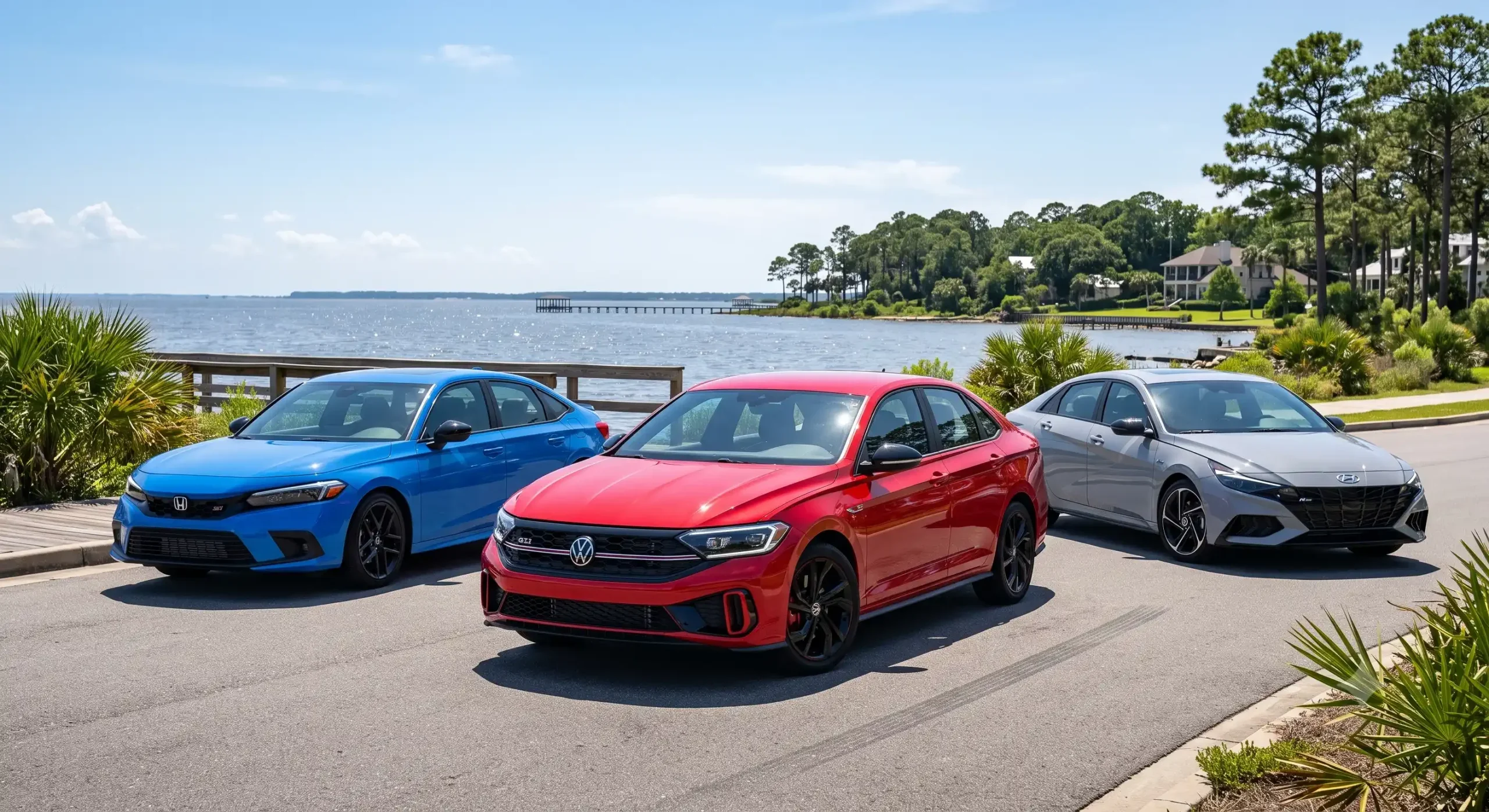
Pros, Cons, and Monthly Costs: Leasing vs. Buying a VW Jetta
Once you have decided that the 2026 Volkswagen Jetta is the car you want, the next question is how you want to pay for and use it. Leasing and financing can put you behind the wheel of the same Jetta, but they create different rules around mileage, customization, ownership, vehicle condition, and what happens several years later.
Leasing a 2026 Volkswagen Jetta can make sense to evaluate when a defined vehicle cycle and contract mileage fit the way you drive, while financing creates a path toward full ownership without lease mileage or lease-end wear restrictions. Neither option is automatically better or less expensive for every shopper. The stronger choice depends on your expected mileage, how long you plan to keep the Jetta, the actual lease or finance terms, and what you want to do with the vehicle later.
This guide assumes you have already chosen the Jetta rather than comparing it with another sedan. The 2026 Jetta uses a 1.5-liter turbocharged TSI four-cylinder engine producing 158 horsepower and an 8-speed automatic transmission with Tiptronic and Sport Mode. Choosing lease versus finance does not change that powertrain. It changes your financial relationship with the vehicle.
That distinction is especially important for commuters around Daphne and Mobile. A payment that looks attractive on its own does not tell you whether a lease mileage allowance fits your daily driving, just as a longer finance term does not tell you whether you actually want to own the Jetta for many years.
Leasing a 2026 Volkswagen Jetta
Leasing is built around a defined contract period rather than indefinite ownership. You agree to use the Jetta according to the lease terms, including the contracted mileage and vehicle-condition requirements, and then make another decision as the lease approaches maturity.
That structure may appeal to someone who prefers replacing vehicles periodically instead of keeping one well beyond the original contract period. It can also make sense to evaluate if you know your driving pattern well enough to choose an appropriate mileage allowance.
A Defined Vehicle Cycle
One reason drivers consider leasing is that it gives the vehicle relationship a defined timeline. Instead of purchasing a Jetta and deciding at some unknown point when to sell or trade it, the lease has an established maturity date.
That does not mean you simply hand over the keys without another decision. Volkswagen Financial Services currently provides lease-end options that can include returning the vehicle, purchasing it, or transitioning toward another Volkswagen according to the applicable agreement and current program.
Mileage Allowances and Lease Terms
Mileage deserves particular attention for a Jetta because sedans are often considered for commuting. The right lease should account for the way the car will actually be driven rather than starting with the lowest advertised payment and working backward.
Your signed lease agreement determines the mileage allowance and any applicable excess-mileage terms. There is no single annual mileage number or universal overage rate that should be assumed for every Volkswagen lease.
If you expect to commute regularly across the Eastern Shore or into Mobile, our Volkswagen lease mileage guide goes deeper into estimating contract mileage before signing.
Vehicle Condition at Lease-End
A leased Jetta must also be evaluated against the applicable lease-end wear-and-use standards if you return it. That means vehicle condition matters throughout the contract in a way that is different from owning a financed car.
Normal driving does not mean the vehicle must remain untouched, but excessive wear, missing equipment, certain modifications, or damage can affect the lease-end process. Review the current Volkswagen Financial Services guidance and your specific agreement rather than relying on a general online estimate.
Financing a 2026 Volkswagen Jetta
Financing takes a different approach. Instead of paying for the right to use the vehicle during a lease term, you are purchasing the Jetta with a loan and working toward owning it outright.
Long-Term Ownership
Volkswagen's current financing guidance states that once the applicable vehicle financing has been fully repaid, you own the Volkswagen. There is no lease maturity date requiring you to return the Jetta simply because a specified term of vehicle use has ended.
That can matter to someone who already knows they prefer keeping vehicles for a long time. Once the finance obligation is satisfied, the decision to continue driving, sell, or trade the Jetta belongs to the owner, subject to any other applicable obligations.
Mileage Freedom
Financing also removes lease mileage restrictions. If your work location changes, your commute grows, or you start taking more road trips than expected, there is no lease mileage allowance to exceed.
That does not mean mileage becomes financially irrelevant. Mileage can still affect vehicle condition, maintenance needs, depreciation, and future resale or trade value. The difference is that there is no contractual lease mileage limit or lease-end excess-mileage charge.
Customization
Volkswagen also identifies greater customization freedom as a financing benefit. A leased vehicle is subject to lease terms and must eventually satisfy the applicable return requirements if it is turned in.
If you already know you want to make permanent changes to the Jetta, financing may deserve closer consideration. Any modification should still comply with applicable laws, warranty terms, safety requirements, and vehicle specifications.
2026 Jetta Lease vs Finance Comparison
| Decision Factor | Lease | Finance |
|---|---|---|
| Ownership | You do not automatically own the Jetta at lease-end. | You own the Jetta after the applicable loan balance is fully repaid. |
| Mileage | Contract mileage allowance and excess-mileage terms apply. | No lease mileage restrictions. |
| Vehicle Condition | Lease-end wear-and-use standards matter if the vehicle is returned. | No lease turn-in inspection or lease wear standard. |
| Customization | Changes may be limited by the lease agreement and return requirements. | Greater customization freedom, subject to legal, warranty, and safety considerations. |
| End of Term | Return, purchase, or transition options may be available according to the agreement. | Continue owning, sell, or trade the vehicle after satisfying the loan. |
| Ownership Value | The lease does not automatically create vehicle ownership. | You may build ownership value, but positive equity at any particular point is not guaranteed. |
| Primary Question | Do the term, mileage, and lease-end requirements fit how I expect to use the Jetta? | Do I want long-term ownership and freedom from lease mileage and return requirements? |
Leasing and financing do not change the mechanical specifications of the 2026 Jetta, but they change what happens around the vehicle. A lease uses a defined term, mileage allowance, and lease-end requirements, while financing removes lease mileage and return restrictions and leads toward ownership after the loan is repaid. Comparing those obligations is more useful than assuming one option wins simply because its advertised monthly payment appears lower.
How Annual Mileage Changes the Jetta Decision
Mileage is one of the strongest decision factors for a commuter considering a lease. A Jetta may be an appealing daily driver, but that does not automatically mean every Jetta lease structure fits every daily commute.
Instead of choosing a mileage allowance from memory, estimate what you actually drive.
Start with the distance you travel on a normal work or school day. Multiply that by the realistic number of days you make the trip each year, then add weekend driving, errands, appointments, family travel, and longer road trips.
Someone commuting between Daphne and Mobile several days each week can accumulate a meaningful share of annual mileage from work travel alone. A change in office schedule, school location, or home address during the lease can shift that estimate further.
How Long Do You Expect to Keep the Jetta?
The second major question is time.
If you like changing vehicles on a defined cycle and expect your mileage to remain compatible with the contract, leasing may fit the way you prefer to drive and replace cars.
If your plan is to keep the Jetta long after a typical lease period would end, financing may align more directly with that goal because each completed payment moves the loan closer to payoff and full ownership.
Neither timeline is inherently better. The useful question is whether you expect to want the same Jetta several years from now. A shopper who enjoys changing models regularly is making a different decision from someone who wants to keep a sedan through many years of commuting.
Monthly Payment Is Not the Whole Comparison
Focusing only on monthly payment can make two offers look easier to compare than they really are.
Before deciding, compare the complete structure of each offer. Depending on the transaction, relevant items can include:
- cash due at signing or down payment;
- monthly payment;
- lease or finance term;
- contract mileage allowance;
- excess-mileage provisions;
- lease-end fees or obligations where applicable;
- APR or other applicable finance terms;
- purchase option information for a lease;
- total amount paid over the period you are comparing;
- what you own, if anything, at the end of that period.
A lower monthly figure does not by itself establish a lower total cost. It can reflect a different term, mileage allowance, amount due at signing, interest structure, or end-of-term ownership position.
The Volkswagen of Daphne finance page provides tools for reviewing financing and estimating payments. Any actual lease or finance decision should use the current offer and the terms presented for the specific Jetta you are considering.
Which Option Fits Different Jetta Drivers?
Frequent Commuter
Start with mileage, not payment. Estimate your actual annual driving and compare it with the lease allowance. Financing removes lease mileage restrictions, while leasing can still be viable when the contract mileage fits your use.
Driver Who Changes Cars Regularly
A defined lease cycle may deserve consideration if you prefer transitioning to another vehicle periodically and are comfortable with the contract mileage and condition requirements.
Long-Term Owner
Financing deserves closer consideration if the goal is to keep the Jetta after the loan has been repaid rather than planning for a lease-end decision after a defined vehicle cycle.
Driver Who Wants to Customize
Financing generally provides greater flexibility because you are purchasing the vehicle rather than preparing it for a potential lease return. Modifications can still affect warranty coverage, legality, safety, and resale value.
What About a Student or First-Time Volkswagen Buyer?
Age or buyer status alone should not determine lease versus finance. A student who drives long distances may have very different mileage needs from a student living close to campus. A first-time buyer who plans to keep a Jetta for many years has a different ownership goal from someone who expects their transportation needs to change quickly.
Instead of using a label such as "student" or "young professional" as the deciding factor, work through four questions:
- How many miles do you realistically expect to drive each year?
- How long do you expect the Jetta to fit your needs?
- Do you want to own the vehicle after the finance obligation is complete?
- How do the actual lease and finance offers compare beyond the monthly payment?
Who Handles Volkswagen Lease and Finance Accounts?
Volkswagen's current account structure is worth understanding because older online articles may use outdated finance terminology.
Volkswagen currently identifies active lease customers as Volkswagen Financial Services customers. For new retail auto financing initiated on or after May 1, 2025, Volkswagen identifies the financing relationship as Volkswagen Retail Finance powered by Wells Fargo, with those auto finance accounts owned and serviced by Wells Fargo.
That means a 2026 Jetta shopper should not assume that one generic "Volkswagen finance" account system handles both a new lease and a new retail loan in exactly the same way.
Which Jetta Trim Are You Financing or Leasing?
The lease-versus-finance decision is separate from choosing a Jetta trim, but the two decisions can affect the same budget.
The 2026 Jetta lineup includes S, Sport, SE, and SEL non-performance trims built around the same 1.5-liter turbocharged engine and 8-speed automatic transmission. Equipment and comfort features vary, so compare the trim you actually want before evaluating the final financial structure.
Our 2026 Volkswagen Jetta trim guide can help narrow down S, Sport, SE, and SEL before you compare specific lease and finance terms.
For a Daphne-area Jetta commuter, the first lease-versus-finance calculation should be annual mileage rather than a generalized rule about which option is cheaper. Drivers whose expected mileage fits the actual lease contract may still find leasing appropriate, while drivers who want unrestricted mileage or long-term ownership may place more value on financing. The decision should use the specific lease or loan terms for the Jetta being considered, not a generic payment or mileage threshold.
Questions to Ask Before Signing
Before committing to either structure, make sure you can answer the questions that will matter after the first monthly payment.
If You Are Considering a Lease
- What is the total contract mileage allowance?
- What happens if I exceed it?
- What is due at signing?
- What is the lease term?
- What lease-end fees or obligations apply?
- What is the purchase option?
- What happens if I need to end the lease early?
If You Are Considering Financing
- What APR applies to my approved offer?
- What is the loan term?
- How much is being financed?
- What is the total cost over the loan term?
- Is there a trade-in involved?
- How long do I actually intend to keep the Jetta?
- Does the payment still make sense at the selected term?
Compare 2026 Jetta Lease and Finance Options
Once you know your expected mileage and ownership timeline, compare the current terms for the specific Jetta configuration you are considering rather than relying on a generic lease-versus-finance rule.
Key Takeaways
- Leasing and financing give you access to the same 2026 Jetta, but they create different rules around mileage, ownership, customization, and what happens at the end of the agreement.
- A Jetta lease uses a contract mileage allowance and lease-end vehicle-condition requirements, so frequent commuters should estimate annual mileage before comparing offers.
- Financing removes lease mileage restrictions and creates a path toward full vehicle ownership after the applicable loan balance is repaid.
- A monthly payment alone is not enough to determine which option costs less. Compare term, cash due, mileage, fees, finance charges, end-of-term obligations, and ownership position.
- Volkswagen currently services lease customers through Volkswagen Financial Services, while newer retail financing is handled through Volkswagen Retail Finance powered by Wells Fargo.
- The better option depends on your actual mileage, ownership timeline, budget, and current contract terms rather than a universal lease-versus-finance rule.
2026 Volkswagen Jetta Lease vs Finance FAQs
Is it better to lease or finance a 2026 Volkswagen Jetta?
Neither is automatically better. Leasing may fit a driver who prefers a defined vehicle cycle and whose expected mileage aligns with the lease agreement. Financing may fit a driver who wants long-term ownership, no lease mileage restriction, and greater customization freedom. Compare the actual lease and finance terms before deciding.
Is a Jetta lease a good fit for a high-mileage commuter?
It can be, but only if the mileage structure of the specific lease fits the driver's expected use. Estimate your annual commute, personal driving, and road-trip mileage, then compare that total with the contract allowance and excess-mileage terms. High mileage does not automatically rule out leasing, but it makes mileage planning more important.
Can I customize a leased Volkswagen Jetta?
A leased Jetta remains subject to the lease agreement and applicable vehicle-return requirements, so permanent modifications can create complications at lease-end. Financing generally provides greater customization freedom, although any modification can still affect warranty coverage, safety, legality, and future vehicle value.
Who handles Volkswagen Jetta lease and finance accounts?
Volkswagen currently identifies lease customers as Volkswagen Financial Services customers. Retail auto financing initiated on or after May 1, 2025 is handled through Volkswagen Retail Finance powered by Wells Fargo, with the finance accounts owned and serviced by Wells Fargo.
Choose the Structure That Fits How You Will Use the Jetta
The useful comparison is not simply lease payment versus finance payment. Think about the full period you expect to drive the Jetta. Estimate mileage, decide whether you want long-term ownership, consider how likely your transportation needs are to change, and then compare the complete terms of the current offers.
You can view current Volkswagen inventory and then use the Volkswagen of Daphne finance tools to review the current lease or financing path for the Jetta configuration you are considering.