
Blog

2026 Volkswagen Atlas vs 2026 Ford Explorer: Family SUV Comparison

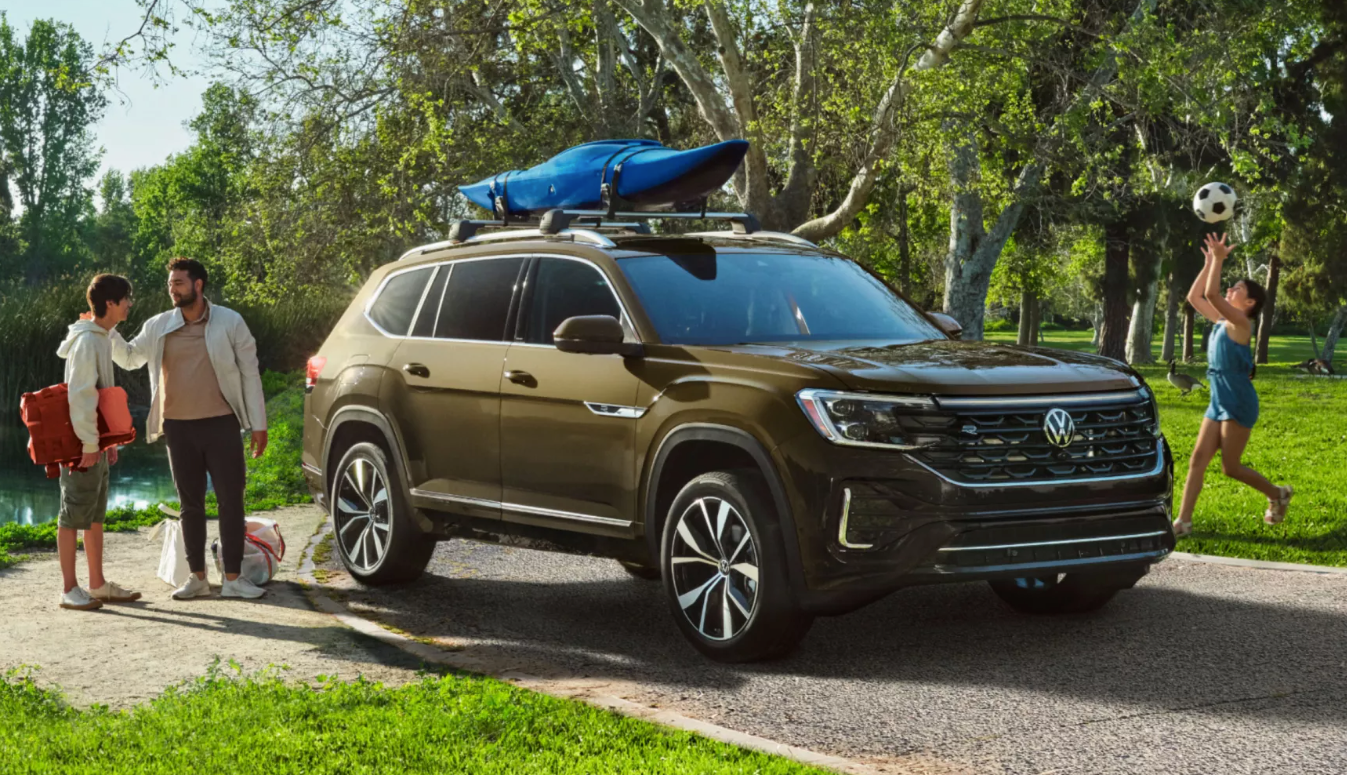
2026 vw atlas cross sport suv

2026 Volkswagen Atlas vs 2026 Ford Explorer: Family SUV Comparison

The 2026 Volkswagen Atlas is the stronger choice for many Daphne-area families who prioritize three-row space, cargo flexibility, everyday comfort, and simple family usability, while the 2026 Ford Explorer is a strong cross-shopper for buyers who want available higher horsepower and a sportier SUV personality. Volkswagen of Daphne recommends the Atlas for families who need room for kids, grandparents, school bags, sports gear, groceries, and Gulf Coast road trips without making third-row life feel like a compromise. For a Fairhope family comparing the Atlas and Explorer for school routines, sports weekends, and Gulf Shores trips, we recommend starting with the Atlas because its 96.6 cubic feet of maximum cargo capacity and seven-passenger family layout make it especially practical. The Explorer is worth considering if performance trim options matter most, but for daily family fit, the Atlas gives us the clearer recommendation.

This comparison focuses on what families actually use: seating comfort, cargo space, third-row access, technology, towing, power, ride feel, ownership support, and local driving fit. We will also show how each SUV fits Daphne, Fairhope, Spanish Fort, Mobile, Foley, and Gulf Shores routines.

Definition: A 2026 Volkswagen Atlas vs 2026 Ford Explorer comparison evaluates two three-row SUVs by seating, cargo space, comfort, performance, technology, safety features, ownership support, and daily usability. For drivers in Daphne, Fairhope, Spanish Fort, Mobile, Foley, and Gulf Shores, it helps identify which family SUV better fits local routines.

Three-Row Seating, Cargo Space, and Family Usability

Key Takeaway: We recommend the 2026 Volkswagen Atlas for families who want three-row space that feels easy to use every day, not just extra seats for occasional passengers.

Third-Row Comfort, Passenger Access, and Family Layout

Three-row SUV shoppers usually start with seating count, but we recommend going deeper. A family SUV needs to work when everyone is tired, bags are everywhere, and the third row is being used by real people, not just listed as a spec. The Atlas gives families a seven-passenger layout with a spacious cabin feel, while the Explorer offers standard six-passenger seating on many trims and seven-passenger capacity with an available second-row bench.

For a Fairhope growing family that regularly carries kids, grandparents, and school bags, we recommend the Atlas because its family-first layout makes the third row feel more useful in normal life. For a Daphne family upgrading from a Tiguan, the Atlas is also the more natural Volkswagen step because it adds the passenger space and cargo flexibility that smaller SUVs eventually cannot provide.

Explorer is a strong three-row SUV, especially for shoppers who want a more performance-focused feel. Still, family usability is where we think the Atlas has the advantage for most local buyers. It is easier to recommend when the daily routine includes school drop-off, grocery runs, sports practice, passenger shuffling, and weekend packing.
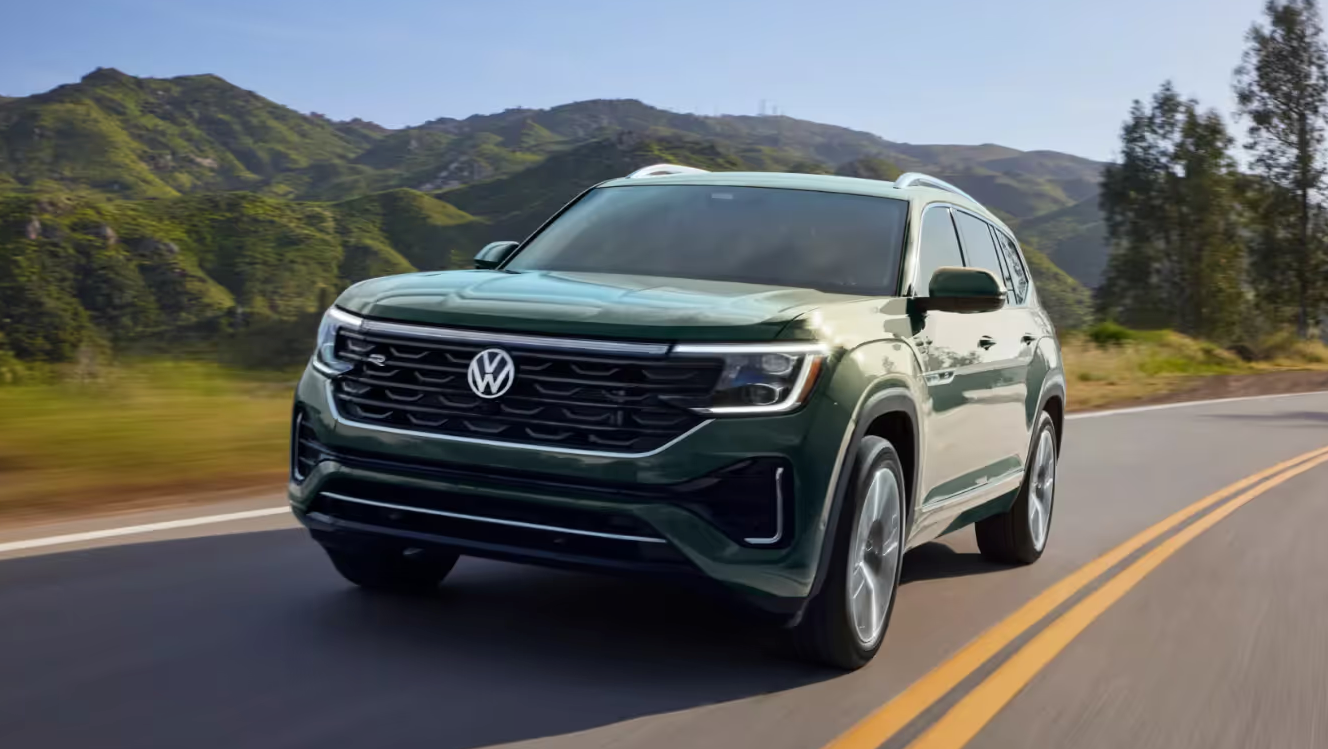
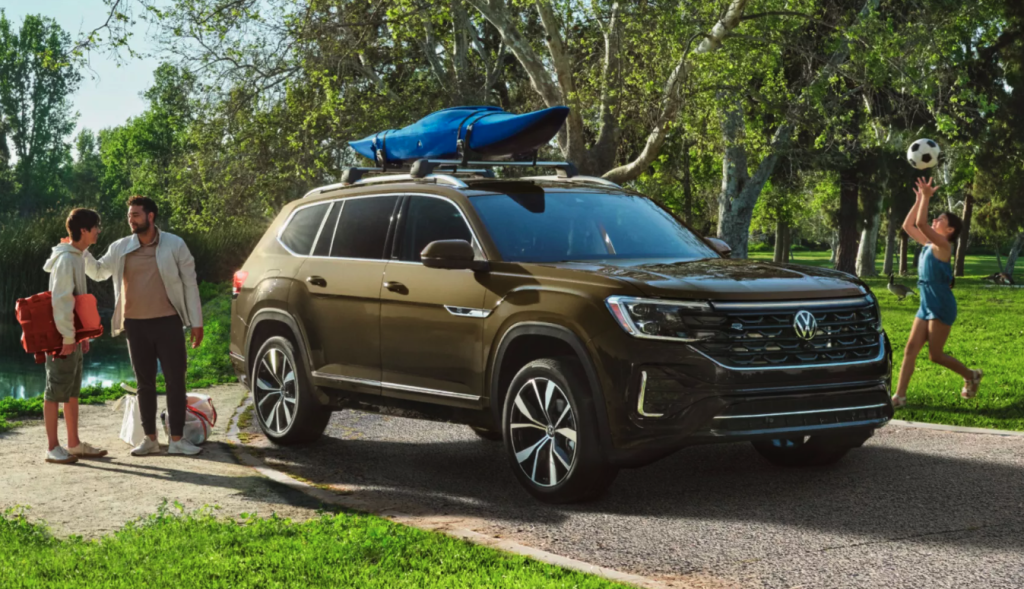
2026 Volkswagen Atlas family SUV at Volkswagen of Daphne in Daphne AL

Cargo Space for Groceries, Sports Gear, Strollers, and Road Trips

The Atlas delivers 96.6 cubic feet of maximum cargo capacity with the rear seats folded, while the Explorer Active lists 85.8 cubic feet of maximum cargo capacity and 16.3 cubic feet behind the third row. That gives the Atlas a meaningful advantage for families that carry larger loads or need more flexible packing space. We recommend the Atlas for Spanish Fort sports families because coolers, folding chairs, backpacks, and team gear can fill a three-row SUV quickly.

Family Usability Point2026 Volkswagen Atlas2026 Ford ExplorerWhy It MattersBest For
Seating layoutThree rows with seven-passenger family layoutSix standard on many trims, seven with available benchFamily seating needs can change quicklyAtlas for larger routine passenger needs
Maximum cargo space96.6 cu ft with rear seats folded85.8 cu ft maximum cargo capacity on Explorer ActiveAtlas gives more total cargo flexibilityRoad trips and sports families
Cargo behind third rowFamily-focused rear cargo area16.3 cu ft behind third row on Explorer ActiveThird-row use often reduces cargo room fastFamilies that use all seats often
Third-row practicalityBuilt around everyday family spaceUseful, with more performance personalityComfort matters when passengers ride oftenSchool and family routines
Gear loadingStrong for strollers, bags, sports gear, and travel cargoStrong, but less maximum cargo than Atlas Active comparisonPacking ease affects road-trip stressGulf Coast weekend travel
Ideal Use CaseFamily-first space and cargo utilityThree-row SUV with sportier optionsClarifies the core differenceAtlas for family usability, Explorer for performance-leaning shoppers

Based on Volkswagen official website and Ford official website.

The Atlas is the better family cargo choice because it offers more maximum cargo capacity than the Explorer Active and supports families who regularly combine passengers with gear. We recommend the Atlas for shoppers who need a three-row SUV that feels flexible on ordinary weekdays and full weekends. The Explorer remains a good cross-shopper, but its strongest argument is performance availability rather than total family cargo room.

  • If you carry third-row passengers often, we recommend testing the Atlas first.
  • If your family packs sports gear every weekend, we recommend comparing the Atlas cargo area in person.
  • If you want the strongest available horsepower, we recommend reviewing Explorer performance trims as a reference point.
  • If your priority is daily family comfort, we recommend starting with the Atlas.

Shop New Volkswagen Atlas SUVs

Why Atlas Practicality Matters for Growing Families

Growing families need more than a large vehicle. They need a layout that stays easy when daily life gets messy. The Atlas fits that role because it focuses on family space, simple utility, and broad cargo flexibility. A larger cargo maximum matters when you are loading strollers, backpacks, folding chairs, coolers, groceries, luggage, and sports gear in the same week.

For a Spanish Fort family with kids in sports, we recommend the Atlas because it handles the people-and-gear mix naturally. For a Fairhope family that brings grandparents along for weekend plans, the Atlas makes the third row feel more relevant. For a Gulf Shores weekend traveler, the Atlas gives more room to pack for beach trips without forcing every bag into a puzzle.

The Explorer can make sense if the buyer wants a more aggressive performance profile. But for a family whose SUV has to reduce stress, not add decisions, the Atlas is the easier recommendation.

Performance, Ride Comfort, and Daily Driving Differences

Key Takeaway: We recommend comparing performance by real use because Explorer offers stronger available horsepower, while Atlas delivers family-focused power, comfort, towing ability, and cargo space in one straightforward package.

2026 Atlas vs Explorer Performance and Feature Comparison

The Atlas uses a turbocharged 2.0 TSI engine rated at 269 horsepower and 273 lb-ft of torque, with a 5,000 lb towing capacity. The Explorer Active uses a 2.3L EcoBoost engine rated at 300 horsepower, also with a 5,000 lb towing capacity, while the Explorer lineup offers up to 385 available horsepower on higher-output models. That means Ford has the horsepower advantage, but Volkswagen has the family space and maximum cargo advantage.

Comparison Point2026 Volkswagen Atlas2026 Ford ExplorerWhy It MattersBest For
Starting MSRP$39,310Varies by trim and offer structureAtlas gives a clear family-SUV starting pointAtlas shoppers comparing straightforward value
Standard power269 hp and 273 lb-ft of torque300 hp on Explorer ActiveExplorer has more base horsepowerPerformance-sensitive buyers
Max available horsepower269 hpUp to 385 hp availableExplorer wins for available horsepowerPerformance-oriented shoppers
Towing capacity5,000 lb5,000 lb on Explorer ActiveBoth support family trailers and light recreational towingWeekend hauling users
Maximum cargo capacity96.6 cu ft85.8 cu ft on Explorer ActiveAtlas has more maximum cargo roomFamilies carrying larger loads
SeatingSeven-passenger family layoutSix standard on Active, seven available with benchAtlas is simpler for families needing seven seatsGrowing families
Technology focus12-inch display, Digital Cockpit Pro, family-friendly cabin tech13.2-inch center display and Ford Digital ExperienceBoth offer modern digital cabinsTech-focused shoppers
Ideal Use CaseFamily space, cargo, comfort, and daily usabilityThree-row SUV with stronger performance optionsRecommendation depends on family space vs horsepower priorityAtlas for families, Explorer for power-first shoppers

Based on Volkswagen official website and Ford official website.

The key difference between the 2026 Atlas and 2026 Explorer is that the Explorer has the stronger performance story, while the Atlas has the stronger family usability story. We recommend the Atlas when cargo room, seating simplicity, third-row practicality, and comfort matter more than chasing the highest horsepower figure. We recommend considering the Explorer if available performance is the top priority and cargo maximum is less important.
Schedule an Atlas Test Drive

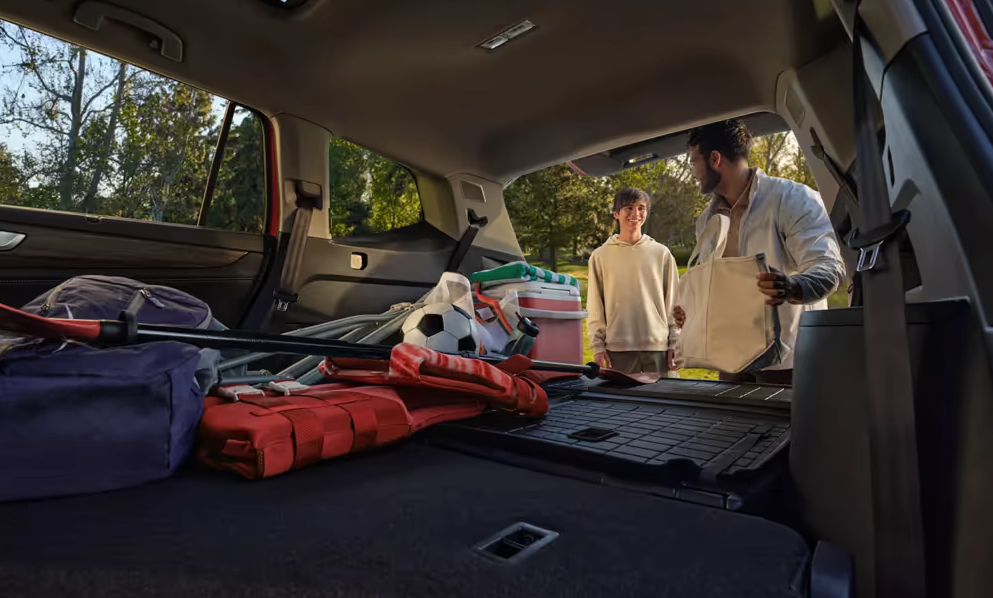
2026 Volkswagen Atlas three-row seating and cargo space at Volkswagen of Daphne

Which SUV Should You Choose for Your Lifestyle?

Driver Profile: Daphne family upgrading from a Tiguan. Scenario: You need more room without losing easy family usability. Recommendation: We recommend the Atlas because it feels like the natural three-row step up for Volkswagen families who need more seats, more cargo room, and a familiar ownership path.

Driver Profile: Mobile highway commuter with family. Scenario: You want confident passing power and comfort on longer routes. Recommendation: We recommend the Atlas for balanced family comfort, but we acknowledge that Explorer higher-output trims may appeal if sportier acceleration is your top priority.

Driver Profile: Spanish Fort sports family. Scenario: You carry backpacks, folding chairs, coolers, and team gear several times a week. Recommendation: We recommend the Atlas because its 96.6 cu ft maximum cargo capacity better supports heavy family loading.

Driver Profile: Performance-oriented shopper. Scenario: You care most about available horsepower and a sportier feel. Recommendation: We recommend comparing Explorer performance trims, then testing the Atlas to decide whether family space and comfort matter more in daily life.

  • If you need simple seven-passenger family flexibility, we recommend the Atlas.
  • If you want maximum available horsepower, the Explorer deserves consideration.
  • If you carry sports gear or luggage often, we recommend the Atlas first.
  • If you are trading out of a compact SUV, we recommend starting with an Atlas test drive.

For most families near Daphne, the Atlas is the better all-around SUV because it turns three-row space into everyday usefulness. The Explorer is strong, especially when power matters, but the Atlas is easier to recommend for school, sports, groceries, trips, and family comfort.

Value Your Current Trade

If you are comparing the 2026 Atlas and 2026 Explorer, we recommend driving the Atlas with your real family routine in mind. Bring the questions that matter most: how the third row feels, where backpacks go, how much cargo space remains, whether child seats fit your routine, and how comfortable the cabin feels after a normal day of errands. Our team can walk you through Atlas trims, current inventory, available 4MOTION configurations, technology, financing, and trade-in options in one visit. Use our website to schedule a test drive or browse our new Volkswagen inventory before you arrive. Call us at 251-374-0664 or use our test drive scheduler, and we will help you compare the Atlas with your actual family needs instead of a generic spec sheet.

Book a 2026 Atlas Test Drive

Why the 2026 Volkswagen Atlas Is a Smart Family SUV Choice Near Daphne

Key Takeaway: We recommend the Atlas for Daphne-area families because local driving often rewards space, comfort, easy loading, and passenger flexibility more than peak horsepower.

Local Driving Conditions, Family Routines, and Gulf Coast Travel

Daphne-area families need a three-row SUV that can handle more than one job. A normal week may include Fairhope school traffic, Spanish Fort sports practices, Mobile commuting, Foley errands, and Gulf Shores beach trips. In that kind of routine, the Atlas makes sense because its strengths are space, comfort, cargo flexibility, and family access.

For a Gulf Shores weekend traveler, we recommend the Atlas because beach gear, luggage, coolers, towels, and passengers can fill a three-row SUV quickly. For a Foley budget-conscious family comparing three-row options, we recommend reviewing Atlas trims and financing because the Atlas gives family space and clear Volkswagen ownership support. For a Daphne trade-in shopper moving from a sedan or compact SUV, we recommend starting with the Atlas because it makes the family-SUV step feel purposeful.

Local Driver ProfilePrimary NeedAtlas AdvantageExplorer ConsiderationBest For
Daphne family upgraderMore seats and cargo than a compact SUVNatural three-row Volkswagen step upConsider Explorer if sportier feel matters mostFamilies outgrowing Tiguan or Taos
Fairhope school-run familyEasy third-row and daily comfortFamily-focused cabin and cargo flexibilityExplorer offers strong tech and available bench seatingFamilies with kids and grandparents
Spanish Fort sports familyGear, bags, chairs, and passengers96.6 cu ft maximum cargo capacityExplorer has less max cargo in Active comparisonSports and activity households
Mobile highway commuterComfort and confident drivingBalanced turbo power and spacious cabinExplorer has more available horsepowerDrivers balancing commute and family use
Gulf Shores weekend travelerBeach gear, luggage, and comfortMore cargo room for loaded tripsExplorer still tows up to 5,000 lb on ActiveRoad-trip families
Ideal Use CaseFamily-first three-row SUVAtlas is easier to recommend for daily usabilityExplorer is strongest for power-focused buyersDaphne-area family SUV shoppers

Based on our experience at Volkswagen of Daphne, local three-row SUV shoppers usually make the best decision when they start with how often every seat and every cubic foot of cargo space will be used. We recommend the Atlas because Daphne, Fairhope, Spanish Fort, Mobile, Foley, and Gulf Shores routines often demand space, flexibility, and comfort more often than maximum horsepower. The Atlas gives families the more practical answer for everyday life.

2026 Volkswagen Atlas for Gulf Coast family driving near Daphne AL

If you are planning a family SUV upgrade, we recommend looking at the Atlas, your current trade value, and your financing options together. Our team can review available Atlas trims, help you compare payment options, and show how your current vehicle may fit into the purchase. We also encourage eligible shoppers to ask us about our Partner Program when they visit. Drivers from Fairhope, Spanish Fort, Mobile, Foley, and Gulf Shores often find the decision easier after they compare space, monthly budget, and real family use in one conversation. Start with our financing center or call us at 251-374-0664, and we will help you decide whether the Atlas is the right three-row SUV for your household.

Review Atlas Financing Options

Ownership Cost Analysis: Pricing, Technology, Safety, and Ownership Value

Key Takeaway: We recommend evaluating value by family usefulness, not only MSRP or horsepower, because ownership value depends on how often the SUV solves real daily problems.

The Atlas starts at $39,310 MSRP and includes a turbocharged 2.0 TSI engine, three-row seating, 5,000 lb towing capacity, a 12-inch display, Digital Cockpit Pro, Safe & Secure plan, and Carefree Coverage on new 2026 Atlas vehicles. For family shoppers, that package matters because the Atlas is not trying to win only on performance. It is built to support space, comfort, technology, and ownership confidence in one family SUV.

The Explorer gives buyers strong available performance, including up to 385 horsepower in the lineup. That is appealing for a buyer who places power at the top of the list. We still recommend the Atlas for most growing families because the extra maximum cargo space, straightforward seven-passenger layout, and Volkswagen ownership support create value that shows up every week.

Ownership PriorityAtlas StrengthExplorer StrengthOur Recommendation
Family cargo96.6 cu ft maximum cargo capacity85.8 cu ft maximum on Explorer ActiveAtlas
Available horsepower269 hp standardUp to 385 hp availableExplorer if power comes first
Daily family usabilityStrong three-row family focusStrong three-row utility with sportier angleAtlas
Towing5,000 lb5,000 lb on Explorer ActiveComparable for many family uses
Ownership supportCarefree Coverage and our local service teamFord ownership networkAtlas for VW shoppers near Daphne
Ideal Use CaseFamily-first valuePerformance-first valueAtlas for most local families

Family and Lifestyle Fit: When Atlas Is the Better Daily Family SUV

Key Takeaway: We recommend the Atlas when the SUV’s most important job is making family life easier through space, comfort, cargo access, and practical three-row flexibility.

The Atlas is the better daily family SUV when your household uses all three rows often, carries gear frequently, and values a roomy cabin more than maximum available horsepower. This is the reality for many local families. The SUV has to handle backpacks, groceries, sports bags, luggage, friends, grandparents, pets, and weekend plans without turning every drive into a packing problem.

We recommend the Atlas if:

  • Your family has outgrown a compact SUV like Taos or Tiguan.
  • You use third-row seating often enough that access and comfort matter.
  • You pack heavy for sports, beach trips, or road trips.
  • You want a three-row SUV with straightforward Volkswagen ownership support.
  • You care more about family space than the highest available horsepower number.

The Explorer is a strong SUV and deserves respect in this comparison. But if your main question is which SUV makes family life easier near Daphne, we recommend the Atlas first.

Ask Us About the Atlas

Key Takeaways

  • The 2026 Atlas is our recommendation for families prioritizing space, cargo, comfort, and daily usability.
  • The Explorer has stronger available horsepower, but Atlas has more maximum cargo space than Explorer Active.
  • Both SUVs can tow up to 5,000 lb in the verified configurations discussed here.
  • We recommend Atlas for school runs, sports gear, Gulf Shores trips, and growing families.
  • Performance-first buyers should compare Explorer trims, then test the Atlas for family fit.

2026 Volkswagen Atlas vs Ford Explorer FAQ for Daphne Drivers

Which is better for families, the 2026 Atlas or Ford Explorer?

For most Daphne-area families, we recommend the 2026 Volkswagen Atlas because it focuses on space, comfort, cargo flexibility, and everyday three-row usability. The Ford Explorer is a strong option for buyers who want available higher horsepower and a sportier SUV personality. If your family routinely carries kids, grandparents, sports gear, groceries, and luggage, the Atlas is usually the better daily family fit. If your top priority is performance trim availability, the Explorer deserves a closer look.

Does the 2026 Atlas have more cargo space than the Explorer?

The 2026 Atlas offers 96.6 cubic feet of maximum cargo capacity with the rear seats folded, while the 2026 Explorer Active lists 85.8 cubic feet of maximum cargo capacity. We recommend the Atlas for families who need more total cargo flexibility for strollers, luggage, sports bags, coolers, and beach gear. For a Spanish Fort sports family or Gulf Shores weekend traveler, that extra space can make a real difference during regular use.

Is the Ford Explorer more powerful than the Volkswagen Atlas?

The Ford Explorer has the stronger horsepower story. The Explorer Active lists 300 horsepower, and the Explorer lineup offers up to 385 available horsepower. The 2026 Volkswagen Atlas uses a turbocharged 2.0 TSI engine rated at 269 horsepower and 273 lb-ft of torque. We recommend the Explorer for shoppers who place available horsepower first. We recommend the Atlas for families who care more about cargo capacity, space, comfort, and daily three-row practicality.

Which SUV should Daphne families test drive first?

We recommend that Daphne families test drive the 2026 Volkswagen Atlas first if their main needs are school routines, third-row comfort, cargo room, road trips, and family ease. Bring the family if possible, or at least bring a realistic list of what you carry every week. If you still want a sportier drive after testing the Atlas, then compare the Explorer. Starting with the Atlas helps families decide whether space and comfort solve the real problem first.

We are here to help you compare the 2026 Volkswagen Atlas against the 2026 Ford Explorer with real family needs in mind. Visit us at Volkswagen of Daphne, 29816 Frederick Blvd, Daphne, AL 36526, and we can walk you through Atlas trims, cargo space, third-row comfort, technology, financing, and trade-in options. We proudly serve Daphne, Fairhope, Spanish Fort, Mobile, Foley, and Gulf Shores with Volkswagen sales, service, and ownership support. Carefree Coverage and our Partner Program can also add confidence as you plan your next family SUV. Call us at 251-374-0664 or start at https://www.vwofdaphne.com/, and we will help you decide if the Atlas is the right three-row SUV for your family.

Recommended Posts

Should You Lease or Finance a 2026 Volkswagen Jetta in Daphne, AL?

Should You Lease or Finance a 2026 Volkswagen Jetta in Daphne, AL?

Pros, Cons, and Monthly Costs: Leasing vs. Buying a VW Jetta Once you have decided that the 2026 Volkswagen Jetta is the car you want, the next question is how you want to pay for and use it. Leasing and financing can put you behind the wheel of the same Jetta, but they create different rules around mileage, customization, ownership, vehicle condition, and what happens several years later. Leasing a 2026 Volkswagen Jetta can make sense to evaluate when a defined vehicle cycle and contract mileage fit the way you drive, while financing creates a path toward full ownership without lease mileage or lease-end wear restrictions. Neither option is automatically better or less expensive for every shopper. The stronger choice depends on your expected mileage, how long you plan to keep the Jetta, the actual lease or finance terms, and what you want to do with the vehicle later. This guide assumes you have already chosen the Jetta rather than comparing it with another sedan. The 2026 Jetta uses a 1.5-liter turbocharged TSI four-cylinder engine producing 158 horsepower and an 8-speed automatic transmission with Tiptronic and Sport Mode. Choosing lease versus finance does not change that powertrain. It changes your financial relationship with the vehicle. That distinction is especially important for commuters around Daphne and Mobile. A payment that looks attractive on its own does not tell you whether a lease mileage allowance fits your daily driving, just as a longer finance term does not tell you whether you actually want to own the Jetta for many years. Lease vs Finance: What Is the Difference? A vehicle lease allows you to use the Jetta for a defined period under contract terms that include mileage and lease-end obligations. Financing uses a vehicle loan to purchase the Jetta, with full ownership remaining with you after the applicable loan balance has been repaid. Leasing a 2026 Volkswagen Jetta Leasing is built around a defined contract period rather than indefinite ownership. You agree to use the Jetta according to the lease terms, including the contracted mileage and vehicle-condition requirements, and then make another decision as the lease approaches maturity. That structure may appeal to someone who prefers replacing vehicles periodically instead of keeping one well beyond the original contract period. It can also make sense to evaluate if you know your driving pattern well enough to choose an appropriate mileage allowance. A Defined Vehicle Cycle One reason drivers consider leasing is that it gives the vehicle relationship a defined timeline. Instead of purchasing a Jetta and deciding at some unknown point when to sell or trade it, the lease has an established maturity date. That does not mean you simply hand over the keys without another decision. Volkswagen Financial Services currently provides lease-end options that can include returning the vehicle, purchasing it, or transitioning toward another Volkswagen according to the applicable agreement and current program. Mileage Allowances and Lease Terms Mileage deserves particular attention for a Jetta because sedans are often considered for commuting. The right lease should account for the way the car will actually be driven rather than starting with the lowest advertised payment and working backward. Your signed lease agreement determines the mileage allowance and any applicable excess-mileage terms. There is no single annual mileage number or universal overage rate that should be assumed for every Volkswagen lease. If you expect to commute regularly across the Eastern Shore or into Mobile, our Volkswagen lease mileage guide goes deeper into estimating contract mileage before signing. Vehicle Condition at Lease-End A leased Jetta must also be evaluated against the applicable lease-end wear-and-use standards if you return it. That means vehicle condition matters throughout the contract in a way that is different from owning a financed car. Normal driving does not mean the vehicle must remain untouched, but excessive wear, missing equipment, certain modifications, or damage can affect the lease-end process. Review the current Volkswagen Financial Services guidance and your specific agreement rather than relying on a general online estimate. Financing a 2026 Volkswagen Jetta Financing takes a different approach. Instead of paying for the right to use the vehicle during a lease term, you are purchasing the Jetta with a loan and working toward owning it outright. Long-Term Ownership Volkswagen's current financing guidance states that once the applicable vehicle financing has been fully repaid, you own the Volkswagen. There is no lease maturity date requiring you to return the Jetta simply because a specified term of vehicle use has ended. That can matter to someone who already knows they prefer keeping vehicles for a long time. Once the finance obligation is satisfied, the decision to continue driving, sell, or trade the Jetta belongs to the owner, subject to any other applicable obligations. Mileage Freedom Financing also removes lease mileage restrictions. If your work location changes, your commute grows, or you start taking more road trips than expected, there is no lease mileage allowance to exceed. That does not mean mileage becomes financially irrelevant. Mileage can still affect vehicle condition, maintenance needs, depreciation, and future resale or trade value. The difference is that there is no contractual lease mileage limit or lease-end excess-mileage charge. Customization Volkswagen also identifies greater customization freedom as a financing benefit. A leased vehicle is subject to lease terms and must eventually satisfy the applicable return requirements if it is turned in. If you already know you want to make permanent changes to the Jetta, financing may deserve closer consideration. Any modification should still comply with applicable laws, warranty terms, safety requirements, and vehicle specifications. 2026 Jetta Lease vs Finance Comparison Decision Factor Lease Finance Ownership You do not automatically own the Jetta at lease-end. You own the Jetta after the applicable loan balance is fully repaid. Mileage Contract mileage allowance and excess-mileage terms apply. No lease mileage restrictions. Vehicle Condition Lease-end wear-and-use standards matter if the vehicle is returned. No lease turn-in inspection or lease wear standard. Customization Changes may be limited by the lease agreement and return requirements. Greater customization freedom, subject to legal, warranty, and safety considerations. End of Term Return, purchase, or transition options may be available according to the agreement. Continue owning, sell, or trade the vehicle after satisfying the loan. Ownership Value The lease does not automatically create vehicle ownership. You may build ownership value, but positive equity at any particular point is not guaranteed. Primary Question Do the term, mileage, and lease-end requirements fit how I expect to use the Jetta? Do I want long-term ownership and freedom from lease mileage and return requirements? Leasing and financing do not change the mechanical specifications of the 2026 Jetta, but they change what happens around the vehicle. A lease uses a defined term, mileage allowance, and lease-end requirements, while financing removes lease mileage and return restrictions and leads toward ownership after the loan is repaid. Comparing those obligations is more useful than assuming one option wins simply because its advertised monthly payment appears lower. How Annual Mileage Changes the Jetta Decision Mileage is one of the strongest decision factors for a commuter considering a lease. A Jetta may be an appealing daily driver, but that does not automatically mean every Jetta lease structure fits every daily commute. Instead of choosing a mileage allowance from memory, estimate what you actually drive. Daily round-trip commute × commuting days + errands + personal driving + longer trips = estimated annual mileage Start with the distance you travel on a normal work or school day. Multiply that by the realistic number of days you make the trip each year, then add weekend driving, errands, appointments, family travel, and longer road trips. Someone commuting between Daphne and Mobile several days each week can accumulate a meaningful share of annual mileage from work travel alone. A change in office schedule, school location, or home address during the lease can shift that estimate further. High mileage does not automatically mean you must finance. It means the actual lease mileage allowance and excess-mileage terms deserve closer scrutiny. Compare your realistic annual driving with the specific lease being offered instead of using a generic mileage rule from another contract or dealership. How Long Do You Expect to Keep the Jetta? The second major question is time. If you like changing vehicles on a defined cycle and expect your mileage to remain compatible with the contract, leasing may fit the way you prefer to drive and replace cars. If your plan is to keep the Jetta long after a typical lease period would end, financing may align more directly with that goal because each completed payment moves the loan closer to payoff and full ownership. Neither timeline is inherently better. The useful question is whether you expect to want the same Jetta several years from now. A shopper who enjoys changing models regularly is making a different decision from someone who wants to keep a sedan through many years of commuting. Monthly Payment Is Not the Whole Comparison Focusing only on monthly payment can make two offers look easier to compare than they really are. Before deciding, compare the complete structure of each offer. Depending on the transaction, relevant items can include: cash due at signing or down payment; monthly payment; lease or finance term; contract mileage allowance; excess-mileage provisions; lease-end fees or obligations where applicable; APR or other applicable finance terms; purchase option information for a lease; total amount paid over the period you are comparing; what you own, if anything, at the end of that period. A lower monthly figure does not by itself establish a lower total cost. It can reflect a different term, mileage allowance, amount due at signing, interest structure, or end-of-term ownership position. The Volkswagen of Daphne finance page provides tools for reviewing financing and estimating payments. Any actual lease or finance decision should use the current offer and the terms presented for the specific Jetta you are considering. Which Option Fits Different Jetta Drivers? Frequent Commuter Start with mileage, not payment. Estimate your actual annual driving and compare it with the lease allowance. Financing removes lease mileage restrictions, while leasing can still be viable when the contract mileage fits your use. Driver Who Changes Cars Regularly A defined lease cycle may deserve consideration if you prefer transitioning to another vehicle periodically and are comfortable with the contract mileage and condition requirements. Long-Term Owner Financing deserves closer consideration if the goal is to keep the Jetta after the loan has been repaid rather than planning for a lease-end decision after a defined vehicle cycle. Driver Who Wants to Customize Financing generally provides greater flexibility because you are purchasing the vehicle rather than preparing it for a potential lease return. Modifications can still affect warranty coverage, legality, safety, and resale value. What About a Student or First-Time Volkswagen Buyer? Age or buyer status alone should not determine lease versus finance. A student who drives long distances may have very different mileage needs from a student living close to campus. A first-time buyer who plans to keep a Jetta for many years has a different ownership goal from someone who expects their transportation needs to change quickly. Instead of using a label such as "student" or "young professional" as the deciding factor, work through four questions: How many miles do you realistically expect to drive each year? How long do you expect the Jetta to fit your needs? Do you want to own the vehicle after the finance obligation is complete? How do the actual lease and finance offers compare beyond the monthly payment? Who Handles Volkswagen Lease and Finance Accounts? Volkswagen's current account structure is worth understanding because older online articles may use outdated finance terminology. Volkswagen currently identifies active lease customers as Volkswagen Financial Services customers. For new retail auto financing initiated on or after May 1, 2025, Volkswagen identifies the financing relationship as Volkswagen Retail Finance powered by Wells Fargo, with those auto finance accounts owned and serviced by Wells Fargo. That means a 2026 Jetta shopper should not assume that one generic "Volkswagen finance" account system handles both a new lease and a new retail loan in exactly the same way. Which Jetta Trim Are You Financing or Leasing? The lease-versus-finance decision is separate from choosing a Jetta trim, but the two decisions can affect the same budget. The 2026 Jetta lineup includes S, Sport, SE, and SEL non-performance trims built around the same 1.5-liter turbocharged engine and 8-speed automatic transmission. Equipment and comfort features vary, so compare the trim you actually want before evaluating the final financial structure. Our 2026 Volkswagen Jetta trim guide can help narrow down S, Sport, SE, and SEL before you compare specific lease and finance terms. For a Daphne-area Jetta commuter, the first lease-versus-finance calculation should be annual mileage rather than a generalized rule about which option is cheaper. Drivers whose expected mileage fits the actual lease contract may still find leasing appropriate, while drivers who want unrestricted mileage or long-term ownership may place more value on financing. The decision should use the specific lease or loan terms for the Jetta being considered, not a generic payment or mileage threshold. Questions to Ask Before Signing Before committing to either structure, make sure you can answer the questions that will matter after the first monthly payment. If You Are Considering a Lease What is the total contract mileage allowance? What happens if I exceed it? What is due at signing? What is the lease term? What lease-end fees or obligations apply? What is the purchase option? What happens if I need to end the lease early? If You Are Considering Financing What APR applies to my approved offer? What is the loan term? How much is being financed? What is the total cost over the loan term? Is there a trade-in involved? How long do I actually intend to keep the Jetta? Does the payment still make sense at the selected term? Compare 2026 Jetta Lease and Finance Options Once you know your expected mileage and ownership timeline, compare the current terms for the specific Jetta configuration you are considering rather than relying on a generic lease-versus-finance rule. Review Finance and Lease Options View Current Volkswagen Inventory Key Takeaways Leasing and financing give you access to the same 2026 Jetta, but they create different rules around mileage, ownership, customization, and what happens at the end of the agreement. A Jetta lease uses a contract mileage allowance and lease-end vehicle-condition requirements, so frequent commuters should estimate annual mileage before comparing offers. Financing removes lease mileage restrictions and creates a path toward full vehicle ownership after the applicable loan balance is repaid. A monthly payment alone is not enough to determine which option costs less. Compare term, cash due, mileage, fees, finance charges, end-of-term obligations, and ownership position. Volkswagen currently services lease customers through Volkswagen Financial Services, while newer retail financing is handled through Volkswagen Retail Finance powered by Wells Fargo. The better option depends on your actual mileage, ownership timeline, budget, and current contract terms rather than a universal lease-versus-finance rule. 2026 Volkswagen Jetta Lease vs Finance FAQs Is it better to lease or finance a 2026 Volkswagen Jetta? Neither is automatically better. Leasing may fit a driver who prefers a defined vehicle cycle and whose expected mileage aligns with the lease agreement. Financing may fit a driver who wants long-term ownership, no lease mileage restriction, and greater customization freedom. Compare the actual lease and finance terms before deciding. Is a Jetta lease a good fit for a high-mileage commuter? It can be, but only if the mileage structure of the specific lease fits the driver's expected use. Estimate your annual commute, personal driving, and road-trip mileage, then compare that total with the contract allowance and excess-mileage terms. High mileage does not automatically rule out leasing, but it makes mileage planning more important. Can I customize a leased Volkswagen Jetta? A leased Jetta remains subject to the lease agreement and applicable vehicle-return requirements, so permanent modifications can create complications at lease-end. Financing generally provides greater customization freedom, although any modification can still affect warranty coverage, safety, legality, and future vehicle value. Who handles Volkswagen Jetta lease and finance accounts? Volkswagen currently identifies lease customers as Volkswagen Financial Services customers. Retail auto financing initiated on or after May 1, 2025 is handled through Volkswagen Retail Finance powered by Wells Fargo, with the finance accounts owned and serviced by Wells Fargo. Choose the Structure That Fits How You Will Use the Jetta The useful comparison is not simply lease payment versus finance payment. Think about the full period you expect to drive the Jetta. Estimate mileage, decide whether you want long-term ownership, consider how likely your transportation needs are to change, and then compare the complete terms of the current offers. You can view current Volkswagen inventory and then use the Volkswagen of Daphne finance tools to review the current lease or financing path for the Jetta configuration you are considering. Related Volkswagen Insights & Updates Jetta Trim Guide 2026 Volkswagen Jetta Trim Levels: Which One Fits Daphne Drivers? Compare the Jetta S, Sport, SE, and SEL to decide which equipment level you want before evaluating a specific lease or finance offer. Read More Jetta Technology 2026 Volkswagen Jetta Technology & Safety Review IQ.DRIVE, connectivity, digital displays, driver-assistance features, and comfort technology available for the 2026 Jetta. Read More Lease Mileage Volkswagen Lease Mileage Guide for Daphne and Mobile Drivers Learn why commute distance, personal driving, and regional trips should be considered before agreeing to a lease mileage allowance. Read More Jetta Overview 2026 Volkswagen Jetta Sedan Near Daphne, AL Take a broader look at the 2026 Jetta's turbocharged powertrain, everyday usability, technology, and sedan configuration. Read More

Volkswagen SUV Leasing Guide: Taos, Tiguan, and Atlas

Volkswagen SUV Leasing Guide: Taos, Tiguan, and Atlas

The Financial Benefits of Leasing a Volkswagen: Lower Payments and Warranty Perks Choosing a Volkswagen SUV to lease starts with a different question than simply asking which SUV is largest or has the most features. A lease covers a defined period and a contracted mileage allowance, so the more useful question is how much passenger room, cargo flexibility, drivetrain capability, and vehicle size you expect to use during that period. The Volkswagen Taos, Tiguan, and Atlas serve three different SUV needs. The Taos is the smallest five-seat choice, the Tiguan adds more two-row cargo capacity and available performance, and the Atlas moves into a three-row layout with substantially greater maximum cargo space. For a lease shopper, the right choice is the SUV that provides enough capability for the next lease cycle without paying for size or capacity that will rarely be used. That distinction matters for drivers around Daphne and Mobile. A commuter who normally carries one or two passengers may have very different needs from a household that regularly fills a second row, and both may need far less vehicle than a family that depends on a third row. This guide focuses specifically on choosing among the Volkswagen Taos, Tiguan, and Atlas for a lease. It does not assume that the largest SUV is automatically better or that leasing is automatically less expensive than financing. The actual lease payment, mileage allowance, incentives, fees, and terms depend on the vehicle, program, contract, and customer eligibility at the time of the transaction. What Is a Lease Mileage Allowance? A lease mileage allowance is the amount of driving permitted under the lease agreement before additional mileage charges may apply when the vehicle is returned. Volkswagen Financial Services advises customers to review the mileage stated in their individual lease agreement because the allowed mileage and applicable excess-mileage terms are contract-specific. Why Lease a Volkswagen SUV? Leasing can fit drivers who prefer a defined vehicle cycle and expect their annual mileage to remain compatible with the lease agreement. Instead of purchasing the vehicle for indefinite ownership, the customer uses it for the agreed term and then follows the applicable lease-end process. That structure makes vehicle selection especially important. If you lease an SUV that is larger than your routine requires, you may spend the entire lease term carrying size and capability you rarely use. If you choose too little vehicle, passenger or cargo needs can become frustrating long before the lease reaches maturity. Access to Current Technology and Features A lease can also appeal to shoppers who prefer changing vehicles periodically rather than keeping one for many years. Taos, Tiguan, and Atlas can offer Volkswagen technologies such as Digital Cockpit features, connected services, IQ.DRIVE driver-assistance technology, and available 4MOTION all-wheel drive, although exact equipment varies by model year and trim. Driver-assistance systems should be compared by exact configuration. IQ.DRIVE features assist the driver but do not make a Volkswagen autonomous, and they remain subject to system limitations and driver responsibility. Ownership Timeline, Mileage, and Lifestyle Before deciding among these SUVs, estimate how your driving will look over the entire lease period. Include your normal commute, school or family transportation, errands, weekend travel, and longer trips rather than basing the estimate on one typical week. A regular Daphne-to-Mobile commute, for example, can contribute a significant portion of annual mileage before weekend driving is added. Instead of assuming a standard allowance will fit, calculate your actual route and expected driving days, then compare that estimate with current Volkswagen Financial Services lease terms. For more detail on this part of the decision, see our Volkswagen lease mileage guide. Leasing a Volkswagen Taos Compact SUV Taos The Taos is the smallest of these three Volkswagen SUVs. Volkswagen's current U.S. Taos information lists five-passenger seating, a 174-horsepower turbocharged engine, available 4MOTION all-wheel drive, and up to 65.9 cubic feet of cargo capacity with the rear seats folded. Two-Row SUV Tiguan The current Tiguan provides five-passenger seating and up to 69.8 cubic feet of cargo space with the rear seats folded. Available 4MOTION gives shoppers an AWD option, while the current SEL R-Line Turbo adds a higher-output 268-horsepower configuration. Three-Row SUV Atlas The Atlas changes the decision more substantially by adding a third row and up to 96.6 cubic feet of cargo capacity with the rear seats folded. Its current turbocharged engine produces 269 horsepower and 273 lb-ft of torque, with up to 5,000 pounds of towing capacity when properly equipped. Compact Size, Commuting, and Everyday Flexibility The Taos deserves consideration when five seats are enough and you want SUV cargo access without moving into a larger footprint. That can be useful for commuting, parking, daily errands, and households that regularly carry passengers but do not need a third row. Choosing the Taos does not have to mean treating it as a compromise. If its passenger room and cargo capacity cover the way you expect to use the SUV throughout the lease, moving up simply because another model is larger may add capacity without adding much practical value. Volkswagen's national model-year transition is worth noting here. At the time of publication, Volkswagen's current U.S. Taos page has moved to the 2027 model, while Volkswagen of Daphne inventory may still include 2026 Taos vehicles. Always compare the specifications and lease program for the exact model year and VIN you are considering. Leasing a Volkswagen Tiguan Passenger Flexibility, Cargo Room, and Family Use The Tiguan sits between the Taos and Atlas in this decision. It remains a two-row, five-passenger SUV, but Volkswagen lists 33.8 cubic feet of cargo capacity behind its rear seats and 69.8 cubic feet with them folded on the current 2026 model. That makes the Tiguan worth evaluating when a Taos is close to meeting your needs but you expect to use the rear seats frequently, carry bulkier items, or simply want additional two-row flexibility without leasing a three-row SUV. The current Tiguan also gives shoppers a broader performance spread. Core versions use Volkswagen's turbocharged powertrain, while the 2026 SEL R-Line Turbo is rated at 268 horsepower and 258 lb-ft of torque with standard 4MOTION. More horsepower is not automatically a reason to choose that configuration. For a lease shopper focused mainly on commuting and cargo flexibility, trim equipment, drivetrain, mileage terms, and the actual lease program may matter more than peak output. Leasing a Volkswagen Atlas When a Third Row Changes the Decision Atlas is not simply a larger Tiguan. Its three-row layout changes the type of household it can support. If your normal routine includes additional children, relatives, friends, teammates, or other passengers who regularly require more than two seating rows, Atlas provides functionality the Taos and Tiguan cannot duplicate. Volkswagen also lists up to 96.6 cubic feet of cargo space with the rear seats folded on the current 2026 Atlas. Atlas may also matter when towing is part of the requirement. Volkswagen lists up to 5,000 pounds of towing capacity for the current Atlas when properly equipped. Towing limits depend on configuration, equipment, trailer setup, load, and other operating conditions, so always confirm the requirements for the exact vehicle before towing. If the third row would remain folded almost all the time and your cargo needs fit comfortably within a smaller SUV, however, the added size may not provide meaningful value during the lease. That is why Atlas should be selected because its extra capability solves an actual need, not simply because it sits above Tiguan in the lineup. Taos vs Tiguan vs Atlas for a Volkswagen Lease Decision Factor Volkswagen Taos Volkswagen Tiguan Volkswagen Atlas Layout Two rows Two rows Three rows Passenger Focus Five-seat compact SUV Five-seat SUV with more two-row flexibility Households that need a third row Maximum Published Cargo 65.9 cu. ft. 69.8 cu. ft. 96.6 cu. ft. 4MOTION AWD Available Available; standard on current SEL R-Line Turbo Available Main Sizing Question Are five seats and compact-SUV cargo enough? Do you need more two-row space without a third row? Will you actually use three-row passenger capacity? Lease Planning Question Does the smaller SUV cover your needs for the full term? Is the extra two-row flexibility useful often enough? Do passenger, cargo, or towing needs justify the larger vehicle? Current official Volkswagen specifications shown here refer to the current U.S. model pages available at publication. Volkswagen currently lists the 2027 Taos, 2026 Tiguan, and 2026 Atlas. Always verify the exact model year, trim, drivetrain, and lease program for the vehicle you are considering. The biggest functional jump in this Volkswagen SUV comparison occurs between the Tiguan and Atlas, not between Taos and Tiguan. Volkswagen lists 65.9 cubic feet of maximum cargo capacity for the current Taos and 69.8 cubic feet for the current Tiguan, while the Atlas increases maximum cargo capacity to 96.6 cubic feet and adds a third seating row. That makes the Atlas decision primarily about needing a different passenger-and-cargo layout rather than simply moving one size higher. Vehicle Size and Passenger Capacity Start by counting how many seats are used regularly rather than how many people might ride in the SUV once or twice a year. If five seats cover nearly every week of the lease, Taos and Tiguan keep the decision within the two-row category. If a third row will regularly solve carpools, extended-family travel, or larger household needs, the Atlas becomes fundamentally different from the other two. Daily Commuting and Regional Travel Commuting can favor a smaller SUV simply because passenger capacity is not the only consideration. Parking, maneuverability, fuel use, annual mileage, and how much cargo you carry during a normal workweek all matter. Longer Gulf Coast trips can shift the calculation. Four or five people plus luggage may make cargo space more important than it appears during a normal commute. Frequent travel can also increase annual mileage considerably, which means the lease allowance deserves as much attention as the model itself. Choosing an SUV Based on Your Lease Priorities Instead of trying to identify a universal "best Volkswagen SUV to lease," rank the factors that will remain important during the entire lease term. Passenger count: How many people ride with you during a normal week? Cargo with seats in use: Do you need cargo room while the rear seats remain occupied? Annual mileage: Does your commute and regional travel fit the mileage structure being offered? AWD preference: Do you specifically want a 4MOTION configuration? Parking and maneuverability: Does a larger vehicle create an unnecessary tradeoff in your daily routine? Third-row use: Will you actually use the Atlas's additional seating layout often enough to justify moving up? Lease term and program: What mileage, payment, fees, and obligations apply to the exact offer you are reviewing? How Mileage Changes the SUV Lease Decision Mileage is one of the areas where leasing changes the model-selection conversation. A vehicle can fit your passenger needs perfectly and still be a poor lease match if your expected driving does not align with the contract. Volkswagen Financial Services states that most standard leases are calculated around a specified mileage allowance and that a higher mileage limit may be negotiated in some cases. If the contracted mileage is exceeded and the vehicle is returned, additional charges may apply according to the agreement. That means a regular Eastern Shore commuter should calculate likely mileage before choosing both the SUV and the lease structure. Start with your normal round-trip commute and number of commuting days, then add recurring errands, school transportation, trips to Mobile, and longer regional travel. Do not assume every Volkswagen lease uses the same mileage allowance or excess-mileage rate. Review the current Volkswagen Financial Services program and the actual lease agreement for the specific vehicle. The contract controls the mileage and financial obligations that apply to your lease. Do You Actually Need to Move Up to the Next Volkswagen SUV? Taos to Tiguan Moving from Taos to Tiguan is primarily a two-row space decision. Both are designed around five-passenger use, and their maximum published cargo figures are relatively close compared with the much larger jump to Atlas. Tiguan becomes more compelling when the additional passenger and cargo flexibility, available configuration, or performance choices matter in your daily use. If the Taos already covers your routine comfortably, there is no automatic leasing advantage to moving up. Tiguan to Atlas Moving from Tiguan to Atlas is easier to justify when you have a real third-row requirement. The Atlas also provides a substantial increase in maximum cargo capacity and greater towing capability, but those strengths only matter when you use them. A five-passenger household that rarely transports additional people may find Tiguan provides all the space needed. A household that regularly exceeds two rows has a clearer functional reason to evaluate Atlas. Leasing the largest SUV available is not automatically the most useful choice. A lease covers a defined term and mileage structure, so the better sizing decision is to choose enough passenger, cargo, drivetrain, and towing capability for how you expect to use the vehicle during that period. A third row creates clear value when it is used regularly, but it provides less practical benefit to a commuter or five-passenger household that rarely needs it. Taos, Tiguan, or Atlas for Different Driving Needs If Compact Size Is the Priority Start with the Taos. Check whether its five seats and cargo capacity cover your normal passenger and luggage needs before moving to a larger model. If You Need More Two-Row Flexibility Compare the Tiguan. It gives you additional cargo capacity and a broader range of current performance configurations without moving into a three-row SUV. If a Third Row Is Part of Normal Life Put the Atlas on the comparison list. Its seating layout and much larger maximum cargo capacity address a different household need than the Taos or Tiguan. If you want to compare the Volkswagen SUV lineup without the leasing-specific factors, our Volkswagen SUV buying guide takes a broader look at passenger space, cargo needs, daily driving, and regional travel. Compare Volkswagen SUV Lease Options in Daphne Compare the Taos, Tiguan, and Atlas based on the space and mileage you actually expect to use, then review the current lease terms for the exact vehicle and configuration you are considering. View Current Volkswagen Inventory Review Finance and Lease Options Key Takeaways The Taos, Tiguan, and Atlas solve different SUV needs, so choosing a lease should start with passenger count, cargo requirements, and expected mileage rather than simply choosing the largest model. Volkswagen currently lists 65.9 cubic feet of maximum cargo space for the Taos, 69.8 cubic feet for the Tiguan, and 96.6 cubic feet for the Atlas. The biggest functional step occurs when moving to the Atlas because it adds a third seating row and substantially more maximum cargo capacity. Drivers considering a lease should estimate their full annual mileage, including commuting, errands, and regional travel, before agreeing to a mileage allowance. 4MOTION is available across these SUV lines in certain configurations, but AWD should be chosen because it matches a real drivetrain preference or use case, not because it is automatically necessary for every driver. Exact lease payments, mileage terms, incentives, fees, and availability change, so evaluate the current program for the exact model, trim, drivetrain, and model year you are considering. Volkswagen SUV Leasing FAQs Should I lease a Volkswagen Taos or Tiguan? Start with passenger and cargo needs. Both are two-row, five-passenger SUVs, but the Tiguan provides somewhat greater maximum cargo capacity and a broader current performance range. If the Taos already gives you enough room for the full lease period, moving up to Tiguan is not automatically necessary. Should I lease a Tiguan or Atlas? The strongest reason to move from Tiguan to Atlas is a genuine need for a third row or substantially greater cargo capacity. Tiguan remains a two-row option, while Atlas is designed around a three-row layout and provides up to 96.6 cubic feet of maximum cargo space on the current model. Which Volkswagen SUV has three rows? The Volkswagen Atlas is the three-row SUV in this comparison. Taos and Tiguan use two-row layouts, so shoppers who regularly need a third seating row should include Atlas in their comparison. How should annual mileage affect my Volkswagen SUV lease? Estimate the mileage you expect to drive during the entire lease term before choosing an allowance. Include commuting, errands, family transportation, and longer trips. Volkswagen Financial Services states that exceeding the mileage specified in the lease agreement can result in additional charges when the vehicle is returned, so the exact contract should guide the decision. Compare the SUV You Will Actually Use Taos, Tiguan, and Atlas are easier to compare once you stop treating size as the goal. Think about the busiest normal week you expect during the lease: how many people are in the vehicle, how much cargo stays behind occupied seats, how far you drive, and whether you genuinely need the capability of the next SUV up. You can view current Volkswagen inventory to compare available SUVs, then review the current program with the Volkswagen of Daphne finance team before making a lease decision. Related Volkswagen Insights & Updates SUV Buying Guide Which 2026 Volkswagen SUV Is Right for You in Daphne? Compare Taos, Tiguan, Atlas Cross Sport, and Atlas based on passenger space, cargo needs, commuting, and everyday use. Read More Lease Mileage Volkswagen Lease Mileage Guide for Daphne and Mobile Drivers Learn how mileage allowances work and how commuting, errands, and regional travel can affect lease planning. Read More Taos Guide 2026 Volkswagen Taos: Is It the Right Compact SUV for Your Daily Drive in Daphne, AL? Take a closer look at Taos cargo flexibility, commuting, technology, drivetrain choices, and everyday usability. Read More SUV Travel Guide Best 2026 Volkswagen SUVs for Summer Adventures Near Daphne Compare Volkswagen SUVs for road trips, beach travel, passengers, cargo, and Gulf Coast weekend use. Read More

volkswagen lease

Volkswagen Lease Return, Buyout, and Trade-In Options in Daphne, AL

Lease Return, Buyout, or Trade-In: Which End-of-Lease Path Fits Your Budget? Reaching the end of a Volkswagen lease does not automatically mean handing over the keys and starting over. If your Volkswagen Financial Services lease is approaching maturity, you may have several paths to consider, including returning the vehicle, purchasing it, moving into another Volkswagen, or asking whether you qualify for a limited lease extension. Volkswagen Financial Services currently provides four broad lease-transition paths: turn in your vehicle and move into another Volkswagen, request an eligible lease extension, purchase your current vehicle, or return it at lease-end. The right option depends on your individual lease agreement, payoff information, vehicle condition, mileage, future driving needs, and any new transaction you are considering. Review your actual account and contract before assuming that a fee, payoff amount, extension, or trade-in outcome applies to you. This guide is for drivers who already have an active Volkswagen lease and are deciding what to do next. It is different from deciding whether leasing or financing makes sense when first acquiring a vehicle. At lease-end, the important questions involve your existing agreement, current mileage, vehicle condition, purchase option, timing, and what you want to drive after the contract ends. Starting the process before the maturity date can also give you more time to review the vehicle, arrange the required inspection if you plan to return it, investigate a buyout, or compare a replacement vehicle without rushing the decision. Definition: What Is Lease Maturity? Lease maturity is the scheduled end of the lease term established in your agreement. As that date approaches, the lessee must determine how the contract will be completed, such as returning the vehicle, exercising an available purchase option, or reviewing another transition option offered by Volkswagen Financial Services. What Are Your Options at the End of a Volkswagen Lease? Volkswagen Financial Services currently organizes the lease-end process around four broad choices. They sound simple on paper, but each one has different practical and financial considerations. Return Your Leased Volkswagen If you do not want to keep the vehicle, you can prepare it for turn-in. Volkswagen Financial Services provides a formal return process that includes assessing the vehicle, arranging a complimentary inspection, deciding whether to complete eligible repairs, making the final payment, and scheduling the turn-in with a Volkswagen dealer. Purchase Your Current Volkswagen If you want to keep the Volkswagen you have been driving, contact your Volkswagen dealer or Volkswagen Financial Services for current payoff instructions. The purchase decision should be based on your actual contract and payoff information rather than assuming the original residual or a general market estimate tells the whole story. Move Into Another Volkswagen You may choose to return your existing leased vehicle and lease or purchase another Volkswagen. Treat the old lease and the new transaction as connected decisions but separate financial obligations. Current programs, eligibility, incentives, credit approval, and terms should always be confirmed at the time of the transaction. Ask About a Lease Extension Volkswagen Financial Services states that customers may be eligible to extend a lease for a limited period. Eligibility is not automatic. Current customers should use My Account and contact Volkswagen Financial Services to determine whether an extension is available for their specific lease. When Should You Start Preparing for Volkswagen Lease-End? Volkswagen Financial Services publishes a lease timeline that begins well before the final day of the contract. You do not have to make every decision six months in advance, but the timeline gives you useful milestones for avoiding a last-minute rush. 6M About 6 months remaining: Start reviewing your lease-transition options. If you are considering another vehicle, this is also a reasonable time to begin comparing models. 3M About 3 months remaining: Volkswagen Financial Services indicates that customers receive Wear and Use guidance around this point. Review the vehicle's condition and the items that should be present at inspection and return. 45 About 45 days remaining: Schedule the complimentary vehicle inspection if you plan to return the Volkswagen. Also begin arranging the eventual turn-in with the appropriate dealership. 30 About 30 days remaining: Prepare for your final scheduled payment and make sure you understand any remaining account obligations. 0 Lease-end: Complete the return or purchase process according to your lease and Volkswagen Financial Services instructions. The exact account status always matters more than a general timeline. If your vehicle is being repaired, you have deferred payments, your maturity date has passed, or another circumstance affects the account, contact Volkswagen Financial Services directly for instructions. What Should You Review Before Returning Your Volkswagen? Mileage and Your Lease Agreement Start with your signed lease agreement. That document establishes the mileage allowance and the terms that apply if the vehicle is returned with more mileage than the contract allows. Volkswagen Financial Services states that mileage beyond the maximum allowed by the agreement, plus any additional miles that may have been purchased, can result in an excess-mileage charge when the vehicle is returned. The applicable per-mile rate comes from the individual lease agreement, so there is no single overage rate that should be applied to every Volkswagen lease. If you want a deeper explanation of how contract mileage works, see our Volkswagen lease mileage guide for Daphne and Mobile drivers. Vehicle Condition and Excess Wear Normal use and excess wear are not the same thing. Volkswagen Financial Services publishes current wear-and-use standards covering areas such as exterior damage, interior condition, wheels, tires, missing equipment, aftermarket modifications, and mechanical condition. That is why it is useful to assess the vehicle before the formal inspection instead of waiting until the return appointment. Check that original equipment is present, look for damage that may fall outside normal-use guidelines, and make sure recommended maintenance or warranty repairs that apply to the vehicle have been addressed. Volkswagen Financial Services currently instructs returning lease customers to schedule a complimentary inspection through AiM, its accepted third-party inspection provider for excess wear and use. The inspection report is valid for 90 days as long as no additional damage occurs after the inspection date. Completing the inspection before turn-in gives the customer time to review the report and decide whether eligible repairs should be handled before the vehicle is returned. What to Have Ready for the Inspection and Return Volkswagen Lease-End Checklist All vehicle keys Owner's manual and maintenance booklet Headrests Cargo cover, when applicable Equipment that was installed when the vehicle was delivered Inspection report Repair documentation and proof of payment for qualifying post-inspection work, when applicable Your lease and account information Volkswagen Financial Services currently states that its complimentary lease-end inspection can take place at a home, office, or dealership. If repairs are completed after the inspection, follow Volkswagen Financial Services instructions for documenting the work before turning in the vehicle. Should You Buy Out or Return Your Volkswagen Lease? A lease buyout and a vehicle return solve two different problems. The right decision depends on whether you still want the vehicle and what the actual numbers in your account look like. Question to Review Why It Matters Do you still want to drive this Volkswagen long term? If the vehicle still fits your needs, purchasing it may deserve consideration. If your needs have changed, returning or replacing it may be more logical. What is the current payoff or purchase amount? You need actual Volkswagen Financial Services payoff information before evaluating a buyout. What is the vehicle's current condition? Condition is especially important when returning the vehicle because excess wear may affect the final invoice. Where are you relative to your mileage allowance? Mileage can affect a return. Review the allowance and excess-mileage provisions in your individual agreement. Have your passenger or cargo needs changed? A different vehicle may make more sense if your household, commute, or daily use has changed since the lease began. Do you want another lease or long-term ownership? Your preferred ownership timeline can change whether the next step is another lease, a purchase, or keeping the current vehicle. Buying your leased Volkswagen can make sense to evaluate if you want to keep the vehicle and the actual payoff, financing or cash requirements, and long-term ownership plan fit your situation. Returning the vehicle may be more appropriate when you want a different vehicle or no longer want to own the current one long term. Neither option is automatically cheaper or financially better without reviewing the real contract terms, payoff, vehicle condition, market context, and any financing involved. One important distinction is that Volkswagen Financial Services currently states that customers who purchase their leased vehicle do not pay a turn-in fee, excess wear-and-use charges, or excess-mileage charges associated with returning the vehicle. That does not mean purchasing is automatically less expensive overall. The purchase price, taxes, registration costs, financing terms, and long-term ownership expenses still need to be considered. If you want help evaluating financing for a purchase, you can review the Volkswagen of Daphne finance options and discuss the actual lease payoff before making a decision. Can You Trade In a Leased Volkswagen Early? This question needs more nuance than a simple yes or no. A leased Volkswagen is not the same as a vehicle you own outright, so a lease customer should not assume the vehicle can be traded like a fully owned car without first reviewing the lease account. Volkswagen Financial Services currently directs lease customers who are interested in trade-in possibilities to log into My Account and review their options. The current account balance, payoff, timing, vehicle value, transaction structure, and contractual obligations may all affect what is possible. Important: Returning a Volkswagen before the scheduled lease-end date may involve an early-termination charge. Volkswagen Financial Services notes that the earlier a lease is ended, the greater that charge is likely to be. Contact Volkswagen Financial Services about your specific account before assuming a dealer trade or replacement vehicle eliminates the obligations on your current lease. This is especially important if you still have several payments remaining. Moving into another vehicle and ending the current lease are related decisions, but they should not be treated as one automatic transaction. What Happens During a Volkswagen Lease Return? If you decide to return the vehicle rather than purchase it, Volkswagen Financial Services currently outlines a six-step process. Assess your Volkswagen. Review mileage, maintenance, vehicle condition, original equipment, and current wear-and-use guidelines. Schedule the complimentary inspection. Volkswagen Financial Services currently uses AiM for its official excess wear-and-use inspections. Review the inspection and decide on repairs. If you choose to address items identified during the inspection, follow current Volkswagen Financial Services requirements for qualifying repairs and documentation. Make your final scheduled payment. Check your account for any deferred or other remaining contractual payments. Arrange the vehicle turn-in. Contact your Volkswagen dealer to schedule the return. Volkswagen Financial Services instructs customers to obtain a copy of the Vehicle Turn-In Form for their records. Review the final invoice. Volkswagen Financial Services currently says the final invoice is typically made available through My Account or mailed after the completed turn-in process. If you are returning the vehicle somewhere other than the originating Volkswagen dealer, confirm acceptance with that dealership before arriving. Volkswagen Financial Services guidance notes that the originating dealer is required to accept the vehicle, while another Volkswagen dealer should be contacted first. What If You Want Another Volkswagen After Your Lease? Lease-end can also be a useful point to reassess what you actually need from the next vehicle. Your commute, passenger count, cargo needs, annual mileage, or preference for leasing versus owning may have changed during the current contract. For example, someone who originally leased a compact Volkswagen for a shorter commute may now need more passenger or cargo room. Another driver may still prefer the same vehicle category but want newer technology. The decision should come from your current needs rather than assuming the same lease structure or model remains the right fit. You can browse current Volkswagen inventory to compare models and configurations before deciding whether another vehicle belongs in your lease-end plan. Review Your Volkswagen Lease-End Options If your current lease is approaching maturity, Volkswagen of Daphne can help you compare a return, vehicle purchase, or transition into another Volkswagen based on your actual account and current needs. Contact the Finance Team View Current Volkswagen Inventory Key Takeaways Volkswagen Financial Services currently gives lease customers several possible paths at maturity, including returning the vehicle, purchasing it, moving into another Volkswagen, or asking whether a limited extension is available. Your signed lease agreement and current Volkswagen Financial Services account determine the financial terms that actually apply to you. Volkswagen's published timeline recommends beginning the decision process months before maturity and scheduling the complimentary inspection around 45 days before lease-end if you plan to return the vehicle. The current official inspection process uses AiM, and an inspection report remains valid for 90 days provided no additional damage occurs afterward. Early return or trade-in should be reviewed with Volkswagen Financial Services because early termination may involve additional charges. Do not assume that returning, buying, trading, extending, and moving into a new lease have the same financial consequences. Each option changes which contract terms matter. Volkswagen Lease Return and Buyout FAQs Can I buy my Volkswagen when the lease ends? Volkswagen Financial Services currently provides a purchase option for lease customers. Contact your Volkswagen dealer or Volkswagen Financial Services for current payoff instructions and review your actual contract and account before deciding whether purchasing the vehicle fits your budget and ownership plans. Do I need an inspection before returning my Volkswagen? Volkswagen Financial Services' current turn-in process calls for a complimentary inspection through AiM, its accepted third-party inspection provider for determining excess wear and use. Volkswagen's lease timeline recommends scheduling that inspection around 45 days before lease-end. The resulting inspection report is valid for 90 days if no additional damage occurs. Can I return my Volkswagen lease early? You may be able to end a Volkswagen Financial Services lease before its scheduled maturity date, but early termination can involve a charge. Volkswagen Financial Services states that the earlier the lease ends, the greater that charge is likely to be. Review your specific account before making an early-return decision. Can I extend my Volkswagen lease? You may qualify for a limited lease extension, but extensions are not automatic. Volkswagen Financial Services currently instructs customers to log into My Account and send a secure message to determine whether their lease qualifies. Plan Your Next Step Before Your Lease Matures The most useful lease-end decision starts with your actual contract and your actual plans. Check your maturity date, current mileage, vehicle condition, purchase information, and whether you still want the same vehicle before deciding what comes next. If you are considering another Volkswagen, you can compare current Volkswagen inventory. If you want to discuss purchasing the vehicle you already lease or financing another vehicle, visit the Volkswagen of Daphne finance department to review the next steps based on your situation. Related Volkswagen Insights & Updates Lease Mileage Volkswagen Lease Mileage Guide for Daphne and Mobile Drivers Learn how contract mileage works and what to review as your current Volkswagen lease approaches its scheduled end. Read More Volkswagen Leasing Best Volkswagen Models to Lease for Daphne Commuters and Families Compare Volkswagen models based on passenger space, commuting, mileage expectations, and lifestyle if another lease is your next step. Read More Lease vs Buy Buy or Lease? Find the Best Option for Your New Volkswagen Review the broader differences between leasing and purchasing if your current lease-end has you reconsidering how you want to acquire your next vehicle. Read More Buying Guide First Time Volkswagen Buyer Guide in Daphne, AL Review vehicle selection, budgeting, financing preparation, test-drive considerations, and online tools for purchasing a Volkswagen. Read More