

Should You Choose the Atlas or Atlas Cross Sport?
Choose the 2026 Volkswagen Atlas if you regularly carry six or seven passengers, need a third row, participate in carpools, or want the greatest possible passenger-and-cargo flexibility. It seats up to seven and provides up to 96.6 cubic feet of cargo room with the rear seats folded.
Choose the 2026 Volkswagen Atlas Cross Sport if five seats are enough and you prefer a sportier two-row design with a shorter body, direct access to the cargo area, and up to 77.8 cubic feet of maximum cargo space. It is especially well suited to couples, smaller families, commuters, pet owners, and empty nesters who would rarely use a third row.
Both models use a 2.0-liter turbocharged TSI engine producing 269 horsepower and 273 pound-feet of torque. Both offer available 4MOTION all-wheel drive, IQ.DRIVE technology, modern infotainment, and family-friendly comfort features. The deciding factor is not power. It is how many people you carry and how you prefer to use the cabin.
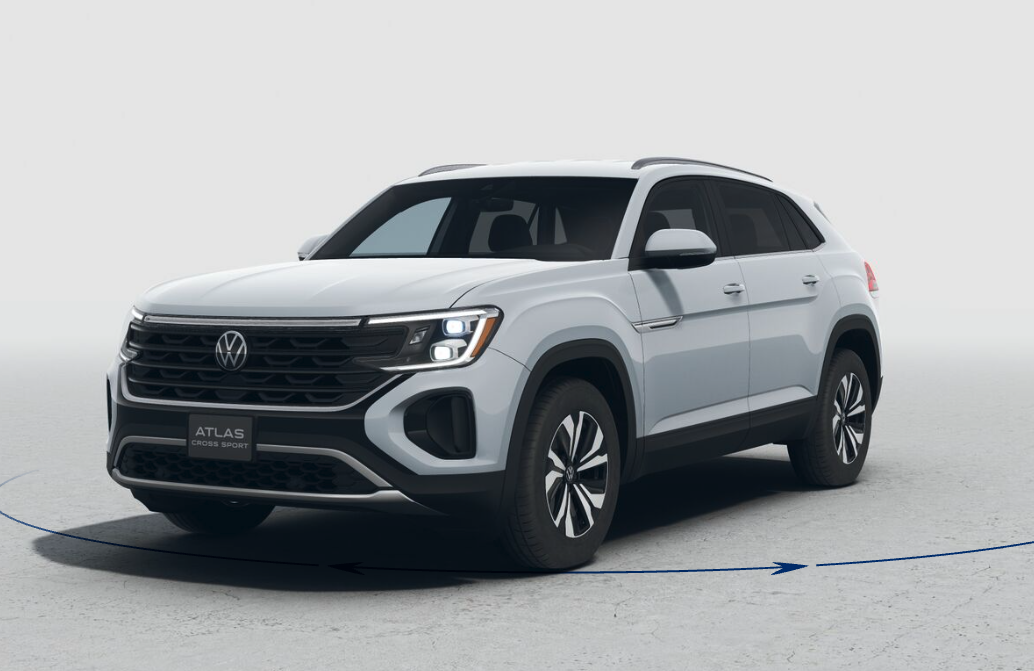
The key difference between the Volkswagen Atlas and Atlas Cross Sport is simple: the Atlas is a three-row SUV for up to seven people, while the Atlas Cross Sport is a two-row SUV for up to five. The Atlas prioritizes passenger capacity and maximum flexibility. The Atlas Cross Sport prioritizes a sportier shape, spacious two-row comfort, and a cargo area that is always directly accessible behind the second row.
At Volkswagen of Daphne, we help shoppers make this decision based on weekly routines rather than exterior styling alone. A Fairhope parent who participates in school carpools has different needs from a Mobile commuter, a couple with a large dog, or an empty-nest household planning frequent Gulf Shores weekends.
Both SUVs offer the same general powertrain strength, available all-wheel drive, and many of the same convenience and driver assistance features. This guide focuses on the differences that affect real ownership: seating, cargo access, exterior size, passenger movement, family flexibility, and local Gulf Coast use.
View our current Volkswagen SUV selection , schedule a side-by-side test drive , or start with online pre-approval .
The Biggest Difference Between Atlas and Atlas Cross Sport
The Atlas is built around changing passenger counts, while the Atlas Cross Sport is built around five-passenger comfort and two-row cargo access.
The Atlas uses a traditional three-row SUV body. Its taller, more upright rear section creates room for a third seating row and the larger maximum cargo figure. The Atlas Cross Sport uses a more sloped rear roofline and eliminates the third row, creating a five-seat cabin with a sportier profile.
Neither approach is automatically better. The better vehicle is the one that avoids a daily compromise. A family of six should not choose the Atlas Cross Sport simply because it prefers the exterior styling. A couple should not assume the larger Atlas is necessary if the third row would remain folded nearly every day.
| Core Difference | 2026 Volkswagen Atlas | 2026 Volkswagen Atlas Cross Sport | Why It Matters |
|---|---|---|---|
| Seating Rows | Three | Two | Atlas can accommodate larger families and carpools |
| Maximum Seating | Up to seven | Up to five | The sixth and seventh seats are the main Atlas advantage |
| Rear Design | More upright family-SUV profile | Sloped, sportier roofline | Design changes passenger capacity and cargo shape |
| Maximum Cargo | Up to 96.6 cu. ft. | Up to 77.8 cu. ft. | Atlas supports larger occasional loads |
| Daily Cargo Access | Depends on whether the third row is upright | Cargo area always begins behind the second row | Cross Sport avoids rearranging a third row |
| Engine | 2.0-liter turbocharged TSI | 2.0-liter turbocharged TSI | Powertrain does not need to decide the comparison |
| Best For | Growing families, carpools, and maximum flexibility | Couples, smaller families, commuters, and pet owners | Household use matters more than exterior preference |
Based on Volkswagen official website and current 2026 model information.
Three Rows vs Two Rows: Which Seating Layout Works Better?
The Atlas is the clear recommendation for households that routinely carry more than five people. Its third row provides two additional seating positions for children, teenagers, relatives, friends, or carpool passengers.
That third row also adds flexibility for families whose passenger count changes during the week. A family of four can keep it folded for cargo most days, then raise it when grandparents join a dinner trip or extra children need a ride home after practice.
The Atlas Cross Sport removes that flexibility, but it also removes the need to manage a third row. Five passengers have a dedicated two-row cabin, and the cargo area remains open behind the rear seats. For many couples and smaller households, that simpler layout is easier to use every day.
Choose the Atlas If:
- You carry six or seven people at least several times each month.
- Your family participates in regular school or sports carpools.
- Children, grandparents, or visiting relatives often join trips.
- You want seating flexibility for future family growth.
- You would rather keep extra seats available than coordinate a second vehicle.
Choose the Atlas Cross Sport If:
- Your household never needs more than five seats.
- You want generous rear-seat space without managing a third row.
- Your regular passengers are adults or taller teenagers.
- You prefer a sportier shape and a more focused two-row cabin.
- You want cargo access available immediately behind the second row.
Atlas vs Atlas Cross Sport Cargo Space
Comparing maximum cargo figures alone favors the Atlas, but everyday cargo use is more nuanced. The Atlas reaches 96.6 cubic feet with its rear seats folded. It also provides 20.6 cubic feet when all three rows are upright. The Atlas Cross Sport provides 77.8 cubic feet with its rear seats folded and a larger permanent cargo area behind its second row because there is no third row.
For a family carrying seven people, the Atlas rear cargo area must share the vehicle with every seating row. For a Cross Sport owner, the cargo floor always begins behind the second row. That can make the two-row model feel especially practical for dog crates, luggage, golf bags, beach chairs, groceries, and sports equipment.
| Cargo Scenario | Better Choice | Recommended Configuration | Reason |
|---|---|---|---|
| Seven passengers plus daily bags | Atlas | All three rows upright | Only the Atlas provides the required seating |
| Four people plus beach equipment | Either model | Atlas third row folded or Cross Sport rear seats upright | Both provide useful two-row cargo flexibility |
| Couple with a large dog crate | Atlas Cross Sport | Five-seat layout with cargo area behind rear seats | No third row needs to be folded or managed |
| Maximum home-project load | Atlas | Second and third rows folded | Atlas provides the larger maximum cargo volume |
| Five airport passengers with luggage | Depends on luggage size | Atlas third row folded or Cross Sport two-row layout | Both can work, but actual suitcase dimensions matter |
| Frequent golf or sports equipment | Atlas Cross Sport | Permanent two-row cargo configuration | Direct access suits equipment carried every week |
| Changing passenger and cargo combinations | Atlas | Use the split-folding third row | Atlas can preserve one third-row seat beside longer cargo |
Based on Volkswagen official website. Actual fit depends on the dimensions of each item, seat position, accessories, and safe cargo-loading practices.
For households that carry five people or fewer and transport equipment every week, the Atlas Cross Sport may offer the more convenient cargo experience even though its maximum number is lower. For households that need maximum capacity or frequently change between five and seven passengers, the Atlas is more flexible.
Shared Performance, 4MOTION, and Technology
Performance is one of the easiest parts of this comparison because both models use the same general powertrain. The current 2026 Atlas and Atlas Cross Sport use a turbocharged 2.0-liter TSI four-cylinder engine producing 269 horsepower and 273 pound-feet of torque, paired with an eight-speed automatic transmission.
Front-wheel drive is offered on applicable configurations, while 4MOTION all-wheel drive is available. For Daphne and Mobile drivers, 4MOTION can provide added traction support when heavy Gulf Coast rain changes road conditions. It does not replace properly maintained tires, appropriate speed, following distance, or attentive driving.
Both models also offer current Volkswagen technology, including Digital Cockpit displays, a 12-inch infotainment screen, wireless smartphone integration, and IQ.DRIVE driver assistance features. Exact equipment depends on trim and build.
Shared Features That Should Not Decide the Comparison
- 269-horsepower turbocharged TSI engine.
- 273 pound-feet of torque.
- Eight-speed automatic transmission.
- Available 4MOTION all-wheel drive.
- Available IQ.DRIVE driver assistance.
- Digital Cockpit instrumentation.
- 12-inch center infotainment display.
- Available comfort and premium interior upgrades.
Because these models share so much mechanically, we recommend focusing your test drive on visibility, rear-seat access, parking, cargo loading, and the difference between carrying five people and having two additional seats available.
Volkswagen Atlas vs Atlas Cross Sport Side-by-Side
The Atlas wins on passenger capacity and maximum flexibility. The Atlas Cross Sport wins for shoppers who want a spacious two-row SUV without paying for or carrying a third row they will not use.
| Decision Factor | Volkswagen Atlas | Volkswagen Atlas Cross Sport | Recommended Winner |
|---|---|---|---|
| Maximum Seating | Up to seven | Up to five | Atlas |
| Third-Row Flexibility | Standard | Not offered | Atlas |
| Maximum Cargo Volume | 96.6 cu. ft. | 77.8 cu. ft. | Atlas |
| Permanent Two-Row Cargo Access | Requires third row to remain folded | Standard cabin layout | Atlas Cross Sport |
| Sporty Exterior Profile | Traditional three-row SUV shape | Sloped rear roofline | Atlas Cross Sport |
| Growing-Family Flexibility | Excellent | Best for five or fewer | Atlas |
| Couples and Empty Nesters | More vehicle than some households need | Spacious without an unused third row | Atlas Cross Sport |
| Engine Performance | 269 hp and 273 lb-ft | 269 hp and 273 lb-ft | Tie |
| Available AWD | 4MOTION available | 4MOTION available | Tie |
| Best Overall Use Case | Families needing maximum passenger flexibility | Five-passenger households prioritizing style and cargo access | Depends on household size |
Based on Volkswagen official website.
Which Volkswagen SUV Fits Your Household?
The fastest way to make the right decision is to describe your household, not the vehicle. Start with the maximum number of people you carry during a normal month, then consider your largest regular cargo item.
Household Recommendation Guide
- Couple or single driver: We recommend the Atlas Cross Sport because five seats and the permanent two-row cargo area provide more than enough flexibility without an unused third row.
- Couple with a large dog: We recommend the Atlas Cross Sport because the rear cargo area is easy to access and well suited to a properly secured carrier or pet travel supplies.
- Family of four: Either can work. Choose the Atlas Cross Sport for daily simplicity or the Atlas if relatives, friends, or carpool passengers join regularly.
- Family of five: We often recommend the Atlas because the third row provides backup seating and allows passengers to spread out during longer trips.
- Family of six or seven: Choose the Atlas. The Atlas Cross Sport cannot support the required passenger count.
- Empty nesters: We recommend the Atlas Cross Sport when comfortable two-row travel and cargo space matter more than extra seats.
For a family of five, the Atlas is usually the stronger long-term choice even though every passenger can technically fit in the Atlas Cross Sport. The third row gives the family options when friends, grandparents, or additional luggage join a trip. For a family of four that rarely carries anyone else, the Cross Sport may be the more focused daily vehicle.
Which One Works Better Around Daphne and the Eastern Shore?
Local use can make the choice clearer. Drivers around Daphne often combine I-10 commuting, US-98 traffic, school routines, shopping in Spanish Fort, and weekend trips toward Foley or Gulf Shores.
| Local Driver Profile | Recommended Model | Local Scenario | Why It Fits |
|---|---|---|---|
| Daphne carpool parent | Atlas | School pickup and activities with changing passenger counts | The third row provides two additional seats |
| Mobile commuter | Atlas Cross Sport | Regular Bayway and I-10 driving with one or two passengers | Five seats are sufficient and the two-row layout is easy to use |
| Fairhope family of five | Atlas | School, sports, errands, and visiting relatives | Extra seating protects future flexibility |
| Gulf Shores weekend couple | Atlas Cross Sport | Beach equipment, luggage, and no need for a third row | The permanent cargo area suits two-row travel |
| Spanish Fort shopping household | Atlas Cross Sport | Five or fewer passengers and frequent cargo use | No rear seat must be folded before loading |
| Baldwin County sports family | Atlas | Players, siblings, teammates, and equipment | Passenger capacity changes from trip to trip |
| Heavy-rain commuter | Either with 4MOTION | Seasonal Gulf Coast downpours | Both offer available all-wheel-drive traction support |
For a Daphne household that regularly combines Mobile commuting with family carpools and Gulf Shores weekends, the Atlas is the more flexible all-purpose choice. For a driver who commutes with one or two passengers and uses the rear area for golf bags, pets, or beach gear, the Atlas Cross Sport is often the more natural fit.
Family and Lifestyle Fit: When the Atlas Third Row Is Worth It
A third row is valuable when it solves a recurring problem. It is worth choosing the Atlas when it prevents your household from taking two cars, leaving someone behind, or rearranging weekly transportation.
Some families of four still benefit greatly from the Atlas. The third row can handle grandparents during dinner trips, children’s friends after school, relatives during holidays, or extra passengers on vacations. Folding one half of the third row can also preserve one extra seat beside longer cargo.
We recommend the Atlas for future-focused buyers when family growth, aging parents, blended-family schedules, or increasing activity commitments could change passenger needs during the ownership period.
The Atlas Third Row Makes Sense When:
- You use six or seven seats at least monthly.
- You participate in carpools or team transportation.
- Grandparents or relatives join local outings.
- You want children to spread across multiple rows.
- Your household is likely to grow during ownership.
- You need the greatest possible passenger-and-cargo flexibility.
The Atlas is the best choice for a family of four that often becomes a group of six. The Atlas Cross Sport is the better choice for a family of four that reliably remains a group of four and prefers permanent two-row cargo space.
Contrarian Insight: Bigger Is Not Automatically Better
Many shoppers assume the larger SUV is the safer long-term choice, but unused space can become a daily compromise. A third row adds flexibility only when the household uses it. When it remains folded nearly all the time, the Atlas Cross Sport may deliver the more direct ownership experience.
The Cross Sport gives five-passenger households a spacious rear seat, a cargo floor that is always available, and a sportier exterior shape. Drivers do not have to raise, lower, clean, or plan around a third row.
For a Mobile professional who commutes alone during the week and carries a dog, luggage, or golf equipment on weekends, the Cross Sport may be the smarter decision. For empty nesters who want road-trip comfort but do not transport grandchildren or friends regularly, it provides generous room without unused seating.
The Atlas Cross Sport Is the Smarter Choice When:
- Your passenger count never exceeds five.
- You use cargo space more frequently than extra seating.
- You prefer a sportier rear profile.
- You want a spacious SUV without three-row management.
- You are a couple, smaller family, pet owner, or empty nester.
A household that never uses a third row does not lose practicality by choosing the Atlas Cross Sport. It trades passenger capacity it does not need for a more focused two-row layout that may fit daily life better.
Ownership, Service, and Daily Care
Both models belong to the same Atlas family and share many maintenance needs. Routine service can include oil and filter changes, tire rotations, brake inspections, battery testing, cabin air filter replacement, fluid checks, and factory-recommended maintenance.
Gulf Coast humidity, heat, rain, sand, and frequent short trips can affect tires, brakes, batteries, filters, and interior condition. Families carrying children, pets, sports equipment, or beach gear may also benefit from genuine Volkswagen cargo liners and interior-protection accessories.
Our Volkswagen service team can help you maintain either model according to its schedule. You can schedule Volkswagen service online when your Atlas or Atlas Cross Sport is due for maintenance.
Compare the Atlas and Atlas Cross Sport at Volkswagen of Daphne
The Atlas is the stronger recommendation for families that need a third row, carry changing passenger counts, or want the greatest possible cargo flexibility. The Atlas Cross Sport is the stronger recommendation for households that need five seats, value direct cargo access, and prefer a sportier two-row design.
At Volkswagen of Daphne, we can park both models side by side, demonstrate the seating arrangements, fold the rear seats, compare visibility, and help you test the cargo area with your stroller, pet carrier, sports bag, luggage, or beach equipment. Our team can also explain available trims, 4MOTION configurations, IQ.DRIVE features, financing options, and trade-in considerations.
Visit us at 29816 Frederick Boulevard, Daphne, AL 36526, or call our sales team at 251-374-0664. We serve drivers from Daphne, Fairhope, Spanish Fort, Mobile, Foley, Gulf Shores, and nearby Gulf Coast communities.
Volkswagen Atlas vs Atlas Cross Sport FAQ
What is the biggest difference between the Atlas and Atlas Cross Sport?
The biggest difference is seating. The Volkswagen Atlas has three rows and seats up to seven, while the Atlas Cross Sport has two rows and seats up to five. We recommend the Atlas for larger families, carpools, and changing passenger needs. We recommend the Atlas Cross Sport for couples and smaller households that prefer a spacious two-row cabin and permanent access to the cargo area.
Which has more cargo space, Atlas or Atlas Cross Sport?
The Atlas provides the greater maximum cargo capacity, with up to 96.6 cubic feet when the rear seats are folded. The Atlas Cross Sport provides up to 77.8 cubic feet. The Cross Sport may still feel more convenient for five-passenger households because its cargo area always begins behind the second row and no third row needs to be folded first.
Is the Atlas Cross Sport good for a family of five?
The Atlas Cross Sport can work well for a family of five when the household never needs additional passenger positions. It provides two spacious seating rows and generous cargo room. We recommend the Atlas instead when a family of five regularly transports friends, grandparents, teammates, or other passengers because its third row creates useful backup capacity.
Which model is better for commuting between Daphne and Mobile?
The Atlas Cross Sport is often the better fit for a Daphne-to- Mobile commuter who carries five people or fewer and wants a spacious two-row SUV. The Atlas is better when the same vehicle also handles regular carpools or large family trips. Both offer 269-horsepower turbocharged performance and available 4MOTION all-wheel drive for changing Gulf Coast conditions.
Do the Atlas and Atlas Cross Sport use the same engine?
The current 2026 Atlas and Atlas Cross Sport both use a turbocharged 2.0-liter TSI four-cylinder engine producing 269 horsepower and 273 pound-feet of torque. Both use an eight-speed automatic transmission and offer available 4MOTION all-wheel drive. Seating and body design should therefore carry more weight than performance in this decision.

