Blog / Daphne Volkswagen Service

Blog

All Daphne Volkswagen Service New VW Cars Daphne Volkswagen Dealer Vehicle Comparison Daphne Used Cars
jumpstartvolk

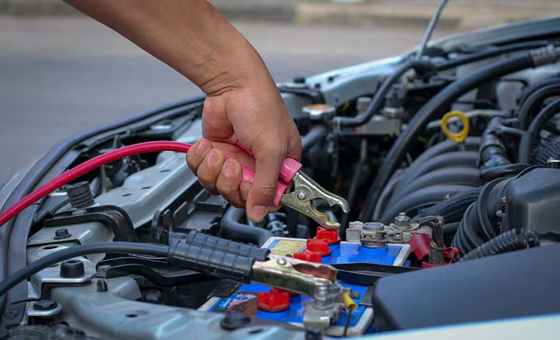
How to Jumpstart Your Volkswagen: A Step by Step Guide

How to Jumpstart a Volkswagen Safely Near Daphne, AL A dead 12-volt battery can interrupt your day fast, but a Volkswagen jumpstart should never be rushed. The safest process starts with checking the battery condition, confirming the correct jump points, turning off electrical loads, connecting the jumper cables in the proper order, and using an approved ground point instead of guessing near battery sensors or wiring. Volkswagen of Daphne created this guide for drivers in Daphne, Fairhope, Spanish Fort, Mobile, Foley, and Gulf Shores who need clear steps for jumpstarting a VW Jetta, Tiguan, Taos, Atlas, Golf, or another Volkswagen model. Use this guide to understand when it is safe to jumpstart, when to call Volkswagen Roadside Assistance, and when a dead battery means it is time to schedule Volkswagen battery service. Last updated: July 8, 2026 A Volkswagen jumpstart uses a booster pack or another vehicle’s 12-volt battery to provide temporary power to a VW with a discharged 12-volt battery. On modern Volkswagen models, safe jumpstarting depends on correct cable order, approved jump points, battery condition, and extra caution around Stop-Start systems, battery monitoring, and sensitive electronics. Quick Answer: How Do You Jumpstart a Volkswagen? To jumpstart a Volkswagen, park safely, turn off both vehicles and electrical loads, connect the red cable to the disabled VW’s positive terminal or approved positive jump post, connect the other red cable to the assisting battery, connect the black cable to the assisting battery’s negative terminal, then connect the final black clamp to the approved ground point on the disabled VW. Start the assisting vehicle or booster pack, start the Volkswagen, then remove the cables in reverse order. Do not jumpstart: If the battery is leaking, cracked, frozen, swollen, smoking, sparking, heavily corroded, or smells like sulfur. Best first step: Check the owner’s manual for your exact Volkswagen model and year. Most common mistake: Guessing the negative connection point or clamping near battery sensor wiring. After the jumpstart: Schedule battery testing if the battery died more than once, the vehicle cranks slowly, or warning messages appear. Table of Contents Safety Warning: Read This Before Connecting Jumper Cables Before You Jumpstart Your Volkswagen Step-by-Step Volkswagen Jumpstart Instructions What to Do After Your Volkswagen Starts Common Volkswagen Jumpstart Mistakes to Avoid Jetta, Tiguan, Taos, Atlas, Golf, and Model-Specific Tips When to Schedule Volkswagen Battery Service Battery Help for Daphne, Mobile, and Gulf Coast Drivers Key Takeaways Volkswagen Jumpstart FAQ Safety Warning: Read This Before Connecting Jumper Cables Safety Warning: Do not jumpstart your Volkswagen if the battery is cracked, leaking, frozen, swollen, smoking, sparking, heavily corroded, or smells like rotten eggs. Do not jumpstart a vehicle that was recently flooded, has damaged cables, or shows warning messages that suggest a serious electrical fault. If you cannot identify the correct positive terminal, remote positive jump post, or approved ground point, stop and request help. Always follow the owner’s manual for your exact Volkswagen model and year. A dead battery can feel urgent, especially in a hot Daphne parking lot, during a Mobile commute, or before a family drive to Gulf Shores. Still, incorrect jumper-cable placement can damage electronics, cause sparks, or create safety hazards around the battery. The safest first step is not connecting cables. It is deciding whether the battery and location are safe enough to attempt a jumpstart. Situation Risk Recommended Action Why It Matters Battery is leaking, cracked, swollen, frozen, or smells like sulfur Possible chemical, gas, or explosion risk Do not jumpstart Battery damage can create a serious safety hazard You cannot identify the correct jump points Incorrect connection Check owner resources or request help Modern VW electrical systems need correct connection points Vehicle is on a highway shoulder or unsafe roadside Traffic injury risk Call roadside assistance Your safety comes before the jumpstart Cables or clamps are damaged Sparks, heat, or poor connection Do not use those cables Damaged cables can arc, overheat, or fail Battery has died more than once Weak battery, charging issue, or electrical draw Schedule battery testing A jumpstart does not solve the root problem Use Volkswagen Roadside Assistance Before You Jumpstart Your Volkswagen Key Takeaway: Before you connect cables, confirm the battery is safe, identify the correct positive and ground points, turn off electrical loads, and check the owner’s manual for your specific Volkswagen. Volkswagen jump point locations can vary by model, engine layout, battery location, and equipment. Some VW models use battery terminals directly, while others may have a remote positive jump post or a specific approved ground point under the hood. That is why we recommend checking the owner’s manual or digital owner resources before connecting anything. Before you begin, turn off headlights, climate control, heated seats, interior lights, chargers, audio, and other electrical loads. Make sure both vehicles are in Park, the parking brakes are set, and the vehicles are not touching. If you are using a portable booster pack, read the booster pack instructions before connecting it to the VW. Check Battery Condition Do not proceed if the battery looks damaged, swollen, frozen, leaking, or heavily corroded. Confirm Jump Points Find the approved positive point and approved ground point for your exact VW model. Turn Loads Off Turn off lights, climate control, seat heaters, chargers, and accessories before connecting cables. What to Know About Stop-Start and Battery Sensors Many modern Volkswagen vehicles use battery monitoring and may include Stop-Start systems. These systems can rely on battery condition data, charging behavior, and electrical sensors. Do not clamp onto sensor wiring, bypass battery sensors, or assume the negative battery post is always the preferred final connection point. Use the approved ground point listed in your owner resources. Volkswagen or Situation What to Check First Why It Matters Recommended Action Jetta, Taos, Tiguan, Atlas, Golf Owner’s manual jumpstart section Jump points may vary by model and year Use manual-specific instructions Stop-Start equipped VW Battery sensor and approved ground point Incorrect grounding can affect battery monitoring Use the approved ground point, not sensor wiring Remote positive jump post present Post location and cap marking Some models provide a dedicated positive point Connect the red clamp only after confirming location Unclear negative connection Approved body or engine ground Reduces spark risk near the battery Use owner resources or call for help Repeated no-start condition Battery age, charging system, and possible draw A jumpstart may be temporary Schedule Volkswagen battery testing Schedule VW Battery Service Step-by-Step Volkswagen Jumpstart Instructions Key Takeaway: The safest basic cable order is positive to the disabled VW, positive to the assisting battery, negative to the assisting battery, then negative to the approved ground point on the disabled VW. These steps are a general guide for many gasoline Volkswagen vehicles with a discharged 12-volt battery. Always follow your owner’s manual first. If your model-specific instructions are different, follow the manual. Park safely. Put both vehicles in Park, set the parking brakes, and make sure the vehicles are not touching. Turn everything off. Turn off headlights, climate control, heated seats, chargers, radio, and other electrical loads. Open the hood and locate the jump points. Find the positive terminal or approved positive jump post on your Volkswagen and the approved ground point for the negative clamp. Connect the red clamp to the disabled VW. Attach one red positive clamp to the positive terminal or approved positive jump post on the Volkswagen with the dead battery. Connect the other red clamp to the assisting power source. Attach it to the positive terminal of the good battery or the positive terminal on the booster pack. Connect the black clamp to the assisting power source. Attach one black negative clamp to the negative terminal of the good battery or booster pack. Connect the final black clamp to the disabled VW ground point. Use the approved unpainted metal ground point listed in the owner’s manual. Avoid clamping to sensor wiring or a questionable painted surface. Start the assisting vehicle or activate the booster pack. Let the assisting vehicle run briefly, or turn on the booster pack according to its instructions. Start the Volkswagen. Try to start the VW. If it does not start after a few attempts, stop and request professional help. Remove cables in reverse order. Remove the black clamp from the VW ground point, black clamp from the assisting battery, red clamp from the assisting battery, then red clamp from the VW. Step Cable or Action Where It Goes Important Note 1 Red positive clamp Disabled VW positive terminal or approved positive jump post Confirm the correct positive point first 2 Other red positive clamp Assisting battery or booster pack positive terminal Keep clamps separated 3 Black negative clamp Assisting battery or booster pack negative terminal Follow booster pack instructions if using one 4 Final black negative clamp Approved ground point on disabled VW Avoid battery sensor wiring and questionable surfaces 5 Start and remove Start VW, then remove cables in reverse order Stop if sparks, smoke, or abnormal behavior appears Do not let cable clamps touch each other while connected. Do not lean over the battery. Do not rev the assisting vehicle aggressively. Do not keep trying if the Volkswagen will not start, cranks oddly, shows electrical faults, or sparks occur. Book a Battery Inspection What to Do After Your Volkswagen Starts Key Takeaway: A jumpstart provides temporary power. It does not prove the battery is healthy or that the charging system is working correctly. After your Volkswagen starts, keep it running long enough to stabilize, then drive carefully only if the vehicle behaves normally. Do not assume the issue is solved. If the battery is weak, old, or unable to hold a charge, the vehicle may fail to restart after you shut it off. We recommend scheduling a battery test after any jumpstart, especially if the battery has died more than once, the vehicle starts slowly, the Stop-Start system is unavailable, or warning messages appear. Modern VW battery testing can check battery condition, charging performance, terminal condition, and whether replacement is needed. After-Start Symptom Possible Meaning What We Recommend Service Priority VW starts but cranks slowly again later Weak battery or charging issue Schedule battery testing High Stop-Start unavailable Battery charge or system condition concern Battery and system check Medium to high Battery warning light appears Charging-system concern Do not ignore it High Warning messages after jumpstart Electrical system needs review Have the vehicle inspected High Vehicle will not restart after being shut off Battery may not hold charge Battery diagnostic and possible replacement High Common Volkswagen Jumpstart Mistakes to Avoid Key Takeaway: The biggest VW jumpstart mistakes are guessing the jump points, connecting the negative clamp incorrectly, ignoring battery damage, using damaged cables, and assuming the battery is fine after one successful restart. A jumpstart is simple only when the battery is safe, the location is safe, and the connection points are clear. Many problems happen because someone tries to move too quickly. On a modern Volkswagen, the safest approach is to protect the driver, the battery, and the vehicle electronics before trying to save a few minutes. Mistake Why It Is a Problem Safer Alternative Who This Matters For Connecting cables without checking owner resources Jump points may vary by model Use the VW digital owner’s manual by VIN Jetta, Taos, Tiguan, Atlas, and Golf owners Clamping to sensor wiring near the battery Can affect battery monitoring Use the approved ground point Stop-Start equipped vehicles Trying to jump a damaged battery Can create serious safety hazards Stop and call roadside assistance All VW owners Letting clamps touch Can cause sparks or short circuits Keep clamps separated at all times Anyone using jumper cables Ignoring repeated dead batteries The problem will likely return Schedule battery diagnostic service Daily commuters and family drivers Using the wrong battery replacement later Can affect system performance Use the correct VW battery type and service process Modern Volkswagen owners When Not to Jumpstart Your Volkswagen Do not jumpstart your Volkswagen if the battery case is damaged, leaking, swollen, frozen, smoking, or has a strong sulfur smell. Do not jumpstart if the cables cannot be attached securely, if the vehicle was recently flooded, if the battery area has severe corrosion, or if you cannot find the correct jump points. Do not continue if sparks, smoke, popping sounds, or burning smells occur. We also recommend calling for help if the vehicle is in an unsafe location. A dead battery in a driveway is one situation. A dead battery near fast traffic, in heavy rain, or in a poorly lit parking area is another. Your safety should decide whether you continue. Get VW Roadside Assistance Jetta, Tiguan, Taos, Atlas, Golf, and Model-Specific Jumpstart Tips Key Takeaway: Drivers often search by Volkswagen model because battery location, jump-point access, Stop-Start equipment, and warning messages can vary across the lineup. The safest general process is similar across many Volkswagen vehicles, but the exact jump points and model-specific notes can vary. Before connecting cables, confirm the instructions for your VW Jetta, Tiguan, Taos, Atlas, Golf, or other Volkswagen model. Volkswagen Model Common Search Intent What to Check First Recommended Next Step Volkswagen Jetta How to jump start a Volkswagen Jetta Battery condition, positive point, and approved ground Use the manual-specific cable order and schedule testing after a jump Volkswagen Tiguan How to jump start a VW Tiguan Stop-Start system status and battery sensor area Use the approved ground point and avoid sensor wiring Volkswagen Taos VW Taos dead battery Battery age, slow crank, and warning messages Schedule a battery and charging-system test after restart Volkswagen Atlas VW Atlas battery jump start Family travel timing, battery condition, and jump points Test the battery before longer trips if it needed a jump Volkswagen Golf VW Golf dead battery or jumpstart Battery location and approved ground point Follow model-specific instructions before connecting cables For any Volkswagen model, repeated no-start symptoms should not be treated as normal. A jumpstart may help in the moment, but slow cranking, a battery warning light, an unavailable Stop-Start system, or a no-restart condition after shutdown should be checked by a Volkswagen service team. When to Schedule Volkswagen Battery Service Key Takeaway: Schedule Volkswagen battery service after any repeated jumpstart, slow crank, warning light, Stop-Start issue, or no-restart event. Schedule a Volkswagen battery inspection after any jumpstart if the battery has died more than once, the engine cranks slowly, the battery warning light appears, the Stop-Start system is unavailable, accessories behave oddly, or the vehicle will not restart after being shut off. We also recommend testing the battery before peak Gulf Coast summer heat because heat can expose a weak battery quickly. At Volkswagen of Daphne, our service team can test battery condition, check charging performance, inspect terminals, review symptoms, and recommend replacement if needed. If your Volkswagen uses battery management, replacing the battery properly matters. The right battery type and service process help protect electronics and support normal battery monitoring. Reason to Schedule What It May Mean Why Service Helps Battery died more than once Weak battery, charging issue, or electrical draw Testing can identify whether the battery needs replacement Slow crank Battery may be weak or struggling under load A battery test can confirm health before full failure Stop-Start unavailable Battery condition may not support the system Inspection can check battery and system readiness Battery warning light Charging-system concern may be present Diagnosis can prevent another no-start event Vehicle will not restart after a successful jump Battery may not hold charge Service can determine if replacement is needed Schedule Volkswagen Battery Testing Battery Help for Daphne, Mobile, and Gulf Coast Drivers Key Takeaway: Gulf Coast heat, humidity, daily commuting, short trips, and family travel can all contribute to weak battery performance around Daphne and Mobile. Daphne-area drivers often deal with battery stress before they realize it. A Jetta commuter may notice slower starts after I-10 driving and hot parking lots. A Tiguan family may find the vehicle dead after short trips, accessories, or a weekend sitting parked. A Taos driver in Mobile may have a battery that works one morning and fails the next. An Atlas owner preparing for a family trip should not wait for a second no-start before checking battery health. If you live in Daphne, Fairhope, Spanish Fort, Mobile, Foley, or Gulf Shores, we recommend scheduling battery service after a jumpstart rather than treating it as a one-time inconvenience. Our service team can help with battery testing, diagnostics, and genuine Volkswagen battery replacement when needed. Local Driver Situation Battery Risk Recommended Next Step Best Fit Daphne commuter Heat and daily starts Battery test after slow crank Jetta and Taos owners Fairhope family driver Short trips and accessory use Battery and charging check Tiguan and Atlas families Spanish Fort sports family Doors, lights, and cargo loading Inspect battery before long weekends Family SUV owners Mobile highway driver High heat and traffic delays Test battery before summer Daily commuters Gulf Shores traveler Road-trip no-start risk Battery inspection before travel Weekend drivers Schedule VW Service in Daphne Key Takeaways Check your Volkswagen owner’s manual before jumpstarting because jump points can vary by model and year. Do not jumpstart a damaged, leaking, frozen, swollen, smoking, or sulfur-smelling battery. Use the approved ground point, especially on VW models with Stop-Start or battery monitoring. Connect jumper cables in the correct order and remove them in reverse order. A jumpstart is temporary. Schedule battery testing after repeated no-start issues, slow cranking, warning lights, or Stop-Start concerns. Do not guess if the vehicle is in an unsafe location or you cannot identify the correct jump points. Use roadside assistance instead. Volkswagen Jumpstart FAQ Can I jumpstart a Volkswagen with Stop-Start? You can jumpstart many Volkswagen vehicles with Stop-Start, but you should follow the owner’s manual for the exact model and year. Stop-Start vehicles may use battery monitoring and sensors, so the negative jumper cable should connect to an approved ground point rather than sensor wiring. If you are not sure where to connect, stop and use Volkswagen Roadside Assistance or schedule battery service. Where are the jump points on a Volkswagen? Volkswagen jump point locations can vary by model, year, engine layout, and equipment. Some vehicles use battery terminals, while others may have a remote positive post or a specific approved ground point under the hood. We recommend using Volkswagen digital owner resources to confirm the correct jump points before connecting cables. Should I connect the negative jumper cable to the battery? In many modern Volkswagen jumpstart procedures, the final negative clamp should connect to an approved unpainted metal ground point on the disabled vehicle, not directly to the negative battery terminal. This can reduce spark risk near the battery and helps avoid clamping onto battery sensor wiring. Always follow the owner’s manual for your exact model. Why does my Volkswagen battery keep dying? A Volkswagen battery may keep dying because the battery is old, weak, discharged from short trips, affected by heat, or unable to hold a charge. Other possible causes include charging-system issues, accessory drain, loose connections, or electrical faults. If your VW needs more than one jumpstart, we recommend scheduling battery testing and a charging-system inspection. When should I replace my Volkswagen battery? You should consider replacing your Volkswagen battery when testing shows it cannot hold a charge, the vehicle cranks slowly, the battery warning light appears, the battery is damaged, or the vehicle repeatedly needs a jumpstart. Modern VW models may require the correct battery type and service process, especially if the vehicle uses Stop-Start or battery management. How do I jump start a Volkswagen Jetta? To jump start a Volkswagen Jetta, confirm the battery condition and jump points in your owner resources, connect the positive cable to the approved positive point, connect the assisting battery or booster pack, and use the approved ground point for the final negative clamp. After the Jetta starts, schedule battery testing if the battery has died more than once. How do I jump start a VW Tiguan? To jump start a VW Tiguan, use the model-specific jumpstart instructions for your year and trim. Tiguan models may include Stop-Start or battery monitoring, so avoid clamping onto sensor wiring and use the approved ground point. If warning messages appear after the jumpstart, schedule Volkswagen battery service. Can Volkswagen of Daphne test my battery after a jumpstart? Yes. Volkswagen of Daphne can test your battery, check charging performance, inspect terminals, and recommend replacement if needed. This is especially important after repeated dead-battery issues, slow starts, battery warning lights, or Stop-Start system concerns. A safe Volkswagen jumpstart starts with the right information, the right jump points, and the right judgment. If the battery looks unsafe, the vehicle is in a dangerous location, or you cannot confirm the correct procedure, use Volkswagen Roadside Assistance instead of guessing. If your VW starts after a jump, schedule a battery inspection so the problem does not return. Volkswagen of Daphne helps drivers from Daphne, Fairhope, Spanish Fort, Mobile, Foley, and Gulf Shores with battery testing, diagnostics, and Volkswagen battery replacement. Schedule Volkswagen Battery Service

volkservi

Are Volkswagen Vehicles Expensive to Maintain? | Volkswagen of Daphne

Are Volkswagens Expensive to Maintain? VW Maintenance Cost Guide Volkswagen maintenance cost depends on your model, mileage, driving habits, service history, and whether you stay ahead of routine care. The good news is that most VW ownership costs are easier to manage when maintenance is planned instead of delayed. Oil changes, tire rotations, inspections, brake service, battery checks, and genuine Volkswagen parts can help protect long-term reliability while reducing the chance of unexpected repair costs. Volkswagen of Daphne created this guide for drivers in Daphne, Fairhope, Spanish Fort, Mobile, Foley, and Gulf Shores who want a clearer answer to common questions like “Are Volkswagens expensive to maintain?” and “Are Volkswagen parts expensive?” Use the sections below to understand what affects VW maintenance cost, how routine service compares with repair costs, and how Volkswagen Care plans may help you budget with more confidence. Last updated: July 8, 2026 Volkswagen maintenance cost is the total cost of routine services, inspections, replacement parts, fluids, tires, brakes, batteries, and scheduled maintenance needed to keep a VW running properly. Your actual cost depends on the model, mileage, age, driving conditions, and whether the work is preventive maintenance or an unexpected repair. Quick Answer: Are Volkswagens Expensive to Maintain? Volkswagens are not automatically expensive to maintain, but they do reward consistent, Volkswagen-specific service. Routine VW maintenance is usually more predictable than unexpected repair work, especially when you follow the recommended maintenance schedule, use genuine VW parts, keep records, and address small issues early. New Volkswagen models also include Carefree Maintenance for the first two scheduled services, and Volkswagen Care prepaid maintenance plans may help owners manage future service costs. Most predictable costs: Oil changes, tire rotations, inspections, filters, brake service, and battery checks. Costs that vary most: Tires, brakes, diagnostics, repairs, high-mileage service, and driving-condition-related wear. Best way to save: Follow the VW maintenance schedule and use service specials or prepaid maintenance plans when available. Local help: Volkswagen of Daphne can help estimate service needs based on your model, mileage, and driving habits. Table of Contents Understanding Volkswagen Maintenance Cost What Affects VW Maintenance and Repair Costs? Routine Maintenance vs Unexpected Volkswagen Repair Costs Volkswagen Carefree Maintenance and VW Care Plans Are Volkswagen Parts Expensive? Common Volkswagen Services and Cost Factors How Volkswagen of Daphne Helps Lower Maintenance Costs Daphne, Mobile, and Gulf Coast Driving Conditions Key Takeaways Volkswagen Maintenance Cost FAQ Understanding Volkswagen Maintenance Cost Key Takeaway: Volkswagen maintenance cost is easier to control when you plan routine care around mileage, time, and driving conditions instead of waiting for warning lights or symptoms. Your Volkswagen maintenance costs depend on your model, mileage, driving habits, local conditions, and how consistently you follow the recommended service schedule. A Tiguan used for daily family driving may have different tire and brake needs than a Jetta used mostly for highway commuting. An Atlas that takes frequent Gulf Coast road trips may need different attention than a Taos used mostly around Daphne and Fairhope. For many VW owners, the most important distinction is simple: scheduled maintenance is usually more predictable than surprise repairs. Routine services help technicians inspect the vehicle, catch wear early, and confirm that fluids, filters, tires, brakes, battery health, and software or system concerns are being monitored over time. Volkswagen recommends maintenance every 10,000 miles or 12 months, whichever comes first, and new VW models include two years of Carefree Maintenance covering the first two scheduled maintenance services. If you want to plan beyond those first visits, Volkswagen Care prepaid maintenance plans can help cover factory-recommended scheduled maintenance at participating Volkswagen dealerships. Review VW Maintenance Services What Affects VW Maintenance and Repair Costs? Drivers often search for one simple number, but Volkswagen maintenance cost is not one-size-fits-all. Your actual cost depends on whether you are paying for normal wear, scheduled service, diagnostics, a model-specific repair, or a high-mileage item that appears later in ownership. Model and Powertrain Maintenance needs can vary between models like Jetta, Taos, Tiguan, Atlas, Golf GTI, and ID.4. Tires, brakes, fluids, and system checks may differ by vehicle type. Mileage and Age A newer VW with Carefree Maintenance may have lower early service costs, while an older or higher-mileage VW may need more wear-item attention. Driving Habits Short trips, stop-and-go traffic, highway commuting, towing, heat, and frequent road trips can affect tires, brakes, battery life, and fluid condition. Service Consistency Regular service can help reduce the risk of larger repairs by catching small concerns before they become more expensive. Cost Factor Why It Matters How to Manage It Model Different VW models have different service needs, tire sizes, brake sizes, and systems. Use model-specific maintenance guidance and service records. Mileage Higher mileage increases the importance of inspections and wear-item planning. Follow the recommended maintenance schedule and ask about upcoming needs. Driving conditions Heat, traffic, humidity, and short trips can affect batteries, brakes, tires, and fluids. Schedule service before long trips and during seasonal changes. Parts choice Genuine Volkswagen parts are designed for proper fit and performance. Use genuine VW parts when fit, quality, and long-term reliability matter. Maintenance history Missing records can make future costs harder to predict. Keep service records and confirm history when buying a used VW. Routine Maintenance vs Unexpected Volkswagen Repair Costs Key Takeaway: Routine maintenance is planned. Repair costs are usually less predictable. The goal is to use maintenance to reduce surprise repair risk. Many drivers use “maintenance cost” and “repair cost” as if they mean the same thing. They are related, but they are not identical. Maintenance includes planned services like oil changes, inspections, tire rotations, filters, brake checks, battery testing, and mileage-based service. Repairs usually happen when a part fails, a system sets a warning light, or a problem requires diagnosis and replacement. The most cost-effective VW ownership strategy is to stay ahead of routine service so repair risk is easier to manage. That does not mean repairs never happen. It means your service history gives technicians better information, helps spot patterns, and can make ownership more predictable over time. Category Examples Cost Predictability Best Ownership Strategy Routine maintenance Oil changes, inspections, tire rotations, filters, fluid checks More predictable Follow the VW maintenance schedule Wear items Brakes, tires, battery, wipers Moderately predictable Inspect during service and plan ahead Diagnostics Check engine light, EPC light, electrical concern, noise diagnosis Variable Do not delay recurring symptoms Repairs Failed parts, leaks, sensors, mechanical repairs Less predictable Address small problems before they expand Prepaid service Volkswagen Care prepaid scheduled maintenance More predictable for covered services Review plan options based on model and mileage Volkswagen Carefree Maintenance and VW Care Plans Key Takeaway: Volkswagen Carefree Maintenance helps with early scheduled service, while Volkswagen Care prepaid plans can help owners budget for future factory-recommended maintenance. New Volkswagen models include Carefree Maintenance for the first two scheduled maintenance services. Volkswagen recommends maintenance every 10,000 miles or 12 months, whichever comes first, so this early coverage can help reduce initial ownership costs for eligible new VW owners. After those first scheduled services, Volkswagen Care prepaid maintenance plans may help owners plan ahead. These plans are designed to cover factory-recommended scheduled maintenance services, which can make costs more predictable and help keep your Volkswagen service history consistent. Program What It Helps With Best For What to Confirm Carefree Maintenance Early scheduled maintenance on eligible new VW models New Volkswagen owners Eligibility, covered services, time limits, and mileage limits Volkswagen Care Plans Prepaid factory-recommended scheduled maintenance Drivers who want predictable service budgeting Plan availability, covered intervals, model year, and exclusions Service specials Potential savings on select services Owners looking to reduce out-of-pocket service costs Current offers, expiration dates, and service eligibility These programs do not replace all possible ownership costs. Tires, brakes, batteries, diagnostics, repairs, and wear items may still vary. However, they can help reduce uncertainty around factory-recommended scheduled maintenance and make it easier to plan your VW service budget. Learn About Carefree Maintenance Explore Volkswagen Care Plans Are Volkswagen Parts Expensive? Key Takeaway: Volkswagen parts cost depends on the part, model, availability, and whether the repair is routine or specialized. The right part choice can support fit, performance, and long-term reliability. Searches like “are Volkswagen parts expensive” and “are VW parts expensive” show that many drivers are not only asking about maintenance intervals. They are also trying to understand what happens when their VW needs a repair, replacement part, or high-mileage service. Volkswagen parts cost can vary widely. Filters, wipers, oil service parts, batteries, brake components, and tires are common ownership items. More specialized repairs, electrical diagnosis, sensor work, turbo-related concerns, or model-specific components can cost more depending on the issue and the vehicle. Using genuine Volkswagen parts can help protect proper fit and performance. It may also help avoid repeat repairs caused by parts that do not match the vehicle’s specifications. For many owners, the better question is not just “Is this part expensive?” It is “Will this part help the vehicle perform correctly and reduce the chance of doing the job twice?” Part or Service Type Typical Cost Pattern Why It Varies Best Way to Manage Cost Filters and oil service parts More predictable Model, oil specification, service interval Follow scheduled maintenance Battery Moderately predictable Climate, age, driving habits, battery type Test before failure, especially in Gulf Coast heat Brakes Varies by driving style Traffic, hills, load, driving habits, model Inspect pads and rotors during routine visits Tires Varies by size and usage Vehicle model, tire size, alignment, rotation habits Rotate, align, and monitor pressure Diagnostic repairs Less predictable System complexity, fault history, part availability Diagnose early before symptoms worsen Common Volkswagen Services and Cost Factors Common Volkswagen services include maintenance items that support reliability, efficiency, safety, and long-term value. Exact pricing depends on the model, service package, parts needed, and current offers, so we recommend using this table as a planning guide rather than a fixed estimate. Service Why It Matters Typical Timing or Trigger Cost-Saving Tip Oil and filter change Protects engine health and supports long-term performance Often every 10,000 miles or 12 months, depending on model and guidance Follow the VW schedule and use the correct oil specification Tire rotation Helps promote even tire wear Often paired with scheduled service Rotate regularly and monitor tire pressure Brake inspection Helps identify pad, rotor, fluid, or braking concerns During routine maintenance or when noise, vibration, or longer stopping distance appears Inspect before pads wear too far Battery test or replacement Helps prevent no-start problems Battery age, slow start, warning light, or seasonal check Test battery before summer heat or long trips Alignment Helps protect tires and handling Uneven tire wear, pulling, steering-wheel vibration, or after suspension/tire work Do not delay if tire wear appears uneven Diagnostic service Finds the cause of warning lights, noises, leaks, or performance issues Check engine light, EPC light, dashboard warning, noise, or drivability symptom Diagnose recurring concerns early Schedule Volkswagen Service How Volkswagen of Daphne Helps Lower Your Maintenance Costs Key Takeaway: A trusted VW service center can help you plan service by model, mileage, condition, and driving habits instead of reacting only when something breaks. Keeping your VW in peak condition does not have to feel confusing. The team at the Volkswagen of Daphne service center can help you understand what your vehicle needs now, what can wait, and what should be planned for your next visit. Here is how we help local VW owners manage maintenance costs: Certified Volkswagen service support for VW models and systems Online scheduling for convenient service planning Genuine Volkswagen parts for proper fit and performance Maintenance guidance based on model, mileage, and service history Volkswagen Care Plan information for prepaid maintenance planning Clear recommendations when a service is urgent, upcoming, or optional By staying on top of routine care and choosing a Volkswagen service center, you can help your vehicle stay reliable while reducing the chance of surprise repair costs. This is especially helpful for drivers who plan to keep their VW for years, commute from Daphne to Mobile, or rely on one vehicle for family transportation. Visit Our VW Service Center Daphne, Mobile, and Gulf Coast Driving Conditions Key Takeaway: Local driving conditions can affect Volkswagen maintenance cost. Heat, humidity, short trips, traffic, and road-trip use can change how often certain items need attention. Volkswagen maintenance planning should reflect how and where you drive. Around Daphne, Fairhope, Spanish Fort, Mobile, Foley, and Gulf Shores, vehicles often deal with heat, humidity, stop-and-go traffic, short trips, school schedules, beach trips, and highway commuting. These conditions can affect batteries, tires, brakes, fluids, air filters, and alignment. Local Driving Pattern Potential Maintenance Impact Recommended Planning Daphne-to-Mobile commute More mileage, highway use, tire wear, and scheduled service needs Track mileage closely and schedule service before intervals are overdue Fairhope and Spanish Fort errands Short trips can affect battery life and service timing Ask for battery checks and inspection during routine service Gulf Shores weekend trips Longer drives, heat, and road vibration can reveal small issues Inspect tires, fluids, and brakes before seasonal travel Summer heat and humidity Battery, A/C, belts, hoses, and cooling systems may work harder Schedule seasonal inspections before peak heat Used VW ownership Unknown maintenance history can make costs harder to predict Start with a baseline inspection and service-history review If you are not sure what your Volkswagen needs next, start with the model, mileage, service history, and any symptoms you have noticed. From there, our team can help you prioritize what matters most. Book Volkswagen Service in Daphne Key Takeaways Volkswagens are not automatically expensive to maintain, but they benefit from consistent VW-specific service. Routine maintenance is usually more predictable than unexpected repair costs. Volkswagen recommends maintenance every 10,000 miles or 12 months, whichever comes first. New Volkswagen models include Carefree Maintenance for the first two scheduled services. Volkswagen Care prepaid plans can help owners plan for factory-recommended scheduled maintenance. Parts and repair costs vary by model, part type, mileage, and driving conditions. Gulf Coast heat, humidity, traffic, and road trips can affect batteries, tires, brakes, and fluids. Volkswagen Maintenance Cost FAQ Are Volkswagens expensive to maintain? Volkswagens are not automatically expensive to maintain, but costs depend on the model, mileage, age, driving habits, and service history. Routine maintenance is usually easier to budget for than unexpected repairs, especially when you follow the recommended maintenance schedule and use a Volkswagen service center. What affects Volkswagen maintenance cost the most? The biggest factors are model, mileage, age, driving conditions, parts needed, labor involved, and whether the service is routine maintenance or an unexpected repair. Gulf Coast heat, short trips, and stop-and-go driving can also affect items like batteries, tires, brakes, and fluids. Are Volkswagen parts expensive? Volkswagen parts cost varies by part type and model. Routine service parts are usually easier to plan for, while specialized components, diagnostic repairs, or high-mileage repairs can vary more. Genuine Volkswagen parts are designed for proper fit and performance, which can help support long-term reliability. Are Volkswagens expensive to repair? Volkswagen repair costs depend on the issue, the part involved, the model, and how early the problem is diagnosed. Regular maintenance can help reduce the risk of surprise repairs by catching wear, leaks, warning lights, and performance concerns before they become larger problems. How often does a Volkswagen need maintenance? Volkswagen recommends maintenance every 10,000 miles or 12 months, whichever comes first. Your exact needs can vary by model, model year, driving conditions, and service history, so check your owner resources or ask Volkswagen of Daphne for model-specific guidance. What is Volkswagen Carefree Maintenance? Volkswagen Carefree Maintenance is included with new VW models and covers the first two scheduled maintenance services. It can help lower early ownership costs by covering factory-recommended scheduled service during the initial maintenance period. Are Volkswagen Care Plans worth it? Volkswagen Care prepaid maintenance plans may be worth considering if you want more predictable service budgeting. These plans are designed to cover factory-recommended scheduled maintenance services, but availability, coverage, and exclusions can vary, so review the details with Volkswagen of Daphne. How can I lower my Volkswagen maintenance costs? The best ways to manage Volkswagen maintenance costs are to follow the maintenance schedule, address warning lights early, rotate tires, monitor brakes and battery health, use service specials when available, and consider Volkswagen Care plans if they fit your ownership timeline. Volkswagen maintenance cost is easier to manage when you plan ahead. Whether you need scheduled maintenance, help understanding Volkswagen Care plans, a service estimate, or guidance on a warning light, Volkswagen of Daphne is ready to help. Visit us at 29816 Frederick Blvd, Daphne, AL 36526, call 251-374-0664, explore our website at Volkswagen of Daphne, or schedule your next appointment online. Schedule Your Volkswagen Service

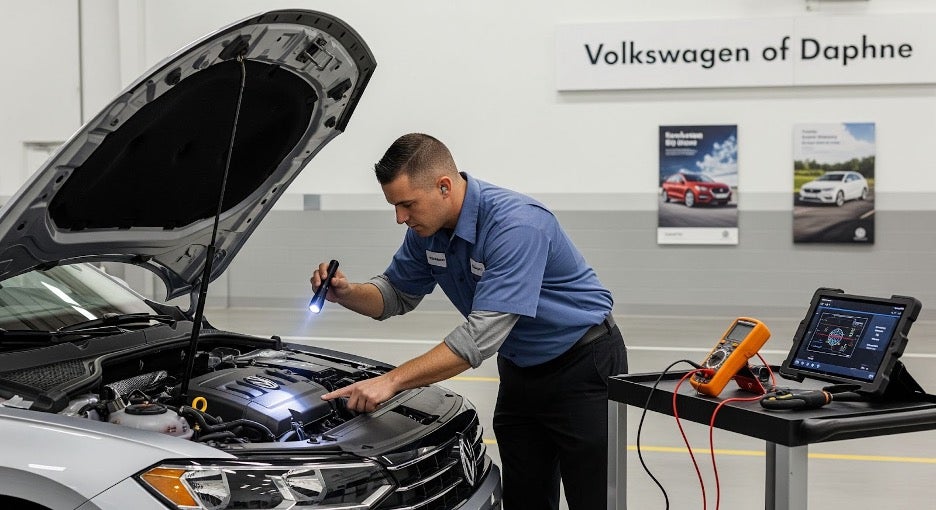
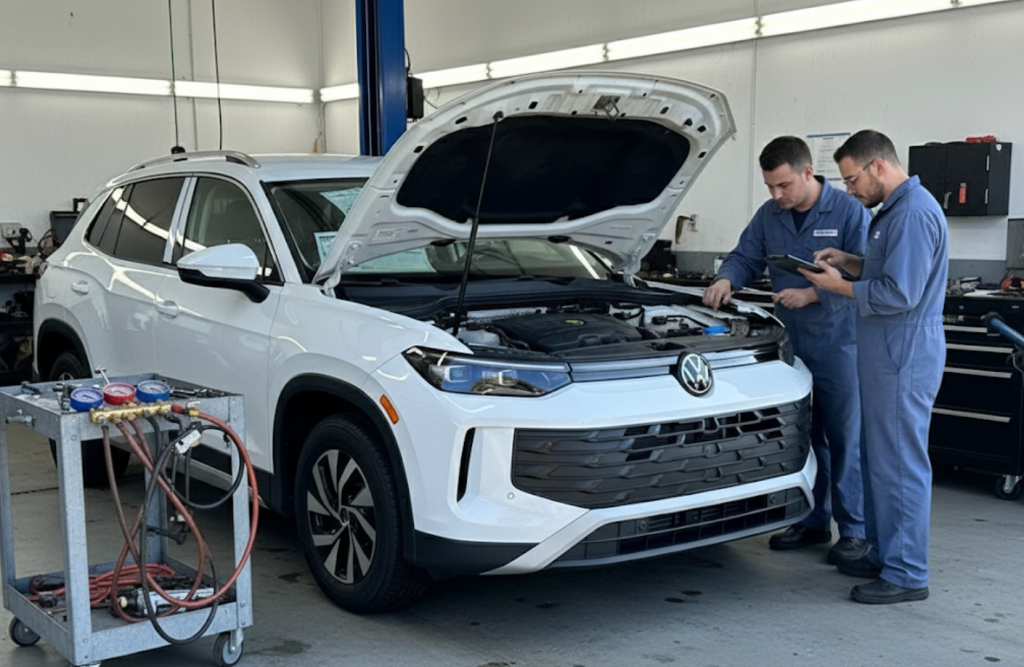
Volkswagen sedan with its hood open at Volkswagen of Daphne service center, while a certified technician inspects the engine to diagnose an unusual noise.

Why is My VW Engine Rattling? Common Volkswagen Engine Noises Explained

VW Engine Rattling Noise? Common Volkswagen Engine Sounds Explained A VW engine rattling noise can come from something simple, such as a loose heat shield or aging belt, or something more serious, such as low oil pressure, spark knock, or internal engine wear. The sound itself matters. A light tick at idle is different from a deep knock under acceleration. A brief cold-start sound is different from a rattle that gets louder with RPM, appears with a dashboard warning light, or comes with smoke, rough running, or loss of power. Volkswagen of Daphne created this guide for drivers in Daphne, Fairhope, Spanish Fort, Mobile, Foley, and Gulf Shores who want to understand common Volkswagen engine noises before scheduling service. Use the tables below to compare rattling, ticking, knocking, squealing, clunking, and pinging sounds, then decide whether your VW should be monitored, inspected soon, or stopped safely. VW engine rattling is a noticeable sound from the engine bay or nearby components that may come from normal mechanical operation, loose hardware, oil-related wear, belt or pulley noise, exhaust vibration, combustion issues, or internal engine damage. The safest next step depends on when the noise happens, how loud it is, whether it changes with RPM, and whether warning lights or drivability symptoms appear. Quick Answer: Why Is My Volkswagen Engine Making a Rattling Noise? A Volkswagen engine may rattle because of a loose heat shield, worn belt or pulley, exhaust vibration, low oil, aging oil, spark knock, a turbo or accessory concern, or a deeper internal engine issue. If the sound is light, brief, and not paired with warning lights, it may be safe to monitor briefly. If the sound is loud, metallic, gets worse with acceleration, or appears with an oil warning, smoke, shaking, overheating, or power loss, we recommend stopping safely and scheduling diagnosis. Light ticking at idle: Often less urgent, but still worth verifying during service. Rattling under the vehicle: May point to a loose shield, bracket, or exhaust component. Knocking under acceleration: More urgent and should be inspected quickly. Squealing or chirping: May relate to belts, pulleys, or accessory components. Noise with warning lights: Stop guessing and schedule service guidance. Table of Contents Common VW Engine Noises and What They Usually Mean Rattling, Ticking, Tapping, Knocking, and Squealing Compared Normal VW Engine Sounds vs Red Flags How Oil, Heat, and Maintenance Affect Engine Noise Should You Keep Driving or Stop? Jetta, Tiguan, Atlas, Taos, and Golf Engine Noise Tips Daphne, Fairhope, Spanish Fort, and Mobile Driving Conditions What Our Volkswagen Technicians Check First Key Takeaways VW Engine Rattling FAQ Common VW Engine Noises and What They Usually Mean Key Takeaway: The first SEO and service opportunity is to explain the sound type clearly. Drivers search for rattling, knocking, ticking, tapping, squealing, and clunking, but each sound points to a different diagnostic path. When someone says, “My VW engine is rattling,” the first step is to make the sound more specific. A loose heat shield can sound like an engine rattle even when the engine itself is not the source. A light injector tick can sound alarming to someone who has not owned a modern Volkswagen before. A deep knock under acceleration is much more concerning than a brief tick after startup. The timing of the sound matters too. A rattle during cold start may have a different cause than a rattle after a 40-minute drive from Mobile. A noise that happens only when accelerating can point to a different system than a noise that happens while idling in Fairhope traffic. A sound that appears after hitting road debris or driving through heavy rain may point us toward shields, belts, or underbody components. Monitor Briefly Light, brief sounds with no warning lights and no change in performance may be noted and verified during routine service. Schedule Service Soon New, repeated, RPM-related, or worsening sounds should be inspected before they become more expensive. Stop Driving Loud knocking, oil warnings, smoke, overheating, shaking, or power loss should be treated as urgent. Rattling, Ticking, Tapping, Knocking, and Squealing Compared Use this comparison table to describe the sound before scheduling service. You do not need to diagnose the part. You only need to explain what the noise sounds like, when it happens, and whether the vehicle still drives normally. Sound Common Pattern Possible Cause Recommended First Step Light ticking Fast, even sound at idle or cold start Direct-injection operation, valve-train sound, oil level, or normal mechanical sound Monitor if brief, then ask our team to verify during service Tapping Sharper sound that may change with RPM Oil level, oil age, valve-train concern, or internal wear Check oil level safely and schedule inspection Rattling Loose vibrating sound from engine bay or below vehicle Heat shield, exhaust bracket, loose hardware, belt area, or underbody component Schedule a multi-point inspection Squealing or chirping High-pitched sound during startup, acceleration, rain, or accessory load Belt, pulley, bearing, tensioner, or accessory-drive issue Schedule belt and pulley inspection Pinging Light metallic sound under acceleration or load Combustion, fuel, carbon buildup, sensor, or engine-management concern Avoid hard acceleration and schedule diagnosis Knocking Deep metallic sound, often worse under load Potential internal engine, combustion, oil-pressure, or severe wear issue Stop driving if loud, persistent, or paired with warning lights Clunking Dull hit or movement sound during shifts, bumps, or load changes Mount, accessory, exhaust, driveline, or suspension-related issue Schedule inspection before more driving For a Daphne commuter hearing a faint tick during the first minute after startup, we recommend noting whether the sound fades as the engine warms. For a Spanish Fort Tiguan owner hearing a heavy knock while merging onto I-10, we recommend avoiding hard acceleration and scheduling diagnosis because load-related knocking can point to a more serious concern. Schedule VW Engine Noise Service Normal VW Engine Sounds vs Red Flags That Need Service Key Takeaway: A sound can be normal only when the pattern supports it. New, loud, worsening, metallic, or warning-light-related sounds should be inspected. Modern Volkswagen engines can make normal operating sounds. Many VW models use direct injection, turbocharged components, cooling fans, emissions systems, and belt-driven accessories. A light ticking sound at idle, a brief cold-start sound, or a fan noise after shutdown may not automatically mean something is failing. The red flags are different. We recommend service when the sound is new, loud, metallic, or worsening. We also recommend prompt inspection if the vehicle shakes, loses power, smells hot, leaks fluid, smokes, overheats, or shows an oil pressure, check engine, EPC, coolant, or charging-system warning. Sound Scenario Less Concerning Pattern Red Flag Pattern Best Next Step Cold-start tick Brief, even, fades after warmup Gets louder, continues after warmup, or appears with warning lights Verify during oil service or diagnostic visit Rattle under vehicle Mild vibration over certain RPM range Dragging, scraping, burning smell, or loud metallic sound Inspect heat shields and exhaust hardware Squeal or chirp Brief sound on startup or damp conditions Repeated sound with steering, A/C load, or acceleration Inspect belts, pulleys, and accessory drive Knock under acceleration None that should be ignored Deep knock, power loss, smoke, or flashing warning light Stop driving and request service guidance For a Mobile Jetta commuter with a light tick and no warning lights, our service team may begin with an oil level check, service history review, and normal-operation comparison. For a Fairhope family driving a Tiguan that suddenly rattles hard in traffic, we recommend scheduling service sooner because heat and stop-and-go driving can reveal oil, belt, cooling, or vibration problems faster. Check VW Service Specials How Oil Condition, Heat, and Maintenance Affect VW Engine Noise Key Takeaway: Oil level, oil age, and maintenance history are among the first items to check when a Volkswagen engine starts ticking, tapping, or rattling. Oil is one of the first things we check when a Volkswagen engine noise comes into our shop. Low oil, old oil, incorrect oil specification, delayed maintenance, or a leak can make engine components sound louder because moving parts are not being protected the way they should be. Gulf Coast heat can make this more noticeable, especially during long commutes, school traffic, and summer road trips. For a Fairhope driver who hears tapping after sitting in traffic, checking oil level and service timing is a smart first step. For a Foley driver who recently bought a used VW and does not know the last service date, a baseline oil service and multi-point inspection can help separate normal operation from a developing issue. Maintenance Factor Why It Can Affect Noise What Our Team Checks Best For Oil level Low oil can increase friction and mechanical sound Oil level, leaks, and oil-pressure concerns Ticking, tapping, or oil warning concerns Oil age Old oil may not protect as well under heat Maintenance history and oil condition High-mileage commuters Oil specification Incorrect oil can affect protection and performance Correct VW-approved oil for the specific model Used VW buyers with unknown service records Belts and pulleys Wear can create chirping, squealing, or rattling Belt drive, pulley bearings, and tensioner condition Drivers hearing sound near the front of the engine Heat shields and exhaust Loose shields can mimic engine rattle Underbody hardware, exhaust hangers, and brackets Drivers hearing rattle below the vehicle Should You Keep Driving or Stop? Key Takeaway: The safest decision depends on sound severity, warning lights, drivability changes, and whether the noise is getting worse. Many VW engine noises are easier to diagnose when they are inspected early. A minor rattle can be a loose shield or bracket. A squeal can be a belt concern. A ticking sound can be related to oil condition or normal operating noise. A deep knock is different. Continuing to drive with a serious knock can turn a manageable problem into a major repair. Situation Monitor Briefly Schedule Service Soon Stop Driving Light tick at idle Yes, if brief and no warning lights Yes, if new, louder, or persistent Only if warning lights or symptoms appear Loose rattle from below vehicle Only if mild and brief Yes Yes, if dragging, scraping, or very loud Squealing belt sound No long-term monitoring Yes Yes, if overheating, steering concern, or battery warning appears Tapping that rises with RPM No long-term monitoring Yes Yes, if oil light appears Pinging under acceleration Avoid hard acceleration Yes Yes, if severe or paired with power loss Deep knocking No Call first Yes If your VW knocks, shakes, smells hot, shows an oil warning, loses power, smokes, overheats, or makes a heavy metallic sound, we recommend stopping safely and contacting our service team before continuing. Book VW Diagnostic Service Jetta, Tiguan, Atlas, Taos, and Golf Engine Noise Tips Key Takeaway: Model-specific language helps capture long-tail search demand while giving owners more relevant service guidance. Volkswagen Model Common Search Intent Possible Noise Pattern Recommended Next Step Volkswagen Jetta Volkswagen Jetta rattling noise, VW Jetta engine ticking Light ticking at idle, tapping after startup, rattle during acceleration Check oil level and schedule diagnosis if the sound repeats Volkswagen Tiguan VW Tiguan rattling noise when accelerating Rattle under load, belt noise, heat shield vibration, engine knock Avoid hard acceleration and schedule service if the noise persists Volkswagen Atlas VW Atlas engine knocking or rattling Deep sound under load, family-trip noise, underbody rattle Schedule diagnosis before longer travel Volkswagen Taos VW Taos engine noise, ticking, or rattle Cold-start sound, idle tick, or RPM-related noise Confirm service history and inspect if the sound is new Volkswagen Golf or Golf GTI VW Golf rattling noise when accelerating Turbo, belt, heat shield, engine, or exhaust-related noise Schedule inspection if the sound changes with throttle The best first step is not guessing the repair. It is matching the sound to timing, warning lights, service history, and driving behavior. Our technicians can use that information to decide whether the inspection should begin with oil condition, loose hardware, belt-drive components, diagnostic codes, or an engine performance test. Daphne, Fairhope, Spanish Fort, and Mobile Driving Conditions Key Takeaway: Gulf Coast heat, humidity, heavy rain, short trips, and I-10 acceleration can make Volkswagen engine noises easier to hear and more important to inspect early. Local conditions matter. Around Daphne and Fairhope, short trips, school traffic, summer heat, and humid air can make oil condition, cooling performance, belts, and exhaust hardware more important. On I-10 toward Mobile, acceleration and engine load can reveal pinging, knocking, or belt-drive noise that may not show up during neighborhood driving. Local Driving Condition Noise Risk What We Check Recommended Action Daphne and Fairhope errands Short trips may make cold-start sounds more noticeable Oil level, service history, startup sound Monitor if mild, service if repeated Spanish Fort to Mobile I-10 driving Acceleration can reveal pinging or knocking Diagnostic scan and road-test pattern Schedule service quickly Gulf Coast summer heat Heat can stress oil, belts, hoses, and cooling parts Fluids, belts, fans, hoses Pair oil service with inspection Gulf Shores weekend trips Long drives and vibration can expose loose components Heat shields, exhaust hangers, underbody hardware Inspect before the next trip Rain and humidity Moisture can make belt or accessory sounds more obvious Belt condition and pulley area Schedule service if the noise repeats If you drive from Fairhope, Spanish Fort, Mobile, Foley, or Gulf Shores, we recommend checking current service specials before booking your appointment. Our team can help pair the right service with the sound you are hearing, including oil service, battery checks, multi-point inspection, belt inspection, or diagnostic testing. View VW Service Specials What Our Volkswagen Technicians Check First Key Takeaway: A step-by-step inspection helps separate simple vibration issues from maintenance-related noises or more serious internal engine concerns. When a VW arrives with an engine noise, our technicians do not jump straight to a worst-case repair. We begin with the basics because many noises are tied to oil level, service history, shields, brackets, belts, pulleys, mounts, exhaust vibration, or stored diagnostic codes. Inspection Step What We Look For Why It Matters Best For Oil level and condition Low level, dark oil, overdue service, leaks Oil problems can make engine sounds louder Tapping, ticking, or maintenance concerns Dashboard and code scan Stored faults, warning-light history, misfire data Electronic clues may point us to the right system Noise with warning lights or rough running Cold and warm listening check Noise timing and temperature pattern Some sounds appear only during startup or warm idle Cold-start complaints Belt and pulley inspection Accessory noise, bearing wear, belt condition Front-engine noises can sound like internal rattles Chirp, squeal, or RPM-related sound Exhaust and shield inspection Loose heat shields, hangers, brackets Simple vibration can mimic engine rattle Rattle from underneath Road test when appropriate Noise under load, turning, braking, or acceleration Some problems only show up while driving Acceleration knock or clunk concern Before your appointment, write down when the sound happens, whether the engine is cold or warm, whether the sound changes with acceleration, and whether any dashboard warning appeared. That information helps us inspect your Jetta, Tiguan, Atlas, Taos, Golf GTI, or other Volkswagen more efficiently. Ask Us About a VW Engine Sound Key Takeaways A light VW engine tick can be normal, but a loud knock or warning-light event needs prompt service. Low oil, aging oil, loose shields, belts, pulleys, exhaust hardware, and internal concerns can all create rattling sounds. Noise under acceleration should be inspected quickly, especially if it is metallic or getting worse. Model-specific searches around Jetta, Tiguan, Atlas, Taos, and Golf are important opportunities for this page. Gulf Coast heat, humidity, traffic, and longer trips can make small maintenance issues easier to hear. Bring sound timing, temperature, acceleration, and warning-light notes to your service appointment. VW Engine Rattling FAQ Why is my Volkswagen engine making a rattling noise? Your Volkswagen engine may be rattling because of a loose heat shield, exhaust vibration, belt or pulley wear, low oil, aging oil, spark knock, or an internal engine concern. A mild rattle may be less urgent, but a loud metallic rattle, knocking sound, warning light, smoke, or power loss should be inspected right away. Is a ticking noise normal in a Volkswagen engine? A light, even ticking sound can be normal in some modern Volkswagen engines, especially at idle or during cold start. If the tick is brief, steady, and not paired with a warning light, our team can verify it during routine service. If the ticking gets louder, changes with RPM, or appears with rough idle, oil warning, or loss of power, schedule service. Can low oil make my VW engine rattle? Yes. Low oil can make a VW engine sound louder because moving parts may not be getting the protection they need. Check the oil level only when it is safe to do so and schedule service if the level is low, the oil looks dirty, or the oil light appears. Do not continue driving with an oil pressure warning. Why does my VW rattle when accelerating? A VW rattling noise when accelerating may relate to exhaust vibration, a loose heat shield, belt or pulley wear, spark knock, turbo-related sounds, engine mounts, or internal engine stress under load. We recommend avoiding hard acceleration and scheduling diagnosis if the sound repeats or gets louder. Should I drive my Volkswagen if the engine is knocking? We do not recommend continuing to drive if your Volkswagen has a deep knocking sound, especially if the noise gets worse under acceleration or appears with a warning light, smoke, rough running, or power loss. Stop safely and call our service team for guidance. What service should I schedule for a VW engine noise? For most VW engine noise concerns, start with a diagnostic inspection or an oil change paired with a multi-point inspection, depending on the sound and service history. If the sound is loud, metallic, new, or paired with warning lights, schedule diagnostic service instead of basic maintenance only. Why is my Volkswagen Jetta making a rattling noise? A Volkswagen Jetta rattling noise may come from a heat shield, exhaust component, belt or pulley, oil-related issue, or engine-management concern. If the sound is light and brief, note when it happens. If it repeats, changes with RPM, or appears while accelerating, schedule service. Why is my VW Tiguan making a rattling noise when accelerating? A VW Tiguan rattling noise when accelerating may indicate a loose shield, exhaust vibration, belt-drive concern, engine mount issue, spark knock, or another load-related problem. Because acceleration noises can point to more serious causes, we recommend scheduling diagnosis if the sound repeats. We know an unfamiliar VW engine sound can make every drive feel uncertain. Volkswagen of Daphne can help you identify whether the noise sounds like a monitor-it item, a service-soon concern, or a stop-driving situation. Visit us at 29816 Frederick Blvd, Daphne, AL 36526, call our service department at 228-291-2035, or schedule through our service appointment form. We proudly serve Volkswagen drivers from Daphne, Fairhope, Spanish Fort, Mobile, Foley, and Gulf Shores.

sddefault

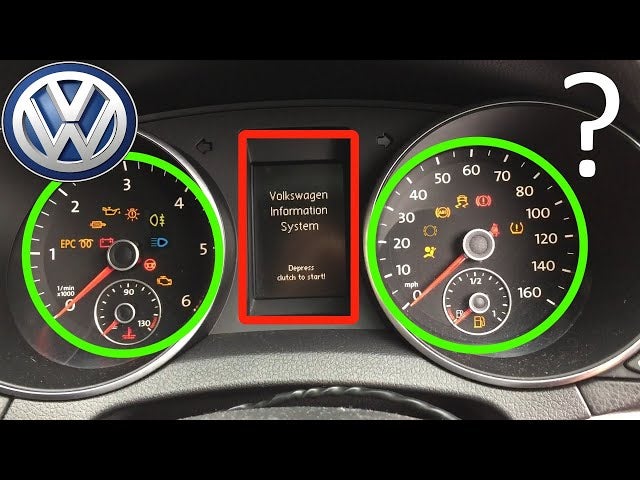
Volkswagen Dashboard Lights and What They Mean

VW Dashboard Warning Lights Explained for Daphne Drivers VW dashboard warning lights help you understand what your Volkswagen is trying to tell you before a small issue becomes a bigger concern. The quickest way to respond is to read the color first, then the symbol, then any message shown in the instrument cluster. Red warning lights usually mean stop safely and address the issue before continuing. Yellow or amber warning lights usually mean the vehicle needs attention soon. Green, blue, and white indicators usually show system status or active features. Volkswagen of Daphne helps local drivers understand Volkswagen warning lights, VW dashboard symbols, ID.4 EV indicators, and newer driver-assistance alerts. Use this guide to understand common lights for Volkswagen Tiguan, Jetta, Passat, Golf, Atlas, Taos, ID.4, and other VW models, then decide whether to monitor the message, schedule service, or stop driving safely. VW dashboard warning lights are symbols and alerts that appear in the instrument cluster to identify vehicle status, maintenance needs, safety-system concerns, or potential faults. For drivers in Daphne, Fairhope, Spanish Fort, Mobile, Foley, and Gulf Shores, they help determine when to stop driving, drive carefully, or schedule Volkswagen service. Quick Answer: What Do VW Dashboard Warning Lights Mean? VW dashboard warning lights use color and symbol type to show urgency. A red Volkswagen warning light usually means stop safely and address the issue before driving farther. A yellow or amber light usually means service or inspection is needed soon. Green, blue, or white indicators usually show that a system is active, available, or changing status. Red light: Stop safely, read the message, and avoid guessing. Yellow light: Drive carefully and schedule service soon if the light stays on. Flashing light: Treat it as more urgent than a steady light. Model-specific light: Check the message, especially on ID.4, Tiguan, Atlas, Jetta, Passat, and newer ADAS-equipped VW models. Table of Contents VW Dashboard Light Color Guide Red Volkswagen Warning Lights That Mean Stop Safely Yellow Volkswagen Warning Lights That Need Attention Soon Green, Blue, and Informational VW Dashboard Icons Tiguan, Jetta, Passat, Golf, Atlas, and ID.4 Dashboard Symbols ID.4 EV Indicators, ADAS Symbols, and Newer VW Alerts VW Dashboard Lights Meaning Reset: What to Know What Dashboard Lights Mean for Daphne and Mobile Drivers Key Takeaways Volkswagen Dashboard Light FAQ VW Dashboard Light Color Guide Key Takeaway: The color of a VW dashboard light tells you the first level of urgency. Red usually means stop safely, yellow means service soon, and green or blue usually means system status. The most useful way to understand Volkswagen dashboard symbols is to start with color. You do not need to memorize every icon immediately. Instead, use the color to decide the safest first response, then use the symbol and message to narrow down the system involved. Red VW Warning Lights Red lights usually point to a serious system warning. Stop safely, read the message, and avoid continuing until you understand whether the vehicle should be driven. Yellow VW Warning Lights Yellow or amber lights usually mean attention is needed soon. The vehicle may still drive, but the issue should not be ignored. Green, Blue, or White Icons These icons often show that a feature is active, available, or changing state. They are usually informational unless paired with a warning message. Light Color Common Meaning Recommended First Step Example VW Systems Red Critical warning or immediate attention needed Stop safely and check the message before continuing Brake system, oil pressure, coolant temperature, charging system Yellow or amber Service, inspection, or caution needed soon Drive carefully and schedule diagnosis if the light remains on Check engine, TPMS, EPC, ABS, traction control, driver-assistance alerts Green System is active or ready Monitor for normal operation Cruise control, lights, turn signals, driver-assistance status Blue Informational system status Confirm the feature matches the driving condition High beams or system indicators depending on model White or gray Status, standby, or feature availability Read the message and monitor ADAS readiness, EV status, driving mode or system status If a light is flashing, paired with a warning sound, or appears with a major change in vehicle behavior, treat it as more urgent. A flashing warning light can indicate that the system needs immediate attention even if the vehicle still moves. Red Volkswagen Warning Lights That Mean Stop Safely Key Takeaway: Red Volkswagen dashboard lights should be treated as stop-and-assess alerts. A vehicle that still drives may still be unsafe to continue operating. Red dashboard lights are the ones we recommend taking most seriously. They often relate to braking, engine lubrication, coolant temperature, charging-system function, or another system that can affect safety or vehicle health. The right response is not panic. It is to stop safely, check the display message, and decide whether the vehicle should continue driving. Common red Volkswagen warning-light categories include: Brake warning light: May indicate a brake-system issue, parking brake concern, or low brake fluid depending on the message. Oil pressure warning light: May indicate that the engine is not receiving proper lubrication. Coolant temperature warning light: May indicate overheating or a cooling-system concern. Battery or charging-system warning: May indicate the charging system is not operating correctly. Critical safety-system alert: May indicate a serious airbag, restraint, or safety-related issue depending on the model. Red VW Warning Light What It May Mean What to Do First Why It Matters Brake system warning Brake-system condition, parking brake, or brake fluid concern Stop safely and review the message Braking performance is safety-critical Oil pressure warning Engine lubrication may be too low or not circulating properly Stop safely and avoid continued driving Driving with oil-pressure issues can damage the engine Coolant temperature warning The engine or system may be overheating Pull over safely and allow the vehicle to cool Overheating can escalate quickly in Gulf Coast heat Battery or charging warning The charging system may not be maintaining power Reduce risk and seek diagnosis The vehicle may lose electrical support if ignored Critical safety warning A major safety-related system may need attention Read the message and avoid assumptions Safety-system status can affect protection and drivability For a Daphne commuter headed toward Mobile, a red light should change your plan immediately. For a Gulf Shores weekend driver loading up for a longer trip, a red warning is the signal to pause before turning a manageable issue into a roadside problem. Schedule Volkswagen Warning-Light Service Yellow Volkswagen Warning Lights That Need Attention Soon Key Takeaway: Yellow VW warning lights usually mean attention is needed soon. The vehicle may still drive, but the issue should not be ignored. Yellow or amber dashboard lights are where many drivers get confused. These warnings often mean the vehicle can still be driven carefully, but that does not make the alert unimportant. We recommend treating yellow lights as service-soon alerts, especially when the light stays on, comes back repeatedly, or appears with unusual vehicle behavior. Common yellow Volkswagen warning-light categories include: Check engine light: May relate to emissions, fuel, ignition, sensor, or engine-management systems. TPMS or tire pressure light: May indicate low tire pressure or a tire pressure monitoring concern. EPC light: May relate to electronic power control on certain gasoline Volkswagen models. ABS light: May indicate an anti-lock braking system concern. Traction control or stability alert: May show system activity, reduced traction, or a fault depending on behavior. Driver-assistance warning: May indicate a temporarily unavailable or limited feature. Yellow VW Light Common Search Intent Recommended Response When to Escalate Check engine light VW warning lights, VW dash lights Schedule diagnostic service soon If flashing, rough running, or loss of power occurs Tire pressure light VW dashboard warning lights Check tire pressure and inspect for tire damage If pressure drops repeatedly or handling changes EPC light VW dashboard symbols Drive carefully and schedule diagnosis If throttle response or power changes ABS light VW warning signs Have braking systems inspected If brake warning lights also appear Driver-assistance alert Volkswagen dashboard symbols Check sensor visibility and message context If the warning persists after conditions improve For a Fairhope driver seeing a tire-pressure warning during errands, the question is not only whether the vehicle still moves. It is whether the tire or system needs attention before the next longer drive. For a Spanish Fort commuter seeing a check engine light without obvious symptoms, diagnosis is still a smart move because waiting can make the issue harder to trace. Visit Our Volkswagen Service Center Green, Blue, and Informational VW Dashboard Icons Key Takeaway: Not every Volkswagen dashboard symbol is a warning. Green, blue, and white icons often show system status, active features, or driver-assistance availability. Green, blue, and informational icons usually show that a system is active, available, or changing state. That can include turn signals, high beams, cruise control, lighting status, driver-assistance status, or EV system readiness on certain models. We still recommend paying attention to these indicators because they help you understand what the vehicle is doing. If an informational symbol changes color, begins flashing, appears with a warning message, or behaves differently than expected, treat it as a sign to review the system and consider service support. Icon Type Common Meaning Typical Urgency Driver Action Green indicator System is active or available Low Confirm the system is operating as expected Blue indicator Feature status, often lighting-related Low Monitor feature status White or gray indicator System standby or availability Low to moderate Read the message if shown Flashing indicator Active system change or warning behavior Varies Check the owner message and system context Tiguan, Jetta, Passat, Golf, Atlas, and ID.4 Dashboard Symbols Key Takeaway: Many drivers search by model because the same general warning category can appear with different messages or display layouts across Volkswagen models. Volkswagen dashboard symbols can vary by model, trim, model year, and display system. That is why drivers often search for terms like VW Tiguan dashboard symbols, Volkswagen Jetta dashboard lights, VW Passat warning lights, VW Golf warning lights, and ID.4 dashboard indicators. The safest approach is to use the symbol color, the exact message, and the model context together. Volkswagen Model Common Search Intent What to Check First Best Next Step Volkswagen Tiguan VW Tiguan dashboard symbols, VW Tiguan warning lights Color, message, and whether the light is steady or flashing Schedule service for persistent yellow lights or any red warning Volkswagen Jetta Volkswagen Jetta dashboard lights, VW Jetta dashboard lights Check engine, EPC, tire pressure, and brake-related alerts Diagnose recurring lights before daily driving makes the issue worse Volkswagen Passat VW Passat warning lights, VW Passat dashboard symbols Brake, check engine, oil, coolant, and service reminders Use color and message to decide urgency Volkswagen Golf VW Golf warning lights symbols explained Engine, tire, braking, and stability control symbols Do not ignore repeated yellow lights Volkswagen Atlas VW dashboard lights, Volkswagen warning lights Family-driving alerts, tire pressure, ADAS, and braking messages Schedule service if safety or driver-assistance alerts persist Volkswagen ID.4 ID.4 dashboard lights, EV indicators EV readiness, charging, high-voltage, and driver-assistance messages Use EV-specific message context instead of gas-vehicle assumptions A Tiguan warning light may appear in a familiar category, but the message and context matter. A Jetta or Passat check engine light may still deserve prompt diagnosis even when the car feels normal. An ID.4 EV indicator may not match older Volkswagen habits at all, so the full display message becomes especially important. ID.4 EV Indicators, ADAS Symbols, and Newer VW Alerts Key Takeaway: Newer VW models should be read by system type as well as color. EV indicators and driver-assistance icons may show system status, temporary limits, or a true fault. Newer Volkswagen models add another layer to dashboard-light interpretation. On an ID.4, some indicators relate to EV operation, charging state, drive readiness, high-voltage systems, or regenerative behavior. On both EV and gasoline models, ADAS and IQ.DRIVE-related icons may reflect system availability, sensor obstruction, reduced function, or a genuine fault. For a Spanish Fort ID.4 owner who sees an unfamiliar symbol, the safest move is not to guess based on an old gas-vehicle warning-light guide. For a Mobile commuter who sees a driver-assistance icon, the right first question is whether the system is temporarily limited, turned off, blocked by conditions, or actually faulted. Newer VW Light Type What It May Relate To Common Meaning Pattern What We Recommend ID.4 EV indicator Charging, readiness, or EV system status Vehicle-specific EV operation message or status light Check the display message and owner guidance first EV warning light High-voltage or drive-system concern System may need attention and affect drivability Follow message guidance and avoid guessing ADAS indicator Driver-assistance availability or sensor issue System may be off, limited, or temporarily blocked Confirm whether the feature is still active Sensor-related indicator Camera, radar, or environmental obstruction Conditions may be affecting feature performance Monitor conditions or schedule diagnosis if persistent Informational assist icon Feature is on or standing by Normal status, not urgent warning Use awareness, not alarm Newer Volkswagen dashboard lights make the most sense when you group them by system as well as urgency. EV indicators, ID.4-specific messages, and driver-assistance icons often answer different questions than traditional engine, oil, or brake warnings. Ask Our Team About a VW Warning Light VW Dashboard Lights Meaning Reset: What to Know Key Takeaway: Resetting or clearing a dashboard light is not the same as fixing the issue. Diagnose the cause before focusing only on making the symbol disappear. Many drivers search for VW dashboard lights meaning reset because they want the light gone. That is understandable, but clearing a light does not automatically resolve the condition that triggered it. If the problem is still present, the light can come back, the vehicle can store another fault, or the underlying issue can get worse. Before thinking about a reset, ask these questions: Is the light red, yellow, or informational? Is the light steady or flashing? Does the display show a specific message? Has the light appeared more than once? Did the vehicle feel different when the light appeared? Was recent service, battery work, tire service, or sensor work completed? Reset Scenario What It May Mean Recommended Action Light appears after tire service TPMS may need confirmation or pressure adjustment Check tire pressure and follow the proper TPMS process Check engine light comes back after clearing The underlying fault may still be present Schedule diagnostic service Service reminder appears Maintenance interval or inspection reminder may be due Confirm maintenance history before resetting ADAS alert disappears and returns Sensor obstruction or system issue may be recurring Check conditions and schedule service if persistent Red warning light appears A critical system may require immediate attention Do not attempt a reset as the first response A light that disappears can still point to a real intermittent fault. A system that feels normal can still need diagnosis. The earlier the cause is found, the easier many issues are to trace accurately. Book a Warning-Light Diagnosis What Dashboard Lights Mean for Daphne, Fairhope, Spanish Fort, and Mobile Drivers Key Takeaway: Gulf Coast heat, humidity, stop-and-go driving, longer commutes, and seasonal trips can make some warning lights more urgent than they look at first. Dashboard lights do not appear in a vacuum. Local driving conditions matter because they affect how hard the vehicle works, how quickly small issues show up, and how much risk there is in delaying diagnosis. Around Daphne and the Eastern Shore, warning-light patterns can be tied to summer heat, humidity, Mobile commutes, stop-and-go traffic, and long periods of lighter use before a weekend trip. Local Driver Scenario Likely Concern Pattern What We Recommend Why It Helps Daphne-to-Mobile commuter Repeating yellow light during regular highway use Schedule service sooner rather than later High-mile use can make small issues grow faster Fairhope errand driver Tire, brake, or system light during stop-and-go use Check urgency and avoid long delays Frequent short trips still stress key systems Spanish Fort newer-VW owner ADAS or sensor alert appears in changing conditions Confirm whether the system is limited or faulted Prevents overreaction or underreaction Gulf Shores weekend traveler Warning light appears before a longer summer drive Reassess trip timing and service urgency Heat and distance raise the risk of delay Foley used-VW owner Light comes and goes over time Diagnose before the issue becomes constant Intermittent faults are easier to address early If you are in Fairhope, Spanish Fort, Mobile, Foley, or Gulf Shores and a dashboard light has you second-guessing whether to keep driving, our service team can help you separate a minor status issue from a problem that should not wait. Visit Our Volkswagen Service Team Key Takeaways Red VW dashboard warning lights usually mean stop safely and assess the issue before continuing. Yellow Volkswagen warning lights often mean the vehicle can still move, but service or inspection should not be delayed. Green, blue, and white indicators usually show system status, not urgent failure. Tiguan, Jetta, Passat, Golf, Atlas, and ID.4 dashboard symbols should be read with model context. ID.4 and ADAS alerts should be interpreted by system type as well as color. Resetting a dashboard light is not the same as fixing the underlying issue. A warning light that comes and goes still deserves diagnosis if it repeats. Volkswagen Dashboard Light FAQ What do VW dashboard warning lights mean? VW dashboard warning lights use colors, symbols, and display messages to show vehicle status or system concerns. Red lights usually mean stop safely, yellow lights usually mean service or inspection is needed soon, and green, blue, or white icons usually show system status. Which Volkswagen dashboard lights mean I should stop driving immediately? We recommend stopping safely for red warning lights tied to braking, oil pressure, overheating, charging-system failure, or another critical safety or system issue. The exact message in the cluster matters, but the safest rule is simple: if the light is red and relates to a major operating system, do not treat it like a minor reminder. Schedule Service for a Warning Light What does a yellow VW warning light mean? A yellow or amber VW warning light usually means the vehicle needs attention soon. The vehicle may still drive, but you should schedule service if the light stays on, comes back repeatedly, or appears with unusual sounds, reduced power, poor braking, overheating, or other symptoms. What warning lights are common on the Volkswagen ID.4? The Volkswagen ID.4 can show EV-related indicators tied to charging, drive-system status, readiness, and high-voltage operation, along with driver-assistance and system-status icons. We recommend checking the full display message because EV indicators often need to be interpreted by system context, not by old gas-vehicle habits. What should I do if my Volkswagen warning light turns on but the car still drives normally? Decide based on color, system type, and whether the vehicle behavior has changed. If the light is red, stop safely. If it is yellow and persistent, schedule service soon even if the vehicle still feels normal. If it appears and disappears, do not ignore it, because intermittent faults are often easier to diagnose early. Can Volkswagen of Daphne diagnose a light even if it comes and goes? Yes. Intermittent warning-light behavior is exactly the kind of issue that should be inspected before it becomes constant. If a light comes and goes, we still recommend having it checked, especially if it has repeated more than once, changed the way the vehicle drives, or appeared before a longer trip. What are common VW Tiguan dashboard symbols? Common VW Tiguan dashboard symbols may include check engine, tire pressure, brake, ABS, traction control, service reminder, and driver-assistance alerts. Always use the color and message to decide urgency because the same general symbol can have different context by model year. What are common Volkswagen Jetta dashboard lights? Volkswagen Jetta dashboard lights often include check engine, EPC, tire pressure, oil pressure, battery or charging, coolant temperature, brake, and traction-control indicators. A red light should be treated as urgent, while a yellow light should be inspected soon if it stays on. Should I reset a VW dashboard light myself? Do not reset a VW dashboard light until you understand why it appeared. Resetting or clearing the light does not fix the cause. If the issue is still present, the warning can return or the problem can get worse. We know a Volkswagen dashboard light can turn an ordinary drive into a stressful guessing game. Volkswagen of Daphne can help you decide whether the alert means stop now, drive carefully, or book service soon. We are proud to serve drivers from Daphne, Fairhope, Spanish Fort, Mobile, Foley, and Gulf Shores. Visit us at 29816 Frederick Blvd, Daphne, AL 36526, call 251-374-0664, use our website at Volkswagen of Daphne, or schedule service online so our team can help you respond the right way.

maxresdefault

Changing Your Volkswagen Key Battery: A Simple Step-by-Step Guide

How to Change a Volkswagen Key Battery Near Daphne, AL Volkswagen of Daphne helps local drivers handle Volkswagen key battery replacement by following the right process for the key fob style in your hand, removing the emergency key, opening the case carefully, and installing the correct coin-cell battery with the proper polarity. In most cases, this is a quick DIY job for drivers seeing a key battery low alert, weak lock response, or shorter remote range, but the exact battery and opening method can vary by fob style. Once you confirm the battery type and seat the new battery correctly, your key should return to normal function without programming. This guide explains how to identify the right battery, open a VW key fob safely, replace the battery step by step, avoid common mistakes, and know when it makes more sense to let our team help. A Volkswagen key battery replacement is the process of removing the depleted coin-cell battery inside a VW key fob and installing the correct new battery. It is designed to restore remote locking, unlocking, and push-button start convenience for drivers in Daphne, Fairhope, Spanish Fort, Mobile, Foley, and Gulf Shores. Quick Answer: How Do You Change a Volkswagen Key Battery? To change a Volkswagen key battery, remove the emergency key, find the seam in the key fob, open the case carefully, remove the old coin-cell battery, and install the new battery in the same orientation. Many Volkswagen key fobs use a CR2032-style battery, but you should always confirm the exact battery code printed on your old battery before replacing it. Best first step: Remove the emergency key and inspect the fob seam. Most common mistake: Installing the new battery upside down. Programming: Most routine VW key battery changes do not require reprogramming if the key worked before the old battery died. Local help: Volkswagen of Daphne can help confirm the right battery or inspect the key if it still does not work. Table of Contents Volkswagen Key Battery Basics, Battery Types, and Fob Styles Signs Your VW Key Battery Needs Replacement Battery Type Reference Table for Common Volkswagen Key Fobs Older vs Newer Volkswagen Key Fobs How to Open a VW Key Fob Without Damaging It Step-by-Step Volkswagen Key Battery Replacement If Your VW Key Still Does Not Work Why This Matters for Daphne Drivers Battery Polarity, Contact Pressure, and Fob Fit DIY Key Battery Change vs Dealership Help Key Takeaways Volkswagen Key Battery FAQ Volkswagen Key Battery Basics, Battery Types, and Fob Styles Key Takeaway: Identify the exact fob style and battery orientation before you pry anything open. The right battery and the right opening method matter more than speed. Signs Your VW Key Battery Needs Replacement The most common warning signs are easy to miss at first. Many drivers notice the locks respond from a shorter distance, the buttons need to be pressed twice, or the vehicle displays a low key battery warning. Those are the right first clues to act on before a minor annoyance turns into a no-response key on a busy morning. For Daphne commuters who leave early and park far from the office, a weakening key battery usually shows up as reduced range long before the key goes dead. For Fairhope parents juggling school drop-off, grocery stops, and afternoon pickup, the warning may feel random because the key works once, then misses the next press. In both cases, replacing the battery early is the better move before assuming the fob itself has failed. The key still works, but only when you are standing close to the door. Lock and unlock response feels delayed or inconsistent. Push-button start requires you to hold the key closer than usual. Your spare key works better than the one you use every day. The vehicle displays a low key battery message. This is also where it helps to separate a key battery issue from a vehicle battery issue. A weak key fob battery affects remote access and convenience. A weak vehicle battery may show up as slow cranking, clicking, or a no-start condition. If your main battery is the concern, our team can inspect it through our VW battery service in Daphne, AL. Battery Type Reference Table for Common Volkswagen Key Fobs Most Volkswagen owners are dealing with a coin-cell battery replacement, and the safest move is to verify the exact battery inside the fob before buying a replacement. CR2032 batteries are common across many Volkswagen key fobs, but you should still check the old battery marking and your owner resources first so you do not force the wrong cell into the housing. That verification step matters because a battery that looks almost right can still create poor contact, weak performance, or a broken clip. For Spanish Fort drivers with newer smart keys, opening the fob carefully and reading the old battery marking is the safest first step. Volkswagen Key Fob Style Common Battery Checkpoint Typical Opening Cue What to Verify Best For Older switchblade-style VW key Confirm marking on existing battery Visible seam, often needs gentle pry tool Battery code and positive-side orientation Older Jetta, Passat, or Tiguan-style keys Newer smart key with emergency key Confirm old battery marking before buying replacement Back seam opens after emergency key is removed Polarity and battery seat fit Newer VW push-button start keys Spare key stored long-term Compare with your daily key before replacement Open only after checking battery condition Battery age and any corrosion Families keeping a backup key at home Daily-use key in high heat Confirm battery type and contact tension Standard seam opening after emergency key removal Clip tension and correct seating Gulf Coast drivers exposed to heat and humidity Key with worn shell or buttons Verify battery and case condition together Housing may flex or separate unevenly Broken tabs, torn buttons, or loose contacts Owners whose issue may be more than battery-related Unsure which key type you have Check owner resources and compare key shape Match fob design before opening Tool need, battery code, and orientation First-time VW owners and DIY beginners Tip: Battery type can vary by key design. Always confirm the printed battery code on the old battery before installing a replacement. We recommend keeping one fresh coin-cell battery at home if you drive your VW every day, especially if you split time between Daphne and Mobile or keep a second key in reserve. Spare keys often lose battery power quietly because they sit unused for long stretches, then fail the first time you need them. Order Genuine VW Parts Older vs Newer Volkswagen Key Fobs and What Changes in the Process Older Volkswagen key fobs and newer smart keys usually follow the same logic, but they do not always open the same way. Older fobs often need a small flat tool at the seam after you remove the emergency key. Newer fobs usually separate more easily by hand once the emergency key is out and you work at the correct split point. That difference matters because this is where owners crack plastic tabs or scratch the shell. Slow down at this stage and avoid forcing the case. If the housing does not separate with light, controlled pressure, stop and confirm you are working at the correct seam. For a Mobile commuter using a newer push-button start key, the faster method is not always the safer method if the seam location is wrong. For a Foley driver with an older switchblade-style key, a tiny flat tool can help, but only if you use it gently and avoid digging into the housing. We also recommend checking both halves of the shell for loose tabs before reassembly. If the battery is new but the shell is damaged, the button pad is worn, or the contacts are bent, the problem is no longer just battery-related. In those cases, our service and parts team can help you decide whether a battery swap, shell replacement, or key diagnosis makes more sense. See Our New Volkswagen Inventory How to Open a VW Key Fob Without Damaging It Key Takeaway: Remove the emergency key first, identify the case seam, and use light pressure. Forcing the shell is the fastest way to damage the fob. The safest way to open a VW key fob is to remove the emergency key first, identify the case seam, and apply gentle pressure at the correct opening point. Do not force the plastic shell. If the fob does not separate with light pressure, stop and confirm the seam before using a small tool. For many newer Volkswagen smart keys, the rear cover separates after the emergency key is removed. Older switchblade-style keys may need a small flat tool at the seam. In both cases, the goal is to open the housing slowly so you do not crack the shell, bend the contacts, or damage the internal clips. Remove the emergency key before opening the fob. Look for the case seam instead of prying at random. Use a plastic trim tool when possible to reduce scratches. Keep track of the old battery orientation before removing it. Stop if the shell bends, creaks, or does not close evenly. If the fob housing feels loose, cracked, or difficult to close, contact our team before forcing it. A damaged shell can make a fresh battery act like a weak or dead battery. Ask Our Team About VW Key Help Step-by-Step Volkswagen Key Battery Replacement and Troubleshooting Key Takeaway: Replace the battery in a clean, well-lit spot, check the old battery code before installation, and confirm the positive side faces the same direction as the original. How to Replace the Battery in Older and Newer VW Key Fobs The safest process starts the same way for both older and newer Volkswagen keys. Remove the emergency key first, identify the seam, open the case carefully, remove the old battery, and install the new battery in the same orientation. After that, snap the shell back together and test lock, unlock, and panic functions before you call the job finished. Step Older VW Key Fob Newer VW Smart Key Why It Matters Best For Remove emergency key Press release and pull key out Press release and pull key out Gives you access to the opening point All Volkswagen owners Open the housing Usually needs gentle pry at seam Often separates by hand at rear seam Prevents broken tabs and cosmetic damage DIY owners working slowly and carefully Remove old battery Lift out with care using small tool if needed Lift out after shell separates Avoids damaging contacts Owners replacing first battery at home Install new battery Match original orientation exactly Match original orientation exactly Wrong polarity means no function Drivers fixing weak lock response Reassemble key Snap shell together evenly Snap shell together evenly Uneven pressure can leave gaps or loose fit Owners who want a clean close and good button feel Test operation Check lock, unlock, and range Check lock, unlock, and range Confirms issue is resolved before you leave Commuters and families who need reliable daily use The key difference between older and newer Volkswagen key battery replacement is usually the opening method, not the basic battery-swap logic. The older-fob method makes sense when the housing clearly needs a gentle pry tool. The newer-fob method works when the case is designed to separate after the emergency key comes out. For most Daphne owners, the right method is the one that matches the exact fob style in your hand. Basic steps: Remove the emergency key from the fob. Locate the correct seam before applying pressure. Open the housing carefully, not forcefully. Read the old battery code before inserting the new one. Install the replacement with the same orientation as the original. Snap the shell closed evenly and test all buttons. If you want an extra layer of confidence before you start, our parts team can help you order the right replacement through our VW parts ordering page. Order the Right Battery or Parts If Your VW Key Still Does Not Work, Practical Fixes by Driver Scenario If the key still does not respond after the battery change, the next step is to work through the likely causes in order. In many cases, the issue is one of four things: the battery is installed backward, the replacement battery is wrong, the battery is not seated firmly against the contacts, or the key housing has wear or internal damage. No Response Reopen the fob and check battery polarity first. A new battery installed backward can act like a dead battery. Short Range Check whether the battery is fresh, correctly seated, and making firm contact with the internal clips. Loose Buttons Inspect the shell, button pad, and tabs. If the housing does not close evenly, the issue may not be the battery. For a Mobile commuter whose key stopped responding after a quick parking lot battery swap, check polarity first. For a Gulf Shores weekend driver who keeps a spare key in a drawer, test both keys because a dead spare key can make it look like a broader issue. For a Spanish Fort driver whose buttons feel mushy or loose after reassembly, inspect the shell and button pad before assuming the battery is the problem. If you changed the battery and the key still does nothing, check battery orientation and seating first. If you used a battery that only seemed to fit, replace it with the exact code from the old battery. If the shell will not snap together cleanly, stop before a tab breaks. If the key works only at very close range, check contact pressure and battery freshness. If the vehicle has no start-related symptoms but remote functions are weak, focus on the key first, not the main battery. Most key battery replacements do not require reprogramming. If the key worked before the old battery died and the fob hardware is still in good shape, installing the correct battery the right way is often enough to restore normal operation. When it does not, that is usually the cue to inspect the key body, the contacts, or a separate starting-system concern. Ask Our Team About Key Fob Help If you would rather not guess your way through a key battery issue, we are ready to help in person at our showroom and service center at 29816 Frederick Blvd, Daphne, AL 36526. Our team can help you confirm the right replacement battery, inspect the fob housing for broken tabs or worn buttons, and point you toward the right next step if the problem is bigger than a simple coin-cell swap. You can set up a visit through our Schedule Service page. If you need a general main-battery check at the same time, we can handle that too. Schedule Volkswagen Key Battery Help Why This Matters for Daphne Drivers and Gulf Coast Ownership Key Takeaway: Treat a weak VW key battery early on the Gulf Coast because heat, humidity, and heavy daily use can make small electronic problems show up at the worst times. Local Conditions, Daily Use, and Why VW Key Batteries Fail at Inconvenient Times Here on the Eastern Shore, convenience matters because most drivers are moving between errands, commutes, and family stops rather than using the key once or twice a day. That means a weak battery can show up at the grocery store, in a school line, or in a parking lot before a trip over to Mobile. Early replacement helps prevent a small issue from turning into a daily disruption. For a Fairhope parent managing sports practice, school pickup, and grocery runs, remote range matters because every missed button press slows down an already packed day. For a Spanish Fort commuter crossing I-10, a spare key that has been sitting untouched for months can create a bad surprise right before an early departure. For a Gulf Shores weekend driver, long stretches of non-use followed by sudden heavy use are exactly the pattern that makes spare-key batteries fail when you finally need them. Local Driver Situation What Usually Happens What We Recommend Why It Helps Best For Daily commute from Daphne to Mobile Reduced remote range gets ignored for weeks Replace the battery at first warning sign Avoids a complete no-response key on a workday Long-distance commuters Fairhope family errand schedule Buttons work inconsistently in quick stop-and-go use Keep one spare coin cell and test both keys Restores daily convenience and cuts stress Parents and carpool households Spanish Fort early-morning departures Spare key sits unused until needed Test the backup key before travel weeks Prevents surprise failure Commuters and shared-vehicle households Gulf Shores weekend travel Heat, humidity, and long storage periods reduce confidence Replace old battery before summer trips Improves reliability away from home Beach-trip and seasonal drivers Foley DIY owner Unsure if issue is key or vehicle battery Compare key symptoms with starting symptoms Helps identify the right repair path Budget-conscious owners Eastern Shore multi-driver family One key works better than the other Replace weaker battery and inspect both fobs Keeps both drivers covered Households with two regular drivers The best time to replace a weak Volkswagen key battery is before it becomes a daily interruption. This is especially true for drivers around Daphne, Fairhope, Spanish Fort, and Gulf Shores because local heat, humidity, and mixed-use driving patterns make small battery issues easy to ignore until the key suddenly stops responding. If you are not sure whether you need a simple battery swap, a replacement part, or a closer look at the fob itself, our service and parts teams can help. If you want to handle the repair yourself, we can point you toward the right battery and genuine parts through our Order Parts page. If you would rather have our team help, you can start with Contact Us or set up service online. Contact Us for Key or Battery Support Technical Deep Dive: Why Battery Polarity, Contact Pressure, and Fob Fit Matter Key Takeaway: A correct battery installed poorly can act just like a dead battery. Battery orientation, contact pressure, and shell fit all matter. The positive side of the coin-cell battery needs to face the same direction as the original battery you removed. That sounds simple, but this is where many quick DIY repairs go wrong. If the battery is flipped, the key will not respond even though the cell is new. Contact pressure matters almost as much as polarity. If the battery sits loosely, the terminals may connect only intermittently, which shows up as weak range, delayed button response, or a key that works one minute and misses the next. This can happen when the old battery is pried out aggressively and one of the internal clips gets bent slightly out of position. Fob fit also matters more than most people expect. If the shell does not snap together evenly, the battery can shift, the button pad may not seat cleanly, and the key can feel inconsistent even after a fresh battery goes in. For a Daphne driver who wants a true one-and-done fix, stop the moment the shell resists reassembly and let our team look at it before the housing tabs break. Ownership Cost Analysis: DIY Key Battery Change vs Dealership Help Key Takeaway: DIY battery replacement can make sense when the fob is intact and the process is clear. Dealership help is the smarter value when the shell, buttons, or contacts look questionable. A simple key battery replacement is one of the VW ownership tasks that many drivers can handle at home without much time or cost. If your fob opens cleanly, the battery code is clear, and the shell is in good condition, DIY can make sense. For a Foley owner who wants the lowest-cost fix and already has a replacement battery ready, that is usually the most efficient path. Dealership help becomes the better value when the problem may be more than the battery. If the shell flexes strangely, the buttons are worn, the key only works at very close range after replacement, or you are unsure which battery belongs inside, let our team step in before the housing gets damaged. That is especially true for busy households that cannot afford trial and error on the only key they use daily. DIY is a good fit when the fob is intact, the battery code is confirmed, and the housing opens normally. Dealership help is recommended when the shell is damaged, the battery orientation is unclear, or the key still fails after replacement. In-person help also makes sense if you want key and main-battery concerns checked during the same visit. Get Your Trade Appraisal Key Takeaways Most VW key battery replacements are quick once you confirm the correct coin-cell battery and fob style. Reduced range, delayed lock response, and low key battery warnings are common early signs. Older and newer Volkswagen key fobs usually differ more in opening method than in replacement logic. For Daphne and Gulf Coast drivers, heat, humidity, and spare-key storage make early replacement a smart move. If the key still fails after a new battery, check polarity, fit, and housing condition before assuming a larger problem. Volkswagen Key Battery FAQ for Daphne Drivers What battery does a Volkswagen key fob usually use? Many Volkswagen key fobs commonly use a CR2032-style coin-cell battery, but the safest approach is to confirm the exact code printed on the old battery before installing a replacement. Fob styles can vary, so first-time VW owners in Daphne should open the fob carefully, read the battery marking directly, and replace it with the same code. Check VW Battery Service Options Do I need to reprogram my Volkswagen key after replacing the battery? In most routine battery changes, reprogramming is not necessary. If the key worked normally before the old battery weakened and the new battery is the correct size and installed with the right polarity, the fob usually returns to normal operation on its own. Recheck battery seating and orientation before assuming a programming issue. Why is my Volkswagen key still not working after I changed the battery? The most likely causes are incorrect polarity, the wrong replacement battery, poor contact pressure, or a damaged shell. Reopen the fob and compare the new battery position to the old one, then check whether the battery sits firmly in place. If that does not fix it, our team can inspect the key and help determine the next step. Can Volkswagen of Daphne help if the key shell or buttons are damaged? Yes. If the issue is no longer just the battery, Volkswagen of Daphne can help you sort out whether the next step is parts support, service inspection, or another key-related repair path. If the shell will not close correctly or the buttons feel loose, let us look at it before further damage turns a small problem into a bigger one. What battery does a 2024 or 2025 Volkswagen Tiguan key fob use? Many Volkswagen Tiguan key fobs use a coin-cell battery such as a CR2032, but the safest answer is to confirm the battery code printed on the old battery before installing a replacement. Fob style, production timing, and key design can vary, so Volkswagen of Daphne recommends checking the old battery marking or contacting our parts team before replacing it. How do I change the battery in a VW Tiguan key fob? To change the battery in a VW Tiguan key fob, remove the emergency key, open the key fob housing at the correct seam, remove the old battery, and install the new battery in the same orientation. After closing the shell evenly, test lock, unlock, and start functions before leaving home. How do I know if my VW key battery is installed backward? If your VW key does not respond after a fresh battery is installed, the battery may be upside down or not seated firmly against the contacts. Reopen the fob, compare the positive side with the original battery orientation, and make sure the shell closes evenly. Can Volkswagen of Daphne replace my key fob battery? Yes. Volkswagen of Daphne can help local drivers confirm the correct replacement battery, inspect the fob housing, and determine whether the issue is a simple battery replacement or a key fob hardware concern. We know a weak Volkswagen key battery can feel like a small issue right up until it interrupts your day. When you visit us at 29816 Frederick Blvd, Daphne, AL 36526, we can help you confirm the right battery, inspect the fob, and point you toward service or parts support that fits the situation. We are proud to serve drivers from Daphne, Fairhope, Spanish Fort, Mobile, Foley, and Gulf Shores. If your key battery warning is showing up now or your fob has already started acting up, start with our website at Volkswagen of Daphne or call us at 251-374-0664.

Maintenance-1

How to maintain your Volkswagen in the New Year

Is showing your Volkswagen some love on your New Year's resolutions list? As a VW fan, you might A new year is the perfect time to refresh your Volkswagen maintenance routine and give your vehicle the attention it deserves. Whether you drive an Atlas, Jetta, ID.4, Tiguan, or Taos, staying proactive with maintenance helps your VW stay safe, efficient, and enjoyable all year long. To kick off 2026 the right way, here’s an updated and comprehensive Volkswagen maintenance checklist to guide you through the essentials. 1. Schedule a Comprehensive Multi-Point Inspection A multi-point inspection is the best starting point for a new year. Think of it as your Volkswagen’s yearly health check-up. At Volkswagen of Daphne, our certified technicians examine your vehicle bumper-to-bumper, ensuring all major systems are performing at their best. A multi-point inspection typically includes: Brakes: Checking brake pad thickness, rotor condition, and fluid quality. Battery: Testing charge levels and inspecting for corrosion or loose connections. Electrical System: Ensuring lights, sensors, and electronic components function correctly. Fluids: Evaluating coolant, brake fluid, power steering fluid, washer fluid, and transmission health. Suspension System: Checking shocks, struts, and overall ride stability. Tires: Measuring tread depth, wear patterns, and tire pressure across all four wheels. A yearly inspection is the easiest way to catch small problems before they become expensive repairs. 2. Update Your VW Maintenance Routine for the Year Ahead Even if you're not ready for a full inspection, there are several smaller maintenance tasks every Volkswagen owner should check off in early 2026: ✔ Door Handles & Hinges Cold snaps, humidity, and dust can cause hinges to stiffen over time. Clean any visible buildup and lubricate the moving parts to restore smooth operation. ✔ Door Seals & Weather Stripping Healthy seals keep noise out, trap heat in, and prevent moisture intrusion. Inspect each seal for cracks or looseness. If your doors sound louder than usual when closing, it may be time for replacement. ✔ Cabin Air Filter Fresh cabin filters improve interior air quality and HVAC performance — especially important during pollen season or coastal humidity. Replace at least once per year. ✔ Wiper Blades & Washer Jets Clean, streak-free visibility is important year-round. Replace worn wiper blades and clear any debris from washer jets. A quick windshield coating can also improve water shedding. Remember: Always choose genuine Volkswagen OEM parts for replacements. OEM components are precision-built for VW vehicles and backed by VW warranties — ensuring the right fit, longevity, and dependable performance. 3. Seasonal Volkswagen Maintenance Tips for 2026 Living along the Alabama and Gulf Coast region means adapting to changing weather conditions. Here’s what to stay on top of: Spring / Summer Check tire alignment and tread depth before road-trip season. Make sure your A/C system is cooling efficiently. Inspect coolant levels to prevent overheating. Fall / Winter Test your battery —cold snaps reduce performance. Replace worn wiper blades to handle winter rain. Verify tire pressure, as colder weather can reduce PSI. 4. Start Your Year with the Volkswagen of Daphne Service Team From Daphne and Mobile to Pensacola and the Florida Panhandle, Volkswagen of Daphne is your trusted hub for VW service and maintenance in 2026. Our certified VW technicians provide: Factory-recommended maintenance Multi-point inspections Oil and filter changes Brake service Battery testing and replacement Tire balancing and rotation Genuine Volkswagen parts and accessories Whether you want to get ahead of your VW’s maintenance schedule or need help diagnosing an issue, we’re here to make the process simple, transparent, and stress-free. Schedule your VW service today, or contact our VW service center desk for your annual maintenance check-up. FAQ How often should I service my Volkswagen in 2026? Most Volkswagen models require service every 10,000 miles or once per year. Refer to your VW maintenance schedule or ask our service team for model-specific intervals. Why is a multi-point inspection important for my Volkswagen? A multi-point inspection identifies wear, damage, or upcoming maintenance needs, helping you prevent costly repairs and maintain peak performance. How often should I replace the cabin air filter in my VW? Volkswagen recommends replacing the cabin air filter every 20,000 miles or once per year, depending on driving conditions. Do I need to use OEM parts for Volkswagen maintenance? Yes—OEM parts ensure proper fit, safety, performance, and warranty protection. Aftermarket parts may not meet Volkswagen quality standards. What are the most important seasonal maintenance items for Volkswagen owners? Seasonal tasks include battery checks, tire pressure adjustments, replacing wipers, and ensuring proper coolant and fluid levels.

Prepare Your Volkswagen For Holiday Travel Near Daphne, AL

Holiday trips around Daphne, AL bring full driveways, packed interstates, and memories that last for years. Before your Volkswagen carries gifts, luggage, and loved ones, it deserves the same thoughtful planning you give the rest of the season. A little preventive maintenance now can help you avoid last minute breakdowns, long waits for roadside help, and added stress when traffic gets heavy. Volkswagen provides clear guidance on service intervals and seasonal checks, and the team at Volkswagen of Daphne follows those standards every day to help keep local drivers on the road. Use this guide to get your VW ready for smooth, safe holiday travel from Daphne and the nearby Eastern Shore communities. Volkswagen Holiday Maintenance Near Daphne Holiday travel is one of the busiest times of the year for service bays in Daphne, AL, which means it pays to plan ahead. Volkswagen recommends regular maintenance that includes oil changes, tire rotations, brake checks, and fluid inspections at specific mileage and time intervals, and tools on the Volkswagen Maintenance and Warranty pages help owners look up schedules by model and year. Before a December or New Year trip, aim to schedule a visit if you are approaching a ten thousand mile service, if it has been about a year since your last check, or if your dashboard reminder light appears. Even if you are not exactly at the next interval, a seasonal vehicle inspection can catch concerns early and keep your warranty coverage in good standing. When you visit Volkswagen of Daphne for holiday maintenance, factory trained technicians follow Volkswagen service procedures, use genuine VW parts, and can review your VW maintenance schedule with you in detail. They will inspect brakes, tires, suspension components, and safety systems along with performing services like oil and filter changes. Many new Volkswagen models also qualify for benefits under Carefree Coverage and prepaid maintenance plans, which are designed to help you stay ahead on factory recommended care, so always ask the service team how your coverage applies. Holiday travel brings extra miles in a short window, so treating this trip as a checkpoint in your VW maintenance schedule is one of the best ways to protect your vehicle and your time with family. How Early Should You Book Holiday Service In Daphne Because so many drivers prepare for road trips at the same time, service appointments in November and December tend to fill quickly. Volkswagen of Daphne offers an online service scheduler that lets you choose your vehicle, pick services such as oil changes or multipoint inspections, and select a convenient date and time. For holiday travel, consider booking at least two to three weeks before you plan to leave, especially if you are driving to visit relatives in Mobile, Pensacola, or beyond. This extra lead time gives the team room to order any parts your vehicle may need and allows for follow up before your departure if the technician notices something that should be rechecked. If you are unsure which services to choose, the scheduler and your owner information can guide you, and the service advisors in Daphne can help you align your appointment with the correct Volkswagen maintenance interval so your vehicle is ready for seasonal travel. Holiday Travel Safety Checks For Your Volkswagen Safety is the top priority when your Volkswagen carries family members, luggage, and maybe a pet or two to holiday gatherings. Organizations such as AAA and the National Highway Traffic Safety Administration consistently recommend checking tire pressure and tread depth, brakes, lights, wipers, and fluid levels before long trips or winter driving. A Volkswagen technician can measure tire tread, confirm there are no uneven wear patterns, and adjust pressure according to the placard in your door jamb, which is crucial when temperatures change along the Gulf Coast. They will also evaluate your brake pads and rotors, inspect brake fluid, and test your battery, since both hot summers and cooler holiday nights in Daphne can weaken battery performance over time. Inside the cabin, a safety focused checklist should include seat belts, child safety seats, and head restraints. Make sure child seats are installed according to manufacturer instructions and that nothing heavy is stacked loosely where it could shift forward during sudden braking. Exterior lights, including headlights, brake lights, and turn signals, should all function correctly for early morning or evening drives to and from holiday events. Windshield wipers and washer fluid are just as important, since seasonal rains and mist along Interstate 10 or Highway 98 can limit visibility quickly. Finally, keep an emergency kit in your cargo area with a flashlight, basic tools, jumper cables, and blankets, so you are prepared for unexpected delays during peak holiday travel times. Weather Ready Prep Along The Gulf Coast Drivers around Daphne and the Eastern Shore know that winter does not always mean snow, but it does bring quick moving rain showers, fog, and occasional cold snaps. Seasonal checks are one of the reasons Volkswagen of Daphne emphasizes inspections of tires, batteries, and wiper blades, and the dealership highlights these same items in its maintenance and battery service resources. Before your holiday trip, confirm that your climate control system can deliver both warm air and clear defrost, especially if you plan early morning departures. Have your technician review the condition of your engine coolant and cabin air filter so the system can keep windows clear and passengers comfortable. For battery health, avoid letting your vehicle sit for long periods without driving in the weeks before you leave, and let the service team test the battery if it is three years old or older. Simple steps like these can make a big difference when traffic slows near the Bayway and weather changes suddenly during your holiday drive. Packing And Comfort Tips For Volkswagen Holiday Road Trips Holiday road trips demand smart packing along with good maintenance. Volkswagens are designed with versatile cargo space and convenient folding rear seats, which is part of why families often choose models like the Atlas and ID.4 for long journeys. Official Volkswagen imagery shows families loading luggage, sports gear, and even roof boxes on these vehicles, reflecting the generous space available when you plan your packing strategy well. Start by placing heavier bags low and close to the back seats, then stack lighter items on top, and use storage bins to keep gifts and smaller packages from shifting. If your vehicle has a cargo cover, keep it in place to protect belongings from sunlight and prying eyes when you stop at rest areas or shopping centers along the Gulf Coast. For comfort, think about the entire cabin, not just the front row. Give passengers cozy blankets or travel pillows, and pack snacks and drinks in a soft cooler that fits neatly in the cargo area. Make sure charging cables are available for everyone, and download playlists or streaming content in advance so you are not relying on spotty coverage between Daphne and your destination. If your Volkswagen includes available driver assistance technologies, review the settings in your owner information so you understand how features such as adaptive cruise control or lane keeping assist work before you set out. A comfortable, organized cabin reduces stress and keeps everyone in a better mood, which matters just as much as any mechanical check when preparing for holiday travel. Family Friendly Holiday Travel From Daphne Many Volkswagen of Daphne guests use their vehicles for seasonal drives to Mobile, Gulf Shores, or family homes several hours away, so family friendly planning goes a long way. Build your route with planned breaks every couple of hours where kids can stretch and adults can reset their focus, and look for rest stops or parks that offer safe, well lit areas. Use your Volkswagen infotainment system to set waypoints and estimate arrival times, and let older passengers help with navigation or audio choices to keep them engaged. When packing, leave a small bag within reach that holds snacks, medications, wipes, and chargers so you are not digging through the cargo area on the side of the road. As you drive, encourage everyone to keep the cabin tidy by placing trash in a designated bag between stops. These small habits keep the interior feeling fresh and organized and help your Volkswagen remain a pleasant place to spend hours together during busy holiday travel periods. Preventive Maintenance As A Holiday Gift To Yourself Preventive maintenance may not be as exciting as a wrapped present, but it can be one of the most valuable gifts you give yourself before holiday travel. When you schedule service based on the Volkswagen maintenance schedule and local guidance from Volkswagen of Daphne, you reduce the chance of unexpected repairs on the way to see family. A well maintained engine, fresh oil, and correct tire pressure also support better fuel efficiency, which helps offset rising travel costs. Knowing that a professional has inspected your brakes, steering, and suspension gives you extra confidence in crowded parking lots and on busy highways. Most importantly, preventive care frees up mental space so you can focus on the experience of the season rather than worrying about whether your vehicle is ready for the trip. Using Volkswagen Care And myVW For Travel Planning Volkswagen offers ownership tools that can make holiday planning even easier. Many new models include access to Carefree Coverage benefits and options for prepaid maintenance plans, which simplify budgeting for future services and keep you aligned with factory recommendations. The myVW owner portal and related online resources allow you to review service history, receive reminders, and find maintenance information without digging through paper records. Before a trip, you can sign in, confirm what work has been done recently, and decide whether it is time for another visit to Volkswagen of Daphne. Using these tools together with local expertise helps you stay proactive about your Volkswagen care instead of reacting to dashboard warnings or surprising noises right before you leave town. Holiday Tips For Volkswagen EV Owners If you drive an electric Volkswagen such as the ID.4, holiday travel planning includes both standard maintenance and charging strategy. Volkswagen highlights that EVs still benefit from regular inspections of tires, brakes, and battery systems, and the EV service guidance on the official site explains how technicians check high voltage components safely. Before your trip, review your expected route and identify public charging locations near shopping centers, hotels, or relatives homes where you may stop. Keep your mobile apps up to date so you can monitor charging networks and plan alternate stops if a station is busy. At home, make sure your charging equipment functions correctly and that cables are stored neatly so you can top off your battery easily the night before you leave. With thoughtful planning and the support of Volkswagen of Daphne, EV holiday travel from Daphne can be just as relaxed and enjoyable as trips in a gasoline powered VW. When you are ready to Prepare Your Volkswagen For Holiday Travel Near Daphne AL, the team at Volkswagen of Daphne is here to help. Visit VW of Daphne website to explore the VW maintenance schedule, review service specials, and learn more about the services available at the dealership. From quick inspections to more in depth seasonal checks, their factory trained technicians understand the needs of drivers in Daphne, Fairhope, Mobile, and the surrounding communities. Use the online scheduler or call the service department to secure an appointment before the busiest weeks of the season. A short visit now can set you up for many miles of confident, comfortable holiday driving in your Volkswagen. Holiday travel puts extra demands on both you and your Volkswagen, especially when you are leaving from a busy area like Daphne, AL and heading toward crowded interstates or coastal destinations. By following Volkswagen maintenance guidance, scheduling service ahead of time, and completing a simple safety and packing checklist, you greatly reduce the chance of holiday travel surprises. Resources from Volkswagen and Volkswagen of Daphne give you clear direction on service intervals, battery care, and seasonal inspections, so you never have to guess what your vehicle needs before a long drive. Combine those professional checks with thoughtful planning inside the cabin and you will enjoy quieter, safer trips with friends and family. With a little preparation, your Volkswagen is ready to carry the spirit of the season wherever your holiday plans take you.

Volkswagen AC repair in Daphne

Beat the Heat: Common Signs Your VW AC Needs Repair

Summer in Daphne means sunshine, beach runs, and hot roads. That makes a healthy air conditioning system absolutely necessary. At Volkswagen of Daphne, we want your ride to stay cool, comfy, and reliable. Here are the most common signs your AC may need attention—and when you should bring it to us for the VW AC repair Daphne drivers trust most. 1. Air Feels Weak or Faint If airflow feels weak—even when your fan’s on full-blast—your cabin air filter might be clogged or your blower motor could be struggling. These issues are easily checked and fixed by our technicians during your next Volkswagen air conditioning service. 2. Warm Air Blowing from Vents There’s nothing worse than feeling warm air when you expect cold. That’s a classic hint of low refrigerant levels or a failing compressor. It's possible that a fuse or the compressor clutch isn’t functioning properly. VW AC systems need the right level of refrigerant to stay cool. Our VW service team in Daphne can quickly diagnose and correct this problem. 3. Strange Noises When the AC Kicks In Squealing, grinding, or clicking noises when the AC is turned on may indicate a failing compressor or other worn-out components. In some VW models, a simple compressor clutch issue causes a telltale clicking sound—but ignoring it will only make the problem grow larger. 4. Musty or Funky Smells from Vents Smells are subtle clues. A foul odor typically signals mold in the evaporator case or just a filthy air filter. Our service pros at Volkswagen of Daphne handle Volkswagen air conditioning service and include filter replacements—so the air you breathe is fresh again. 5. Leaks or Moisture Where You Park A little water drip under the car after the AC runs is usually just condensation—but oily droplets or refrigerant puddles will usually suggest there’s a leak in the system. Some small leaks can turn into major ones fast, leading to corrosion. At Volkswagen of Daphne, we’ll inspect your system and seal it up before full damage hits. Why Early Diagnosis Matters Ignoring these signs risks bigger repairs. A bad compressor, clogged valves, or unchecked leaks cost more over time—and make your cabin much less comfortable. At Volkswagen of Daphne, our certified techs use only genuine VW parts and know every Volkswagen model inside out. That means faster diagnostics, accurate fixes, and a ride that feels new again. VW AC Care Tips for Peace of Mind A little routine VW maintenance goes a long way in keeping your Volkswagen’s AC system reliable. Here are a few simple ways to keep things running smoothly: Stay on schedule with your regular checkups and Volkswagen air conditioning service at our Daphne service center. Ask us about filters, belt and hose inspections, leak testing, or even an AC refresh. Whether you're driving a new or used Volkswagen Atlas, Tiguan, Jetta, or ID.4 electric SUV, our team knows how to treat it right. Stay Cool with Volkswagen of Daphne Don’t wait for summer heat to reveal a broken AC. Pay attention to airflow, temperature, smells, noises, or leaks—and bring your VW in at the first sign of trouble. We’ll get you back to cool in no time. Schedule your VW AC repair appointment today. Your comfort is just a visit away at Volkswagen of Daphne.

synthetic-oil-1200x900-min

End of Year Checklist for Volkswagen Maintenance

As the year draws to a close, it's the perfect time to give your vehicle some extra attention. Keeping your Volkswagen well-maintained boosts its performance and extends its lifespan. At Volkswagen of Daphne, serving Daphne, Mobile, Bay Minette, Fort Walton Beach, and Pensacola, our Volkswagen service center helps you keep your car in top condition. Inspect and Replace Fluids Schedule an oil change if it's been over 5,000 miles since the last one. Synthetic oil can offer better protection in extreme temperatures. Check your coolant and antifreeze levels to prevent engine freezing or overheating, and think about a coolant flush to remove contaminants. Inspect your brake fluid, as it can absorb moisture over time, reducing braking efficiency. Also, check your transmission fluid, as low or dirty fluid can cause shifting issues. Finally, top off your windshield washer fluid with a winter-grade option to prevent freezing and maintain clear visibility. Test Your Battery Cold weather can reduce your battery's capacity. Have it tested, especially if it's over three years old, and inspect the terminals for corrosion or loose connections. Replacing a weak battery now can prevent unexpected breakdowns. Our Volkswagen repairs team can help you select and install the right battery. Examine Your Tires Check the tread depth using the penny test. Place a penny into the tread, and if you see the top of Lincoln's head, it's time for new tires. Also, monitor tire pressure monthly, as it decreases with temperature drops, and adjust it to recommended levels to avoid poor handling and increased wear. You might invest in winter tires for enhanced traction in cold conditions. We offer suitable options for various models at our VW service center, including the VW Tiguan, VW Atlas, and the electric VW ID.4. Inspect Brakes Brakes are critical for safety. Listen for any squealing or grinding noises that may indicate wear and feel for vibrations when braking, which could signal issues. Regularly check the brake pads and rotors to identify wear early. Replace Wiper Blades and Check Lights Maintain clear visibility by inspecting your wiper blades for cracks or stiffness and replacing them annually. Winter blades designed for snow and ice can be beneficial. Test all vehicle lights, including headlights, taillights, brake lights, and turn signals, and promptly replace any dim or burnt-out bulbs. Test Heating and Defrost Systems Verify that your heater turns on and defrosters clear fog and ice effectively. Check that all climate control settings operate correctly to keep you comfortable and maintain clear windows during colder months. Review Suspension and Steering Listen for clunking or squeaking sounds that indicate wear, and notice if the car pulls to one side, which may require alignment. Inspect shocks and struts, as worn parts can impact braking and stability. Schedule Routine Maintenance Regular maintenance keeps your Volkswagen performing at its best. Consult your owner's manual to follow the recommended schedule for essential Volkswagen maintenance tasks. Our VW Carefree Scheduled Maintenance program offers complimentary services to eligible vehicles. Clean Your Vehicle Inside and Out Keeping your vehicle clean protects it from the elements and maintains its appearance. Wash and wax the exterior to safeguard the paint, and vacuum and clean the interior upholstery. Applying a sealant adds an extra layer of defense against environmental damage. Replace the Cabin Air Filter A clean cabin air filter improves the air quality inside your vehicle. Replacing it maintains proper airflow and helps prevent odors by eliminating contaminants. Our service team can handle this simple yet important task during your next visit. Prepare Your Volkswagen for the Year Ahead Completing this end-of-year checklist ensures your Volkswagen is ready for the new year. Whether you need VW maintenance, or VW repairs, or are considering a new or used VW for sale, Volkswagen of Daphne is here to support you. Our commitment to exceptional service makes us the closest Volkswagen dealership you can trust. Ready to give your Volkswagen the care it deserves? Schedule service at our VW service center today.

How Often You Should Get a Volkswagen Oil Change?

Most people know that if you want your Volkswagen car to run smoothly, you must regularly change the oil. However, many drivers may be unclear on how often they should perform that task. The answer depends on a variety of factors, including: Your driving habits. The power of the engine. The type of oil you use. In this article, we will delve into organizing your motor oil maintenance regime and why Volkswagen of Daphne is the ideal place to keep your vehicle in top condition with a Volkswagen oil change. Why Consistent Volkswagen Oil Changes Are Important for Your Vehicle VW oil changes keep your automobile running smoothly. They reduce friction, cool your components, and help prevent wear and tear over time. Getting regular oil changes at VW of Daphne ensures your engine is in tip-top shape, keeping it clean and running smoothly while reducing the chance of breakdowns. Neglecting this crucial task may have the opposite effect. The last thing you want is to break down on the way to your child’s football practice. Therefore, it’s best not to wait until it's too late. Determining the Right Oil Change Interval for Your Volkswagen There are various ways to determine the best interval to get a Volkswagen oil change. Among them are: Manufacturer recommendations: For most cars, it’s common knowledge that you should change your oil every 10K miles. However, certain types of driving may exacerbate wear and tear, necessitating more frequent changes. For example, if you deal with stop-and-go traffic regularly, you may want to consider getting new oil sooner, perhaps at 5K miles. Type of oil: Volkswagens typically use synthetic oil, which lasts longer than conventional oil. We recommend checking your oil twice a month, particularly if you drive in harsh conditions like snow or rain. Driving conditions: As mentioned above, weather matters when it comes to oil changes. Our region is home to hot, humid, and dusty environments. In these conditions, your engine works harder, losing more oil. Drivers in the Daphne area might want to consider getting a Volkswagen oil change every 5K miles. Volkswagen Oil Change Specials and Expertise Volkswagen of Daphne guarantees your car will run its best. We offer VW oil change specials to make maintenance more affordable and accessible to the good people of Daphne. Our maintenance team understands VWs inside and out, knowing exactly what your engine needs to run its best. Choosing Volkswagen of Daphne can provide more than an oil change. We understand every part of your car, from the suspension to the exhaust to the upholstery. Coming to us is an investment in the future. Thanks to our low prices and quality guarantee, every dollar you spend now prevents two dollars down the road. Why you should get your oil changed at VW of Daphne Here’s why VW drivers in Daphne choose us over the competition: Certified Maintenance Team: Our mechanics only undergo rigorous training on VWs and VWs. That means we know the exact specs for your ride. Genuine Parts: We use only the highest-quality parts and synthetic oil for your car, which is a valuable investment. Affordable specials: Forget clipping coupons. With our VW oil change specials, regular maintenance is accessible for everyone! Ready to Set Your Oil Change Schedule? Maintaining an oil change schedule is simple with Volkswagen of Daphne. Our team will help you determine the ideal interval for your vehicle’s needs and keep your VW running smoothly. Schedule your change with us today and see how expert quality care can optimize your driving experience.

VW Oil Change | VW of Daphne, AL

Prolong Your Volkswagen's Life with Expert Oil Change Services in Daphne, AL

Regular oil changes are a cornerstone of vehicle maintenance, ensuring your engine performs at its best, as clean oil lubricates vital components, reduces wear, and enhances fuel efficiency. This simple service can help you avoid costly repairs and reduced performance. Here's everything you need to know about oil changes and why Volkswagen of Daphne should be your go-to to get the job done. Why Regular Oil Changes Matter Regular oil changes are essential for keeping your engine in peak condition. Fresh oil lubricates the moving parts, reducing friction and preventing wear. Here's why regular oil changes are vital: Enhanced Performance: Keeps your engine running smoothly. Fuel Efficiency: Improves gas mileage by reducing friction. Engine Health: Prevents sludge buildup that can lead to costly repairs. Reduced Emissions: Cleaner oil results in lower harmful emissions. At Volkswagen of Daphne, we prioritize your vehicle's longevity and performance with expert oil change services. How Often Should You Change Your Oil? The frequency of oil changes depends on the type of oil and driving conditions. For synthetic oil, every 6,000 miles or six months is typical. Conventional oil generally requires changes every 3,000 miles or three months. Always refer to your vehicle's manual for specific guidelines. Checking Your Oil: A Simple Guide Keeping an eye on your oil levels is crucial for maintaining your Volkswagen's performance. Regular checks can help you catch issues early and avoid costly repairs. Here's a simple guide to checking your oil: Park on Level Ground: Ensure your car is parked on a flat surface. This provides an accurate oil level reading. Turn Off the Engine: Let your engine cool down for a few minutes after turning it off. This allows the oil to settle, giving a precise measurement. Open the Hood: Locate the hood release lever inside your car and open the hood. Secure it with the prop rod if necessary. Find the Dipstick: Look for the dipstick, usually marked with a bright handle labeled "Engine Oil." Pull it out gently. Wipe and Reinsert: Use a clean rag to wipe off any oil from the dipstick. Reinsert it fully into its tube, then pull it out again to check the level. Read the Level: Examine where the oil mark is on the dipstick. It should be between the "Min" and "Max" lines. If it's low, add oil as needed. Check Color and Consistency: Observe the oil's color and texture. Dark or gritty oil may indicate it's time for a change. For professional advice or service, visit Volkswagen of Daphne, where our certified technicians are ready to assist you. Volkswagen Oil Change Services in Daphne, AL At Volkswagen of Daphne, we offer top-tier oil change services tailored to your vehicle's needs. Our certified technicians use genuine Volkswagen parts to ensure optimal performance and longevity. Conveniently located in Daphne, AL, we cater to the surrounding areas, including Mobile and Pensacola. Volkswagen Oil Change Coupons and Specials Save on your next oil change with Volkswagen oil change coupons at Volkswagen of Daphne. We regularly offer specials to help you maintain your vehicle without breaking the bank. Visit our Daphne car dealer today to enjoy quality service from certified technicians while taking advantage of our cost-saving offers.

Batter Replacement at VW of Daphne

Why Should You Trust VW of Daphne for Your Car Battery Replacement?

When you’re looking for car reliability, the battery is one of the most crucial components. At Volkswagen of Daphne, we understand the importance of maintaining this battery correctly and why timely replacement is important when you’re looking at both pure performance and peace of mind. So, what do you need to know about this crucial part and the need for replacement? Your Car Battery’s Role Many people think that a car battery is just a power source for starting the engine. However, it is also responsible for powering all the vehicle's electrical systems, from the headlights or the radio to more complex internal systems like fuel injection or ignition. With time, the battery loses the ability to hold a strong charge, and this could lead to performance issues or eventually, a complete failure. What Are the Signs That You May Need a VW Battery Replacement? It’s very important to recognize when your battery may be on its way out. Some of the common signs include dim headlights, an engine that is slow to crank over, electrical issues, or a flashing “check engine” light. Also, if the battery is more than three years old you may need to consider replacement anyway. If you ignore any of the tell-tale systems it could lead to an inconvenient breakdown, which may leave you stranded when you least expect it. Why Is It Important to Regularly Replace the Battery? If you replace your car battery before it fails, you can avoid some unexpected issues. Bear in mind that a failing battery could cause stress on your vehicle's electrical systems, and this could lead to more significant and costly repairs in the future. In essence, a regular battery check or timely replacement could ensure that your Volkswagen runs reliably and smoothly. This is especially important in the hot summer temperatures in Alabama, where batteries are likely to fail. Why Should You Choose VW of Daphne? It’s important to turn to experts when it comes to something as important as your car battery. So, the certified technicians at VW service of Daphne are waiting to help. They will only use genuine Volkswagen parts and have the training and experience to handle your specific needs. Crucially, they’ll ensure that your new battery meets the highest standards for quality or performance. The Volkswagen of Daphne team will also conduct a thorough inspection of the charging system to ensure that everything is working correctly. You’ll find competitive pricing, fast service, and a commitment to customer satisfaction here, making VW of Daphne your best choice for Volkswagen battery replacement. Visit Our Volkswagen Service Center in Daphne Today So, don’t wait until you’re sidelined with a dead battery. Instead, visit the Volkswagen of Daphne Service Department today for a full battery check and replacement service. Our staff will ensure that your Volkswagen is powered up and ready to go, so you can get on with your busy life. Remember, your vehicle deserves the best and our VW dealer near Mobile will take care of all your maintenance needs.

Contact Us

Fill out this form below and we'll contact you shortly
*Required Fields