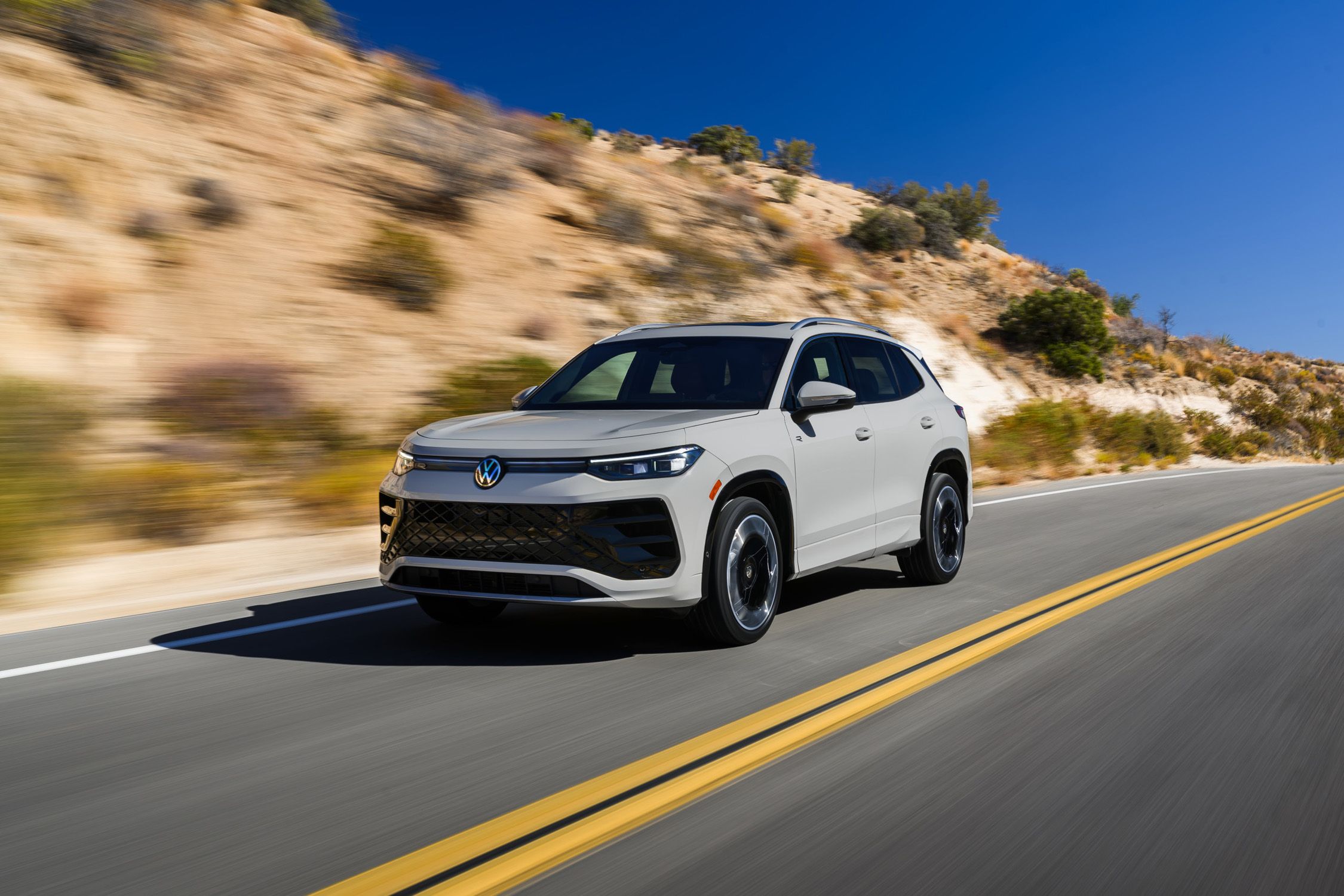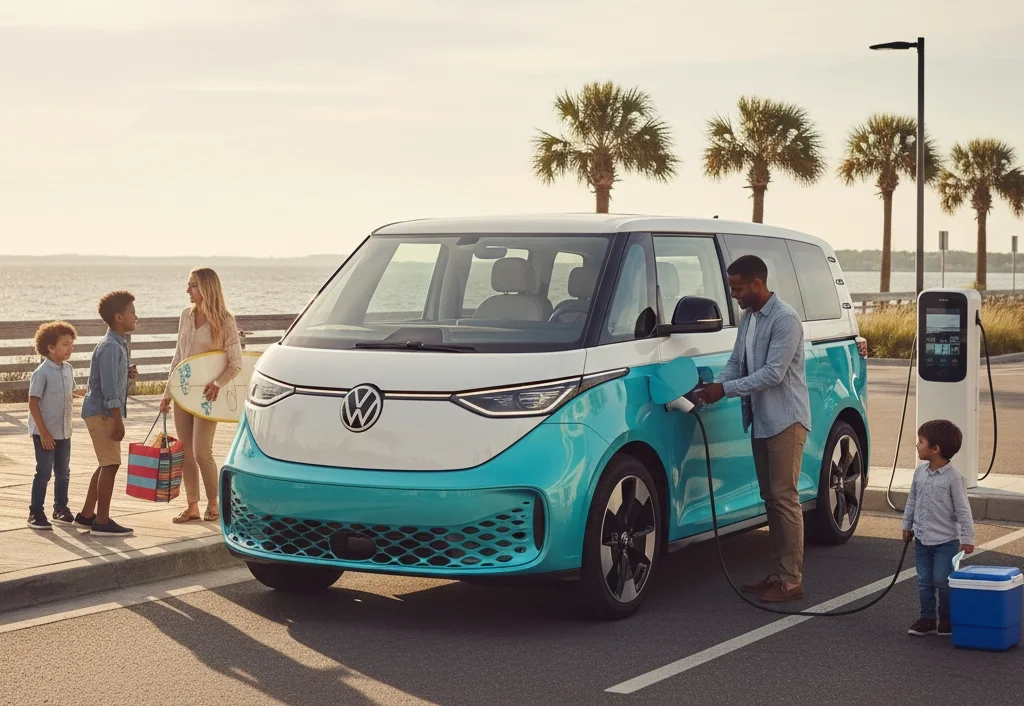

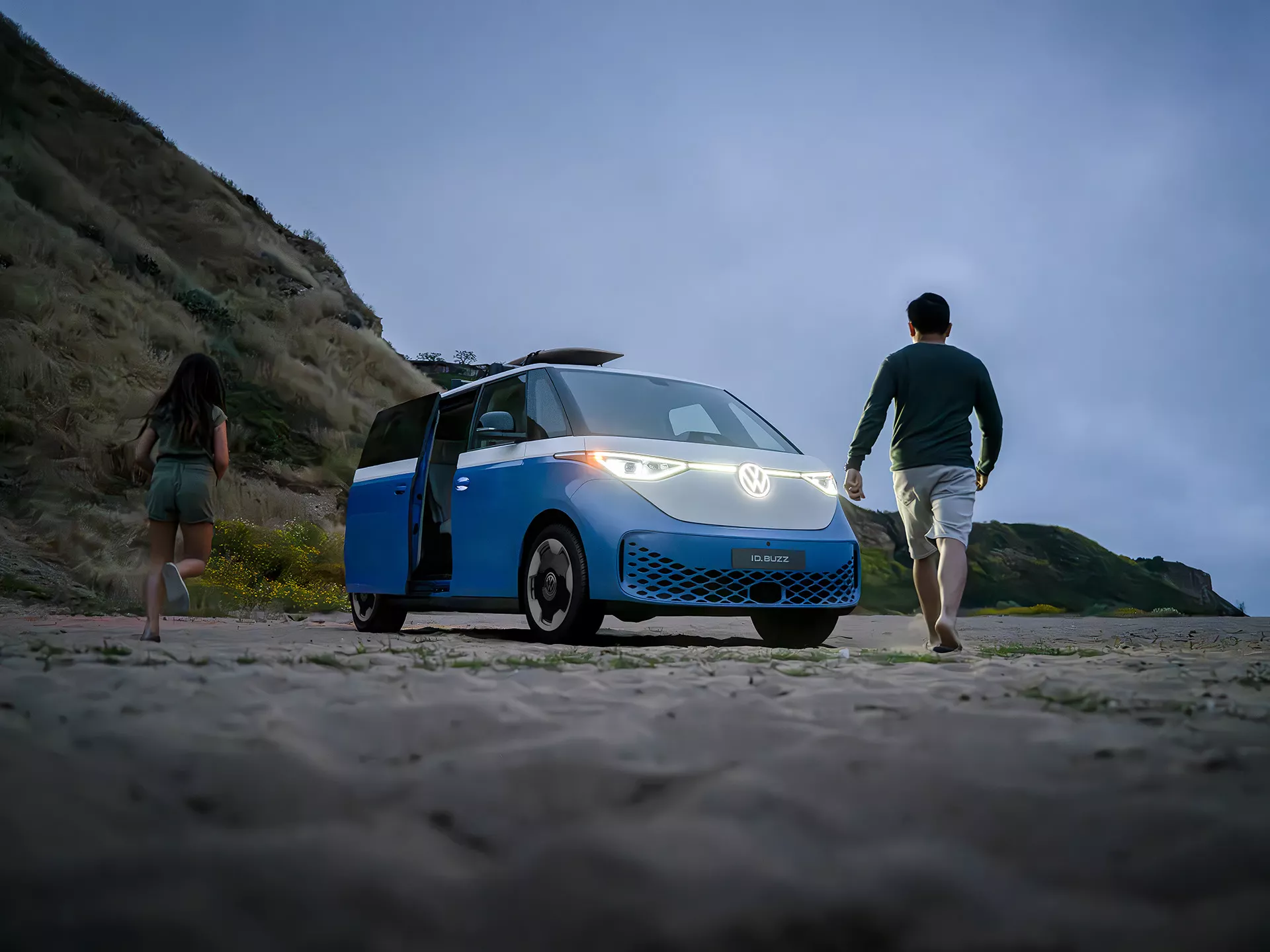
Key 2027 ID. Buzz Updates: Smarter Software, Physical Controls, and NACS Access Volkswagen originally announced the ID. Buzz's U.S. return for model year 2027 after skipping model year 2026. That plan has changed: Volkswagen confirmed in September 2026 that the updated van is now scheduled to arrive in the first half of 2027 as a 2028 model. The previously announced updates included four trims—Pro S RWD, Pro S 4Motion, Tourer 4Motion, and Pro S Plus 4Motion—along with true one-pedal driving and NACS charging compatibility. Contact Volkswagen of Daphne for the final U.S. lineup, local arrival timing, and equipment details for the returning ID. Buzz. This article walks through why the model-year gap happened, what Volkswagen originally announced for the 2027 trims, how the one-pedal driving change affects daily use, and what the current federal tax credit situation actually means for a purchase made now. We also address where official information is still pending, including pricing, so you know exactly what is confirmed and what is not. Volkswagen ID. Buzz Guide: Return Timeline, Trims, Charging & FAQs What Is the Volkswagen ID. Buzz? Why the ID. Buzz Took a Model-Year Hiatus Originally Announced 2027 ID. Buzz Trim Lineup One-Pedal Driving: An Announced Update Based on Owner Feedback Charging and Software Updates Is the ID. Buzz Right for Your Family? The Federal Clean Vehicle Tax Credit: What Current Law Actually Says Key Takeaways FAQ What Is the Volkswagen ID. Buzz? The Volkswagen ID. Buzz is an all-electric van built on Volkswagen's MEB electric vehicle architecture, styled after the brand's classic Microbus but built as a modern family and passenger vehicle. It debuted in the U.S. for model year 2025 in a long-wheelbase, three-row configuration. Volkswagen originally announced an expanded four-trim lineup for model year 2027, but the updated U.S. model is now scheduled to return as a 2028 model during the first half of 2027. Contact Volkswagen of Daphne for current availability and final specifications. Why the ID. Buzz Took a Model-Year Hiatus Volkswagen did not offer a model year 2026 ID. Buzz in the United States. The vehicle sold here for MY2025, and Volkswagen initially planned to bring it back for MY2027. The revised schedule now skips MY2027 as well, with the updated van expected in the first half of calendar year 2027 as a MY2028 vehicle. Contact Volkswagen of Daphne for the latest local arrival information. For shoppers who were on a waitlist or who test drove an early ID. Buzz in 2024 or 2025, this gap likely explains why the model seemed to disappear from new inventory listings for a stretch. It does not mean the vehicle was discontinued. The previously announced update expanded the trim lineup beyond the original launch offering. Final configurations for the returning model should be discussed with Volkswagen of Daphne as Volkswagen releases further details. If you are cross-shopping the ID. Buzz against a gas-powered minivan or a three-row SUV, the practical takeaway is that the updated vehicle is planned for a future arrival. Our team can help you check any remaining current-model availability and discuss the latest timing for the returning ID. Buzz. Originally Announced 2027 ID. Buzz Trim Lineup Volkswagen originally announced four trims for the 2027 ID. Buzz, with two new additions rather than carryovers from the original launch. Pro S RWD was the rear-wheel-drive entry point, and Pro S Plus 4Motion continued as an all-wheel-drive trim. Pro S 4Motion and Tourer 4Motion were the new additions, with the Tourer introducing camping-focused equipment rather than a different body style. These were the announced MY2027 plans; contact Volkswagen of Daphne for the final MY2028 trim structure. "4Motion" is Volkswagen's name for its all-wheel-drive system, which sends power to both the front and rear axles for improved traction. "RWD" means rear-wheel drive, where power goes only to the rear axle. Volkswagen has not released the complete returning U.S. model's specifications for every trim's battery size, output, or range. Contact Volkswagen of Daphne for the latest official specifications as they become available. Trim Drivetrain Originally Announced MY2027 Status Pro S RWD Rear-wheel drive Continuing Pro S 4Motion All-wheel drive New for 2027 Tourer 4Motion All-wheel drive New for 2027 Pro S Plus 4Motion All-wheel drive Continuing If you are deciding between a rear-wheel-drive and an all-wheel-drive ID. Buzz, the practical difference comes down to how power reaches the road. Rear-wheel drive works well for most daily driving on paved roads around Daphne, Fairhope, and Spanish Fort. All-wheel drive adds traction in wet conditions, which matters during the Gulf Coast's heavier rain events, and it typically adds weight and cost in exchange for that traction margin. We recommend discussing your typical driving conditions with our sales team so the drivetrain choice matches how you actually use the vehicle, rather than defaulting to the higher trim because it sounds more capable. One-Pedal Driving: An Announced Update Based on Owner Feedback One of the most significant functional changes announced for the ID. Buzz update is the addition of true one-pedal driving. One-pedal driving lets a driver slow the vehicle and bring it to a complete stop using only the accelerator pedal, through strong regenerative braking, without needing to press the brake pedal in most situations. Many EV drivers rely on this feature because it reduces how often they switch between pedals in stop-and-go traffic, and it recovers energy back into the battery every time the vehicle slows down. The MY2025 ID. Buzz did not offer true one-pedal driving. Its regenerative braking could slow the vehicle, but it could not bring the vehicle to a full stop on its own, meaning drivers still had to finish every stop with the brake pedal. Owners and reviewers flagged this as a notable gap compared to other EVs on the market that already offered full one-pedal capability. True one-pedal driving was announced for the update originally planned for MY2027. Contact Volkswagen of Daphne to confirm its availability and operation on the returning U.S. model. In everyday terms, one-pedal driving can change how a van feels in traffic. When equipped and operating within its limits, lifting off the accelerator allows the vehicle to decelerate toward a stop. Drivers must remain ready to use the brake pedal whenever needed. Drivers who already own another one-pedal-capable EV may find this behavior more familiar than the 2025 version's. Drivers new to one-pedal driving should expect a short adjustment period, since the deceleration feels stronger than a traditional gas vehicle coasting to a stop. This single change addresses one of the most repeated criticisms of the original U.S. ID. Buzz, and it is a meaningful reason for previous waitlist customers to take a fresh look at the announced update rather than assuming it is functionally identical to the vehicle they test drove in 2024 or 2025. Charging and Software Updates Volkswagen announced NACS (North American Charging Standard) adapter compatibility as part of the ID. Buzz update originally planned for MY2027. NACS is the charging connector standard that Tesla originally developed and that has since been adopted across most of the industry in North America. A compatible, approved NACS adapter can provide access to supported public charging stations beyond the CCS-based stations the vehicle has used previously. Contact Volkswagen of Daphne for the returning model's final charging-port configuration, approved adapter requirements, and network compatibility. For a family cross-shopping an ID. Buzz against a gas minivan, this matters most on longer trips, such as a drive toward Pensacola or up toward Mobile and beyond, where charging stop availability affects how practical the vehicle feels on a given route. Volkswagen has not yet published the returning U.S. model's complete battery capacity, EPA-estimated range, and DC fast charging specifications. Contact Volkswagen of Daphne for the full charging information, including supported networks and software features, as Volkswagen releases the final U.S. details. If you already drive a Volkswagen ID.4 or another EV and are considering the ID. Buzz as a second vehicle or a replacement, our team can walk through what is confirmed today about the returning model's charging compatibility and connected software, and what remains to be finalized before launch. You can also start exploring current new Volkswagen inventory at Volkswagen of Daphne's new inventory page to see what is arriving locally. Is the ID. Buzz Right for Your Family? The ID. Buzz occupies a specific spot in the market: it is a dedicated electric van with minivan-like passenger space, styled distinctly from both a traditional minivan and a three-row SUV. Families who already have a home charging setup, or reliable access to public charging along their regular routes, tend to get the most value from an EV like the ID. Buzz, since daily charging replaces regular gas station stops. For Eastern Shore and Gulf Coast households, a few practical questions matter more than styling. How far is your typical daily commute, and does it fit comfortably within a single charge with room to spare? Do you have a place to charge at home, whether that is a garage outlet or a dedicated home charger? Do your longer trips, such as visits to Gulf Shores, Orange Beach, or up toward Mobile, fall within a distance where charging stops are a minor inconvenience rather than a major planning exercise? If your household already drives an EV and understands the charging routine, the announced one-pedal driving and NACS compatibility updates may make the returning model a stronger fit than the original launch version. If you are new to EV ownership and considering the ID. Buzz as your first electric vehicle, we recommend a test drive when the updated model is available so you can feel how one-pedal driving behaves in real traffic, and a conversation with our finance team about how an EV purchase fits your budget compared to a gas-powered alternative. You can also review financing options in advance through our Finance Center. Price is one of the pieces still missing from the returning model's picture. Volkswagen has not announced final U.S. pricing for the updated ID. Buzz. Contact Volkswagen of Daphne for the latest pricing information as it is released. For context only, and not as a prediction of pricing for the returning model, the MY2025 ID. Buzz started at approximately $60,000. Treat that figure strictly as historical background on the prior model, since the returning model's actual pricing has not been published. Area MY2025 Announced Update / Revised U.S. Timing U.S. model-year availability Available MY2026 and MY2027 skipped; MY2028 expected in the first half of 2027 One-pedal driving Not available (regenerative braking did not bring the vehicle to a full stop) True one-pedal driving announced; confirm final equipment with Volkswagen of Daphne Trim lineup Fewer trims at initial U.S. launch Four trims: Pro S RWD, Pro S 4Motion, Tourer 4Motion, Pro S Plus 4Motion Charging CCS-based charging NACS compatibility announced; confirm final charging configuration with Volkswagen of Daphne The Federal Clean Vehicle Tax Credit: What Current Law Actually Says Because an EV purchase decision often factors in a federal tax credit, this is a point where accuracy matters more than optimism. Under current IRS guidance, the federal clean-vehicle tax credit is not available for vehicles acquired after September 30, 2025. This is current law as of this writing, and it applies broadly across eligible EVs, not specifically to the ID. Buzz. This means that an ID. Buzz acquired now would not qualify for the federal clean-vehicle credit under the acquisition-date rule currently in effect. We are not going to write around that fact or suggest a workaround. Tax law can change, and it has changed multiple times in recent years, so the right move is to confirm your specific situation with a qualified tax professional before assuming any credit applies, rather than relying on outdated information from an earlier version of the credit. Acquisition Scenario Current Credit Status Vehicle acquired on or before September 30, 2025 Credit may have applied under prior rules in effect at that time (verify with a tax professional) Vehicle acquired after September 30, 2025 Federal clean-vehicle credit is not currently available under IRS guidance Tax law can change, and eligibility depends on your specific circumstances. Confirm current federal and any applicable state or local EV incentive eligibility with a qualified tax advisor before making a purchase decision based on expected tax savings. Volkswagen of Daphne can share current published program information, but we are not a substitute for tax advice. Key Takeaways The updated U.S. ID. Buzz is now scheduled to return in the first half of 2027 as a 2028 model, replacing the earlier MY2027 plan. The earlier MY2027 announcement listed Pro S RWD, Pro S 4Motion, Tourer 4Motion, and Pro S Plus 4Motion. Contact Volkswagen of Daphne for the final returning lineup. True one-pedal driving was announced for the update, addressing a gap owners and reviewers noted in the MY2025 model. NACS charging compatibility was announced; contact Volkswagen of Daphne for final adapter, connector, and network details. Under current IRS guidance, the federal clean-vehicle tax credit is not available for vehicles acquired after September 30, 2025, so buyers should not assume a credit applies to a new ID. Buzz purchase. Final pricing, EPA range, battery capacity, and charging speed for the returning U.S. model remain pending. Contact Volkswagen of Daphne for the full information as it becomes available. FAQ Why didn't Volkswagen sell an ID. Buzz for 2026? Volkswagen did not offer a model year 2026 ID. Buzz in the United States. The vehicle was sold for MY2025, and Volkswagen initially announced a MY2027 return. That plan was subsequently delayed: the updated U.S. van is now expected during the first half of 2027 as a MY2028 model. Contact Volkswagen of Daphne for the latest availability information. What is one-pedal driving and why does it matter? One-pedal driving lets a driver bring the vehicle to a complete stop using only the accelerator pedal, through regenerative braking, without pressing the brake pedal. The MY2025 ID. Buzz could not fully stop this way, which owners and reviewers noted as a shortcoming. True one-pedal driving was announced for the update originally planned for MY2027. Contact Volkswagen of Daphne for its final availability and operation on the returning U.S. model. Drivers must remain ready to use the brake pedal. Is there still a federal tax credit for the ID. Buzz? Under current IRS guidance, the federal clean-vehicle tax credit is not available for vehicles acquired after September 30, 2025. An ID. Buzz acquired now would fall under that current rule. Tax law can change, so confirm your specific eligibility with a qualified tax professional rather than relying on assumptions about past versions of the credit. What happened to the announced 2027 ID. Buzz trims? Volkswagen originally announced Pro S RWD, Pro S 4Motion, Tourer 4Motion, and Pro S Plus 4Motion. The U.S. return has since moved to model year 2028. Contact Volkswagen of Daphne for the final trim lineup, specifications, range, and pricing as Volkswagen releases them. Volkswagen originally announced a wider trim lineup, true one-pedal driving, and NACS compatibility for the 2027 ID. Buzz. The U.S. return is now scheduled for the first half of 2027 as a 2028 model. Contact Volkswagen of Daphne for the final U.S. specifications and local arrival timing. Pricing, exact range, and battery details are still pending official release, and the federal clean-vehicle tax credit does not currently apply to vehicles acquired after September 30, 2025. If you were on the original ID. Buzz waitlist or are cross-shopping it against a minivan or three-row SUV, the clearest next step is a direct conversation with our team about current availability and timing. Visit Volkswagen of Daphne at 29816 Frederick Blvd, Daphne, AL 36526, or call our sales team at 251-374-0664 to ask about the returning ID. Buzz as details become available. See Why Volkswagen of Daphne for more on how our team works with EV shoppers. We're glad to answer questions and keep you updated as Volkswagen releases further information about the returning ID. Buzz. Explore Your Volkswagen ID. Buzz Options in Daphne View New Volkswagen Vehicles Explore Financing Call 251-374-0664 Related Volkswagen Insights & Updates How to Choose Between the 2026 Volkswagen Tiguan Trims in Daphne, AL Read More 2026 Volkswagen Tiguan in Daphne AL: Complete Guide Read More Which 2026 Volkswagen SUV Is Right for You in Daphne? Read More Best 2026 Volkswagen SUVs for Summer Adventures Near Daphne Read More
Hurricane Season Volkswagen Prep: A Storm-Readiness Checklist for Eastern Shore Drivers
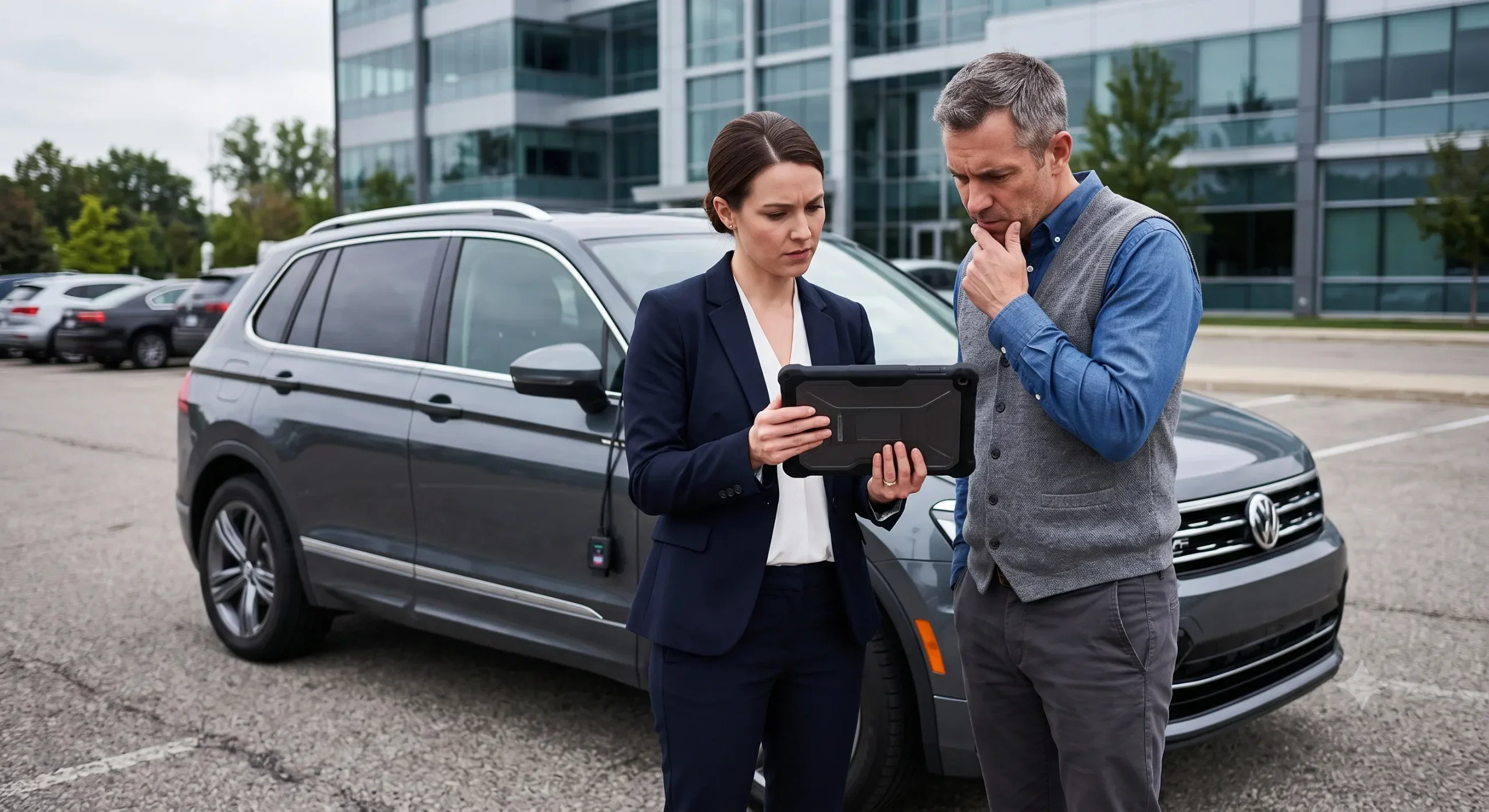
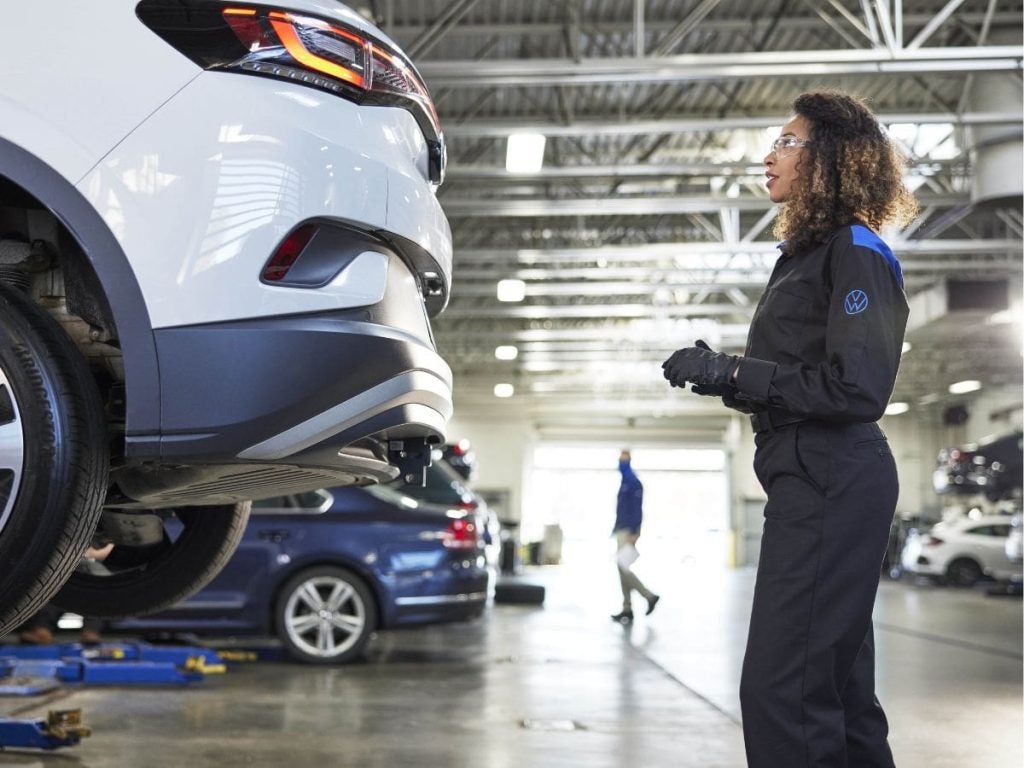
Eastern Shore Storm Preparedness: Safeguarding Your Vehicle Along Mobile Bay Preparing your Volkswagen for hurricane season means checking the systems most likely to fail under storm conditions before a storm ever forms, and building a basic emergency kit you can grab quickly if evacuation becomes necessary. The short list includes a battery test, a look at tire tread and pressure, working wipers and washer fluid, functioning lights and brakes, and a full fuel tank whenever a storm enters the forecast. None of this makes any vehicle safe to drive through floodwater. Official guidance from agencies such as the National Highway Traffic Safety Administration (NHTSA) and the Federal Emergency Management Agency (FEMA) is consistent on that point: no vehicle, regardless of drivetrain, should attempt to cross a flooded road. Volkswagen of Daphne serves drivers across Baldwin County and Mobile County, an area that sits squarely inside the Atlantic hurricane season each year. We put this checklist together so Eastern Shore Volkswagen owners have a clear, practical reference before storm activity picks up, not a list of vehicle capability claims. Our service team can check your battery, tires, and wipers before storm season arrives, and we can help you think through what belongs in a vehicle emergency kit. The rest of this guide walks through why each check matters, what a basic kit should include, and what official sources recommend before, during, and after a storm. Volkswagen Hurricane Prep Guide: Vehicle Checks, Emergency Kit & Evacuation What Is Hurricane-Season Vehicle Readiness? Why Storm Season Matters for Volkswagen Owners on the Gulf Coast Volkswagen Systems Worth Checking Before a Storm Building a Vehicle Emergency Kit What To Do If Evacuation Routes Are Announced Have Our Service Team Check Your Volkswagen Before the Next Storm Key Takeaways FAQ What Is Hurricane-Season Vehicle Readiness? Hurricane-season vehicle readiness refers to the practice of inspecting a vehicle's critical safety and reliability systems, such as the battery, tires, wipers, lights, and brakes, ahead of the Atlantic hurricane season, and assembling a basic emergency kit in case evacuation or extended power outages occur. It does not describe any vehicle's ability to safely operate in floodwater or severe storm conditions. Why Storm Season Matters for Volkswagen Owners on the Gulf Coast The Atlantic hurricane season runs from June through November, with the National Oceanic and Atmospheric Administration and other forecasting agencies typically noting the highest likelihood of activity between August and October. Baldwin County and the broader Eastern Shore, along with Mobile County and the Mississippi Gulf Coast, sit within a region that experiences tropical storm and hurricane risk during these months in a typical year. This is general seasonal context rather than a forecast tied to any specific storm system, and it is worth keeping in mind regardless of how any particular season develops. NHTSA publishes general vehicle-readiness guidance ahead of severe weather season that focuses on the basics: a battery in good condition, tires with adequate tread and correct pressure, functioning wipers, and working lights and brakes. FEMA's guidance centers on household and vehicle emergency preparedness, including having a kit ready before a storm is announced rather than assembling one at the last minute. Neither agency frames vehicle readiness as a guarantee of safe passage through a storm. The purpose of readiness is to reduce the chance of your vehicle failing you during a routine drive, an evacuation, or the days after a storm passes, when fuel and power may be harder to come by. For Volkswagen owners on the Eastern Shore, this matters because storm season often arrives with little warning about its exact severity in any given location. A vehicle that starts reliably, sees clearly in heavy rain, and has a full tank of fuel is simply more useful in the narrow window between a storm watch and a storm's arrival, when many people are trying to run the same errands or leave the area at the same time. Volkswagen Systems Worth Checking Before a Storm Battery Health and Starting Reliability Vehicle batteries fail more often in extreme heat than in cold, because sustained high temperatures accelerate the chemical breakdown inside the battery and shorten its usable life. Gulf Coast summers put batteries under exactly this kind of stress for months before hurricane season peaks, which is part of why a battery that has been marginal all summer can become a no-start situation right when you need the car most. A battery test measures how much cranking power the battery can still deliver compared to its rated capacity, and it takes only a few minutes at our service center. This matters specifically before a storm because a dead battery removes your vehicle from the equation entirely. If an evacuation order comes in the evening or overnight, there may not be time to troubleshoot a no-start condition, arrange a jump start, or source a replacement battery if stores have already closed or lost power. Testing the battery in September, rather than waiting to find out the hard way in October, is a low-cost way to remove one of the more common points of failure. Tires, Tread Depth, and Wiper Performance Tread depth determines how effectively a tire channels water out from under itself at speed, a process engineers call hydroplaning resistance. As tread wears down, the grooves that move water away become shallower, and the tire's ability to maintain contact with the road surface in heavy rain decreases. Checking tread depth (a simple visual and measurement check our team can do during a service visit) tells you whether your tires are still doing that job effectively. Correct tire pressure matters alongside tread depth, since an underinflated tire changes the tire's contact patch and can affect handling and wet-weather grip. Wiper performance is just as important and often overlooked. Rubber wiper blades degrade from UV exposure and heat, both of which the Gulf Coast supplies in abundance, and a blade that streaks or skips can reduce visibility significantly during the kind of heavy, wind-driven rain that arrives well ahead of a storm's center. Washer fluid matters too, since wipers alone cannot clear road film and debris without it. Confirming that wipers clear the windshield cleanly and washer fluid is topped off is a five-minute check with an outsized effect on visibility when it matters most. Lights, Brakes, and Visibility in Heavy Rain Headlights, taillights, and brake lights all play a larger role than usual during tropical weather, both because visibility drops in heavy rain and because power outages can take traffic signals and streetlights out of service. A taillight or brake light that is not working reduces the ability of drivers behind you to react, particularly in low-visibility conditions where following distances are already harder to judge. Brakes deserve attention for a related reason: stopping distances increase on wet pavement, and worn brake pads or low brake fluid compound that effect. A pre-storm inspection that includes a visual brake check and a confirmation that all exterior lights function correctly addresses two of the most consequential safety systems on the vehicle, and both are quick checks during a routine service visit. Fuel Level A simple habit worth building into any storm routine is keeping the fuel tank closer to full once a storm enters the forecast, rather than running it down toward empty. Fuel stations along evacuation routes and throughout affected areas can lose power or run out of supply during an approaching storm and in its immediate aftermath, and lines can form quickly once a storm watch or warning is issued. Topping off early, before the rush starts, is a small step that keeps your options open if evacuation becomes necessary or if you simply need to run errands while local stations are out of service. System to Check Why It Matters Battery Extreme heat accelerates battery wear, making a no-start failure more likely right when reliable starting matters most. Tires (tread depth and pressure) Adequate tread and correct pressure help a tire channel water away from the contact patch in heavy rain. Wipers and washer fluid Worn wiper blades and empty washer fluid reduce visibility during the heavy rain that often precedes a storm's arrival. Lights and brakes Functioning headlights, taillights, and brake lights improve visibility to other drivers, while good brakes help offset longer wet-pavement stopping distances. Fuel level A full or nearly full tank keeps evacuation and errand options open if stations lose power or run low on fuel. Building a Vehicle Emergency Kit FEMA and similar emergency-preparedness sources consistently recommend assembling a basic emergency kit before a storm season begins, rather than trying to gather supplies once a storm watch has already been issued and store shelves start to empty. A vehicle kit does not need to be elaborate. It needs to cover the basics that keep you safer and more comfortable if you are delayed on the road, stopped at a shelter point, or waiting out a power outage at home with the car as a backup resource. Water and non-perishable food cover the possibility of being stuck in traffic during an evacuation or waiting out road closures longer than expected. A flashlight with extra batteries matters because vehicle interior lighting is not designed for extended use and streetlights may be out. A portable phone charger or power bank keeps a phone usable for calls, texts, and emergency alerts after your vehicle's battery capacity is a concern or after a long day without access to a wall outlet. A first aid kit addresses minor injuries without a trip to an urgent care center that may be closed or hard to reach. A basic tool kit and a set of jumper cables help with small mechanical issues or a battery that needs a jump start from another vehicle. A blanket provides warmth if you are stopped for an extended period, particularly if a storm brings cooler air behind it. Copies of insurance and registration documents, kept in a waterproof bag, protect paperwork you may need for a claim or for identification if you have to leave the area. Item Purpose Water and non-perishable food Covers delays from traffic, road closures, or extended waits during an evacuation. Flashlight with extra batteries Provides reliable light if streetlights or power are out. Portable phone charger or power bank Keeps a phone usable for calls, texts, and emergency alerts. First aid kit Addresses minor injuries when medical facilities may be closed or hard to reach. Basic tool kit and jumper cables Helps with small mechanical issues or a battery that needs a jump start. Blanket Provides warmth during extended stops or cooler post-storm conditions. Copies of documents (insurance, registration) in a waterproof bag Protects paperwork needed for identification or insurance claims. What To Do If Evacuation Routes Are Announced Daphne, Spanish Fort, and the wider Mobile Bay area sit along routes that can see heavy traffic when evacuation orders are issued for Baldwin County or neighboring coastal areas. Official guidance from emergency management agencies is consistent on a few points that apply regardless of what vehicle you drive. Follow the evacuation routes and instructions issued by local and state emergency management officials rather than choosing an alternate route on your own. Leave earlier than you think you need to, since roads fill quickly once an order is issued and delays compound as more residents leave at the same time. Most importantly, do not drive through a flooded road under any circumstances. Standing water can hide washed-out pavement, downed lines, or debris, and even water that looks shallow can stall a vehicle or, in some conditions, sweep it off the roadway entirely. This holds true no matter what vehicle you drive, including any Volkswagen equipped with 4MOTION all-wheel drive. All-wheel drive improves traction on dry or wet pavement under normal driving conditions; it does not change the basic physics of a vehicle encountering moving or standing floodwater, and it should never be treated as a reason to attempt a flooded crossing that official guidance says to avoid. If your area is placed under a mandatory evacuation order, plan to leave using the route and timing local officials designate, not based on an assumption about what your vehicle can handle. A vehicle that starts reliably, has good tires and wipers, and has a full tank of fuel simply gives you fewer variables to manage during a trip that is already going to involve traffic and uncertainty. If you have questions about your Volkswagen's readiness before a storm reaches the Gulf Coast, our service team can look over the battery, tires, and wipers and let you know what, if anything, needs attention. You can reach our service department at 228-291-2035, or review our current services at our Service Center. Phase Recommended Action Before Complete a pre-storm vehicle check (battery, tires, wipers, lights, brakes, fuel) and follow any evacuation orders issued by local officials. During Do not drive through flooded roads under any circumstances, and follow official evacuation routes rather than an alternate path. After Avoid downed power lines and storm debris, and have your vehicle inspected if it was exposed to floodwater before driving it further. Have Our Service Team Check Your Volkswagen Before the Next Storm We can schedule a pre-storm-season check that covers the battery, tires, wipers, and lights in one visit, so you have a clear answer on where your vehicle stands before storm activity increases. This is the kind of appointment worth booking in September, ahead of the months when hurricane and tropical storm activity in the Gulf typically peaks, rather than waiting until a storm is already in the forecast and service schedules fill up. Our team can also talk through Volkswagen-specific maintenance questions, including current Carefree Coverage terms for eligible new vehicles, if you want to understand what is covered before you bring your vehicle in. If you are weighing a pre-owned or Certified Pre-Owned Volkswagen and want to understand how our dealership approaches service and ownership support on the Eastern Shore, our Why Volkswagen of Daphne page outlines our current services and programs. For a service appointment, call 228-291-2035, or reach our sales team at 251-374-0664 with general questions. We are located at 29816 Frederick Blvd, Daphne, AL 36526. Key Takeaways Vehicle batteries fail more often in extreme heat, making a pre-storm battery test a practical way to catch a likely no-start issue before it happens. Tread depth and tire pressure affect how well a tire channels water away from the road surface in heavy rain. Worn wiper blades and low washer fluid reduce visibility during the heavy rain that typically arrives ahead of a storm's center. A basic vehicle emergency kit should include water, food, a flashlight, a power bank, a first aid kit, tools and jumper cables, a blanket, and copies of key documents. No vehicle, including a Volkswagen equipped with 4MOTION all-wheel drive, should ever be driven through a flooded road. Official evacuation orders and routes from local emergency management should always take priority over personal route choices or assumptions about vehicle capability. FAQ How often should I have my battery tested before hurricane season? A battery test once a year, ideally in late summer before storm activity typically increases, is a reasonable baseline for most drivers. If your battery is more than three to four years old, or if you have noticed slower starts, it is worth having it tested sooner rather than waiting, since batteries can fail with little warning once they begin to degrade. Is it safe to drive an all-wheel-drive Volkswagen through a flooded road? No. Official guidance from agencies such as NHTSA and FEMA advises against driving through any flooded road, regardless of a vehicle's drivetrain. All-wheel drive, including Volkswagen's 4MOTION system, improves traction on wet or dry pavement under normal conditions, but it does not make a vehicle safe from the effects of standing or moving floodwater, which can stall an engine or move a vehicle unpredictably even at shallow depths. What should I keep in my car during hurricane season? A basic kit typically includes water and non-perishable food, a flashlight with extra batteries, a portable phone charger, a first aid kit, a basic tool kit with jumper cables, a blanket, and copies of insurance and registration documents in a waterproof bag. Keeping this kit in the vehicle throughout the season, rather than assembling it after a storm watch is issued, means it is ready whenever you need it. Should I evacuate in my Volkswagen if an order is issued? If local or state officials issue an evacuation order for your area, follow their designated routes and timing rather than making an independent decision based on your vehicle. Leaving earlier than required, following the official route, and avoiding any flooded roadway along the way are the core recommendations that apply no matter what vehicle you drive. Hurricane season readiness for your Volkswagen comes down to a short, practical list: a battery that starts reliably, tires and wipers that perform in heavy rain, working lights and brakes, a full tank of fuel, and a basic emergency kit ready before you need it. None of this changes the most important rule of storm season, which is to follow official evacuation orders and routes from local emergency management and never attempt to drive through a flooded road, regardless of what vehicle you are driving. If you would like our service team to check your Volkswagen's battery, tires, and wipers before the next storm system develops, call our service department at 228-291-2035 or visit us at 29816 Frederick Blvd, Daphne, AL 36526. Getting this checklist handled early gives you one less thing to manage once a storm actually enters the forecast. Have Our Service Team Check Your Volkswagen Before the Next Storm Visit Our Volkswagen Service Center Call Service: 228-291-2035 Related Volkswagen Insights & Updates Volkswagen of Daphne's Ultimate Guide on How to Get Your VW Vehicle Road Trip Ready Read More Your Guide to Volkswagen Battery Replacement Read More Volkswagen Tire Replacement Signs Read More How to Maintain Your Volkswagen in the New Year Read More